
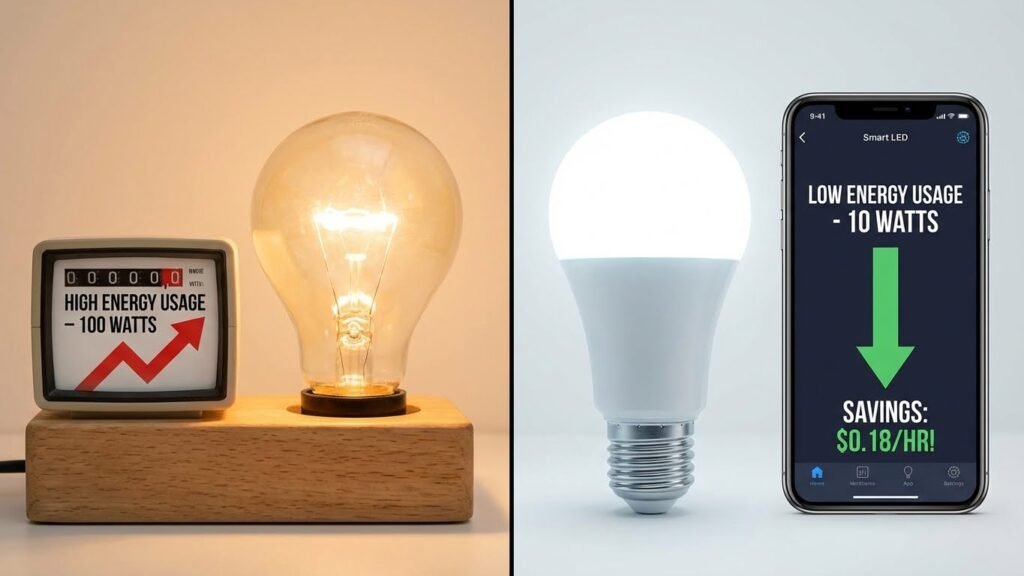
You can save electricity with smart bulbs, but the size of the savings depends on how you use them and which bulbs you buy. Smart bulbs use LED technology like regular LEDs, and they add features—schedules, dimming, motion sensing, and remote control—that help you cut wasted light and lower energy use when you actually put those features to work.
Smart bulbs do draw a tiny bit of standby power when off, but that small draw rarely wipes out the savings from using LEDs and automated controls. If you replace incandescent bulbs with LED smart bulbs and use timers, dimming, or motion sensors, you will usually see noticeable energy savings over time.
Curious which features matter most and how much you can really save at home? Keep going to learn practical tips, real-world examples, and how to pick smart bulbs that give you the best energy return.
Key Takeaways
- Smart bulbs save energy mainly by using LED tech and smart controls.
- Automated features like schedules and motion sensors boost real savings.
- Standby power is small and rarely negates the energy benefits.
How Smart Bulbs Work
Smart bulbs use LED lighting, a small onboard computer, and wireless radios to give you remote control, scheduling, dimming, and color changes. They connect to your phone, voice assistant, or hub so you can change lights without touching a switch.
Technology Behind Smart Bulbs
Smart bulbs use LEDs for light, which use far less power than incandescent filaments. The bulb contains a driver that converts household AC to low-voltage DC for the LEDs. A tiny microcontroller runs firmware that interprets commands and controls brightness and color.
Wireless radios let the bulb talk to your devices. Common protocols include Wi‑Fi (direct control via your router), Bluetooth (nearby phone control), and mesh standards like Zigbee or Z‑Wave (through a hub). Each protocol affects range, latency, and energy use.
Bulbs also include features that save energy: dimming lowers power draw, scheduling avoids needless on‑time, and motion or ambient light sensors prevent waste. Firmware updates can add efficiency or fix bugs, so occasional updates matter.
Types of Smart Bulbs
You’ll find several types based on functionality and connection method:
- Color vs. white: Color bulbs offer RGB or tunable white. RGB lets you pick any hue; tunable white shifts color temperature from warm to cool.
- Connectivity: Wi‑Fi bulbs connect directly to your router. Bluetooth bulbs pair to a phone. Zigbee/Z‑Wave bulbs need a compatible hub for wider automation.
- Form factor: Standard A19 shapes fit most lamps. BR bulbs suit recessed fixtures. Filament-style LEDs mimic older bulbs for visible fixtures.
Choose based on use: pick Wi‑Fi for simple remote control without extra hardware, Zigbee or Z‑Wave for lower network load and integrated automation, and color bulbs where mood lighting matters.
Compatibility With Home Systems
Check protocol and platform compatibility before buying. If you use Amazon Alexa, Google Home, or Apple HomeKit, verify the bulb lists that ecosystem on its packaging or product page. Not all bulbs support all assistants.
Hubs matter for mesh systems. Zigbee and Z‑Wave bulbs usually require a hub like a smart speaker or dedicated bridge. That hub lets you control many bulbs reliably and enables automations across device types.
Also check your router and network. Wi‑Fi bulbs may need 2.4 GHz networks and can tax crowded routers if you have many devices. Finally, confirm physical fit and dimmer compatibility if you have wall dimmer switches to avoid flicker or damage.
Energy Efficiency of Smart Bulbs
Smart bulbs cut lamp energy use and can lower how often you run lights. They use LED technology, offer dimming and scheduling, and usually draw a tiny amount of standby power when idle.
Comparison With Traditional Bulbs
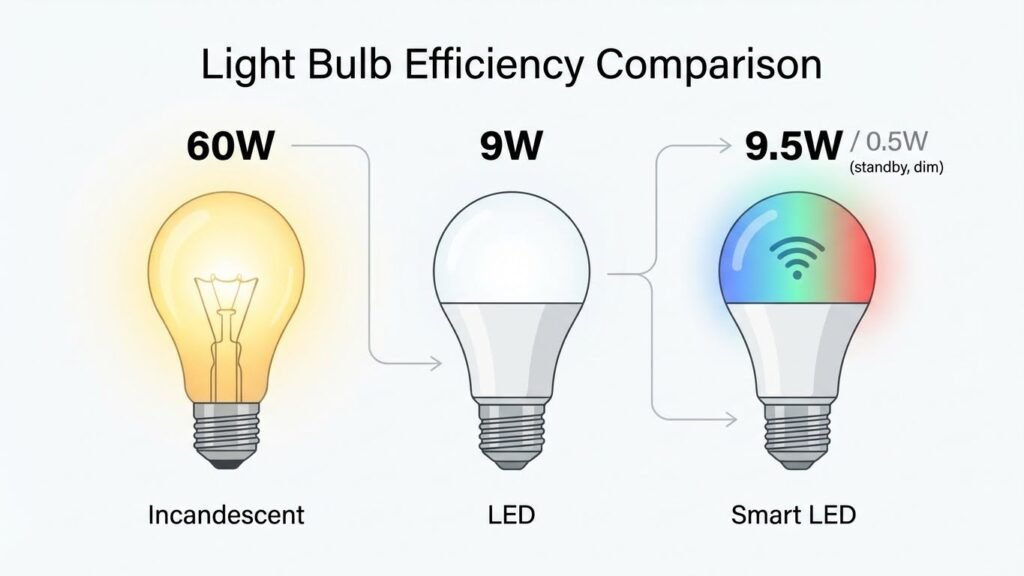
Smart LEDs use about 8–12 watts to match the light of a 60-watt incandescent bulb. That means you get the same brightness while using roughly 80–90% less electricity.
You also save from features like scheduling and motion controls. For example, setting lights to turn off automatically prevents hours of wasted light in rooms you forget to check.
Keep in mind older CFLs and incandescent bulbs waste a lot more energy as heat. If you replace an incandescent with a smart LED and use automation to cut “on” time, your monthly lighting kWh can drop noticeably.
Wattage and Power Consumption
Smart bulbs have two power draws: active (when lit) and standby (when “off” but connected). Active draw commonly ranges 6–12 W for typical household brightness levels. Standby draw is usually under 1 W for modern models.
If a smart bulb uses 9 W while on and 0.7 W standby, running it 4 hours a day at full brightness uses about 1.3 kWh per month plus ~0.5 kWh from standby. That standby adds small cost, but automation and dimming often reduce total use below that of non-smart LEDs.
Use this quick comparison to estimate costs:
- Example: 9 W on for 4 hours/day = 9 W × 4 h × 30 days = 1,080 Wh → 1.08 kWh/month.
- Standby: 0.7 W × 24 h × 30 days = 504 Wh → 0.50 kWh/month.
Lifespan and Replacement Frequency
Smart LEDs typically last 15,000–25,000 hours, much longer than incandescents (1,000 hrs) and often longer than CFLs (8,000–10,000 hrs). That means fewer replacements and less material waste over time.
Longer life lowers lifetime cost even if a smart bulb costs more upfront. For example, a 20,000-hour smart bulb used 3 hours/day lasts about 18 years, cutting replacement frequency and installation time.
Remember lifespan varies by usage and heat exposure. Frequent full-brightness use and poor ventilation can shorten life, so use dimming and good fixture choice to get the rated hours.
Energy-Saving Features of Smart Bulbs
Smart bulbs cut wasted light and let you control brightness, timing, and motion. You can lower wattage use, stop lights from running when rooms are empty, and tune settings to match real needs.
Dimming Capabilities
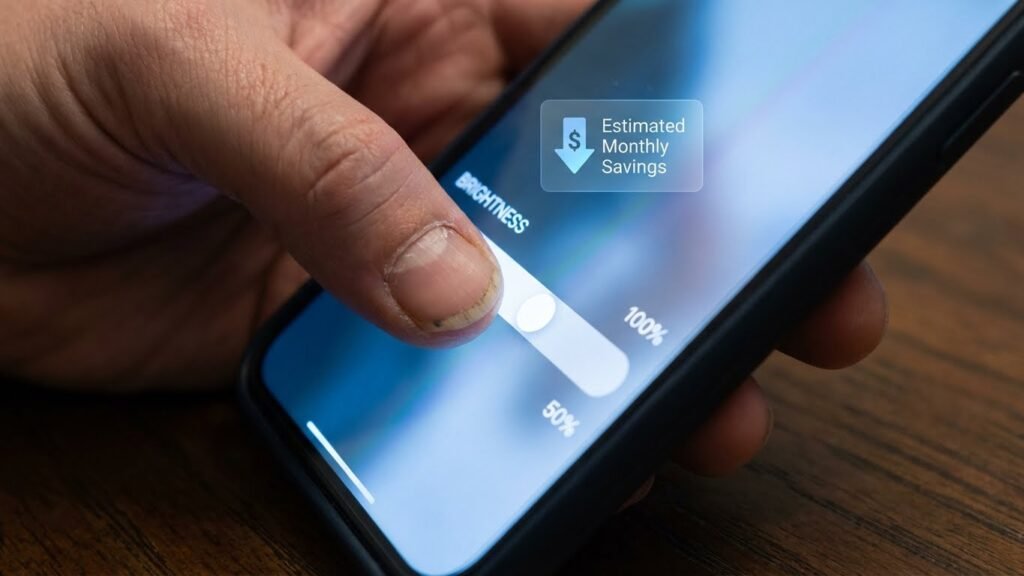
Dimming lowers a bulb’s power draw by reducing LED current. If a smart bulb is set to 50% brightness, it typically uses roughly half the watts compared to full brightness, so you save energy every hour it runs dimmed.
Use dimming for tasks: set living-room lights to 30–50% for TV viewing, or 70% for reading. Many bulbs also let you program scenes that combine dim levels with color temperature to match activity without wasting power.
Be aware: some cheap bulbs use pulse-width modulation that can flicker at low levels. Choose bulbs from reputable brands that specify dimming range and efficiency to avoid wasted energy or poor light quality.
Automated Scheduling
Scheduling turns lights off and on at fixed times so they aren’t left on by mistake. You can create weekday and weekend schedules, set bedroom lights to go off 15 minutes after bedtime, or have exterior lights run only from dusk to midnight.
Schedules reduce hours-of-use, which directly drops your electricity bill. Use sunrise/sunset rules tied to your location so exterior lights adjust year-round without manual changes.
Combine schedules with holiday modes or vacation settings to keep lights off most of the day while preserving security lighting patterns when you’re away.
Remote Control and Sensors

Remote control lets you switch lights from an app when you forget to turn them off. This prevents hours of unnecessary use after you leave a room or home. You can also check real-time power use in many apps to spot lights that consume extra energy.
Motion and ambient-light sensors automate decisions. Motion sensors turn lights on only when someone is present, and auto-off timers cut power after a set period of no motion. Ambient sensors keep lights off during daylight by measuring lux at the fixture.
Combine sensors with room-specific rules: bathroom lights on motion for short intervals, hallway lights on dim for night trips, and kitchen lights on full only when motion plus ambient-dark thresholds both meet your needs.
Real-World Energy Savings
Smart bulbs cut wattage versus incandescents, add dimming and schedules that reduce run time, and use a small amount of standby power. You’ll see savings mainly from lower bulb wattage, less time lights stay on, and smarter control.
Typical Household Usage
A 60W incandescent replacement smart LED usually uses about 8–10 watts while producing the same light. If you replace five such bulbs and each runs 3 hours per day, that totals roughly 22–27 kWh saved per month versus incandescents. Smart features like schedules and motion sensors further reduce on-time by turning lights off when rooms are empty.
Standby draw for many smart bulbs is under 1 watt. That adds a small constant load, so savings depend on how long lights would otherwise be on. Homes that leave lights on for short periods get smaller gains than homes where lights are often left on for hours.
Case Studies and Statistics
Real users and tests show clear reductions when replacing incandescents with smart LEDs. One example: a family of four replaced 10 incandescent bulbs and cut monthly lighting use by about $10–$15, recovering the bulb cost in under two years at typical U.S. rates. Controlled studies report 70–90% energy reduction per bulb compared to incandescents.
Comparisons to regular non-smart LEDs show much smaller differences. Smart bulbs save mostly through behavior change (automation, dimming) rather than big differences in LED efficiency. Expect larger percentage savings if your prior lighting was incandescent or if you use automation aggressively.
Cost Savings Over Time
Calculate savings by comparing wattage, hours used, and your electricity price. Example: replacing a 60W incandescent (60 W) with a 9W smart LED saves 51 W per hour. At 3 hours daily and $0.15/kWh, that equals about $8.40 per bulb per year. Multiply by number of bulbs to get household savings.
Factor in upfront cost and a small standby draw. If a smart bulb costs $15 and saves $8.40 per year, payback is under two years. Also consider non-energy benefits—convenience, longer bulb life, and reduced maintenance—which can improve the overall value of the upgrade.
Factors That Impact Energy Savings
Your savings depend on how often you use the lights, how you set them up, and what other devices they work with. Small behavior and setup changes can change yearly electricity use by noticeable amounts.
Usage Patterns
How long you leave bulbs on matters most. If you replace a 60W incandescent with a 9W smart LED and you run it 3 hours a day, you cut that bulb’s daily energy from 180 Wh to 27 Wh. Multiply that across rooms and months and the savings add up.
Dimming and lower brightness settings reduce power use further. Running a smart bulb at 50% brightness typically uses roughly half the power compared with full brightness. Scheduling also helps: set lights to turn off during predictable absences or overnight to avoid wasted hours.
Standby power can be small but real. Some smart bulbs draw a fraction of a watt when “off” so check specs. If you have many bulbs, even tiny standby draw can affect annual totals.
Integration With Other Smart Devices
Linking bulbs with motion sensors or smart switches cuts on-time automatically. A hallway light tied to a motion sensor will only run when someone walks through, not for set minutes every time.
Use home automation routines to combine lights with presence, door sensors, or a geofence. For example, set all downstairs lights to shut off when your phone’s location shows you left home. That avoids lights staying on during long absences.
Also consider hub and protocol choices. Zigbee and Z-Wave bulbs often have lower standby use than some Wi‑Fi bulbs, and they can run local automations that don’t rely on cloud services. Check compatibility so your automation actually triggers fast and reliably.
Environmental Impact of Smart Bulbs
Smart bulbs cut energy use and change how materials and power are used in lighting. You will see lower electricity demand and different manufacturing trade-offs compared with older bulbs.
Reduced Carbon Footprint
Smart bulbs use LED technology and often run at lower wattages than incandescent bulbs. This means your home uses fewer kilowatt-hours for the same brightness. Fewer kilowatt-hours reduces the CO2 produced by power plants that supply your electricity.
You can also trim use with schedules, motion sensors, and remote dimming. Those features lower wasteful on-time without you remembering to switch lights off. Over a year, smart controls can reduce household lighting energy by a noticeable percent, depending on your habits and local grid emissions.
If your electricity comes from fossil fuels, the carbon savings are larger. In areas with cleaner grids, savings still matter because they reduce overall demand and peak loads, which helps the grid run more efficiently.
Sustainable Manufacturing Practices
Smart bulbs contain more electronics than basic LEDs: chips, radios, and circuit boards. That adds materials like copper, plastics, and small amounts of rare elements. You should expect more complex recycling needs than for a simple LED bulb.
Some brands design bulbs for easier disassembly or use fewer harmful materials. Look for manufacturers that publish parts lists, recycling programs, or take-back options. These practices lower environmental harm from manufacturing and end-of-life disposal.
Buying bulbs with longer rated lifetimes also reduces how often you replace them. Fewer replacements mean less manufacturing and less waste over time. Check product specs for lifespan, repairability, and vendor recycling support when you choose smart bulbs.
Common Misconceptions About Smart Bulbs
You might think smart bulbs always raise your electricity bill. In reality, most smart bulbs use LED technology and save far more energy than old incandescent bulbs. The tiny standby power some models use is usually a fraction of a watt and has little impact on monthly costs.
Some people believe smart bulbs only save energy if you constantly use advanced features. That’s not true. Simple benefits like scheduling, timers, and remote control cut wasted run time right away. Automation helps prevent leaving lights on by mistake.
There’s a myth that regular LED bulbs are always cheaper to run than smart bulbs. Often, the base LED efficiency is the same, but smart bulbs add control that can increase savings over time. Your net benefit depends on how you use them and whether you replace less-efficient bulbs.
You may worry about complex setup or security risks. Many smart bulbs work with straightforward apps and basic setups take minutes. For security, choose products from reputable brands and keep firmware updated to reduce risks.
Common marketing claims can also mislead. Some ads suggest huge bill cuts without context. Look for real wattage, standby usage, and how the bulbs will fit into your daily habits before expecting large savings.
Choosing the Right Smart Bulbs for Energy Efficiency
Pick bulbs that match the brightness, color, and control you need while minimizing wasted power. Focus on lumen output, dimming, connectivity, and certified efficiency to get the best savings and user experience.
Key Features to Look For
Look first at lumens, not watts. Choose about 800 lumens for a typical 60W-equivalent bulb. That gives the light you expect while keeping energy use low.
Check for dimmability. Bulbs that dim smoothly let you lower brightness and energy use during most hours. Confirm the bulb supports your dimming method—app, voice, or physical dimmer—so you don’t get flicker.
Prefer bulbs with an ENERGY STAR label or clear lumen-per-watt specs. Aim for higher lumens per watt to spot efficient models. Also review color temperature (2700K–3000K for warm rooms, 4000K–5000K for task areas) because the right color can reduce the need for extra fixtures.
Consider lifespan and standby power. Look for long rated lifetimes (15,000–25,000 hours) and low idle power for bulbs that stay connected to Wi‑Fi or hubs.
Popular Brands and Products
Philips Hue offers a wide range and reliable firmware updates. Their bulbs work well with hubs and most voice systems. Hue bulbs often cost more but provide strong app features, consistent color, and good dimming performance.
LIFX bulbs use direct Wi‑Fi and deliver bright output with no hub. They usually match or beat Hue on raw lumens and color range but can draw slightly more standby power.
Sengled and IKEA TRÅDFRI give budget-friendly options. Sengled has hub-based and hubless models. IKEA balances cost and performance and integrates easily if you use other IKEA smart devices.
Look for specific models that match your needs: 60W-equivalent warm white for living rooms, tunable white for kitchens, and high-lumen bulbs for ceiling fixtures. Check customer reviews for real-world dimming and connectivity before you buy.
Conclusion
Smart bulbs cut energy use when you replace incandescent or older CFL bulbs with LEDs. They use far less power to produce the same light, and features like dimming, schedules, and motion sensors reduce run time and wasted light.
You may see a small extra standby draw from some smart bulbs. In most homes, that draw is tiny compared with the savings from LED efficiency and smarter controls.
If you want predictable savings, focus on behavior and settings. Set scenes, use timers, dim lights, and turn off rooms you do not use. Those steps often matter more than the brand of bulb.
Use smart bulbs where you get the most benefit: high-use rooms, outdoor fixtures on timers, and places where automation prevents lights being left on. For seldom-used fixtures, a simple LED bulb may be enough.
Quick checklist
- Swap old incandescent bulbs for LEDs or smart-LEDs.
- Use schedules, motion sensors, and dimming.
- Check standby power if you worry about phantom load.
- Prioritize high-use areas for the biggest savings.
You can save energy and cut costs without losing convenience. Choose bulbs and settings that match how you live, and the savings will follow.
FAQs
Do smart bulbs use less energy than regular LEDs?
Yes. Smart bulbs use the same LED technology as regular LED bulbs, so their light output per watt is similar. They can save more energy when you use dimming, schedules, or motion sensors.
Do smart bulbs draw power when turned off?
Some do. Many smart bulbs use under 1 watt in standby to stay connected to your network. That small draw rarely offsets the savings from dimming and automation, but it can add up if you have many bulbs.
Will smart bulbs lower my electricity bill?
They can. If you replace incandescent or halogen bulbs, expect big savings. Compared to regular LED bulbs, savings are smaller and depend on how you use features like timers, scenes, and motion triggers.
Are smart bulbs worth the extra cost?
It depends on your needs. If you value remote control, schedules, and energy tracking, the extra cost can pay back over time. If you only want basic lighting, standard LEDs may be cheaper upfront.
How can I maximize energy savings with smart bulbs?
Use schedules, set lower brightness, enable motion or occupancy sensors, and group bulbs for coordinated control. Turn off networked features you don’t use to cut standby draw.
Do smart bulbs have the same lifespan as LEDs?
Generally yes. Lifespan depends on build quality and usage patterns. Look for bulbs with clear lifetime ratings and warranties.
Conclusion
Smart bulbs cut energy use compared with incandescent and often match regular LEDs for lighting efficiency. You save most when you use schedules, dimming, and motion controls to avoid wasted light.
They use a small amount of standby power, but that extra draw is usually tiny compared with the savings from LED lighting. For tips on measuring real savings in your home, check energy.gov’s guide to lighting and LEDs.
You can lower bills faster by replacing old bulbs, using smart features, and setting routines that match your habits. If you want data-driven advice, the U.S. Department of Energy offers clear comparisons and efficiency standards.
Smart bulbs also give non-energy perks that can indirectly save power — like timers that prevent lights from being left on when nobody is home. Choose bulbs with low standby draw and use automation to make savings consistent and effortless.