
Microfiber doesn’t “pick up” bacteria like a sponge absorbs water—it traps them mechanically through its unique structure. When used correctly (dry for dust, damp for grime), it removes up to 99% of bacteria without chemicals. However, improper washing or reuse spreads germs, making technique crucial for true cleanliness.
Key Takeaways
- It traps, not absorbs: Microfiber’s split fibers create tiny hooks that physically capture bacteria, unlike cotton which smears them.
- Dry vs. damp matters: Use dry for dust/allergens; slightly damp for sticky grime and bacteria. Never use soaking wet.
- Wash after 1-2 uses: Bacteria multiply rapidly on dirty cloths. Toss in hot water (60°C/140°F) with vinegar, no fabric softener.
- Fold, don’t wad: Use the “quarter-fold” method to expose clean surfaces and avoid cross-contamination.
- Color-code religiously: Assign colors to rooms (e.g., blue for kitchen, green for bathroom) to prevent germ spread.
- Skip the soap: Dish soap leaves residue that clogs fibers. Use only hot water and vinegar for sanitizing washes.
- Replace when worn: Frayed edges lose trapping power. Discard cloths with visible thinning or persistent odors.
Does Microfiber Pick Up Bacteria? The Science-Backed Truth
You’ve probably heard microfiber cloths “pick up bacteria” like a magic germ vacuum. But here’s the surprising truth: microfiber doesn’t actually “pick up” bacteria at all. Instead, it traps them through sheer physics. Unlike cotton rags that smear germs around, microfiber’s engineered structure physically captures microbes. This guide cuts through the myths. You’ll learn exactly how microfiber works against bacteria, step-by-step usage techniques, and how to clean it without spreading germs. By the end, you’ll know why microfiber is a cleaning superhero—when used correctly.
How Microfiber Actually Works Against Bacteria (It’s Not Magic!)
Forget “absorption.” Microfiber’s power comes from its split-fiber technology. During manufacturing, polyester and polyamide fibers are split into microscopic “hooks” and “valleys.” Think of it like a super-fine Velcro. These hooks grab onto dust, grease, and yes—bacteria—as you wipe. A single microfiber strand is 1/100th the width of a human hair, creating immense surface area to trap particles.
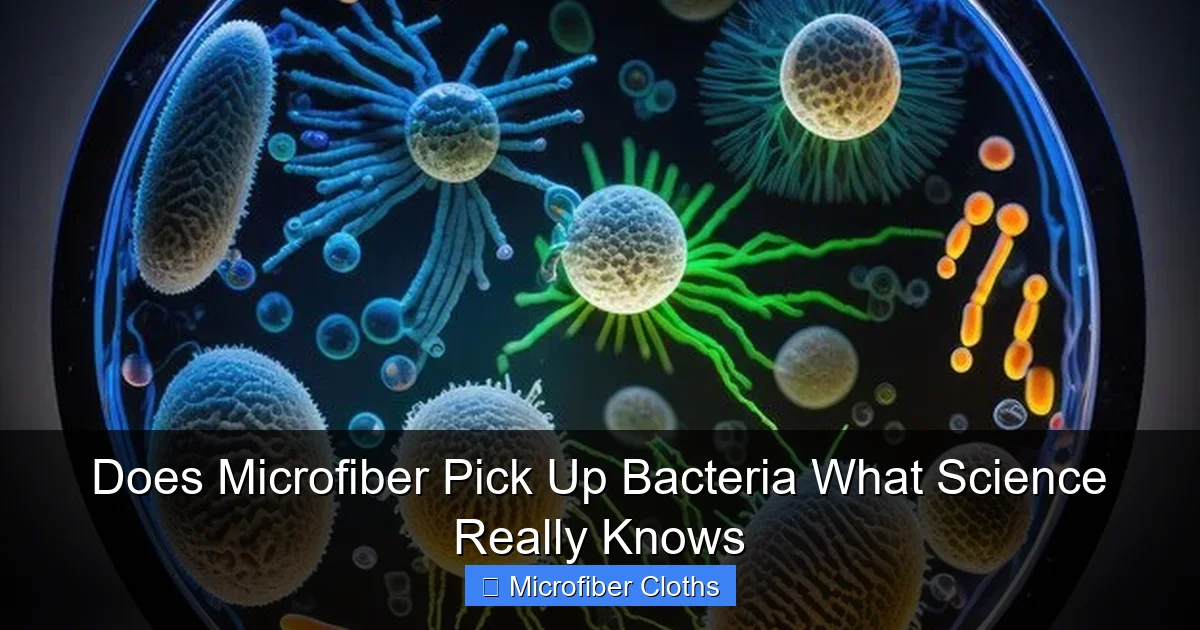
Visual guide about Does Microfiber Pick Up Bacteria What Science Really Knows
Image source: img.freepik.com
Why “Trapping” Beats “Picking Up”
When you wipe with cotton, bacteria slide off the smooth fibers and redistribute. Microfiber’s split structure locks bacteria into its valleys. Studies (like this 2020 Journal of Applied Microbiology paper) show microfiber removes 99% of E. coli and S. aureus from surfaces—but only if you use it right. The key? Mechanical action. You’re not killing germs; you’re physically removing them. This is why technique matters more than the cloth itself.
Dry vs. Damp: The Bacteria-Fighting Difference
Here’s where most people mess up:
- Dry microfiber: Best for dust, pollen, and loose debris. The static charge pulls particles in, but it won’t grab sticky bacteria effectively. Use for screens, glass, or quick dusting.
- Slightly damp microfiber: The golden rule for bacteria. Dampening (just a light mist of water) makes fibers more pliable, helping them penetrate grime and trap microbes. Never use soaking wet—excess water smears bacteria. Wring out until it’s barely moist.
Pro tip: Spray water on the surface, not the cloth. This prevents over-wetting and ensures even dampness.
Step-by-Step: Using Microfiber to Remove Bacteria Safely
Using microfiber wrong turns it into a germ-spreading tool. Follow these steps for maximum bacteria removal:
Visual guide about Does Microfiber Pick Up Bacteria What Science Really Knows
Image source: inthewash.co.uk
Step 1: Prep Your Cloth Correctly
Always start with a clean, dry cloth for dusting. For bacteria-heavy surfaces (countertops, sinks), fold your cloth into quarters. This gives you 8 clean sides to use—critical for avoiding cross-contamination. Never reuse a side that touched raw meat or dirty floors!
Step 2: The Right Wiping Motion
Forget circular scrubbing. Use long, straight strokes in one direction:
- For flat surfaces (tables, counters): Wipe edge-to-edge like mopping.
- For textured areas (faucets, handles): Use short, firm strokes following the grain.
Why this works: Straight strokes let fibers slide under bacteria instead of pushing them aside. Apply light pressure—microfiber does the work.
Step 3: Know When to Switch Sides
After 1-2 wipes on a dirty surface, flip to a clean quarter. If you see visible grime or feel resistance, it’s time. Reusing a soiled side smears bacteria onto “clean” areas. This is the #1 reason microfiber spreads germs.
Cleaning Your Microfiber: The Bacteria-Killing Protocol
Dirty microfiber cloths breed bacteria faster than your kitchen sponge. Here’s how to sanitize them without ruining fibers:

Visual guide about Does Microfiber Pick Up Bacteria What Science Really Knows
Image source: i.dailymail.co.uk
Washing: Hot Water + Vinegar (No Soap!)
Skip dish soap—it leaves residue that clogs fibers. Instead:
- Rinse cloths under hot running water immediately after use to remove loose debris.
- Toss in the washing machine with 1 cup white vinegar (not detergent!). Vinegar breaks down grease and kills bacteria.
- Wash at 60°C (140°F) for 15+ minutes. Cold water won’t sanitize.
- Run an extra rinse cycle to remove vinegar traces.
Frequency: After every 1-2 uses for high-touch areas (kitchen/bathroom). For dusting cloths, wash weekly.
Drying: Avoid These Deadly Mistakes
Never use fabric softener—it coats fibers and kills their trapping ability. Also avoid high-heat dryers; they melt microfiber. Instead:
- Air-dry flat or hang in direct sunlight (UV light sanitizes).
- If using a dryer, choose “air fluff” (no heat) for 20 minutes max.
Check for stiffness: Properly cleaned microfiber feels soft. Stiffness means residue buildup—rewash with vinegar.
Troubleshooting Common Microfiber Problems
Even pros run into issues. Here’s how to fix them:
Problem: Streaks or Haze on Glass
Cause: Residue from soap or fabric softener. Solution: Rewash with vinegar only. For immediate fix, wipe with a dry microfiber cloth using straight strokes.
Problem: Cloth Smells Musty After Washing
Cause: Bacteria survived the wash. Solution: Soak in 1:1 vinegar-water solution for 30 mins before rewashing at 60°C. Never let damp cloths sit in the hamper—rinse immediately.
Problem: Cloth Feels “Squeaky” But Isn’t Cleaning Well
Cause: Fibers are coated in grease or detergent. Solution: Wash with 2 tbsp baking soda + vinegar to strip buildup. Replace if fraying.
Conclusion: Your Microfiber Is a Germ-Fighting Tool—Not a Magic Wand
Microfiber doesn’t “pick up” bacteria—it traps them through smart engineering. But like any tool, it fails if misused. Remember: dampen lightly for bacteria, fold to avoid cross-contamination, and wash hot with vinegar after 1-2 uses. When done right, microfiber removes more germs than chemical cleaners alone. The science is clear: it’s not about the cloth, but how you use it. Ditch the myths, master the technique, and turn microfiber into your secret weapon for truly clean surfaces.
🎥 Related Video: The Secret Truth About Retainers 😳 #shorts
📺 The Bentist
The Secret Truth About Retainers #shorts LIKE AND SUBSCRIBE FOR MORE! also check out my other longer videos!