
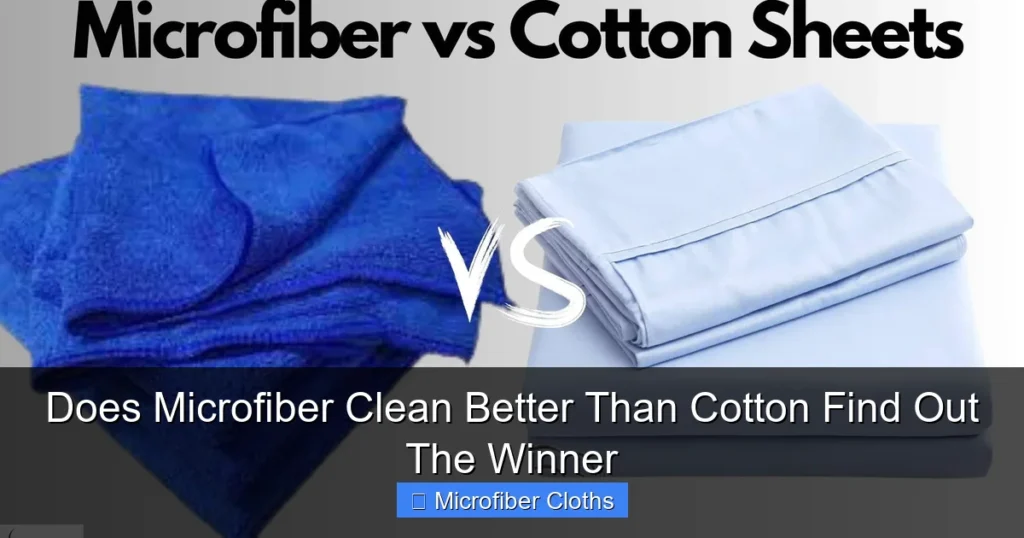
Microfiber generally cleans better than cotton due to its ultra-fine fibers that trap dirt and grime electrostatically, leaving surfaces streak-free and lint-free. While cotton is absorbent, it often pushes dirt around and leaves fibers behind. For most cleaning tasks, microfiber is the superior choice for effective, efficient results.
Key Takeaways
- Microfiber’s secret is its structure: Ultra-fine synthetic fibers (smaller than cotton) create more surface area to trap dirt, dust, and oils electrostatically, not just absorb them.
- Superior streak and lint-free results: Microfiber leaves surfaces virtually residue-free, unlike cotton which often sheds fibers and can leave streaks, especially on glass or screens.
- More efficient with less water: Microfiber’s high absorbency (up to 7x its weight) means you often need less water or cleaner, reducing waste and drying time.
- Durability and reusability win: Quality microfiber lasts hundreds of washes without degrading performance, while cotton wears out faster and loses effectiveness.
- Cotton has niche uses: Cotton excels for heavy grease, applying finishes, or when you need maximum initial absorbency for large liquid spills (but microfiber often cleans the residue better afterward).
- Proper care is crucial: Washing microfiber correctly (no fabric softener, low heat) maintains its cleaning power far longer than cotton.
Does Microfiber Clean Better Than Cotton? Find Out The Winner
Tired of streaky windows, dusty surfaces that seem to reappear instantly, or cloths that leave more lint than they remove? You’re not alone. The age-old debate between microfiber and cotton cloths is constant in kitchens, garages, and cleaning closets. Which one truly gets the job done better? The answer isn’t just about preference – it’s rooted in science and real-world performance. In this guide, we’ll cut through the hype, compare microfiber and cotton head-to-head, and give you the clear winner for most cleaning tasks. You’ll learn why microfiber often outperforms cotton, how to use it effectively, and when cotton might still have a place. Get ready to transform your cleaning routine!
The Science Behind the Clean: Why Fiber Matters
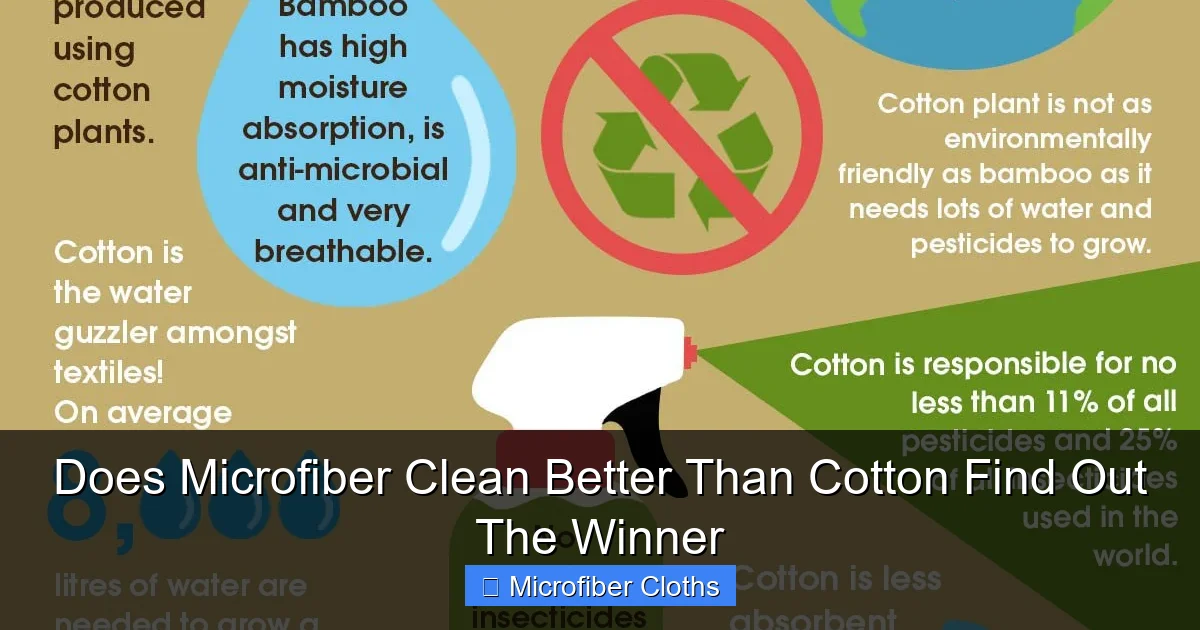
Visual guide about Does Microfiber Clean Better Than Cotton Find Out The Winner
Image source: bamigo.com
Before diving into comparisons, understand *why* the material makes such a difference. It all boils down to fiber structure and physics.
How Cotton Cleans (The Traditional Approach)
Cotton is a natural fiber. Think of it like a bundle of tiny, relatively thick, hollow tubes. When you wipe with cotton:
- Absorption is key: It soaks up liquids well initially, especially large spills.
- Surface contact is limited: The thicker fibers don’t conform perfectly to microscopic surface textures.
- It pushes dirt: Because it lacks strong electrostatic properties, cotton often smears or pushes fine dust and grease around rather than trapping it. Imagine trying to pick up sand with a wide broom vs. a fine sieve.
- Lint is inevitable: Cotton fibers break off easily, leaving behind visible lint, especially on smooth surfaces like glass or TVs.
Cotton relies heavily on the liquid cleaner you apply to do the lifting work. It’s a passive absorber.
How Microfiber Cleans (The Modern Marvel)
Microfiber is made from ultra-fine synthetic fibers (usually polyester and polyamide/nylon), split during manufacturing. This creates fibers that are:
- Microscopically small: Often 1/100th the diameter of a human hair – *much* finer than cotton fibers.
- Split and wedge-shaped: This creates countless tiny hooks and channels along each fiber.
- Electrostatically charged: As you wipe, friction generates a static charge that *attracts* and *traps* dust, dirt, and grease particles like a magnet.
This unique structure means microfiber doesn’t just absorb; it actively *captures* contaminants deep within its fibers. It conforms to surfaces, reaching into microscopic grooves cotton simply can’t access. This is the core reason microfiber clean better than cotton for most everyday tasks.
Head-to-Head: Microfiber vs. Cotton – The Critical Comparisons
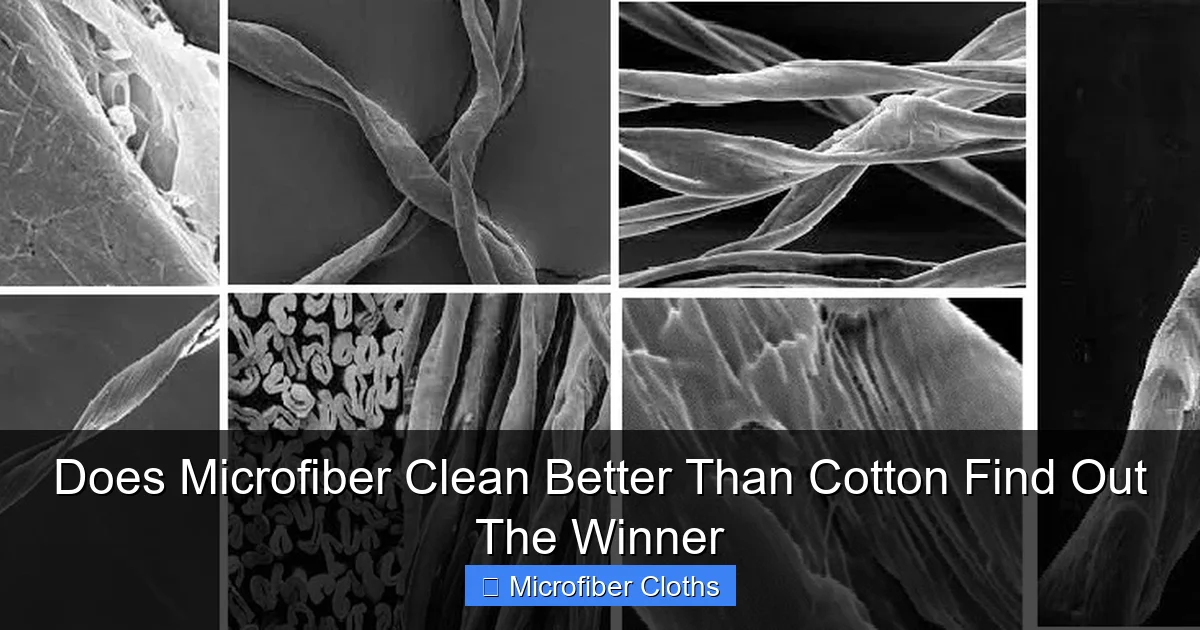
Visual guide about Does Microfiber Clean Better Than Cotton Find Out The Winner
Image source: textilesschool.com
Let’s break down the key performance areas where these materials differ significantly.
1. Dirt and Dust Trapping Ability
- Microfiber: Wins decisively. The electrostatic charge and split-fiber structure grab and hold onto fine particles (like pollen, skin cells, and smoke residue) effectively. Wiping a dusty shelf with microfiber leaves it genuinely clean.
- Cotton: Struggles. It may pick up larger debris but often redistributes fine dust. You might see the dust settle back onto the surface after wiping. It’s like using a fluffy towel on a dusty car – it moves the dust, not removes it.
Winner: Microfiber (By a large margin for fine particles)
2. Streak-Free Performance (Glass, Screens, Mirrors)
- Microfiber: Excels here. Its ability to absorb oils (fingerprints, smudges) and trap residue without leaving lint is unmatched. A damp microfiber cloth followed by a dry one often achieves a crystal-clear finish with minimal effort, even on challenging surfaces like smartphone screens.
- Cotton: Prone to streaks and lint. Cotton fibers shed, leaving visible trails. It also tends to leave behind residue from cleaners or its own fibers, requiring multiple wipes and often still not achieving true clarity.
Winner: Microfiber (Essential for streak-free results)
3. Absorbency and Liquid Handling
- Microfiber: Highly absorbent (can hold 5-7 times its weight in water), but its *real* strength is capillary action. It draws liquid *into* its fibers quickly and holds it securely, preventing drips. Ideal for mopping up spills without spreading them.
- Cotton: Also absorbent, but the liquid sits *on* the surface of the fibers initially. It can feel “wetter” and is more likely to drip or spread spills as you wipe. It holds less liquid overall compared to microfiber of the same size.
Winner: Microfiber (More efficient liquid capture and retention)
4. Linting and Residue
- Microfiber: Designed to be lint-free. High-quality microfiber sheds very little, even after many washes. Leaves surfaces clean without adding fibers.
- Cotton: Naturally sheds fibers. You’ll constantly find cotton lint on your cleaned surfaces, especially noticeable on dark fabrics, electronics, or glass. This is a major frustration for many users.
Winner: Microfiber (Virtually lint-free)
5. Durability and Longevity
- Microfiber: Extremely durable when cared for properly. Quality microfiber can withstand hundreds of washes without losing its cleaning power or structure. The split fibers remain effective.
- Cotton: Wears out faster. Fibers break down, become less absorbent, and shed more lint over time. It loses its effectiveness relatively quickly, especially with frequent washing.
Winner: Microfiber (Much longer functional lifespan)
6. Water and Cleaner Efficiency
- Microfiber: Often cleans effectively with just water, especially for dust and light grime, thanks to its electrostatic action. For tougher jobs, you typically need *less* cleaner because the cloth itself is doing more of the work. Saves money and reduces chemical use.
- Cotton: Usually requires more liquid cleaner to be effective, as it relies on the chemical action rather than its own trapping ability. Can lead to overuse of cleaners and more residue.
Winner: Microfiber (More efficient, eco-friendlier)
How to Use Microfiber Like a Pro (Step-by-Step Guide)

Visual guide about Does Microfiber Clean Better Than Cotton Find Out The Winner
Image source: sustainablereview.com
Knowing microfiber clean better than cotton is one thing; using it correctly is key to unlocking its full potential. Follow these steps:
Step 1: Choose the Right Microfiber Cloth
- Weight Matters: Look for cloths labeled 300-400 GSM (grams per square meter) for general cleaning. Heavier (500+ GSM) is great for cars or heavy-duty tasks. Avoid very thin, cheap cloths (<200 GSM).
- Weave Type: Terry weave (looped) is best for drying and heavy spills. Waffle weave is excellent for glass and streak-free finishes. Flat weave is good for dusting.
- Color Coding: Use different colors for different areas (e.g., blue for kitchen, green for bathroom) to prevent cross-contamination.
Step 2: Pre-Treat Tough Stains (If Needed)
- For dried-on grime or grease, lightly dampen the microfiber cloth with water or a *small* amount of appropriate cleaner.
- Gently rub the stain in a circular motion. Microfiber’s abrasiveness is low, so avoid harsh scrubbing which can damage surfaces.
- Let the cleaner sit for 30-60 seconds to break down the stain before wiping.
Step 3: The Wiping Technique
- Dampen, Don’t Soak: For most tasks (dusting, cleaning surfaces), lightly mist the cloth with water or cleaner. It should be damp, not dripping wet. Excess water can cause streaks.
- Use the Right Pressure: Apply light to moderate pressure. Let the microfiber’s structure do the work – you don’t need to scrub hard.
- Wipe in One Direction: For streak-free results on glass or smooth surfaces, wipe in straight lines (e.g., top to bottom, then left to right), not circles. Change the cloth section frequently as it gets dirty.
- Fold for Fresh Surface: Microfiber cloths have multiple folds. Use a clean section for each new area to avoid spreading dirt.
Step 4: Drying for Perfection
- After cleaning a surface (especially glass, mirrors, or stainless steel), use a *dry*, clean microfiber cloth to buff the area.
- Use light, overlapping strokes. The dry microfiber will absorb any remaining moisture and lift residual streaks, leaving a flawless finish.
- Never use paper towels for drying after microfiber cleaning – they can reintroduce lint and streaks.
Step 5: Proper Cleaning and Storage
- Wash Separately: Wash microfiber cloths alone or only with other microfiber. Avoid washing with cotton towels, as cotton lint will embed in the microfiber, ruining its effectiveness.
- Skip the Softener: Fabric softener coats the fibers, destroying their electrostatic charge and absorbency. Use only detergent.
- Low Heat Drying: Tumble dry on low heat or air dry. High heat can melt the synthetic fibers.
- Store Clean and Dry: Keep washed microfiber in a clean, dry place. Avoid damp storage which can lead to mildew.
Troubleshooting Common Microfiber Issues
Even the best microfiber can have hiccups. Here’s how to fix them:
Problem: My Microfiber Leaves Streaks
- Cause: Usually too much water/cleaner, a dirty cloth, or using a cloth washed with fabric softener.
- Solution: Use a *damp* (not wet) cloth. Ensure the cloth is clean and free of softener residue (rewash without softener). Always follow with a dry microfiber buff. For glass, try a dedicated glass microfiber (often waffle weave).
Problem: My Microfiber Feels Stiff or Less Absorbent
- Cause: Buildup of detergent, fabric softener, or oils from surfaces. Washed with cotton lint embedded.
- Solution: Rewash cloths with hot water (check care label), 1/4 cup white vinegar (no detergent), and no softener. Run an extra rinse cycle. Avoid washing with cotton items.
Problem: Cloths Smell Musty After Washing
- Cause: Damp storage, insufficient rinsing of detergent, or washing at too low a temperature.
- Solution: Ensure cloths are completely dry before storing. Wash with hot water (if fabric allows) and a bit of baking soda. Use the correct amount of detergent and ensure full rinsing.
Problem: Cloths Are Shedding Fibers
- Cause: Very low-quality microfiber or excessive high-heat drying.
- Solution: Invest in higher GSM (300+) microfiber from reputable brands. Always dry on low heat. Some initial shedding is normal with *very* cheap cloths, but it should stop quickly.
When Cotton Might Still Be Useful (The Niche Cases)
While microfiber clean better than cotton for the vast majority of tasks, cotton has a few specific roles:
- Heavy Grease/Oil Spills: For initial cleanup of large, heavy grease spills (like cooking oil), a thick cotton rag can absorb the bulk quickly before switching to microfiber for the final clean.
- Applying Finishes: When applying wood polish, wax, or leather conditioner, some prefer the consistent, non-linting application of a high-quality cotton cloth (like flannel) to avoid microfiber potentially leaving a slight haze.
- Extreme Rough Surfaces: On very rough, abrasive surfaces where microfiber might snag (rare), cotton might be a last resort.
However, even in these cases, microfiber often performs the *final* cleaning step better. For everyday dusting, wiping counters, cleaning glass, and most surface cleaning, microfiber is the clear winner.
Conclusion: The Undisputed Cleaning Champion
So, does microfiber clean better than cotton? The evidence is overwhelming: **yes, for the vast majority of cleaning tasks, microfiber is significantly superior.** Its unique split-fiber structure, electrostatic charge, and lint-free performance allow it to trap dirt and grime at a microscopic level that cotton simply cannot match. You get streak-free surfaces, efficient liquid handling, long-lasting durability, and the ability to clean effectively with less water and cleaner.
Cotton has its place for specific, heavy-duty initial absorption or application tasks, but it falls short in the critical areas of fine particle removal, streak prevention, and lint control. By understanding *how* microfiber works and following the proper usage and care steps outlined in this guide, you’ll unlock its full potential. Ditch the streaky, linty results of cotton. Invest in a few quality microfiber cloths, use them correctly, and experience the difference a truly effective cleaning tool makes. Your surfaces – and your cleaning routine – will thank you. Make the switch today and see why microfiber is the undisputed winner!
🎥 Related Video: Clean smarter, not harder! Meet the Self-Twisting Water Mop for a spotless home. #MopMagic
📺 DHgate
https://cutt.ly/VefW6I95 $10.75 with freeshipping!❤️Save up to 70% off.New Buyer Coupon Pack $62 OFF explore other …