
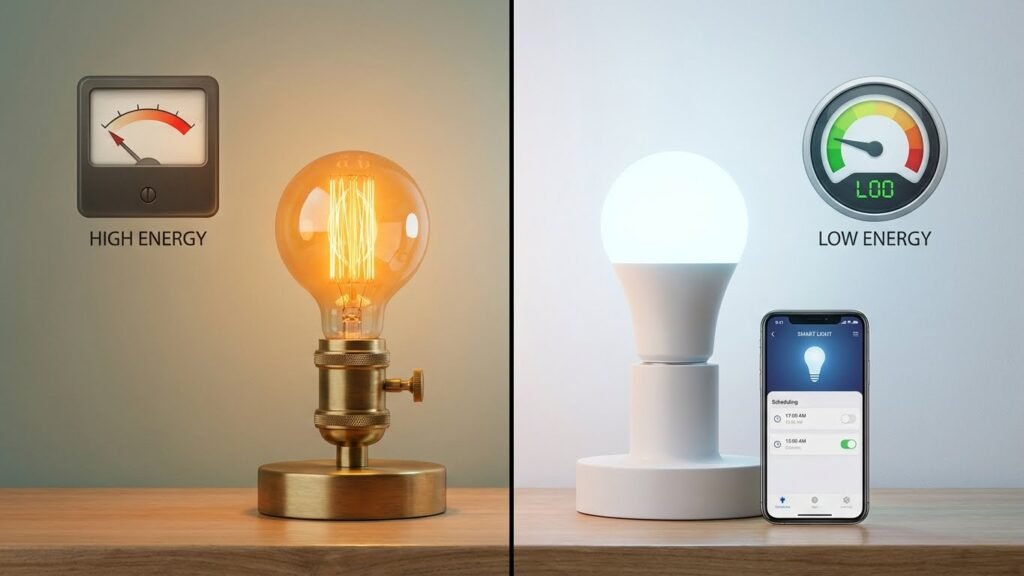
Smart bulbs usually use the same LED technology as regular LED bulbs, so they save a lot of energy compared with old incandescent bulbs. You will generally use about the same watts for light output with a smart LED as with a regular LED, and the extra electricity for smart features is very small.
If you want to lower your bills, smart bulbs can help by letting you schedule lights, dim them, or turn them off remotely so you waste less power. Some smart bulbs draw a tiny amount of standby power when “off,” but that hardly changes overall savings from using efficient LEDs.
Key Takeaways
- Smart LEDs use similar power for light as regular LEDs and are far more efficient than incandescent bulbs.
- Smart features can cut wasted lighting by letting you control, dim, and schedule lights.
- Standby power exists but usually makes only a small difference in total energy use.
How Smart Bulbs Work
Smart bulbs use LED light sources, a small wireless radio, and a tiny processor to give you remote control, color change, and automation. They draw a small amount of power even when “off” so they can listen for commands and keep schedules.
Technology Behind Smart Bulbs
Smart bulbs use LEDs for light, which are far more efficient than incandescent filaments. The LED module converts electrical current into light with little wasted heat. A built-in driver regulates voltage and current so the LED runs safely and lasts thousands of hours.
Each bulb also contains a wireless chip for communication. Common protocols include Wi‑Fi, Bluetooth, Zigbee, and Z‑Wave. Wi‑Fi connects directly to your router for remote control over the internet. Zigbee and Z‑Wave use a hub to reduce Wi‑Fi traffic and improve battery life of other devices.
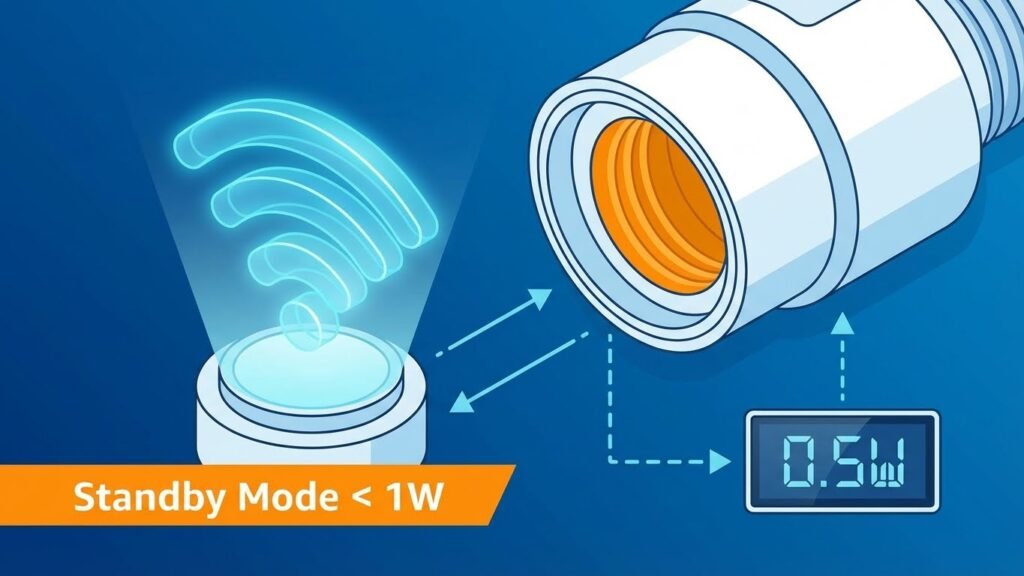
A small microcontroller runs the firmware that handles color, dimming, schedules, and firmware updates. Because that electronics stack needs power, bulbs use a fraction of a watt in standby. That standby draw is usually under 1 W on modern models.
Types of Smart Lighting
You can choose bulbs that replace standard A19 bulbs, GU10 spotlights, or tube-style fixtures. Most smart bulbs are full-featured RGBW models that let you set white temperature and millions of colors. Simpler models offer only tunable white or fixed white with dimming.
Control methods vary. Wi‑Fi bulbs work without extra hardware but can add load to your network. Bulbs using Zigbee or Z‑Wave require a hub but let devices form a mesh network, improving range and reliability. Bluetooth bulbs pair directly with your phone but offer limited range and no built‑in remote internet access.
You’ll also find smart switches and smart bulbs that work together. Smart switches replace wall switches and can control regular bulbs, while smart bulbs give per‑lamp features like color and per‑bulb scheduling. Choose based on whether you want per‑lamp control or whole‑room simplicity.
Energy Efficiency of Smart Bulbs
Smart bulbs usually use LED chips that need far less wattage than incandescent bulbs and offer features that cut wasted light and runtime. They draw a small amount of power when idle but save energy through dimming, scheduling, and sensors.
Comparison With Traditional Bulbs
Smart LEDs typically use about 8–12 watts to match the light of a 60-watt incandescent. That means you get the same brightness while using roughly 80% less electricity.
You also gain control options that reduce runtime. Scheduling and motion sensors keep lights off when you don’t need them. Voice and app control can prevent lights from being left on by accident.
Consider lifetime costs. Smart bulbs cost more up front, but they last 15,000–25,000 hours versus 1,000 hours for incandescent bulbs. Fewer replacements and lower energy bills usually offset the higher purchase price.
Energy Consumption Metrics
Look at three numbers: wattage, lumens, and standby draw. Wattage tells how much power the bulb uses when lit. Lumens tell how bright the bulb is. Compare lumens per watt to judge efficiency.
Standby draw is small but real. Many smart bulbs use 0.5–1.5 watts when idle to maintain wireless connections. Multiply that by hours per day to see its annual cost.
Use examples: a 10 W bulb at 3 hours/day uses ~11 kWh/year. Add a 1 W standby always-on adds ~8.8 kWh/year. That standby can matter if you have many bulbs, but active savings from less runtime usually outweigh it.
Smart Bulb Efficiency Ratings
Check for ENERGY STAR or equivalent labels to confirm tested efficiency and performance. ENERGY STAR-rated smart bulbs meet strict lumen-per-watt and standby requirements.
Also read lumens-per-watt (lm/W) on the package. Higher values mean more light for the same power. Aim for 80–120 lm/W for common LED smart bulbs.
Finally, check lifetime and warranty info. Longer rated life and a solid warranty reduce total cost and waste. Ratings and labels give you objective numbers to compare models before you buy.
Features Impacting Energy Use
Smart bulb features can cut or add to your energy use depending on how you set them. Dimming, remote scheduling, and sensor integration change when and how long lights draw power.
Dimming Capabilities
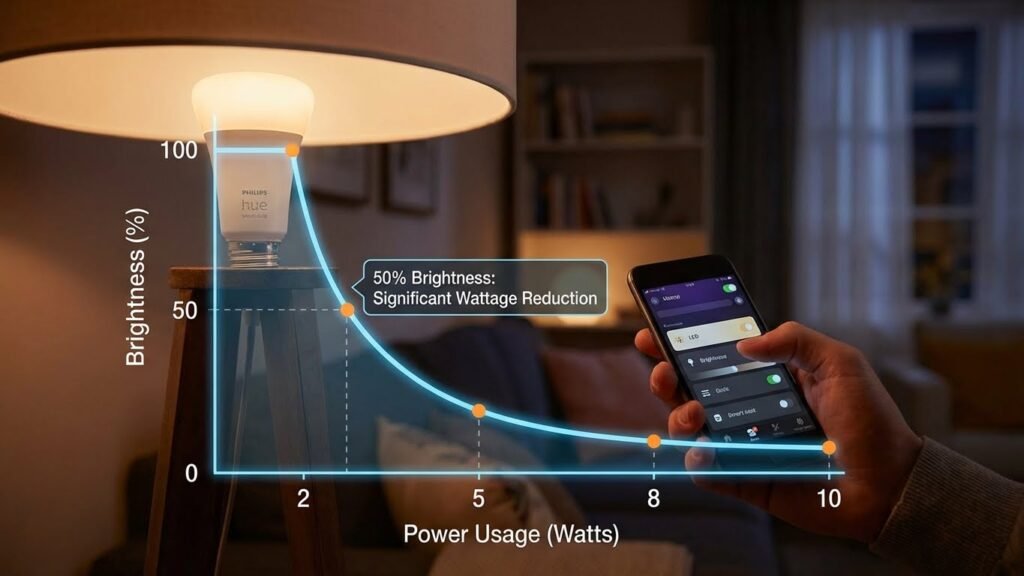
Dimming lowers bulb brightness and reduces power draw, but not in a perfectly linear way. If you dim an LED smart bulb to 50%, it typically uses around 30–60% of its full power, depending on the bulb’s driver and firmware. Older or cheaper bulbs may still draw a visible baseline of power even at low dim settings.
Use dimming for rooms where full brightness is rarely needed: living rooms, bedrooms, and hallways. Remember that color-changing bulbs sometimes use slightly more power when producing certain colors or white temperatures. Check the bulb’s tech specs for measured wattage at common dim levels if you want exact savings.
Remote Control and Scheduling
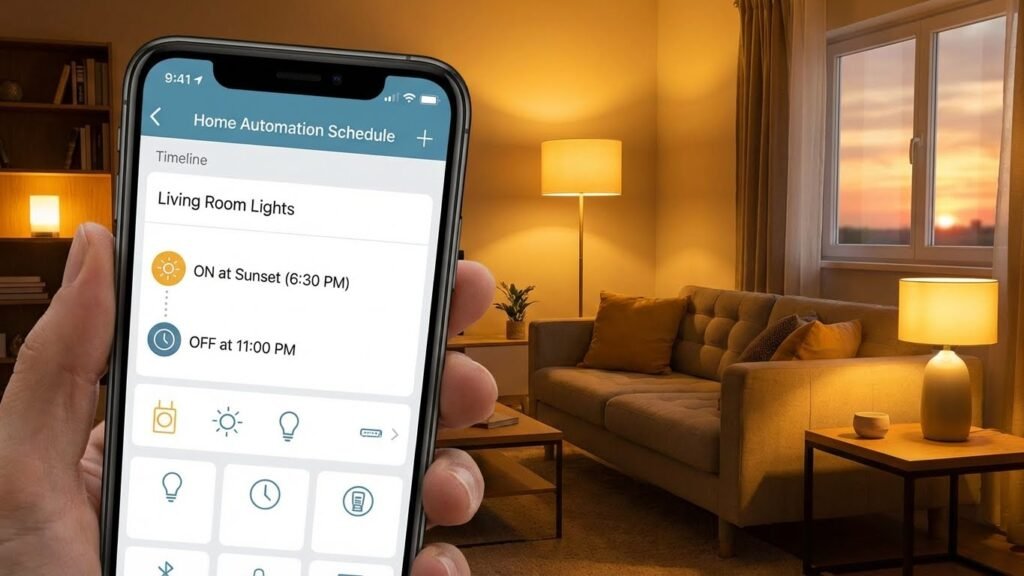
Remote control and scheduling let you limit the hours lights are on without needing to remember switches. You can set lights to turn off at specific times, fade on before you arrive, or follow different schedules on weekdays and weekends. That prevents lights from running all night and cuts wasted hours.
Schedules work best when you match them to real routines. Use the app to set zone-specific rules (kitchen on until midnight, porch off after 11 PM). Keep in mind that scheduled wake-up scenes with low-level light use only a few watts compared to full brightness.
Integration With Sensors
Motion and ambient-light sensors make smart bulbs more efficient by turning lights on only when needed. Motion sensors typically trigger within seconds and turn lights off after a set timeout you control. Ambient-light sensors stop lights from coming on during daylight, saving power in rooms with windows.
Place sensors to cover actual traffic paths, not just central zones, to avoid false offs. Combine motion sensors with short auto-off timers in low-traffic areas. Note that sensors and bridges themselves use small amounts of standby power, but the net effect usually lowers total lighting energy use.
Comparing Lifespan and Durability
Smart LED bulbs last far longer than incandescent bulbs and resist common failure modes better. You’ll find big differences in rated hours, real-world life, and how brightness holds up with use.
Average Lifespan
Most smart LED bulbs are rated between 15,000 and 50,000 hours.
That means if you run a bulb 3 hours per day, a 25,000-hour bulb lasts about 23 years. Ratings vary by brand, chip quality, and heat management.
Look at the product spec for “rated life” and any warranty length. Warranties of 2–5 years often indicate the maker’s confidence. Cheaper smart bulbs may advertise similar hours but use lower-quality parts that shorten life in real use.
Factors that shorten lifespan include high ambient temperature, frequent on/off cycling, and poor fixture ventilation. Choosing bulbs with good heat sinks and buying from reputable brands reduces early failures.
Performance Over Time
Brightness and color accuracy usually decline slowly rather than failing suddenly. LEDs dim gradually; you’ll notice reduced lumen output or color shift after thousands of hours.
Smart features—Wi‑Fi, Bluetooth, or integrated electronics—can fail before the LED itself. Firmware bugs or power-supply issues may stop the smart functions while the light still works in a basic on/off fixture.
To protect performance:
- Keep bulbs in fixtures with airflow.
- Avoid excessive switching.
- Update firmware when manufacturers release fixes.
If a bulb loses smart functions but still lights, you can often use it as a regular LED bulb.
Environmental Impact
Smart bulbs cut operating energy and add new material and waste considerations. You save electricity while facing different manufacturing and disposal trade-offs that matter for long-term environmental effect.
Resource Consumption
Smart bulbs use LED technology, which draws far less power than incandescent or halogen bulbs during use. That lowers your home’s electricity demand and reduces carbon emissions tied to power generation. However, smart bulbs contain more electronic parts than simple LEDs — microcontrollers, wireless chips, and batteries in some models — and those components require metals like copper, gold, and rare earth elements.
Manufacturing these electronics consumes energy and raw materials. If you replace many bulbs at once, the embedded carbon in production can partially offset first-year energy savings. Choose bulbs with long rated lifetimes (20,000+ hours) and reputable efficiency certifications to maximize benefits. Buying fewer, higher-quality smart bulbs reduces repeated manufacturing impacts.
Disposal and Recycling
Smart bulbs are not always accepted in standard bulb recycling streams because of their electronics. The small circuit boards, solder, and sometimes lithium coin cells mean you should not toss them in regular curbside recycling or landfill bins. Improper disposal can release heavy metals and complicate material recovery.
Locate electronics recycling centers or retailer take-back programs that accept smart bulbs. Some manufacturers provide mail-back or in-store recycling options. When possible, remove and recycle internal batteries separately. Recycling recovers metals and reduces the need for new mining, cutting long-term environmental costs tied to your smart lighting choices.
Cost Effectiveness Over Time
Smart bulbs cost more at purchase but usually cut your energy and replacement costs later. You should weigh upfront price, expected lifespan, and how you plan to use the bulbs.
Upfront Investment vs. Long-Term Savings
Smart LED bulbs typically cost between $10 and $50 each, depending on brand and features like color changing and Wi‑Fi or Zigbee compatibility. You pay more up front than for a basic LED, which might be $2–$10.
Lifespan matters. A good smart LED often lasts 15,000–25,000 hours, reducing how often you replace bulbs. That lowers maintenance and replacement costs, especially in fixtures that are hard to reach.
Think about features you will actually use. Scheduling, dimming, and motion control can cut run hours and make the higher initial price worth it. If you buy bulbs for many fixtures, the savings add up faster.
Impact on Utility Bills
Smart bulbs use about the same electricity as regular LEDs while on, often consuming 6–12 watts for a 600–800 lumen light. They can save energy by turning off automatically, dimming, or using motion sensors.
Standby power is small but exists. Most smart bulbs draw under 1 watt when “off” but connected. That adds a few dollars per year per bulb at typical electricity rates.
Estimate savings by tracking hours. If a smart bulb cuts daily runtime from 4 hours to 1 hour, you save roughly 75% of that bulb’s energy use. Multiply that by your number of bulbs and local electricity cost to see real bill impact.
Practical Considerations for Consumers
Smart bulbs save energy but come with trade-offs you should weigh. Think about what devices and apps you already use, how often you switch lights, and how much you want to control scheduling or dimming.
Installation and Compatibility
Check the bulb base (A19, GU10, etc.) and the fixture size before buying. Some smart bulbs are larger and may not fit recessed cans or tight lamps.
Confirm the wireless standard: Wi‑Fi bulbs connect directly to your router, while Zigbee or Z‑Wave bulbs need a hub. If you already have a smart hub (like a Hue Bridge or a smart-home hub), pick bulbs that list that brand for easier setup.
Look for platform support. If you use Alexa, Google Home, or HomeKit, make sure the bulb explicitly names that system. Also check app reviews for stability; poorly rated apps often cause disconnects.
Finally, note firmware updates. You’ll need occasional updates for security and features. If a manufacturer stops supporting a bulb, you may lose smart features even if the light still works.
Potential Drawbacks
Expect a higher upfront cost than standard LEDs. Smart bulbs typically cost several times more per bulb, which can delay payback from energy savings.
Some smart features can actually use extra power. Idle power draw for Wi‑Fi radios or cryptographic modules can add a small, continuous load. Over many bulbs, that adds to your bill.
Relying on apps or cloud services can cause frustration. If the internet or the company’s servers go down, scheduled scenes or remote control may fail. Local-control options (Zigbee, local API) reduce this risk.
Privacy and security matter. Use strong router passwords and update bulb firmware. Without these steps, you increase the risk of unauthorized access to your network.
Future Trends in Smart Lighting
You will see smarter bulbs tie into more devices and systems through the Internet of Things (IoT). This lets your lights work with thermostats, sensors, and security systems to cut wasted energy. Automation means lights dim or turn off based on real use, not just timers.
AI and machine learning will make bulbs learn your habits and adjust settings for comfort and savings. Over time, the system will fine-tune brightness, color, and schedules to match your routine. That reduces run time and energy waste without daily effort from you.
Expect continued improvements in LED efficiency and driver electronics. New chips and better heat management mean bulbs use fewer watts for the same light output. This lowers both power use and replacement costs for your home or office.
Battery-backed and solar-compatible smart fixtures will become more common for outdoor and remote uses. You can run lights during outages or in off-grid spots while still saving energy. Sensors and adaptive controls will help maximize the limited power these setups have.
Security and privacy features will grow alongside energy tools. Manufacturers will add encrypted connections and local-control options so your data and automations stay under your control. That gives you energy benefits without unnecessary risk.
Key trends at a glance:
- AI-driven automation for personalized savings
- Better LED efficiency and electronics
- Greater IoT integration with home and building systems
- Solar/battery options for resilient, low-energy lighting
- Stronger security and local control features
FAQs
Do smart bulbs use more energy than regular LED bulbs?
No. Smart bulbs use about the same amount of light-producing power as regular LEDs. They may draw a small amount of extra energy for wireless features when idle, usually less than 1 watt.
Will smart bulbs raise my electricity bill a lot?
Probably not. The tiny standby use adds only a few cents a month per bulb. You can often save more by using schedules, dimming, and automation to cut overall on-hours.
Are smart bulbs worth it for energy savings?
Yes, if you use their features. Automation, motion sensors, and remote control help reduce wasted light. If you never use those features, savings are similar to regular LEDs.
How can I maximize efficiency with smart bulbs?
Use schedules, dim scenes, and motion-triggered off settings. Turn off or unplug hubs if they waste standby power. Choose ENERGY STAR or low-standby models when possible.
Do smart bulbs last as long as regular LEDs?
Yes. They use LED technology so lifespan is similar. Some models may have extra electronics that can affect longevity, so check warranty and reviews.
Are there privacy or network downsides that affect efficiency?
Not for energy directly, but poor network setups can cause bulbs to stay awake more often. Keep firmware updated and use recommended hubs or protocols to avoid extra power draw.
How do I compare bulbs?
Look at lumens per watt, standby wattage, and ENERGY STAR labeling. Also check app features and whether those features will actually reduce your usage.
Conclusion
Smart bulbs use LED technology, so they use far less energy than incandescent bulbs and are similar to regular LED bulbs in baseline efficiency. You still save power when you dim lights, use schedules, or automate off-times.
Standby power from smart features is small — usually under 1 watt. That adds a tiny constant draw, but your total lighting energy typically stays much lower than old-style bulbs. For detailed specs and safety, check the U.S. Department of Energy and EPA guidance on lighting efficiency.
Your savings depend on how you use the bulbs. If you leave lights on all the time, smart features help less. If you use automation, timers, or motion sensors, you cut waste and costs.
Consider bulb quality and ecosystem compatibility. Choose ENERGY STAR-rated models and compare lumens per watt to judge efficiency. Matching bulb type to fixture and use will give you the best results.
If you want help choosing models or calculating payback, tools from your utility or the Department of Energy can guide you. They offer calculators and tips to estimate real-world savings for your home.