
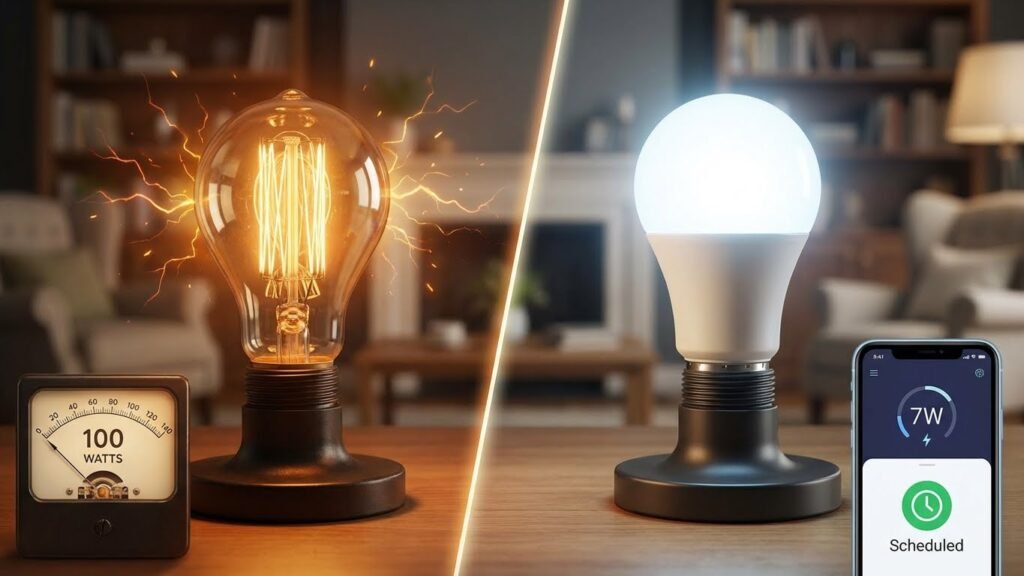
You can save electricity with smart bulbs, but how much you save depends on how you use them and what you replace. Smart bulbs use LED technology that cuts lighting energy big compared to incandescents, and features like scheduling, dimming, and motion control can trim your bill further.
Smart bulbs draw a tiny amount of standby power, but that extra draw is usually much smaller than the savings from smarter use. If you replace old incandescent or halogen bulbs and use schedules, dimming, or motion sensors, smart bulbs will lower your electricity use; compared to regular LED bulbs, the savings are smaller and depend on your habits.
Curious about real cost differences, best setup tips, and when smart bulbs make the most sense for your home? Keep going to see clear comparisons, simple strategies to maximize savings, and common pitfalls to avoid.
Key Takeways
- Smart bulbs cut energy compared to incandescent lighting.
- Savings versus regular LEDs depend on your usage and features.
- Use scheduling and motion controls to improve real-world savings.
How Smart Bulbs Work
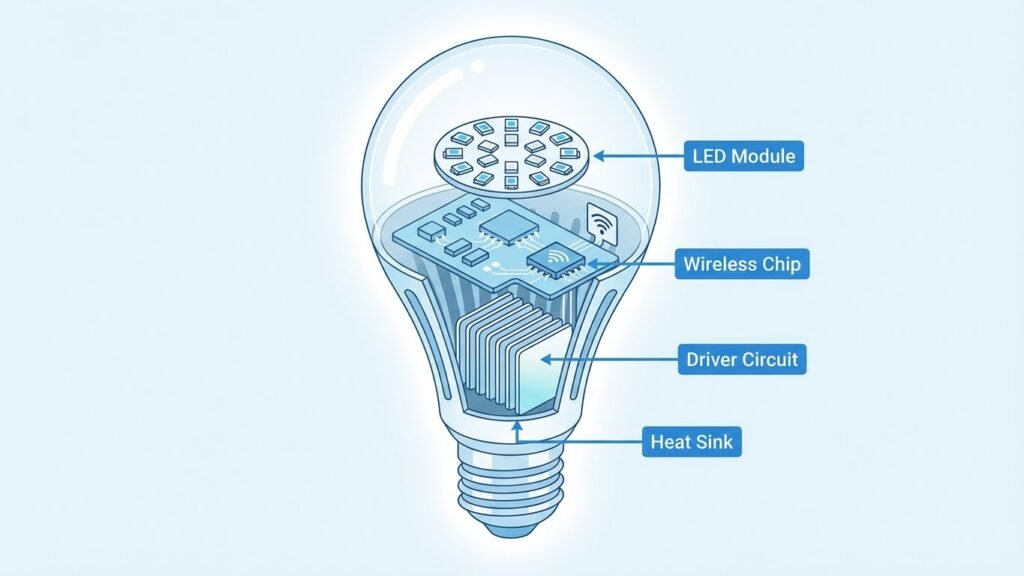
Smart bulbs connect to your devices and let you control brightness, color, and schedules. They run on LED technology and use wireless protocols to receive commands while drawing small standby power.
Technology Behind Smart Bulbs
Smart bulbs use LED chips for light. LEDs convert electricity into light far more efficiently than incandescent filaments. The bulb includes a driver circuit that regulates current and a small radio or wireless module for communication.
Common wireless standards are Wi‑Fi, Bluetooth, Zigbee, and Z‑Wave. Wi‑Fi bulbs connect directly to your router and work without a hub, but they use more network power. Zigbee and Z‑Wave bulbs need a hub but use less energy and create a mesh network that improves reliability.
Bulbs also have firmware — small software that handles pairing, updates, and features like color temperature control and dimming. Firmware updates can add features or fix bugs, so secure, up‑to‑date firmware matters for reliability and privacy.
Types of Smart Bulbs
You’ll find several smart bulb types: tunable white, color‑changing, dimmable white, and specialty bulbs (filament style, floods, and decorative shapes).
- Tunable white bulbs let you change color temperature (warm to cool).
- Color‑changing bulbs offer millions of colors plus white options.
- Dimmable white bulbs only adjust brightness but often cost less.
Connection options vary: Wi‑Fi (no hub), Bluetooth (direct control nearby), and Zigbee/Z‑Wave (hub required). Choose based on range, number of bulbs, and whether you want local control or cloud features. Also check lumen output and equivalent wattage to match brightness to your old bulbs.
Smart Bulbs vs. Traditional Bulbs
Smart bulbs are LED-based, while traditional bulbs include incandescent and CFL types. LEDs use 70–90% less energy than incandescent bulbs for similar light output, which reduces electricity use.
Smart bulbs draw a small amount of standby power—usually less than 1 watt—so they use slightly more electricity when “off” compared to a true mechanical switch. However, built‑in dimming, scheduling, and motion integration let you cut overall runtime and lower energy use compared to always‑on traditional bulbs.
Consider cost: smart bulbs cost more up front but last much longer and can lower your energy bill through automation. Match brightness (lumens) and color temperature when replacing old bulbs to get the same visual result.
Energy Efficiency of Smart Bulbs
Smart bulbs use LED chips and low standby power. You can expect much lower running watts than incandescent bulbs and small extra draw for smart features. Scheduling and dimming let you cut hours of use and peak wattage.
Wattage and Power Consumption
Smart bulbs typically list wattage like regular LEDs. A common smart bulb uses about 8–12 watts to match a 60W incandescent. Check the bulb’s lumen rating: 800–900 lumens is roughly a 60W equivalent.
Smart features add standby draw. Many bulbs use under 1 watt when “off” but some older or Wi‑Fi models draw 0.5–1.5 watts. Multiply that standby by hours per day to estimate extra kWh per month.
To compare costs, use this quick formula:
- Watts ÷ 1000 × hours used per day × days per month × electricity rate = monthly cost. This lets you see whether smart features change your bill in a meaningful way.
LED Technology and Savings
You get major savings from LED light engines in smart bulbs. LEDs convert most energy to light, not heat, so they use about 70–85% less energy than incandescents for the same brightness.
Lifespan matters. LEDs often last 15,000–25,000 hours, so you replace bulbs less often. That lowers material and maintenance costs in places like hallways or high ceilings.
Color tuning and dimmability also save energy. Running a bulb at 50% brightness often reduces power draw roughly proportionally, so dimming directly cuts kWh used.
Smart Controls and Automation
Smart controls let you schedule lights to run only when needed. You can set scenes, timers, or occupancy rules that prevent lights from staying on for hours.
Remote control and geofencing stop lights from being left on when you leave. Automation can combine sensors with bulbs so lights turn off after no motion is detected, which saves energy in rarely used rooms.
Use energy-monitoring features in apps to track actual consumption. That data shows whether your schedules and scenes actually reduce kWh and helps you tweak settings for better savings.
Factors Affecting Electricity Savings
Your actual savings depend on how you use the bulbs, how they connect with other devices, and which smart features you enable. Small choices—like scheduling and dimming—have the biggest impact on energy use.
Usage Patterns
How long and when you leave lights on drives most savings. If you replace incandescent bulbs and use smart LEDs for rooms that are on many hours (living room, kitchen), expect larger reductions. Short, infrequent use (closets, bathrooms) yields smaller gains because LEDs already use little power.
Occupancy sensors and motion-triggered rules cut wasted runtime when people leave rooms. Remote control helps you turn off lights you forgot. Standby power is small — usually under 1 watt per bulb — but it adds up if you have many bulbs and rarely power them down.
Integration With Smart Home Ecosystems
Connecting bulbs to a hub or smart assistant changes how well automation works. Zigbee or Z-Wave hubs often allow lower latency and local control, which reduces reliance on cloud-based schedules and can save energy during outages. Wi‑Fi bulbs are easier to set up but may not offer as robust scene-based automation.
Integration with motion sensors, door locks, and thermostats lets you make rules like “turn off lights 10 minutes after arrival if no motion.” Energy monitoring features in some ecosystems report real usage so you can target high-use rooms. Choose systems that support local execution for reliability and less network chatter.
Dimming and Scheduling Features
Dimming reduces wattage linearly in most LEDs, so running bulbs at 50% often uses roughly half the power. Use dimming in living areas and bedrooms to cut energy while keeping comfort. Beware that some inexpensive bulbs may flicker or change color when dimmed.
Scheduling removes human error. Set daytime schedules for work-from-home days and shorter evening times on weekdays. Combine schedules with sunset/sunrise triggers to match actual daylight. Use gradual fades to avoid abrupt changes and to extend bulb life by avoiding full-power cycles.
Comparing Smart Bulbs to Conventional Bulbs
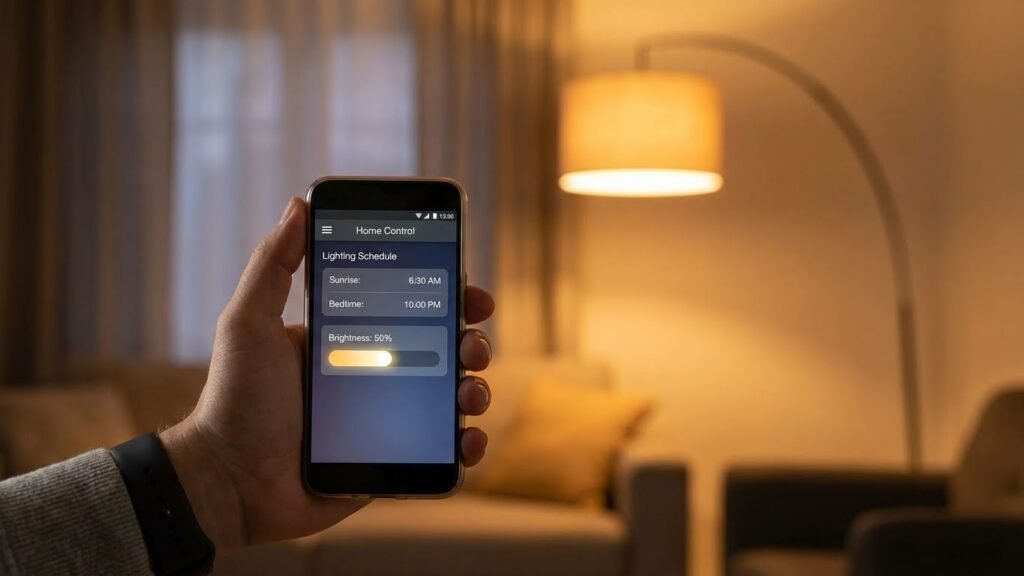
Smart bulbs use LED technology with low wattage, small standby draw, and remote controls that let you schedule or dim lights. You can expect big energy and cost differences when comparing smart LEDs to older bulb types, plus extra features that help cut waste.
Incandescent vs. Smart Bulbs
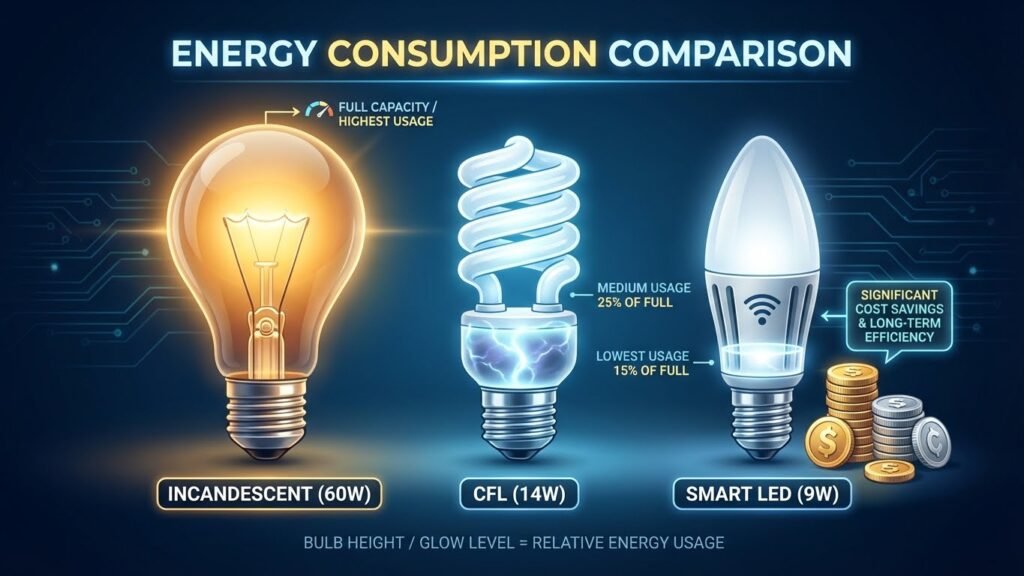
Incandescent bulbs turn nearly all electricity into heat, so a 60-watt incandescent gives you light but wastes most energy. A comparable smart LED uses about 7–10 watts while producing the same brightness, so you wipe out roughly 80–90% of the operating energy.
Smart bulbs add features that save more power: scheduling, motion triggers, and dimming. Those features reduce the hours the lamp is actually lit. They do draw a tiny amount of standby power (often under 1 W), but the savings from reduced run time far outweigh that idle use.
If you still use many incandescents, switching to smart LEDs will cut your lighting electricity quickly. You also lower replacement and cooling costs because LEDs last longer and emit less heat.
CFL vs. Smart Bulbs
Compact fluorescent lamps (CFLs) use less energy than incandescents but more than modern LEDs. A CFL that matches a 60-watt incandescent typically uses about 13–15 watts, while a smart LED uses 7–10 watts. That gives smart bulbs a clear edge in watts-for-brightness.
CFLs take time to reach full brightness and contain small amounts of mercury, which affects disposal. Smart LEDs provide instant bright light, longer lifespans, and simpler recycling. Smart features—timers and motion sensors—let you cut on-time, which CFLs can’t do without an external smart switch.
If you already have CFLs, replacing high-use fixtures with smart LEDs yields the most noticeable savings first. For low-use or hard-to-reach fixtures, savings are smaller because CFL lifetime and efficiency already help.
Halogen vs. Smart Bulbs
Halogen bulbs are just improved incandescents; they run hot and use more power than LEDs. A halogen matching a 60-watt incandescent might use 43–50 watts for similar or slightly better light quality. Smart LEDs deliver the same lumen output at under 10 watts.
Smart bulbs beat halogens on efficiency, life span, and heat output. Halogen fixtures add to room heat and can increase cooling costs in warm months. Smart controls let you dim or schedule light levels, lowering both energy use and wear on the bulb.
If your home still uses halogens in frequently used areas, swapping to smart LEDs pays back faster. In fixtures where color rendering matters (work lamps), pick smart LEDs with high CRI ratings to match halogen color quality.
Real-World Electricity Cost Impact
Smart bulbs cut lamp wattage and reduce hours the lights are on. They add small standby use but make up for that with scheduling, dimming, and motion control that reduce wasted light.
Potential Savings Over Time
You can save by replacing incandescent or older CFL bulbs with smart LEDs. For example, swapping ten 60W incandescent bulbs with 9–10W smart LEDs that run three hours daily cuts annual use from about 66 kWh per bulb to roughly 11 kWh. That change saves roughly 55 kWh per bulb each year. At $0.14 per kWh, one bulb saves about $7.70 annually; ten bulbs save about $77.
Automation increases savings. Use schedules and motion sensors to cut hours of use. Dimming reduces wattage further—running at 70% brightness roughly cuts energy use proportionally. Expect larger savings if you currently leave lights on often or have many fixtures.
Return on Investment
Smart bulbs cost more up front than basic LEDs, so you should track payback time. Example math:
- Smart bulb price: $8–$20
- Annual saving per bulb: $7–$12 (varies by use and rates) If a bulb costs $15 and saves $9 yearly, payback is ≈1.7 years. After payback, savings continue for the bulb’s life, often 5–15 years.
Factor in non-energy benefits: convenience, longer life than incandescents, and fine control that can extend payback. Also include small standby draw (usually under 0.5W) when calculating net savings for many bulbs. For most homes that already use LEDs, ROI is smaller and driven more by automation than by raw LED efficiency.
Case Studies and User Experiences
Real users often report monthly bill drops of $8–$15 after replacing multiple incandescent fixtures with smart LEDs and using schedules. One family that replaced ten incandescents with smart LEDs and used motion sensors cut lighting energy by about 60%, saving roughly $10–$15 per month depending on local rates.
Other users who switched from regular LEDs to smart LEDs see smaller direct savings. Their benefits come from reduced wasted hours and comfort features. In apartments with short daily lighting hours, payback can take longer. In homes with high use or many fixtures, smart bulbs pay back faster and provide clearer monthly savings.
Environmental Benefits
Smart bulbs use LED technology that needs far less electricity than incandescent bulbs. That lower energy use reduces the power your home draws and can cut greenhouse gas emissions tied to electricity production.
You can set schedules and sensors so lights run only when needed. Automation limits wasted hours of lighting and lowers your overall energy use without extra effort from you.
Many smart bulbs offer dimming and motion sensing. Dimming reduces power further, and motion sensors keep lights off in empty rooms. Those features multiply savings across a whole house.
Some models include energy monitoring that shows real-time usage. You can track patterns, spot waste, and make small behavior changes that add up over time.
Environmental perks of smart bulbs at a glance:
- Lower energy use: LEDs use up to about 75–80% less energy than incandescents.
- Less heat output: LEDs waste less energy as heat, easing cooling needs.
- Longer lifespan: Fewer bulb replacements mean less manufacturing and waste.
You should still choose efficient models and use the automation features. The biggest benefits come from combining energy-efficient LEDs with smart controls and mindful usage.
Potential Drawbacks of Smart Bulbs
Smart bulbs can cut energy when used right, but they also bring trade-offs you should know about. Two main issues are tiny continuous power use and devices or apps that don’t work well together.
Standby Power Consumption
Smart bulbs often draw a small amount of power even when the light is off. This is usually under 1 watt for modern models, but some older or cheaper bulbs may use more.
That standby draw adds up if you have many bulbs. For example, ten bulbs each using 0.8 W continuously consume about 70 kWh per year. That can slightly raise your electricity bill compared with standard non-smart LEDs.
You can reduce standby losses by using smart bulbs on switched circuits that you turn off at the wall, or by choosing bulbs rated for very low standby power. Check product specs for “standby” or “idle” wattage before you buy.
Compatibility Issues
Smart bulbs rely on apps, hubs, or voice assistants that may not all work together. A bulb that uses a proprietary hub might not pair with the smart home system you already own.
You can face problems like lost features, limited color control, or dropped automations when mixing brands. Firmware updates sometimes fix issues, but updates can also change behavior or break older integrations.
Before buying, verify compatibility with your hub, app, or voice assistant. Look for open standards like Zigbee or Matter, and confirm third-party integrations on product pages to avoid surprises.
Tips for Maximizing Electricity Savings With Smart Bulbs
Use schedules and timers to match lighting to your routine. Automating on/off times prevents lights from running when you forget them, and short, consistent schedules save more energy than leaving lights on all evening.
Dim bulbs when full brightness is unnecessary. Lower brightness uses less power and extends bulb life. Try 50–70% for common rooms and 10–30% for night lights.
Combine motion sensors with smart bulbs in low-traffic areas. Sensors cut waste by switching lights off when no one is present. This works well in closets, garages, and hallways.
Group bulbs and create scenes for whole rooms. Controlling multiple bulbs at once simplifies energy-saving actions. One tap can set all lights to an efficient level.
Choose ENERGY STAR or low-standby models when possible. Some smart bulbs use a small standby power draw; certified models minimize that waste. Check product specs for standby watts.
Use voice control sparingly for convenience, not as a primary method to turn lights off. Voice can be handy, but schedules and sensors save more energy automatically.
Track usage with apps or energy monitors. Some systems report kilowatt-hours and cost estimates. Use that data to refine schedules and dim levels for real savings.
Replace inefficient fixtures and pair smart bulbs with LED technology. LEDs are the baseline for savings; smart features add control. Together they reduce both energy use and replacement frequency.
Future Trends in Smart Lighting
You will see smart bulbs get even more efficient as LED tech improves and manufacturers cut standby power to near zero. That means lower energy use for the same light output and smaller differences between smart and regular LEDs.
Expect tighter integration with home systems and voice assistants. Your lights will respond to routines, security sensors, and energy management tools, so they turn off or dim automatically when not needed.
Automation features will get smarter with machine learning. Bulbs will learn your habits and adjust schedules and brightness to save energy without you thinking about it.
Sensors and occupancy detection will spread from switches to bulbs themselves. Motion, daylight, and temperature sensors built into fixtures will reduce wasted on-time in rooms you don’t use.
Look for expanding support for standards like Matter and Thread. Those let devices from different brands work together, so you can build systems that optimize energy across many appliances.
Solar-powered and grid-aware lighting will grow in niche uses. You may see more lights that shift usage to off-peak hours or pair with home batteries to lower costs and emissions.
Key features to watch:
- Dimming and tunable white for lower wattage when bright light isn’t needed.
- Better energy monitoring in apps to show real savings.
- Wider adoption of open standards for seamless control.
These trends will make smart lighting more cost-effective and easier to manage, giving you clearer ways to save electricity.
FAQs
Do smart bulbs use more electricity than regular LED bulbs?
Smart bulbs draw slightly more power because of built-in radios and standby features. The extra use is small—often under 1 watt in standby—so it rarely adds much to your bill compared with the savings from LED lighting.
Will smart bulbs save money on my electricity bill?
Yes, if you replace incandescent or halogen bulbs with smart LEDs you will save energy and money. You also save more when you use schedules, dimming, and presence-based automation.
Do smart bulbs consume power when turned off?
Some do. Many smart bulbs use a bit of standby power so they can respond to remote commands. You can cut that standby drain by using a smart switch, cutting mains power, or choosing bulbs with very low standby ratings.
Are smart bulbs worth the higher price?
They can be, especially if you value convenience and energy control. Factor in longer LED life, automated savings, and any smart-home integration when you decide.
How can you maximize energy savings with smart bulbs?
Use schedules and motion sensors, dim lights whenever possible, and group bulbs into zones. Monitor usage with energy-report features if your system provides them.
Do smart bulbs work in all fixtures?
Most work in standard fixtures, but check for compatibility with enclosed fixtures, dimmer switches, or high-heat locations. Manufacturers list any limits, so verify before you buy.
Conclusion
Smart bulbs can cut the electricity you use for lighting compared with incandescent bulbs. They use LED technology and can reduce energy use by a large margin, especially when you dim them or schedule them to turn off automatically.
You may see a small rise in standby power because smart bulbs often draw a fraction of a watt when idle. That extra draw is usually tiny and rarely changes your monthly bill much. For details on standby power and efficiency, check resources from the U.S. Department of Energy or Energy Star for guidance.
Your savings depend on how you use the bulbs. Turn lights off in empty rooms, use schedules or motion sensors, and dim lights when full brightness isn’t needed to get the best results. Combining smart bulbs with smart switches or home automation can further reduce wasted electricity.
Smart bulbs cost more up front, but they last longer than incandescent bulbs and often longer than basic LEDs. Factor in purchase price, lifespan, and how much you actually use lights to judge value for your home.
If you want a simple rule: swap out old incandescent bulbs for LEDs or smart LEDs, use smart features to cut run time, and monitor your usage. That approach gives you lower energy use, more control, and clearer savings over time.