
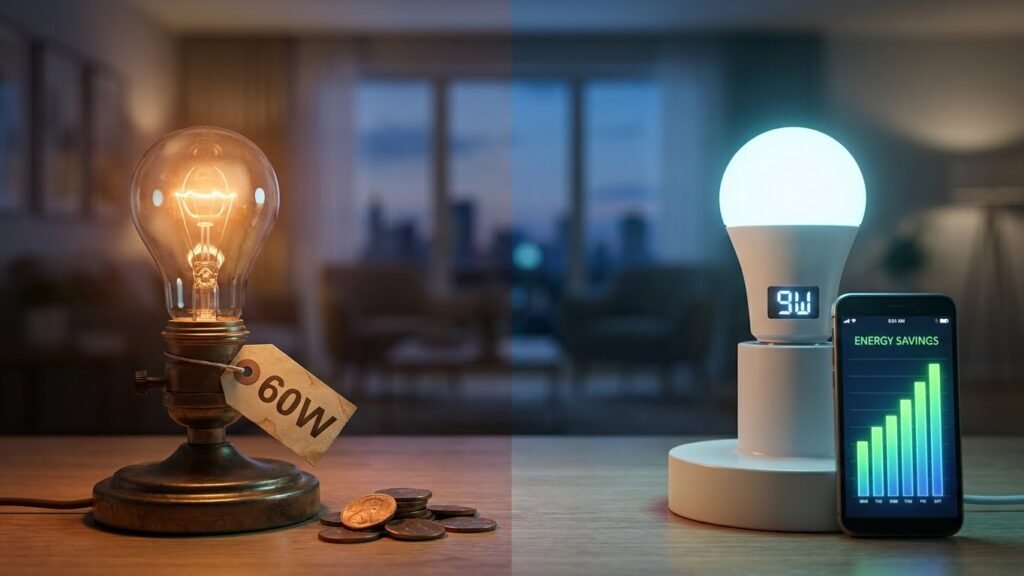
You probably worry that smart bulbs gulp electricity because they stay connected. They do use a tiny bit of power when idle, but their LED core uses far less energy than old incandescent bulbs, so overall they cut your lighting costs. Most smart LED bulbs use roughly 7–10 watts when on (matching a 60W incandescent) and about 0.2–1 watt in standby, so their extra connected power usually adds only a few cents per year.
You can save more by dimming, scheduling, and using automation that turns lights off when not needed. This post will show simple math to estimate your costs, explain what affects power use, and point out choices that give the biggest savings.
Key Takeaways
- Smart LEDs use far less power while on than incandescent bulbs.
- Standby connectivity adds only a small extra energy use.
- Scheduling and choosing efficient models cut costs the most.
Understanding Smart Bulb Energy Consumption
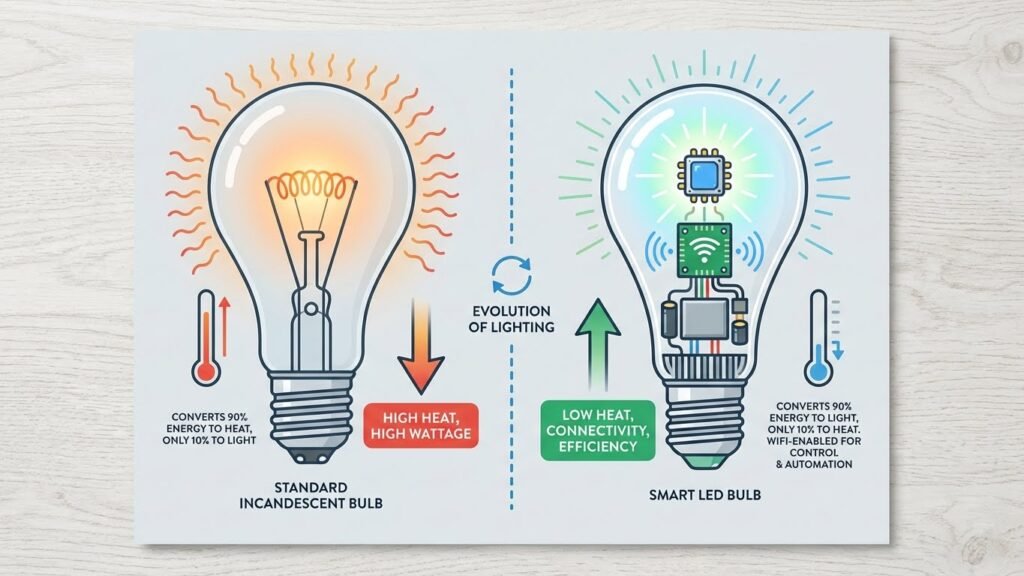
Smart bulbs use LED chips for light and small electronics for connectivity and control. They draw a bit of extra power when idle, but they still use far less energy while lit than old incandescent bulbs.
How Smart Bulbs Work
Smart bulbs combine an LED light source with a power driver and a wireless radio (Wi‑Fi, Zigbee, or Bluetooth). The driver converts mains voltage to low-voltage DC for the LEDs. The radio and a tiny microcontroller handle commands, schedules, and firmware updates.
When the bulb is on, most energy powers the LED. When off, the radio and electronics often remain powered in a low-energy standby state to listen for commands. Standby draw is typically under 1 watt for modern bulbs, though older or cheaper models can use more. Features like color changing, high brightness, and frequent wireless activity can slightly raise energy use.
Typical Wattage of Smart Bulbs
Smart LED bulbs commonly draw 7–10 watts to match the light output of a 60W incandescent. Lower‑output bulbs run 4–6 watts; brighter models for task or flood lighting reach 12–15 watts or more. Check the bulb label for exact wattage—manufacturers list both power (watts) and light output (lumens).
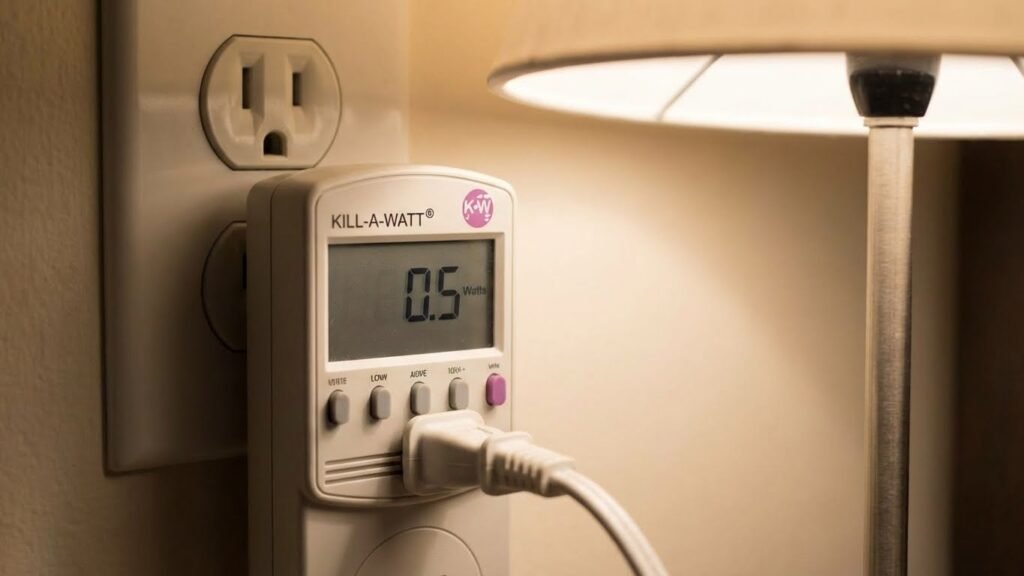
Standby power adds about 0.3–1.0 W for most smart bulbs. If you keep a bulb off but connected 24 hours a day, that standby use can add up to a few kWh per year per bulb. Use a smart plug with power reporting or a plug-in meter to measure a specific bulb’s real consumption.
Comparison With Traditional Bulbs
Compare by lumen output, not wattage. A 9W smart LED that delivers 800 lumens equals a 60W incandescent in light, but uses roughly 85% less electricity while on. Incandescent bulbs have no standby draw, but their high on-state wattage makes them far less efficient.
Compared to regular non-smart LEDs, smart bulbs usually use 0.3–1 W more in standby. That extra draw rarely offsets the on-state savings, since both types use similar watts while lit. If you often leave lights on accidentally, smart features (scheduling, remote off) can reduce total energy use despite the tiny standby cost.
- Key numbers:
- Typical smart on-power: 7–12 W
- Typical standby: 0.3–1.0 W
- Incandescent equivalent: ~60 W for 800 lumens
Factors Affecting Smart Bulb Power Usage
These factors determine how much electricity a smart bulb draws: the light level you set, whether you use colors or whites, and the network features that keep the bulb ready. Each factor can change consumption by a few watts or a fraction of a watt over time.
Brightness Levels and Energy Draw
Brightness (measured in lumens) maps to power use in LED smart bulbs. A typical smart LED that gives 800 lumens (like a 60W-equivalent) usually uses about 7–10 watts. If you dim the bulb to 50% perceived brightness, power often falls roughly to half or a bit more, so you might see 3–6 watts instead of 7–10.
Different bulbs use different driver electronics, so dimming behavior varies by brand. Some bulbs keep a small baseline current even at low dim levels. If you run many bulbs at high brightness for hours, that adds up quickly. Use schedules or motion sensors to avoid leaving full brightness on when you don’t need it.
Color Features and Consumption
Color capability changes energy use because the bulb mixes LEDs (red, green, blue, sometimes white) to make colors. Pure white often uses fewer LEDs or optimized white LEDs, so it can be more efficient than some saturated colors. Bright saturated colors like bright blue can draw slightly more power than soft warm white.
Color temperature (warm vs cool white) also matters: cooler whites sometimes use more blue/white diode output and may draw marginally more watts. When you use dynamic scenes, transitions, or color-cycling effects, the bulb’s electronics stay active and can add small extra consumption. For most users, color effects change power by a few tenths to a couple of watts, not tens of watts.
Connectivity and Standby Power
Smart bulbs keep a radio (Wi‑Fi, Zigbee, Bluetooth) active to accept commands, which creates standby draw. Standby power is usually low—often 0.3–1.5 watts for Zigbee or Bluetooth bulbs and can be 0.5–2.5 watts for Wi‑Fi models. Over a year, a 1‑watt standby draw uses about 8.8 kWh, so many always‑connected bulbs can add noticeable energy use if you have many of them.
Features like firmware updates, mesh routing, and cloud polling can raise standby use briefly. Turning off the physical switch cuts power to zero but also disables smart controls. Use hubs, group scheduling, or bulbs that sleep when idle to reduce standby impact.
Calculating Smart Bulb Energy Costs
You will learn how to turn bulb wattage, hours, and your electricity price into a clear cost. You will also see how habits change that cost and which tools give the most accurate measurements.
Estimating Daily and Monthly Usage
Start with the bulb’s wattage. A typical smart LED runs between 7–12 watts while on. Multiply that wattage by the hours you use the bulb each day to get daily watt-hours.
Example: a 10 W bulb used 4 hours/day = 40 Wh/day = 0.04 kWh/day.
Convert to monthly use by multiplying by 30. Using the example: 0.04 kWh × 30 = 1.2 kWh/month.
Then multiply by your electricity rate (cents per kWh). If your rate is $0.15/kWh: 1.2 kWh × $0.15 = $0.18/month for that bulb.
Use this formula:
- Daily kWh = (Wattage ÷ 1000) × Hours/day
- Monthly cost = Daily kWh × 30 × Price per kWh
Impact of Usage Patterns
Standby power matters. Many smart bulbs draw a small standby current (typically <1 W) when “off” but still connected. If a bulb uses 0.5 W standby and stays idle 20 hours/day, that adds 0.01 kWh/day (0.3 kWh/month).
If you use automation to fully cut power or use physical switches, you can avoid standby draw.
Brightness and color change affect power too. Running a bulb at full white uses more watts than dimmed or colored light. If you dim to 50%, energy often falls roughly in half.
Group control reduces wasted on-times: turning off several bulbs at once saves more than scheduling them separately.
Tools for Measuring Power Consumption
Use a plug-in power meter (Kill A Watt style) for the best real-world reading. Plug the meter into the outlet and the bulb’s lamp into the meter to log watts and kWh over hours.
Smart plugs with energy monitoring can provide similar data and let you capture on/off and standby use.
If you prefer calculations, many online calculators ask for wattage, hours, and price to estimate cost. Manufacturer specs and reviews sometimes list standby watts; use those numbers for more accuracy.
For fleets of bulbs, add each bulb’s monthly kWh to get a room or house total before multiplying by your rate.
Smart Bulbs and Household Energy Efficiency
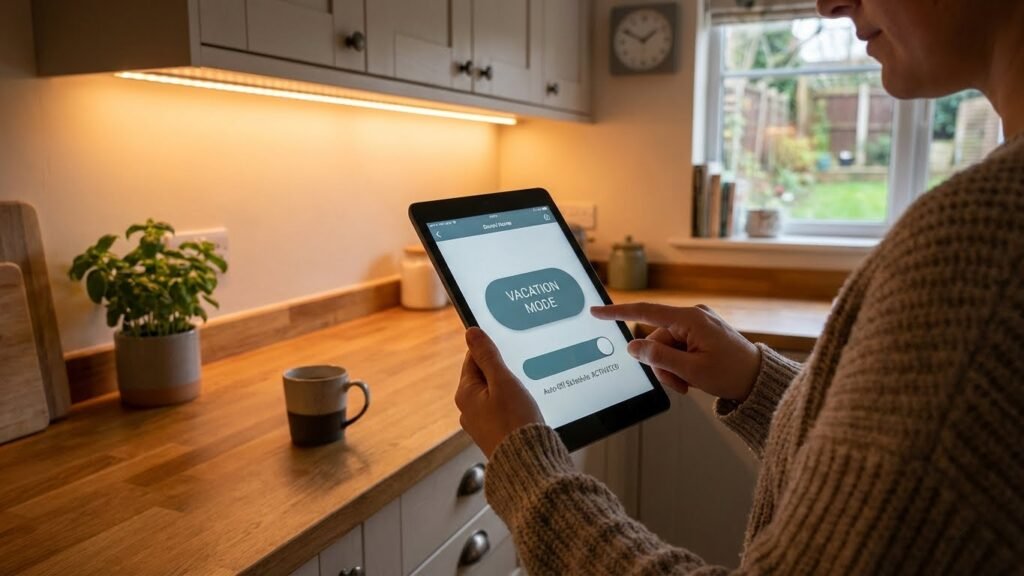
Smart bulbs cut lamp wattage and add scheduling and automation to avoid wasted light. They use LED technology, draw tiny standby power when idle, and let you set brightness and timers to match real use.
Role in Reducing Electricity Bills
You save most when you replace incandescent or halogen lamps with smart LEDs. A typical smart LED uses 8–12 watts to give the same light as a 60–75 watt incandescent. That drops your lighting energy by about 70–85% per bulb.
Use these features to save more:
- Dimming: Lower brightness to 50% reduces consumption roughly in half.
- Schedules/timers: Turn lights off when rooms are unused to avoid wasted hours.
- Motion sensors: Auto-off in hallways and bathrooms prevents lights staying on.
Standby draw is small — usually under 1 watt per bulb. Over a year, standby adds only a few kilowatt-hours per bulb, far outweighed by LED savings when lights are used regularly.
Integration With Smart Home Systems
You can link bulbs to hubs, voice assistants, or sensors for tighter control. Grouping bulbs lets you change whole-room brightness with one command, which avoids leaving single lamps on.
Examples of useful setups:
- Routines: Set evening scenes that dim multiple rooms at fixed times.
- Geofencing: Lights turn off when your phone leaves home to cut phantom use.
- Occupancy automation: Combine motion sensors and bulbs so lights only run when someone is present.
Pay attention to compatibility and network setup. Using the same ecosystem (Zigbee, Z-Wave, Wi‑Fi, or a single app) reduces glitches and prevents accidental power-on events that could raise energy use.
Environmental Impact of Smart Bulb Consumption
Smart bulbs cut electricity use and lower CO2 emissions compared with incandescent bulbs, but they add small standby power and electronic waste concerns. You’ll see lower power draw while lit and different end-of-life handling than for simple LED bulbs.
Carbon Footprint Reduction
Switching to smart LED bulbs typically reduces the energy needed to light a room. A smart LED that uses 7–10 watts can replace a 60-watt incandescent bulb, so you save roughly 50–80 watts each hour you use the light. Over a year, that adds up to noticeable electricity savings, especially if you use schedules, dimming, or presence sensors to reduce on-time.
Those savings translate to lower CO2 emissions based on your grid’s mix. If your electricity comes from fossil fuels, every kilowatt-hour saved cuts carbon emissions. Using smart features to avoid wasted lighting — automatic off, dimming during daytime, and grouping bulbs — increases your savings beyond what a dumb LED would achieve.
Recycling and Disposal Considerations
Smart bulbs contain small electronic components like PCBs, radio modules, and sometimes batteries. These parts mean you cannot treat them exactly like simple screw-in LEDs when disposing of them. Check local rules: many areas require electronic waste drop-off or special recycling for light-based electronics.
You can extend a bulb’s life by keeping firmware up to date and avoiding power cycling that stresses electronics. When a smart bulb fails, remove it from the socket and take it to an e-waste collection point or retailer take-back program. Proper recycling recovers metals and prevents hazardous materials from entering landfills.
Choosing Energy-Efficient Smart Bulbs
Look for bulbs that use low watts for high lumens, have verified efficiency labels, and come from brands known for reliable LEDs and low standby draw.
Labels and Certifications to Look For
Check the ENERGY STAR label first. ENERGY STAR bulbs meet strict efficiency and light quality tests. They use less energy than standard LEDs and often list lumen-per-watt (lm/W) ratings.
Look for the DLC (DesignLights Consortium) mark for commercial-grade efficiency. DLC products are tested for long-term performance in fixtures and networks.
Read the packaging for lumen output, color temperature (Kelvin), and CRI (Color Rendering Index). Aim for 800 lumens at 8–10 watts for a 60W-equivalent bulb and a CRI of 80+ for true colors.
Also check the listed standby power. Good smart bulbs show <1 W standby. That lowers unseen energy use when the bulb is “off” but connected.
Top Brands for Low Energy Consumption
Philips Hue and LIFX are common choices; both offer bulbs that produce about 800 lumens at roughly 8–10 W. They also publish technical specs online so you can verify lm/W and standby power.
Sengled and Wyze focus on value with efficient LEDs that often hit ENERGY STAR standards while costing less. They usually list wattage, lumens, and standby loss on product pages.
GE and Cree (now part of different portfolios) make reliable LED cores with consistent lm/W and longer lifespans. Compare the product spec sheets for lumen output, wattage, and standby watts before you buy.
If you use many bulbs, pick the brand that publishes clear specs and has measured standby below 1 W to keep overall energy use low.
Future Trends in Smart Bulb Efficiency
You will see standby power drop as manufacturers focus on lower idle draw. Many new models already reach under 0.5 W standby, and some aim for 0.1–0.2 W with better chip design and firmware. That reduces the tiny yearly cost smart bulbs add when “off.”
Expect wider adoption of energy monitoring in bulbs and hubs. Built-in meters let you track real-time use and spot savings. You can then schedule or automate bulbs to cut waste more precisely.
Matter and other smart-home standards will improve efficiency by reducing constant cloud checks. Local control lowers network traffic and standby activity. Your bulbs will react faster and use less background power.
AI and adaptive lighting will tune brightness and color to save energy without losing comfort. These features dim lights for natural daylight and presence, so you use only what you need. That saves power over time, especially in frequently used rooms.
Manufacturers will use more efficient LEDs and sustainable materials. Expect better lumens per watt and longer lifetimes. You will replace bulbs less often, lowering total energy and material costs.
Key takeaways:
- Lower standby targets (0.1–0.5 W)
- Built-in energy meters for user control
- Local standards (Matter) cut background use
- AI-driven dimming optimizes real consumption
FAQs
Do smart bulbs use more electricity than regular LED bulbs?
Smart bulbs use slightly more power than basic LEDs because they run a small chip and wireless radio. The extra draw is usually under 1 watt in standby, so it adds only a few dollars per year to your bill.
Do smart bulbs draw power when turned off?
Yes. Many smart bulbs use a tiny amount of power while “off” so they can respond to apps or voice commands. If you want zero standby use, cut power at the switch.
How much does a smart bulb cost to run?
Most smart LED bulbs use 6–11 watts when on. At typical electricity rates, running one for 3 hours a day costs only a few dollars a year. Dimming, schedules, and motion sensors lower that cost further.
Can smart features save energy?
Yes. Features like scheduling, timers, geofencing, and motion sensors help you use light only when you need it. These features often save more energy than the small standby draw costs.
Are there ways to reduce smart bulb energy use?
Use dimming and shorter on-times. Group bulbs on a smart switch or hub to avoid multiple radios working. Choose bulbs with low standby ratings when possible.
Should you worry about the extra power use?
Not usually. The convenience and energy-saving features often outweigh the tiny extra standby use. You can monitor usage if you want exact numbers.
Conclusion
Smart bulbs use far less energy than old incandescent bulbs when they are on. Most smart LED bulbs use about 6–12 watts to match a 60-watt incandescent, so you save energy and money during regular use.
Standby power exists but is small. Typical smart bulbs draw around 0.2–1 watt when idle, which adds up to only a few kilowatt-hours per year. That extra cost is usually under a dollar annually in most homes.
You can lower overall use with simple steps. Use schedules, motion sensors, and dimming to cut run-time and brightness. Those features often make smart systems more efficient than plain LED bulbs.
If you want exact numbers, check the bulb’s spec sheet and use a power meter for real-world readings. For broader guidance on LEDs and energy savings, the U.S. Department of Energy offers clear resources, and ENERGY STAR lists certified efficient bulbs.