
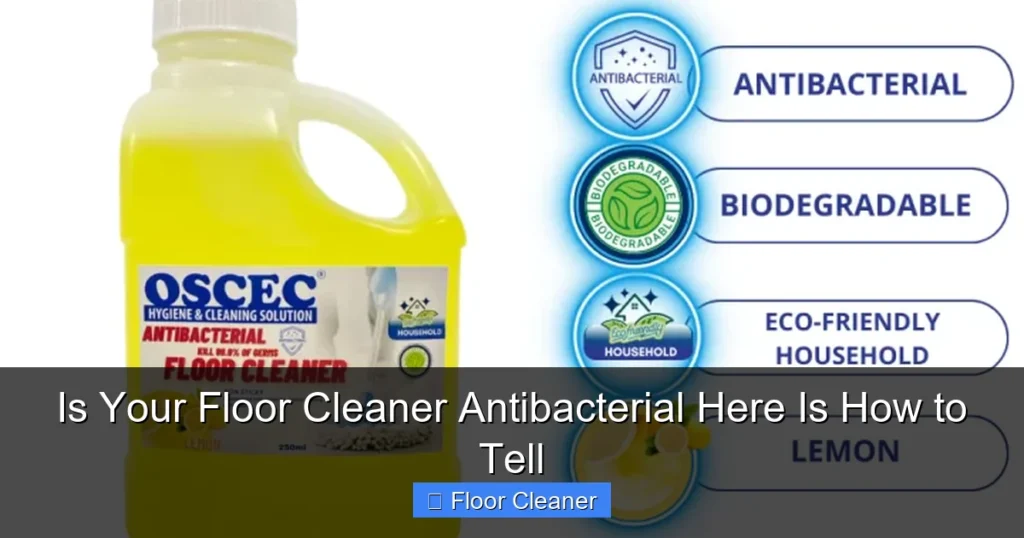
Not all floor cleaners are antibacterial, and knowing the difference is crucial for proper hygiene. This guide provides clear, actionable steps to identify antibacterial properties in your cleaner, from reading labels to understanding ingredients. Arm yourself with knowledge to ensure your floors are truly germ-free and safe for your family.
Key Takeaways
- Check the Label First: The product label is your primary source for antibacterial claims, often featuring terms like “antibacterial,” “disinfectant,” or EPA registration numbers.
- Know Active Ingredients: Antibacterial cleaners contain specific agents like quaternary ammonium compounds, bleach (sodium hypochlorite), or hydrogen peroxide that kill bacteria.
- Look for EPA Registration: In the U.S., an EPA registration number on the label indicates the product has been tested and proven effective against bacteria and other germs.
- Understand Marketing Terms: Terms like “sanitizing” or “kills germs” may not always mean antibacterial; verify by checking for specific ingredients or claims.
- Follow Usage Instructions: Antibacterial effectiveness depends on correct use, including proper dilution and allowing sufficient contact time on surfaces.
- Test When in Doubt: If unsure, you can perform simple checks like reviewing manufacturer websites or using test kits, but rely on label information for accuracy.
- Prioritize Safety: Even antibacterial cleaners can pose risks; always use as directed, store safely, and consider allergies or sensitivities in your household.
Introduction: Why Knowing If Your Floor Cleaner Is Antibacterial Matters
Hello there! Have you ever looked at your floor cleaner and wondered, “Is this really antibacterial?” You’re not alone. In today’s world, keeping our homes clean and germ-free is a top priority. But with so many products on the market, it’s easy to get confused. Not all floor cleaners are created equal. Some just remove dirt and grime. Others actually kill bacteria. Knowing the difference can help protect your family from illness.
This guide is here to help. We’ll walk you through simple steps to tell if your floor cleaner is antibacterial. You’ll learn how to read labels, understand ingredients, and make informed choices. By the end, you’ll be a pro at spotting true antibacterial cleaners. Let’s dive in!
Step 1: Check the Product Label Carefully
The label on your floor cleaner bottle is your best friend. It holds clues to whether the product is antibacterial. Start by examining the front and back of the bottle. Look for specific words and symbols.
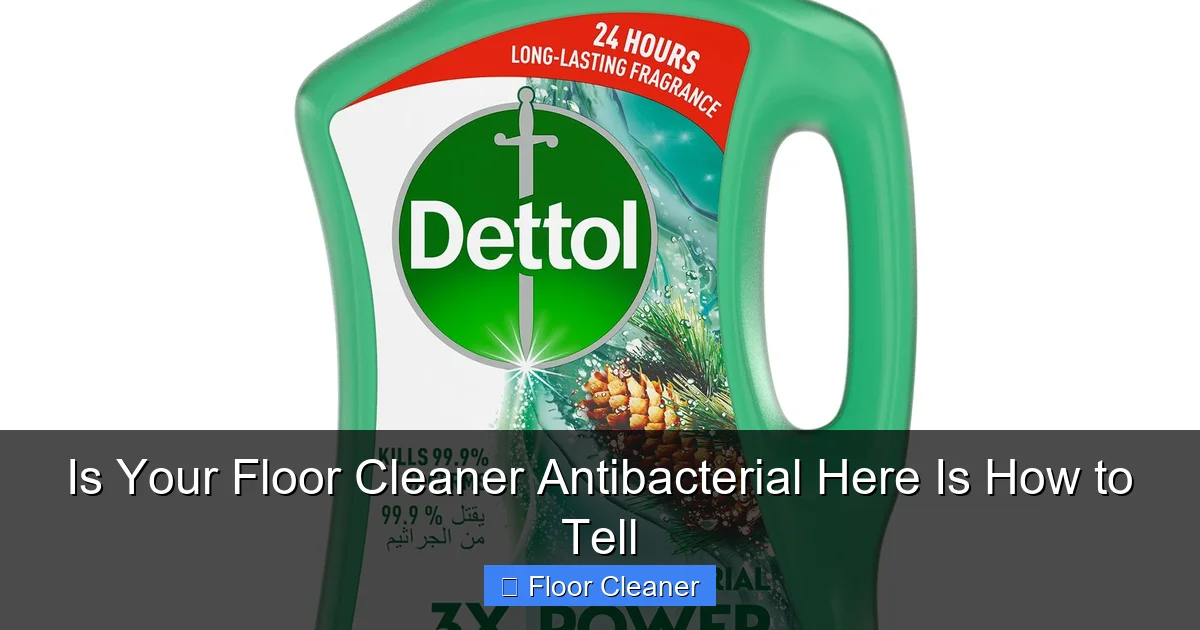
Visual guide about Is Your Floor Cleaner Antibacterial Here Is How to Tell
Image source: images.deliveryhero.io
Look for “Antibacterial” or “Disinfectant” Claims
Many cleaners clearly state “antibacterial” on the front. This is a good sign. But be cautious. Some products use similar terms like “sanitizing” or “kills germs.” These might not always mean antibacterial. “Sanitizing” can reduce bacteria but not necessarily kill all types. “Disinfectant” is stronger. It typically means it kills bacteria and viruses. Check for these terms first.
Identify EPA Registration Numbers
In the United States, the Environmental Protection Agency (EPA) regulates antibacterial products. If a cleaner is antibacterial, it often has an EPA registration number. This number looks like “EPA Reg. No. 12345-12.” It means the product has been tested for efficacy. You can find this on the label, usually in small print. If you see it, your cleaner is likely antibacterial.
Practical Tip: Grab your floor cleaner now. Look at the label. Write down any claims or numbers you see. This will help you follow along.
Step 2: Decode the Ingredients List
If the label isn’t clear, turn to the ingredients list. This is often on the back. Ingredients are listed in order of concentration. Look for active ingredients that fight bacteria.
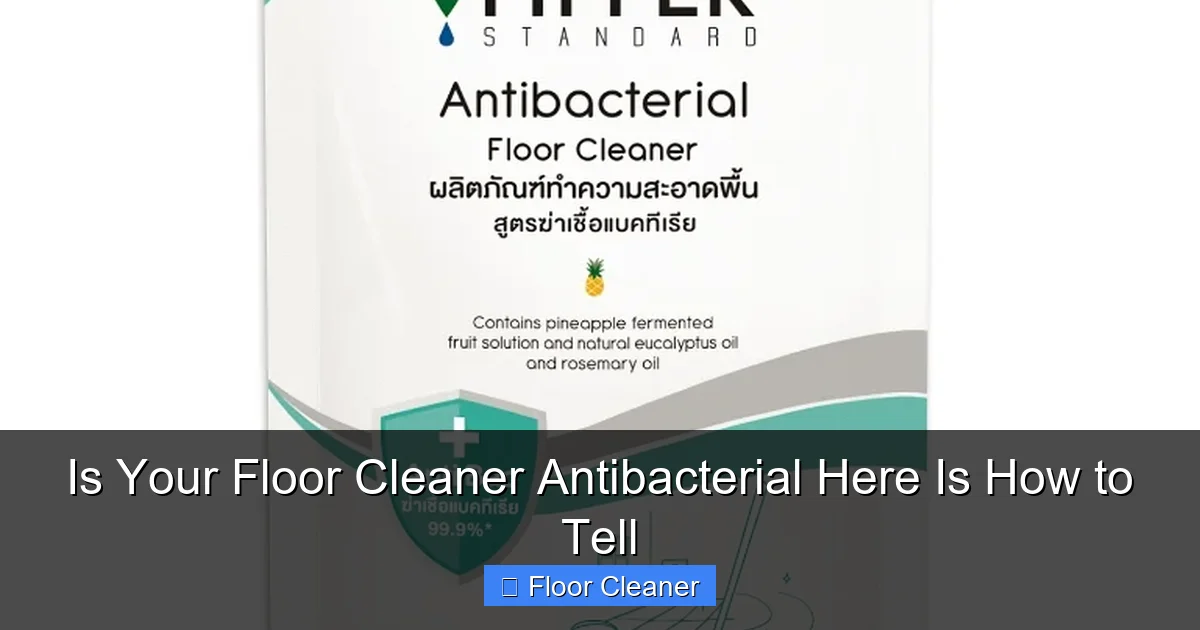
Visual guide about Is Your Floor Cleaner Antibacterial Here Is How to Tell
Image source: down-th.img.susercontent.com
Common Antibacterial Active Ingredients
Antibacterial cleaners contain specific chemicals. Here are some to watch for:
- Quaternary Ammonium Compounds (Quats): These are common in household cleaners. Look for names like benzalkonium chloride or alkyl dimethyl benzyl ammonium chloride.
- Bleach (Sodium Hypochlorite): Bleach is a powerful antibacterial agent. It’s often in disinfectant cleaners.
- Hydrogen Peroxide: This is another effective antibacterial ingredient. It’s found in some eco-friendly cleaners.
- Pine Oil or Phenols: These are older antibacterial agents. They might be in some specialty cleaners.
If you see these, your cleaner is antibacterial. Inert ingredients like water or fragrances don’t kill bacteria. They support the active ones.
Understand Inert Ingredients
Inert ingredients are not active against bacteria. But they help the cleaner work better. For example, surfactants help lift dirt. Solvents dissolve grime. Don’t confuse them with antibacterial agents. Focus on the active ingredients list. It’s usually separated from inert ones.
Example: A label might say “Active Ingredient: Alkyl Dimethyl Benzyl Ammonium Chloride (0.5%).” That’s a quat, so it’s antibacterial. The rest are inert.
Step 3: Understand Regulatory Standards and Certifications
Regulations vary by country. Knowing them helps you trust the claims. In the U.S., the EPA sets rules for antibacterial products. Other countries have similar agencies.
Visual guide about Is Your Floor Cleaner Antibacterial Here Is How to Tell
Image source: golddrop.eu
EPA vs. FDA Regulations
The EPA regulates cleaners that claim to kill germs on surfaces. The FDA regulates products for use on skin, like hand sanitizers. For floor cleaners, EPA oversight is key. An EPA registration number means the product meets standards for antibacterial efficacy. Check for this on the label.
What “Kills 99.9% of Germs” Really Means
You’ve seen this claim. It’s common on antibacterial cleaners. It means the product has been tested in labs. It kills most bacteria and viruses under specific conditions. But note: it doesn’t kill 100% of germs. And it might not work against all types. Always check which germs it targets. The label should list them, like “kills Staphylococcus aureus and Escherichia coli.”
Tip: Look for specifics. A vague claim like “kills germs” is less reliable than “kills 99.9% of bacteria including Salmonella.”
Step 4: Perform Simple Checks and Tests at Home
If you’re still unsure, there are simple ways to check. You don’t need a lab. Use these methods to verify antibacterial properties.
Review Manufacturer Information Online
Go to the manufacturer’s website. Search for your product. They often provide detailed information. Look for safety data sheets (SDS) or product specifications. These documents list active ingredients and efficacy claims. They’re reliable sources.
Observe Performance and Residue
Antibacterial cleaners may leave a slight residue. This is often from active ingredients. But don’t rely solely on smell or feel. Some antibacterial cleaners have no scent. Others might smell strong. Focus on the label and ingredients.
Use Test Kits (If Available)
You can buy home test kits for bacteria. They’re not perfect. But they can show if bacteria levels drop after cleaning. Follow kit instructions carefully. Compare cleaned areas with untreated ones. This gives a rough idea of effectiveness.
Note: Home tests are for curiosity. For certainty, trust EPA registration and ingredient lists.
Step 5: Evaluate Usage Instructions for Effectiveness
Antibacterial cleaners only work if used correctly. The label has directions. Follow them to ensure bacteria are killed.
Contact Time Matters
Contact time is crucial. It’s how long the cleaner must stay wet on the surface. For example, a label might say “leave for 10 minutes to disinfect.” If you wipe it off too soon, it won’t kill all bacteria. Always check and follow contact time.
Dilution Ratios and Application
Some cleaners need dilution. Mixing too much or too little water can reduce efficacy. Use the recommended ratio. For example, “mix 1 ounce per gallon of water.” Apply evenly on floors. Let it sit as directed. Then rinse if needed.
Practical Tip: Set a timer when cleaning. This ensures you meet contact time. Your floors will be truly antibacterial.
Troubleshooting: Common Issues and Solutions
Sometimes, things don’t go as planned. Here are common problems and how to fix them.
My Cleaner Says Antibacterial but Doesn’t Seem to Work
This can happen. First, check usage. Did you follow contact time and dilution? If yes, the cleaner might be old or stored poorly. Heat and light can degrade active ingredients. Store cleaners in a cool, dark place. Replace them if expired. Also, some bacteria are resistant. Try a different active ingredient.
Allergic Reactions or Sensitivities
Antibacterial cleaners can cause allergies. Symptoms include skin rashes or breathing issues. If this happens, switch to a milder product. Look for “hypoallergenic” or “fragrance-free” options. Always wear gloves when cleaning. Ventilate the area.
Misleading Marketing Terms
Terms like “natural” or “green” don’t always mean antibacterial. Some natural cleaners use vinegar or citrus. These may not kill bacteria. Check for antibacterial claims or ingredients. Don’t assume based on marketing.
Solution: When in doubt, contact the manufacturer. Ask for proof of antibacterial efficacy. They should provide test results or certifications.
Conclusion: Take Control of Your Floor Hygiene
You’ve made it! Now you know how to tell if your floor cleaner is antibacterial. Start by checking the label for claims and EPA numbers. Decode the ingredients list for active agents. Understand regulations and usage instructions. Perform simple checks if needed. Remember, not all cleaners are antibacterial. But with these steps, you can choose wisely.
Keeping your floors germ-free is important for health. Use this knowledge to protect your home. Share it with friends and family. Together, we can create safer, cleaner living spaces. Happy cleaning!
🎥 Related Video: ANTI BACTERIAL DETTOL FLOOR CLEANER
📺 Melma Ilongga
short #cleaning #dettol.