Keeping your floors clean shouldn’t risk your cat’s health. Many common cleaners contain chemicals like phenols, ammonia, and essential oils that are highly toxic to felines. This guide will teach you how to identify safe ingredients, recommend trusted brands, and provide easy DIY recipes for a spotless home that’s also a safe haven for your curious cat.
Key Takeaways
- Avoid Phenols & Essential Oils: These common disinfectants are extremely toxic to cats and can cause liver failure or respiratory distress.
- Decode the Label: Look for clear, full ingredient lists and certifications like “EPA Safer Choice” or “EWG Verified” for product safety assurance.
- Vinegar & Water is a Safe Baseline: A simple solution of diluted white vinegar effectively cleans, deodorizes, and is non-toxic once dry, making it a reliable standby.
- Ammonia is a Major Red Flag: Never use ammonia-based cleaners; its smell mimics urine and can cause respiratory issues or encourage inappropriate marking.
- Rinse and Ventilate: Always rinse cleaned floors with water and ensure the area is well-ventilated to minimize your cat’s exposure to any cleaning residues.
- Baking Soda is Your Friend: Perfect for scrubbing tough spots and neutralizing odors without any chemical risk to your pet.
Find the Best Cat Safe Floor Cleaners for Your Home
You love a clean home. You also love your cat. Sometimes, these two loves can feel at odds. Your feline friend walks, plays, naps, and even licks your floors. So, when you mop, you’re not just cleaning a surface—you’re cleaning part of your cat’s world. Many standard floor cleaners contain chemicals that are harmful, even deadly, to cats. This guide will walk you through everything you need to know. You will learn which ingredients are dangerous, how to choose safe commercial products, and how to make effective cleaners yourself. Let’s create a home that sparkles and keeps your kitty safe.
Understanding the Risks: Why Cats Are So Vulnerable
Cats are uniquely sensitive to many household chemicals. This isn’t just a preference; it’s a matter of biology.
Visual guide about Find the Best Cat Safe Floor Cleaners for Your Home
Image source: familyhandyman.com
Their Unique Metabolism
A cat’s liver lacks certain enzymes. These enzymes are needed to break down common toxins. Phenols, found in many disinfectants, and certain essential oils simply cannot be processed. This leads to a dangerous buildup in their system.
Grooming Habits
Cats are fastidious groomers. Any cleaner residue left on their paws or fur will be ingested when they lick themselves. This direct ingestion is a major route of poisoning.
Close Proximity to Surfaces
Cats have a much smaller stature. Their noses are inches from the floor. This means they breathe in higher concentrations of fumes from freshly cleaned surfaces. Their respiratory systems are delicate and easily irritated.
Step 1: Learn the “No-Go” Ingredients
Your first step is to become a label detective. If you see these ingredients, put the bottle back on the shelf.
Visual guide about Find the Best Cat Safe Floor Cleaners for Your Home
Image source: familyhandyman.com
Phenols
This is the biggest threat. Phenols are found in many pine-scented cleaners, some laundry disinfectants, and certain surface sprays. They are corrosive and can cause liver damage in cats. Signs of phenol poisoning include drooling, lethargy, and difficulty walking.
Ammonia
A powerful irritant. Ammonia fumes can burn a cat’s sensitive airways, eyes, and skin. Worse, because ammonia is a component of urine, its smell can actually encourage your cat to remark the area, creating a frustrating cycle.
Essential Oils (Many)
This surprises many people. Oils like tea tree, peppermint, citrus, pine, and eucalyptus are toxic to cats. They can cause symptoms from drooling and vomiting to severe liver failure and nervous system depression. Never use cleaner concentrates with these oils.
Formaldehyde & Formalin
These are preservatives and disinfectants. They are known carcinogens and strong irritants. Exposure can cause asthma-like symptoms and eye irritation in your pet.
Chlorine Bleach
While highly diluted bleach can be used with extreme caution, it is a strong irritant. Cats should be kept away from the area until it is thoroughly rinsed and completely dry. Inhaling the fumes can cause breathing problems.
Step 2: How to Choose a Safe Commercial Cleaner
You don’t have to make everything yourself. Many great brands now offer pet-safe options. Here’s what to look for.
Visual guide about Find the Best Cat Safe Floor Cleaners for Your Home
Image source: k9ofmine.com
Read the Full Ingredient List
A truly safe company is transparent. Look for a full list of ingredients on the label or website. Vague terms like “surfactants” or “fragrance” are red flags. You want to see specific, recognizable components.
Look for Trusted Certifications
- EPA Safer Choice: This means every ingredient meets strict safety criteria for human health and the environment.
- EWG Verified: The Environmental Working Group’s mark indicates the product avoids their chemicals of concern and is fully transparent.
Opt for “Fragrance-Free” or “Unscented”
Artificial fragrances are complex chemical cocktails. They can trigger allergies and asthma in cats. A product that is truly fragrance-free is always a safer bet.
Consider the Surface
Hardwood, laminate, tile, and vinyl all have different needs. A cleaner safe for cats but bad for your floors isn’t the answer. Choose a product formulated for your specific flooring type.
Step 3: Review of Recommended Cat-Safe Cleaner Types
Plant-Based & Biodegradable Cleaners
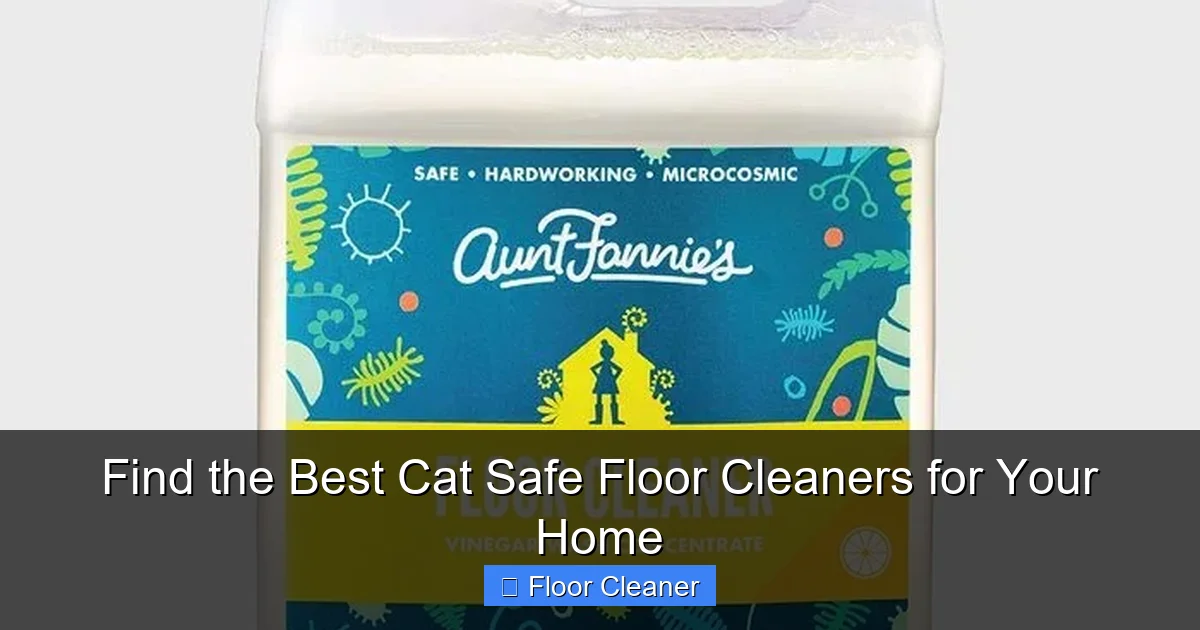
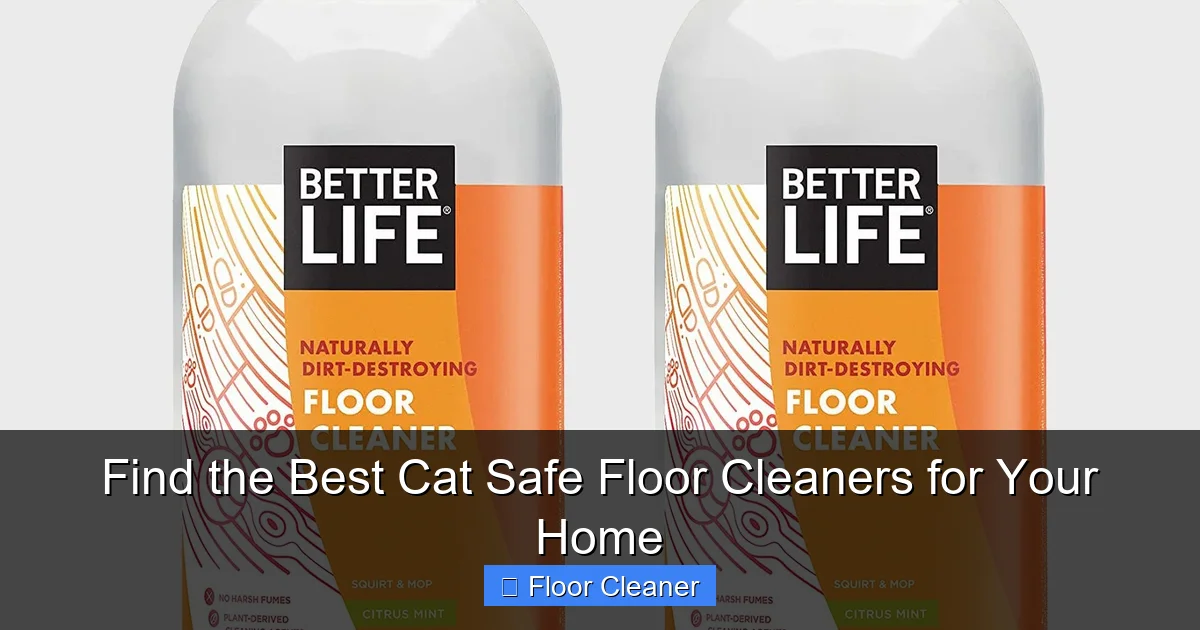
These are often excellent choices. Brands like Better Life, Seventh Generation, and Puracy use ingredients derived from plants (coconut, corn, etc.). They are typically free of harsh chemicals and break down safely.
Steam Cleaners
A steam mop is a fantastic investment. It uses only heated water vapor (over 200°F) to sanitize floors. There are zero chemicals involved. It’s effective on most sealed hard surfaces and great for killing germs and dust mites.
Microfiber Mops with Water
For daily maintenance, nothing beats a good microfiber mop. The ultra-fine fibers grab and hold dust, dirt, and hair with just water. It’s the ultimate in simplicity and safety.
Step 4: Simple DIY Cat-Safe Floor Cleaner Recipes
Making your own cleaner is cost-effective and puts you in complete control. Here are two reliable recipes.
The All-Purpose Vinegar Cleaner
Best for: Vinyl, tile, sealed stone. Avoid on waxed wood or unsealed stone.
- 1 part white distilled vinegar
- 3 parts warm water
- Optional: A squeeze of pure castile soap for extra grease-cutting power
Instructions: Mix in a spray bottle or bucket. The vinegar smell disappears as it dries, taking other odors with it. It’s a mild disinfectant and excellent for cutting grime.
The Hardwood Floor Friendly Cleaner
Best for: Sealed hardwood, laminate, engineered wood.
- 1 gallon warm water
- 1/4 cup white distilled vinegar or 1/2 cup isopropyl alcohol (70%)
- 3-4 drops of pure castile soap
Instructions: Mix gently in a bucket to avoid suds. Wring your mop very well—excess moisture is hardwood’s enemy. The alcohol helps it streak-free dry quickly.
Step 5: The Safe Cleaning Protocol
Using a safe product is only half the battle. How you clean is just as important.
Remove Your Cat
Before you start, gently move your cat to another room with the door closed. This keeps them away from fumes and wet floors.
Ventilate the Area
Open windows and turn on fans. Good airflow helps dissipate any cleaner odor and speeds up drying.
Dilute and Apply Properly
Always follow dilution instructions. More concentrate is not better. Apply the cleaner to your mop or cloth, not directly to the floor in large amounts.
The Crucial Rinse Step
For mopping, use a two-bucket system: one for cleaner, one for clean rinse water. After cleaning a section, rinse the mop in the clean water and wring. This prevents spreading dirty, soapy residue. For spray cleaners, occasionally go over the floor with a mop dampened with plain water.
Ensure Complete Dryness
Do not let your cat back onto the floor until it is completely dry to the touch. This prevents paw-licking and tracks.
Troubleshooting Common Cat-Related Cleaning Issues
Problem: My cat had an accident on the floor. How do I clean and deodorize it safely?
Solution: First, blot up as much as possible. Then, use an enzymatic cleaner made specifically for pet stains (like Nature’s Miracle). These cleaners use biological enzymes to “eat” the odor-causing proteins. They are non-toxic and far more effective than masking scents.
Problem: There’s a sticky spill or tough grime that water won’t cut.
Solution: Make a paste of baking soda and a tiny bit of water. Gently scrub the spot with a soft cloth, then wipe clean with your safe all-purpose cleaner. Baking soda is a mild abrasive and excellent degreaser.
Problem: I’m worried about germs. How can I disinfect without bleach?
Solution: Your vinegar solution (1:3) has mild disinfecting properties. For a stronger, still cat-safe option, use a 3% hydrogen peroxide solution in a spray bottle. Let it sit for a few minutes before wiping. Always test on a hidden area first, as peroxide can lighten some surfaces. Remember, a steam cleaner is also a powerful disinfectant.
Conclusion: A Clean Home, A Happy Cat
Choosing a cat-safe floor cleaner is one of the easiest and most important ways to protect your pet’s health. It doesn’t mean you have to compromise on cleanliness. By understanding risky ingredients, selecting transparent brands, and using simple DIY solutions, you can maintain a spotless home that is a true sanctuary for every member of your family—including the four-legged ones. Start by checking the labels under your sink today. Your cat will thank you with every safe step they take.
🎥 Related Video: How I Keep My Multi-Cat House Clean | The Pack
📺 The Dodo
I’m always getting compliments about how clean my house is despite having three cats, so this is how I do it! Shop all products …