

This guide explains which cleans faces better, baby wipes or wet wipes, and how to choose the safest option for your skin or your child’s skin. You’ll learn the key differences in ingredients, how each type works on makeup, dirt, and food, and how to test them on sensitive skin. Use this guide to make confident, safe choices every time you reach for a wipe.
Key Takeaways
- Point 1: Baby wipes are usually gentler and safer for sensitive facial skin, especially for babies and children.
- Point 2: Many wet wipes clean tougher messes better but can contain stronger chemicals that may irritate the face.
- Point 3: Always check the ingredient list and choose fragrance-free, alcohol-free wipes for facial use.
- Point 4: For everyday face cleaning, baby wipes or facial-specific wipes are usually the better choice.
- Point 5: Patch testing on a small area helps you see which cleans faces better for your skin without causing irritation.
- Point 6: Proper technique (gentle wiping, not scrubbing) matters as much as which type of wipe you choose.
- Point 7: When in doubt, rinse with water after using any wipe to remove leftover residue from the skin.
Which Cleans Faces Better Baby Wipes or Wet Wipes Guide
When you need to clean a face fast, wipes are the easiest choice. But which cleans faces better, baby wipes or wet wipes? This guide walks you through the differences, how to use each type safely, and how to decide which is best for your skin or your child’s skin.
You will learn:
- What baby wipes and wet wipes are made for
- Which cleans faces better in different situations
- How to read labels and avoid harsh ingredients
- Step-by-step methods to clean a face with wipes
- How to handle sensitive skin, breakouts, and irritation
By the end, you will know exactly which cleans faces better, baby wipes or wet wipes, for your daily needs.
Understanding Baby Wipes vs Wet Wipes
What Are Baby Wipes?
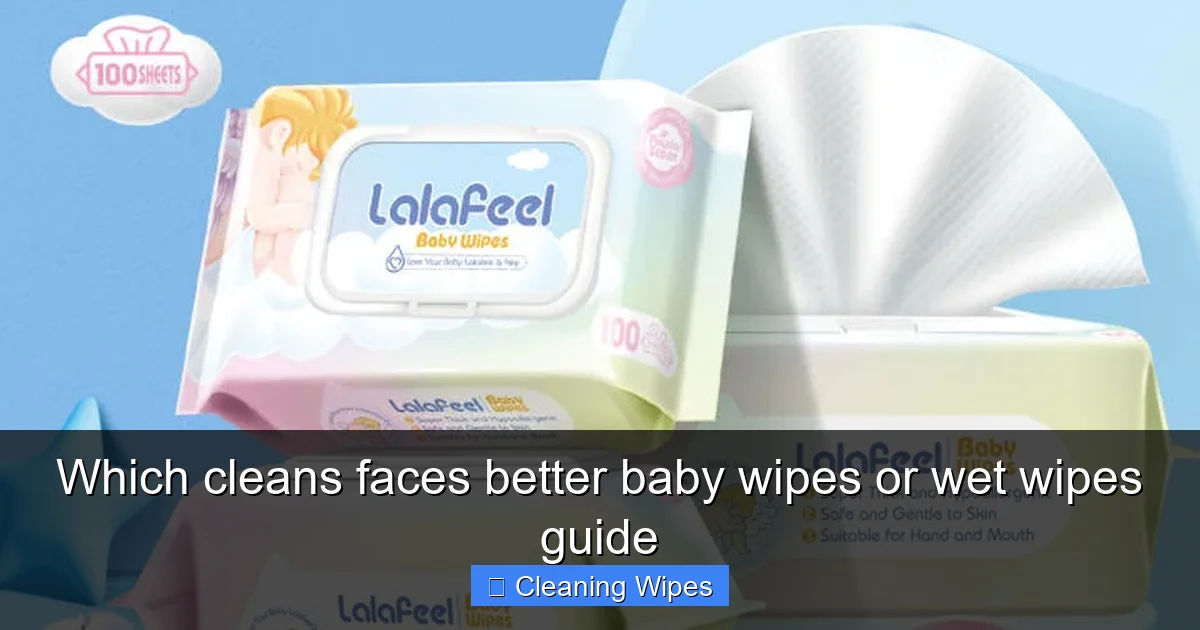
Baby wipes are designed mainly for cleaning a baby’s diaper area. Because that area is very delicate, baby wipes are usually gentle and mild. They often contain soft cloth-like material soaked in a water-based solution with light cleansers, moisturizers, and sometimes soothing ingredients like aloe or chamomile.
Visual guide about Which cleans faces better baby wipes or wet wipes guide
Image source: img.lazcdn.com
The key idea behind baby wipes is safety for very sensitive skin. That is why many people wonder which cleans faces better, baby wipes or wet wipes, when the skin is fragile or easily irritated.
What Are Wet Wipes?
Wet wipes is a broad term. It can include household cleaning wipes, disinfecting wipes, makeup remover wipes, personal hygiene wipes, and more. Some wet wipes are made for skin, and others are made for surfaces only.
Because of this, wet wipes can range from very gentle to very strong. Some contain alcohol, strong preservatives, or disinfectants. These can be too harsh for facial skin. So when asking which cleans faces better, baby wipes or wet wipes, you must first know what type of wet wipe you are holding.
Key Differences That Affect Face Cleaning
- Purpose: Baby wipes are for baby skin. Wet wipes might be for skin or for surfaces.
- Ingredients: Baby wipes usually avoid harsh chemicals. Wet wipes can contain stronger agents.
- Fragrance: Many wet wipes are scented. Fragrance can irritate facial skin.
- Cleaning Power: Some wet wipes clean heavy dirt or germs better, but may be too strong for the face.
These differences are central to deciding which cleans faces better, baby wipes or wet wipes, in a safe way.
Step 1: Decide Who and What You Are Cleaning
Cleaning a Baby’s Face
If you are cleaning a baby’s face after feeding or playtime, baby wipes are usually the better choice. They are made with infants in mind and tend to be free of harsh alcohol and strong fragrances. In this case, which cleans faces better, baby wipes or wet wipes, is simple: baby wipes almost always win for safety and gentleness.

Visual guide about Which cleans faces better baby wipes or wet wipes guide
Image source: my-test-11.slatic.net
Cleaning a Child or Teen’s Face
For older children or teens, the skin can still be sensitive. Food, dirt, and sweat are common messes. Baby wipes can still work well here for quick cleanups, especially around the mouth and cheeks. Some gentle wet wipes labeled for “sensitive skin” or “facial cleansing” can also be good options.
Ask yourself:
- Is the skin sensitive, dry, or prone to rash?
- Is there makeup, thick sunscreen, or heavy grime?
For light dirt, baby wipes are usually enough. For heavier buildup, a facial-specific wet wipe may clean better.
Cleaning an Adult’s Face
Adults often use wipes to remove makeup, sweat, or pollution after a long day. Here, the question of which cleans faces better, baby wipes or wet wipes, depends on your skin type and what is on your face.
- For light dirt and sweat: Baby wipes can be gentle and effective.
- For waterproof makeup or thick sunscreen: Makeup remover wipes (a type of wet wipe made for faces) usually clean better.
- For very sensitive or reactive skin: Fragrance-free baby wipes or wipes labeled for “very sensitive facial skin” are often best.
Step 2: Read the Label Before Using Any Wipe on the Face
Check the Intended Use
Always look for phrases like:
- “For facial use”
- “For baby’s skin”
- “For sensitive skin”
If the package says “surface disinfecting,” “bathroom,” “kitchen,” or “household cleaning,” do not use those wet wipes on faces. In the debate over which cleans faces better, baby wipes or wet wipes, surface wipes should never be in the running for skin.
Look for Gentle Formulas
For facial use, especially on babies and children, try to choose wipes that are:
- Fragrance-free or lightly scented
- Alcohol-free (no drying alcohols)
- Hypoallergenic
- Dermatologist-tested for sensitive skin
These features help answer which cleans faces better, baby wipes or wet wipes, by showing you which option is less likely to cause redness, burning, or dryness.
Ingredients to Prefer
Look for wipes that list:
- Water (aqua) as the first ingredient
- Glycerin or other gentle moisturizers
- Soothing plant extracts like aloe vera or chamomile (if you are not allergic)
These ingredients support gentle cleansing and help the skin stay soft. They are common in baby wipes and better-quality facial wet wipes, and they improve both cleaning and comfort.
Ingredients to Be Cautious About
When deciding which cleans faces better, baby wipes or wet wipes, pay attention to these possible irritants:
- Strong fragrances or “parfum” high on the list
- Harsh alcohols like denatured alcohol or isopropyl alcohol (especially near the top of the list)
- Bleach, disinfectants, or antibacterial chemicals not made for skin
- Harsh preservatives if you know you are sensitive to them
These ingredients may clean more aggressively but can damage the skin barrier, especially on the face.
Step 3: Test Which Wipe Your Skin Tolerates Best
Do a Simple Patch Test
Before using a new wipe all over the face, test it on a small area first. This helps you see which cleans faces better, baby wipes or wet wipes, without risking a full-face reaction.
How to patch test:
- Pick a small area, like behind the ear or along the jawline.
- Wipe the area gently once or twice.
- Wait 12–24 hours and watch for redness, bumps, itching, or burning.
If there is no reaction, the wipe is more likely to be safe for broader facial use.
Compare Baby Wipes and Wet Wipes Side by Side
If you want to see which cleans faces better, baby wipes or wet wipes, you can test them directly:
- Use a baby wipe on one side of the face.
- Use a gentle, facial-safe wet wipe on the other side.
- Note how much makeup, dirt, or food each side removes.
- Pay attention to how the skin feels during and after wiping.
If one side feels tight, stings, or turns red, that wipe is likely too harsh for regular facial use.
Step 4: Learn the Best Technique for Wiping a Face
Prepare the Skin
Before using any wipe, wash your hands. Dirty hands can spread germs to the face. If the face has visible crumbs or chunks of food, gently remove the largest pieces with a tissue or a clean, dry cloth first. This makes the wipe’s job easier and gentler.
Use Gentle, Short Strokes
Whether you choose baby wipes or wet wipes, technique matters. To see which cleans faces better, baby wipes or wet wipes, you must also wipe the right way.
- Do not scrub or rub hard.
- Use light, short strokes.
- Wipe outward from the center of the face.
- Use a clean section of the wipe for each area.
Gentle wiping removes dirt while protecting the skin barrier.
Follow a Simple Order
This order helps you avoid spreading mess from one area to another:
- Forehead: Wipe from the center outwards.
- Cheeks: Wipe from nose outward toward the ears.
- Nose: Wipe down the bridge and around the nostrils gently.
- Mouth and chin: Wipe last, as this area often has food or drool.
For babies, support the head and neck while wiping, and talk softly to keep them calm.
Use More Than One Wipe If Needed
Do not try to clean the entire face with a single, very dirty wipe. Once a wipe is heavily soiled, it can smear mess around. It is better to use a second clean wipe than to overuse a dirty one. This also helps you see which cleans faces better, baby wipes or wet wipes, because you are using each wipe properly.
Step 5: Rinse or Moisturize After Wiping (When Needed)
When to Rinse with Water
Even gentle wipes can leave a light residue on the skin. For very sensitive skin, or when using stronger wet wipes, rinsing can help:
- Use lukewarm water and splash the face lightly.
- Gently pat dry with a soft towel.
This step is useful if you are unsure which cleans faces better, baby wipes or wet wipes, for your skin. Rinsing removes leftover ingredients that might irritate later.
When to Apply Moisturizer
If the skin feels dry or tight after wiping, apply a gentle moisturizer:
- Choose a fragrance-free cream or lotion.
- Use a pea-sized amount for a child, more for an adult if needed.
- Pat it on, do not rub harshly.
This protects the skin barrier and keeps the face soft, no matter which wipe you chose.
Which Cleans Faces Better in Common Situations?
After Meals (Babies and Toddlers)
Mess: Food, milk, drool around the mouth and cheeks.
Better choice: Baby wipes.
Reason: Baby wipes are gentle, safe if a bit gets near the mouth, and usually clean soft food mess well. In this situation, which cleans faces better, baby wipes or wet wipes, is clear: baby wipes are safer and effective.
After Sports or Exercise (Children and Adults)
Mess: Sweat, light dirt, maybe some sunscreen.
Better choice: Either baby wipes or gentle facial wet wipes.
Reason: For simple sweat and dirt, baby wipes work fine. If there is heavier sunscreen, a facial-cleansing wet wipe might clean more thoroughly. Choose fragrance-free and alcohol-free options when possible.
Removing Makeup (Adults)
Mess: Foundation, mascara, eyeliner, lipstick.
Better choice: Facial makeup remover wet wipes.
Reason: In this case, which cleans faces better, baby wipes or wet wipes, leans toward wet wipes made for makeup. Baby wipes may not remove waterproof or long-wear makeup fully and can lead to rubbing, which irritates the skin.
Quick Freshen-Up During Travel
Mess: Light sweat, oil, dust.
Better choice: For sensitive skin, baby wipes; for normal skin, facial wet wipes.
Reason: Both can work. If your skin is easily irritated, baby wipes are often the safer choice. If your skin is normal and you want a very “clean” feel, a gentle facial wet wipe may feel fresher.
Troubleshooting: Common Problems and Fixes
Problem: Redness or Burning After Using Wipes
Possible cause: Fragrance, alcohol, or harsh chemicals in wet wipes; too much rubbing.
Fix:
- Switch to fragrance-free baby wipes or ultra-gentle facial wipes.
- Use fewer strokes and lighter pressure.
- Rinse with cool water after wiping to remove residue.
Problem: Skin Still Feels Dirty or Oily
Possible cause: Wipe is too mild for heavy makeup or thick sunscreen.
Fix:
- Use a facial cleansing wet wipe designed for makeup removal.
- Follow with a gentle face wash and water when possible.
- Accept that in some cases, no wipe alone can replace a full cleanse.
Problem: Breakouts After Using Wipes
Possible cause: Pore-clogging ingredients, residue left on the skin, or not rinsing.
Fix:
- Choose non-comedogenic, facial-specific wipes.
- Rinse with water after wiping, especially if you are acne-prone.
- Limit wipe use to emergencies and rely on regular cleansing at home.
Problem: Baby Resists or Cries During Face Wiping
Possible cause: Wipe feels cold, rough, or stings.
Fix:
- Warm the baby wipe between your hands for a few seconds.
- Switch to ultra-soft baby wipes labeled for sensitive skin.
- Wipe slowly while talking or singing to distract and comfort.
Final Verdict: Which Cleans Faces Better, Baby Wipes or Wet Wipes?
There is no single answer that fits every person and every situation. The real answer to which cleans faces better, baby wipes or wet wipes, depends on your skin type, the mess you are cleaning, and the ingredients in the wipe.
In general:
- For babies and very sensitive skin: Baby wipes are usually the best and safest choice.
- For everyday light face cleaning: Baby wipes or gentle facial wet wipes both work well.
- For removing heavy makeup or thick sunscreen: Facial cleansing wet wipes clean better than baby wipes.
- For any face: Avoid using household or disinfecting wet wipes on skin.
If you are ever unsure which cleans faces better, baby wipes or wet wipes, choose the gentler option, test on a small area, and rinse with water afterward. Your skin’s comfort and safety matter more than any single product.
Use this guide as your step-by-step reference whenever you reach for a wipe. With the right choice and the right technique, you can keep every face clean, comfortable, and cared for.