
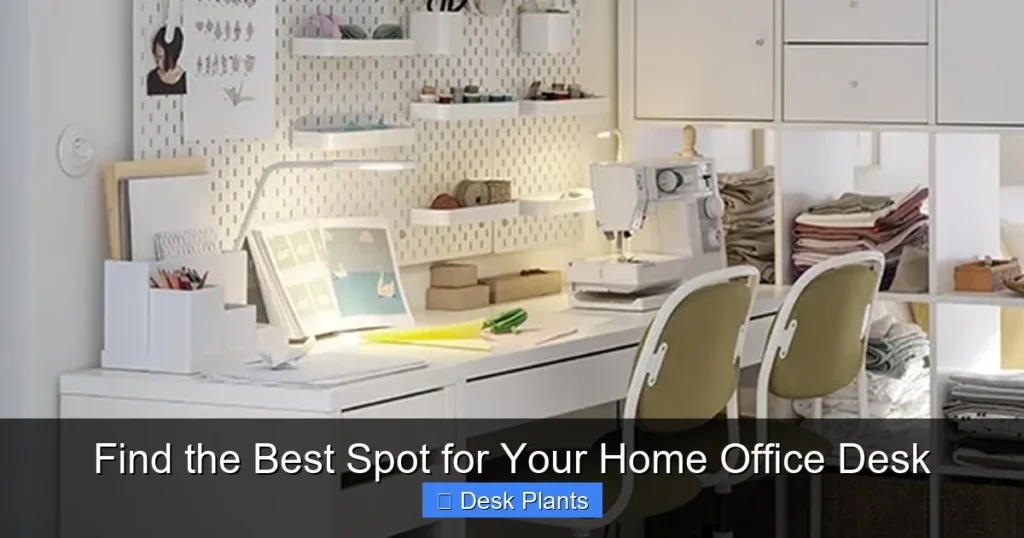
Finding the best spot for your home office desk is crucial for comfort, focus, and productivity. This guide walks you through a step-by-step process to evaluate your space, considering factors like natural light, power sources, room layout, and even the principles of Feng Shui. You’ll learn how to choose a location that supports your workflow and well-being, whether you have a dedicated room or a small corner.
Key Takeaways
- The Command Position is Key: Position your desk to face the door without being directly in line with it. This reduces subconscious stress and puts you in a position of control.
- Harness Natural Light: Place your desk perpendicular to a window to reduce glare on your screen while benefiting from mood-boosting daylight.
- Prioritize Ergonomics First: Your chosen spot must allow for a proper chair height, monitor distance, and keyboard placement to prevent strain and injury.
- Map Your Power and Tech: A great spot is useless without easy access to outlets and strong Wi-Fi. Plan your layout around your tech needs.
- Define Your Work Zone: Use rugs, bookshelves, or room dividers to psychologically separate your office area from your living space, enhancing focus.
- Incorporate Life with Plants: Adding desk plants like snake plants or pothos near your workspace can improve air quality, reduce stress, and boost creativity.
- Your Workflow Dictates Layout: An L-shaped desk might suit collaborative tasks, while a minimalist floating desk is better for deep, focused work.
Find the Best Spot for Your Home Office Desk: A Complete How-To Guide
Setting up a home office is more than just buying a nice desk and chair. Where you place that desk can make or break your productivity, comfort, and even your long-term health. A poorly placed desk can lead to neck strain, eye fatigue, constant distractions, and a lack of motivation. The right spot, however, can make you feel energized, focused, and in control of your workday.
This guide will walk you through the process of finding the absolute best location for your home office desk. We will cover everything from ancient spatial principles to modern ergonomics. You will learn how to evaluate your room, work with lighting, manage cables, and create a zone that truly works for you. Let’s find your perfect desk placement.
Step 1: Assess Your Space and Intent
Before you move a single piece of furniture, take a mental step back. What kind of work do you do? What does your space allow?
Visual guide about Find the Best Spot for Your Home Office Desk
Image source: m.media-amazon.com
Identify Your Work Type
Are you on video calls all day? You’ll need a clean, professional background. Do you handle spreadsheets and need multiple monitors? Your spot needs ample desk space and easy access to power. Are you a creative who sketches or writes? Natural light and a inspiring view might be your priority. Your primary tasks should guide your placement.
Audit Your Room Options
Walk through your home. Is there a dedicated room, a quiet corner in the bedroom, or space in the living area? Each has pros and cons. A dedicated room offers separation. A corner nook requires clever space-saving. Note the size, shape, and fixed features of each potential spot, like windows, doors, vents, and radiators.
Step 2: Apply the “Command Position” (A Feng Shui Principle)
This is arguably the most powerful concept for desk placement. In Feng Shui, the “command position” means placing your desk so you can see the door to the room without being directly in line with it.

Visual guide about Find the Best Spot for Your Home Office Desk
Image source: a.storyblok.com
Why It Works
It taps into a subconscious sense of security. When your back is to the door, part of your mind is on alert, which can increase stress and reduce concentration. Facing the door puts you in a position of control and awareness.
How to Achieve It
Ideally, place your desk diagonally from the door. If that’s not possible, the next best is facing the door directly, but with enough distance that you don’t feel like you’re in the traffic flow. If you must face a wall, hang a small mirror so you can see the reflection of the door behind you.
Step 3: Evaluate and Master Natural Light
Lighting is critical. Natural light boosts mood and reduces eye strain, but it must be managed correctly.
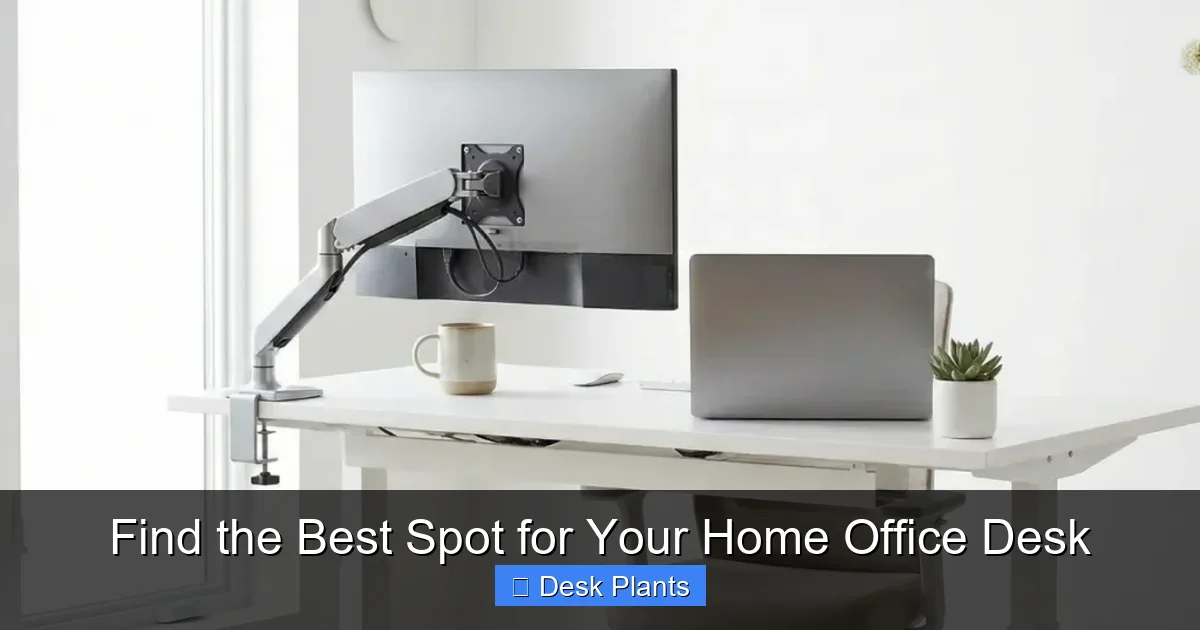
Visual guide about Find the Best Spot for Your Home Office Desk
Image source: resource.auditoryworks.co
The Golden Rule: Perpendicular to Windows
Never place your desk directly facing a window or directly with your back to it. Facing a window causes glare on your screen. Having a window directly behind you creates a silhouette on video calls. The best position is to have the window to your left or right side. This gives you even, shadow-free light for tasks.
Dealing with Direct Sun
If your only option gets harsh afternoon sun, invest in good window treatments. Light-filtering blinds or shades can diffuse the light, removing glare while keeping the room bright.
Step 4: Prioritize Ergonomic Fundamentals
A beautiful spot is useless if it hurts your body. Ergonomics trumps almost everything.
Allow for Proper Chair and Desk Height
Ensure there’s enough space under the desk for your legs and for your chair to slide in comfortably. Your feet should rest flat on the floor (or a footrest), with knees at about a 90-degree angle.
Plan Your Monitor and Keyboard Placement
Your monitor should be about an arm’s length away, with the top of the screen at or slightly below eye level. Your keyboard should allow your elbows to be at a 90-degree angle with wrists straight. Your chosen desk location must accommodate this setup without forcing you to twist your body.
Step 5: Solve the Practical Puzzle: Power and Tech
This is the most practical step. A perfect Feng Shui spot is worthless if you can’t plug in your computer.
Map Your Outlets
Identify all power outlets in the room. Your ideal desk placement should be within reasonable reach of at least two. Consider using a surge-protecting power strip to extend your reach neatly.
Manage Your Cables
Plan your cable management from the start. Use cable trays under the desk, adhesive clips, or sleeves to route cords neatly from your desk to the outlet. A tidy space is a focused space.
Check Your Wi-Fi Signal
Test the Wi-Fi strength in your potential desk spot. If it’s weak, consider a Wi-Fi extender or a powerline adapter for a more stable, wired Ethernet connection.
Step 6: Define Your Work Zone for Mental Focus
Especially in shared or multi-use rooms, you need to create psychological boundaries.
Use Physical Boundaries
A large area rug can anchor your office zone. A bookshelf or a room divider placed behind your desk can separate it from the rest of the room. This visual cue tells your brain, “This is work space.”
Control Your Background
Think about what will be behind you on video calls. A tidy bookshelf, a piece of art, or a simple wall is better than a messy kitchen or a busy hallway. Position your desk with this in mind.
Step 7: Incorporate Life and Inspiration (The Desk Plants Category!)
This is where our category shines. Adding plants to your desk area isn’t just decorative.
Benefits of Desk Plants
Plants like the Snake Plant, ZZ Plant, or Pothos improve air quality, reduce stress, and can boost creativity and productivity. They add a necessary touch of life and color to your workspace.
Placing Your Plants
Place a small plant on your desk for a visual break. Put a larger floor plant like a Fiddle Leaf Fig in the corner near your desk to soften the room’s edges. Ensure they get the appropriate light for their species based on your window placement.
Step 8: Choose Your Desk Layout Based on Workflow
Finally, the type of desk you have will influence the best spot for it.
Against-the-Wall Desks
This is the most space-efficient. It works well in corners and smaller rooms. Ensure you have enough wall space for monitors and shelves above.
L-Shaped or Corner Desks
These are great for multitaskers. They need a dedicated corner. Place them so the primary work surface is in the command position, and the return is easily accessible.
Floating or Centered Desks
Placing a desk in the middle of the room makes a powerful statement and allows access from all sides. This requires a larger room and careful management of cables running across the floor.
Troubleshooting Common Desk Placement Problems
Problem: “My only option is facing a wall.”
Solution: Make the wall a focal point. Hang inspiring art, a vision board, or floating shelves with books and your desk plants. Use a large monitor with a scenic screensaver to create depth.
Problem: “My home office is in a noisy, shared space.”
Solution: Position your desk facing away from the main activity, if possible. Use noise-cancelling headphones. A room divider behind you can also help block visual and some auditory distractions.
Problem: “The room is very small.”
Solution: Opt for a wall-mounted or a very narrow desk. Use vertical space for storage. A light-colored desk and a mirror can make the area feel larger. A single, well-placed plant can add life without clutter.
Conclusion: Your Perfect Spot Awaits
Finding the best spot for your home office desk is a personal and practical journey. It blends the wisdom of the command position with the non-negotiable rules of ergonomics and the sheer practicality of plugging things in. By following these steps—assessing your needs, commanding your space, harnessing light, protecting your body, planning for tech, defining your zone, adding life with plants, and choosing the right layout—you will create a workspace that doesn’t just look good, but truly works for you.
Start with one step today. Move your desk, test the light, or buy that snake plant. Your productivity and well-being will thank you for it.
🎥 Related Video: The BEST place to put your desk in a home office!
📺 Fangshwhy