
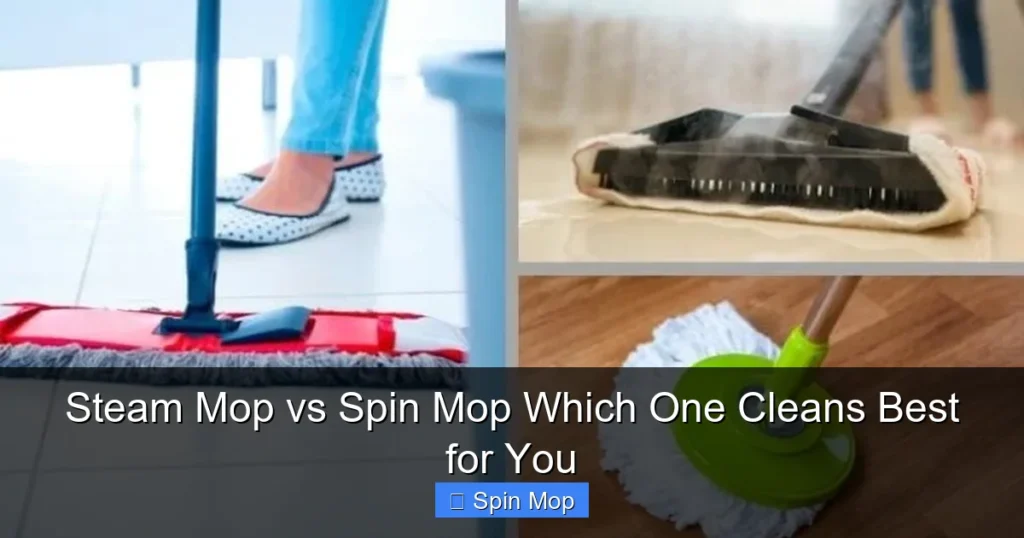
Steam mops use hot steam to sanitize and remove grime without chemicals. Spin mops use a spinning bucket or head to wring and lift dirt for quick, wet cleaning. This guide helps you choose, use, and care for each so you get the best clean for your floors.
Key Takeaways
- Point 1: Steam mops sanitize using hot steam and work best on sealed hard floors.
- Point 2: Spin mops offer manual control, fast wet cleaning, and are great for textured surfaces.
- Point 3: Consider floor type, time, budget, and chemical preferences when choosing.
- Point 4: Maintenance matters: descale steam units and wash spin mop heads often.
- Point 5: For deep sanitizing choose a steam mop; for everyday messes a spin mop is efficient.
- Point 6: Both mops can be eco-friendly when used correctly—less chemical waste and less water use.
Introduction
This guide will help you decide between a steam mop and a spin mop. You will learn how each tool works. You will read step-by-step instructions for using both. You will get tips, maintenance steps, and troubleshooting. By the end, you will know which option cleans best for your home.
What Is a Steam Mop?
A steam mop heats water to create steam. The steam loosens dirt and kills many germs. Steam mops often have a flat head and a cloth pad. They are best on sealed hard floors. They use no harsh chemicals.
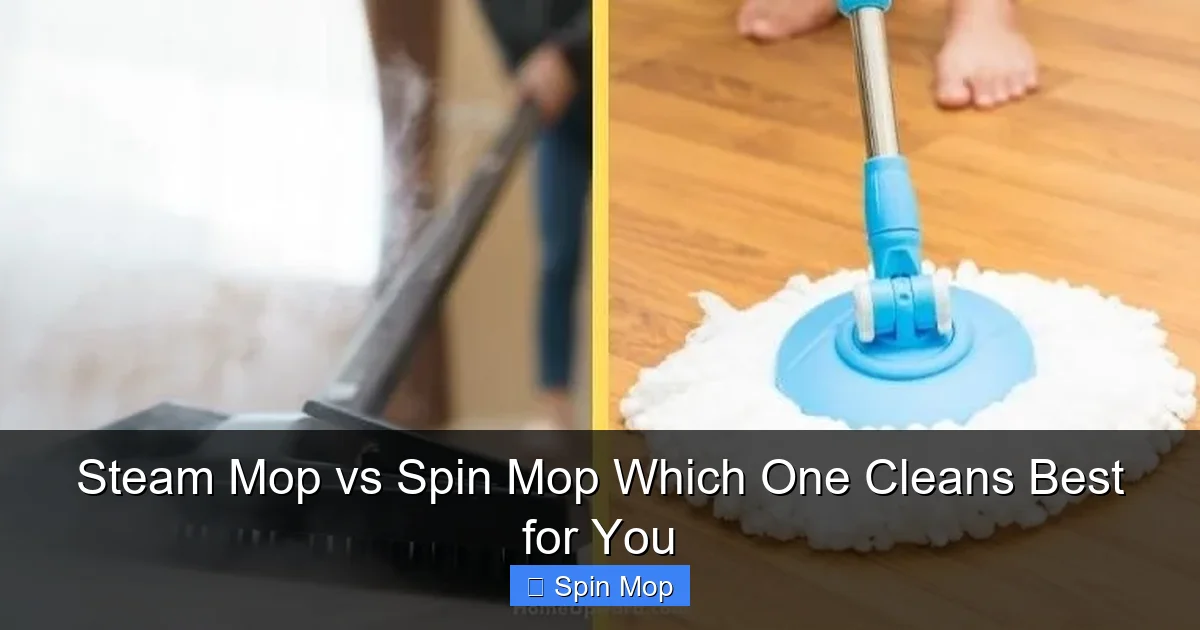
Visual guide about Steam Mop vs Spin Mop Which One Cleans Best for You
Image source: homeupward.com
What Is a Spin Mop?
A spin mop uses a round mop head that often fits into a spinning bucket. The bucket wrings the mop for you. The mop head spins to remove excess water. Many models have a pedal or a hand-twist system. The design cuts down on hand wringing and makes wet cleaning easy.
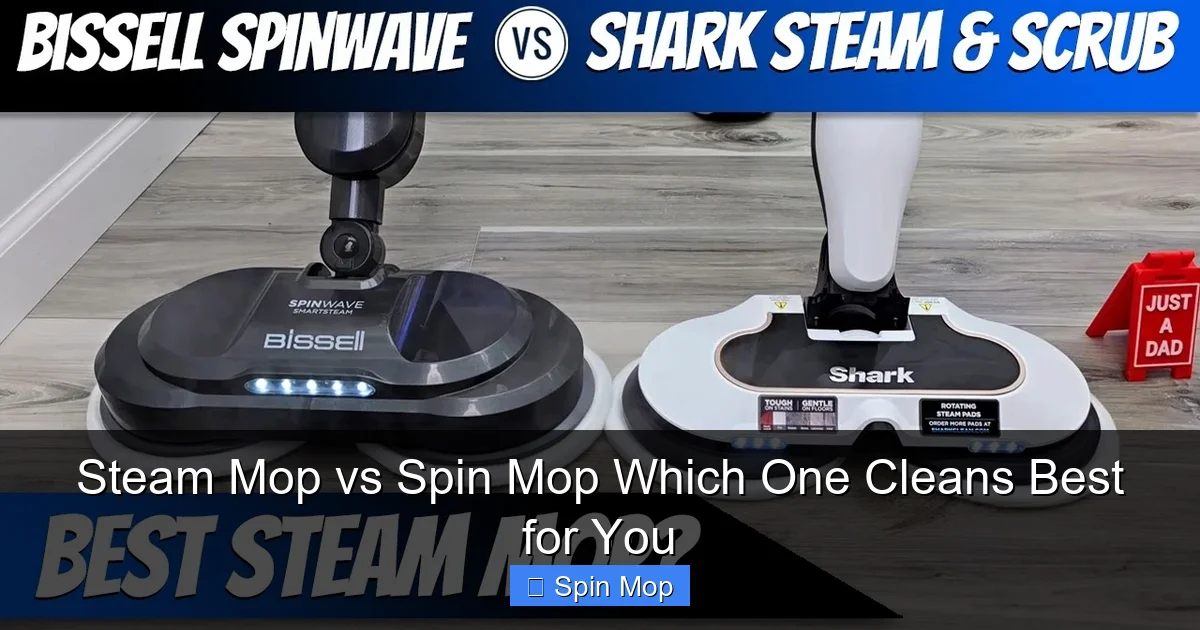
Visual guide about Steam Mop vs Spin Mop Which One Cleans Best for You
Image source: i.ytimg.com
How Steam Mops Work (Step-by-Step)
Step 1: Read the manual
Always read the manual first. Each steam mop has different water limits and safety notes. Check which floors the manufacturer allows.
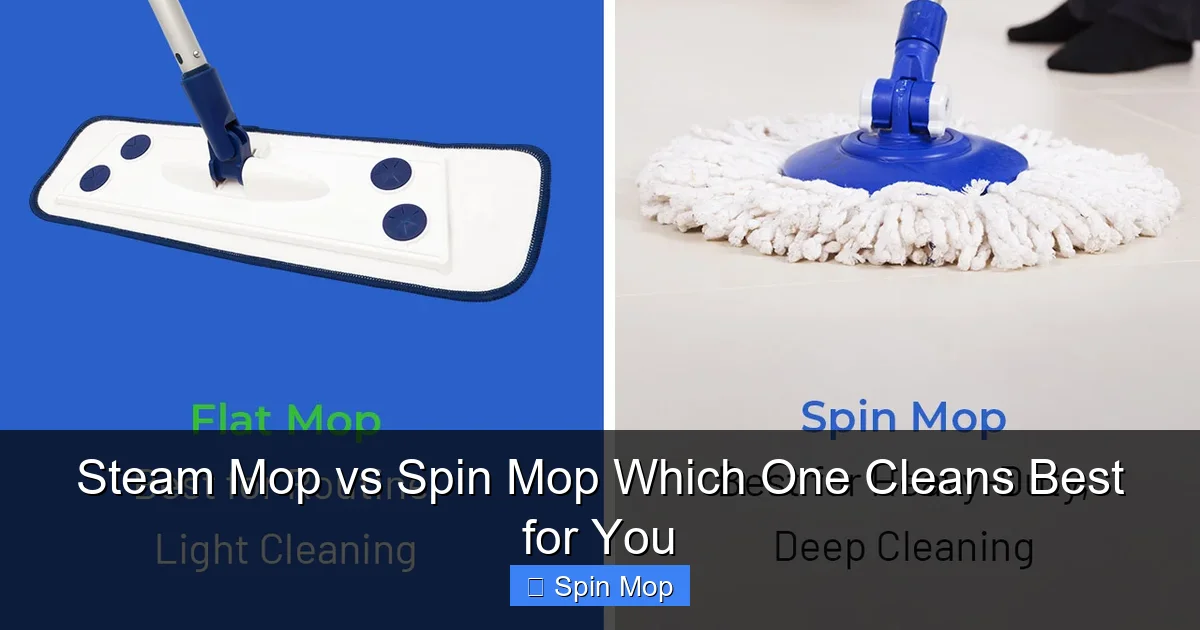
Visual guide about Steam Mop vs Spin Mop Which One Cleans Best for You
Image source: thecleaningstation.com
Step 2: Fill the tank
Use clean water. Some brands recommend distilled water to reduce scale. Fill below the maximum line.
Step 3: Heat up the unit
Plug in and wait for the ready light. Heating usually takes 20–60 seconds. Never leave the mop unattended while heating.
Step 4: Attach the pad
Snap on a clean microfiber pad. Make sure it is secure. A damp pad helps steam transfer to the floor.
Step 5: Steam clean
Move the mop slowly. Let the steam dwell on tough spots. For sticky spills, use a microfibre cloth to lift loosened grime. Do not soak the floor. Use short passes on wood and laminate.
Practical tips for steam mopping
- Speed matters. Move slowly for stubborn stains.
- Use distilled water to cut down mineral build-up.
- Test a small area first on delicate floors.
- Use low steam settings if your unit has options.
How Spin Mops Work (Step-by-Step)
Step 1: Assemble the mop and bucket
Unpack the spin mop and bucket. Clip the handle together. Attach the mop head to the handle. Place the head in the bucket’s spinner basket.
Step 2: Add water and cleaner
Fill the bucket with warm water. Add a small amount of floor cleaner if you like. For many floors, plain water works fine. Avoid bleach on wood floors.
Step 3: Wet and wring
Dip the mop head into the water. Place it into the spinner. Use the pedal or push the handle to spin. The spinner removes excess water. Adjust the spin level for more or less dampness.
Step 4: Mop the floor
Use an S-pattern for large areas. Rinse the mop head regularly in the bucket. Spin it to control dampness. Replace or clean the mop head when it gets dirty.
Practical tips for using a spin mop
- Start at the farthest corner and work to the door.
- Use two buckets if you want cleaner water for rinsing.
- Keep the mop head only slightly damp on wooden floors.
- Replace microfiber heads periodically for best pickup.
Pros and Cons: Steam Mop vs Spin Mop
Here is a clear comparison to help you choose. Both tools clean, but they do it differently.
Steam Mop — Pros
- Sanitizes without chemicals.
- Dries fast.
- Great for removing sticky residues.
- Often lighter to push on smooth floors.
Steam Mop — Cons
- Not for unsealed wood or some laminates.
- Higher upfront cost for quality units.
- Requires descaling with hard water.
- Pads need frequent washing.
Spin Mop — Pros
- Inexpensive and simple to use.
- Great on textured or grout-heavy floors.
- Controls dampness with a spinner.
- Easy to swap heads for cleaning or polishing.
Spin Mop — Cons
- Requires manual effort to move around.
- Mop heads may leave streaks if not cleaned.
- Bucket water can get dirty fast.
- Less sanitizing power than steam.
Choosing the Right Mop for Your Home
Think about your floors, lifestyle, and needs. Here are key points to guide you.
Floor type
Use a steam mop on sealed tile, stone, and many sealed hardwoods. Use a spin mop on most floors, including textured tile and vinyl. If you have unsealed wood, a spin mop with minimal water is safer.
Household needs
If you have pets or kids, steam can sanitize better. If you need fast, frequent cleanups, a spin mop is quick and effective.
Budget
Spin mops are usually cheaper. Steam mops cost more upfront. Factor in the cost of pads and replacement parts for both types.
Storage and weight
Spin mops are light and compact. Steam mops can be bulkier because of the water tank and power cord. Consider storage space when choosing.
Step-by-Step Guide: Using a Spin Mop Like a Pro
Follow these steps to get the best clean with a spin mop. These steps will help you cut cleaning time and improve results.
Step 1: Prep the room
Pick up rugs, toys, and small furniture. Sweep or vacuum first to remove loose dirt. A clean floor helps the mop work better.
Step 2: Mix your solution
Fill the bucket with warm water. Add a mild cleaner if needed. For dark grout or heavy grease, add a strong cleaner but follow floor care rules.
Step 3: Wet and wring
Dip the mop head and allow it to soak. Place it into the spinner basket. Use the pedal or twist action to wring. Aim for a damp but not dripping head, especially on wood and laminate. For tile or non-porous floors you can leave it wetter for more cleaning power.
Step 4: Mop in sections
Work in small sections. Move the mop in an S-pattern. Rinse and wring often. Change the water if it becomes dirty.
Step 5: Final rinse or dry
If you used cleaner, you may want to go over the floor with clean water to remove residue. For fast drying, open windows or use a fan. On wood floors, use minimal water and a nearly dry mop head.
Extra tips for spin mop performance
- Flip the mop head to use a fresh side on bigger jobs.
- Replace the head after 3–6 months with regular use.
- Hand-wash or machine-wash microfiber heads on gentle cycle.
- Use a microfiber head to trap fine dust and hair.
Maintenance: Keep Both Tools Working Longer
Routine care extends lifespan. Here’s how to maintain steam mops and spin mops.
Maintaining a steam mop
- Empty the tank after each use to reduce scale and bacteria.
- Use distilled water if you have hard water.
- Descale monthly if needed with a vinegar solution or manufacturer solution.
- Wash the pad after every use and let it dry completely.
- Store unplugged and cooled, upright if possible.
Maintaining a spin mop
- Rinse the mop head after each use and wring dry.
- Machine-wash heads regularly to remove grime.
- Empty and clean the bucket to prevent odors and bacteria.
- Check the spinner mechanism and clear any hair or debris.
- Replace parts like heads and handles when worn.
Cleaning Solutions and Safety
Not all cleaners mix well with steam or spin buckets. Use the right product for your floors.
For steam mops
Most steam mops work best with water only. Avoid bleach or solvent cleaners. Use only products approved by the manufacturer.
For spin mops
Use a mild floor cleaner for sealed floors. Avoid oil-based soaps on wood floors as they can leave a residue. For grout and heavy stains, a stronger cleaner helps but rinse well afterward.
Troubleshooting Common Issues
Here are common issues and quick fixes for both types of mops.
Steam mop won’t heat
- Check the power cord and outlet.
- Make sure the tank has water and is securely closed.
- If it still won’t heat, consult the manual or contact support.
Steam mop leaves streaks or residue
- Use distilled water to prevent mineral streaks.
- Wash the pad frequently to remove trapped dirt.
- Try slower passes so steam has time to loosen grime.
Spin mop smells or has dirty bucket water
- Empty and rinse the bucket after use.
- Wash the mop head and dry it outside the bucket.
- Replace water frequently during long jobs.
Spin mop head won’t spin
- Clear hair and debris from the spinner basket.
- Check for damage to the pedal or twist mechanism.
- Tighten any loose parts and test again.
Real-World Examples and Use Cases
Here are real-life choices to help you decide.
Apartment owner with laminate floors
If you have sealed laminate, a steam mop offers fast sanitation and fresh smell. Use low steam settings. If you prefer no electricity, a spin mop with a damp head works well for quick touch-ups.
Family with kids and pets
Steam mops can reduce germs and pet odors. For frequent spills, a spin mop makes fast cleanups easy. Many households keep both: a steam mop for deep clean and a spin mop for daily maintenance.
Older home with mixed floors
Pick a spin mop if you have a mix of sealed and unsealed floors. The ability to control dampness helps protect sensitive surfaces. Use the steam mop on tile or sealed stone only.
Buying Guide: What to Look For
Use this checklist when shopping.
For steam mops
- Tank size and heat time.
- Adjustable steam settings.
- Included pads and attachments.
- Weight and maneuverability.
- Warranty and customer support.
For spin mops
- Quality of spinner mechanism.
- Durable microfiber heads.
- Bucket stability and handle strength.
- Height-adjustable handle for comfort.
- Availability of replacement heads.
Eco and Health Considerations
Both tools can be eco-friendly. Steam mops cut down on chemical cleaners. Spin mops reduce water waste when used properly. For allergy sufferers, steam mops can kill dust mites. For chemical sensitivity, spin mops let you control or skip cleaners.
Cost Comparison
Spin mops are cheaper upfront. A good spin mop can cost under $50. Steam mops often start higher, from $70 to several hundred dollars. Factor in pad replacements, descaling solutions, and electricity cost for steam units.
When to Choose Both
Many households benefit from owning both. Use a steam mop for monthly deep cleans and a spin mop for daily spills. This pairing saves time and keeps floors in top shape. A spin mop is also useful where steam is not safe to use.
Conclusion
Both a steam mop and a spin mop clean well. A steam mop adds sanitizing power. A spin mop gives control and quick damp cleaning. Choose based on your floors, budget, and cleaning style. For deep sanitation choose steam. For everyday messes and textured floors choose a spin mop. If you want the best of both, keep one of each for different tasks. Follow maintenance steps to get long life from either tool. With the right choice and care, your floors will stay clean and healthy.
🎥 Related Video: Wet Mop vs. Steam Mop vs. Spin Mop: We Tested All 3
📺 Shop TODAY
Shop TODAY makes a commission when you purchase through our links. » Shop these products here: O-Cedar EasyWring …