
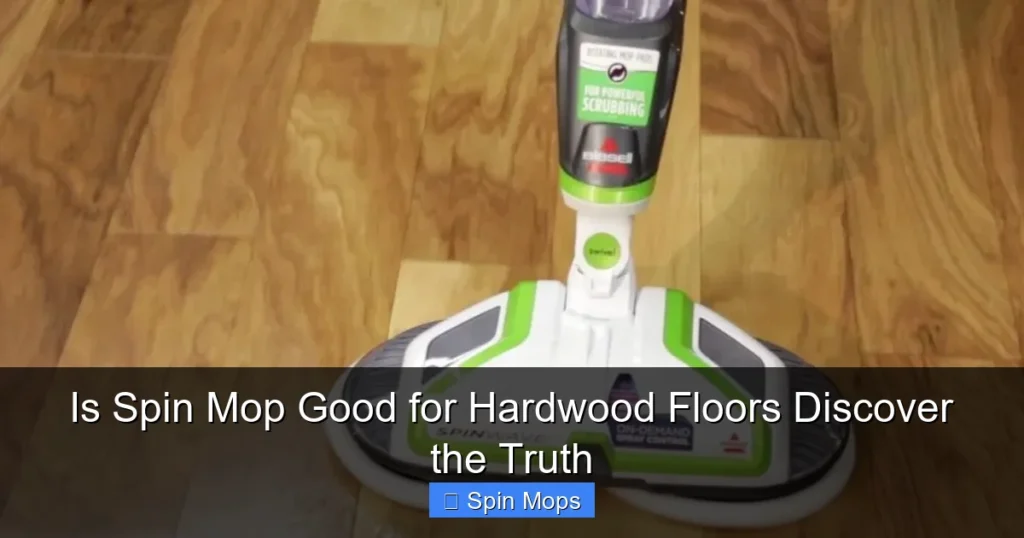
The truth is, a spin mop can be an excellent tool for hardwood floors when used correctly. Its main benefit is controlled moisture application, preventing the standing water that can damage wood. Success depends entirely on your technique, the mop’s microfiber quality, and a gentle, wood-safe cleaning solution.
Key Takeaways
- Controlled Moisture is Key: The spin mop’s bucket allows you to wring the mop head to a damp, not wet, state, which is the golden rule for hardwood floor care.
- Microfiber is Non-Negotiable: High-quality, lint-free microfiber pads are gentle, effective at trapping dirt, and won’t scratch your floor’s finish.
- Solution Matters More Than the Tool: Always use a pH-neutral, hardwood-floor-specific cleaner or a simple vinegar/water mix. Avoid soapy, waxy, or acidic products.
- Technique Prevents Damage: Use a gentle, linear motion following the wood grain. Never let liquid pool or sit on the surface, and dry buff with a clean, dry microfiber pad.
- Regular Dry Maintenance is Essential: Sweep or dry mop daily to remove abrasive grit. The spin mop is for weekly or bi-weekly damp cleaning, not for daily dry pick-up.
- Not All Hardwood Floors Are the Same: Older, worn, or unsealed floors are far more vulnerable to moisture. Always test your mop and cleaner in an inconspicuous area first.
Is Spin Mop Good for Hardwood Floors? Discover the Truth
You stare at your beautiful hardwood floors. You want them clean and shiny. But you also fear damage. Water is wood’s enemy, right? So, is that popular spin mop a friend or foe? The answer isn’t a simple yes or no. The truth is more about how you use it. This guide will show you the complete picture. You will learn the pros and cons. You will get a safe, step-by-step method. We will cover product picks and common mistakes. By the end, you will know if a spin mop is the right partner for your hardwood floors.
Why the Spin Mop Design Has Potential for Hardwood
Let’s break down why a spin mop can work. Traditional mops and buckets often lead to over-wetting. You drag a sopping mop across the floor. Water seeps into seams. This causes swelling, warping, and damage. The spin mop bucket changes the game.
Visual guide about Is Spin Mop Good for Hardwood Floors Discover the Truth
Image source: woodworkingadvisor.com
Its built-in spinner lets you control moisture. You can wring the mop head until it’s just damp. This “damp mopping” is exactly what wood floor makers suggest. The lightweight design is a plus, too. You are not pushing a heavy, water-logged mop. This means less pressure on the floor. The mop head is also usually microfiber. Microfiber grabs dust and dirt. It does not just push dirty water around.
The Major Benefit: Moisture Control
This is the biggest win. A well-wrung spin mop applies a minimal, safe amount of moisture. It evaporates quickly. Your floor is clean and dry in minutes. No puddles. No risk.
The Potential Risk: User Error
The tool is only as good as the user. If you do not wring it enough, it’s a wet mop. If you use the wrong cleaner, you leave residue. If you scrub too hard, you might scratch. The spin mop is not magic. It needs smart use.
Your Safe, Step-by-Step Guide to Using a Spin Mop on Hardwood
Follow these steps for a perfect, safe clean every time.
Visual guide about Is Spin Mop Good for Hardwood Floors Discover the Truth
Image source: woodworkingadvisor.com
Step 1: Preparation is Everything
Never start with a damp mop on a dirty floor. Grit and sand are like sandpaper. They will scratch the finish when you mop.
- Dry Sweep or Vacuum: Use a soft-bristle broom or a hardwood floor vacuum attachment. Get every crumb and dust bunny.
- Spot Clean Sticky Spills: Use a slightly damp microfiber cloth for any sticky spots. Do this before the overall mopping.
- Mix Your Cleaner: Fill the clean bucket with warm water. Add your cleaner. Use only a pH-neutral, hard-floor cleaner or a mix of 1/4 cup white vinegar to 1 gallon of warm water. Avoid soap-based products.
Step 2: The Perfect Wringing Technique
This is the most important skill.
- Submerge the mop head in the cleaning solution.
- Lift it and place it into the spinning basket.
- Spin it vigorously. Do not be shy. Spin it 4-5 times until no water drips when you hold it over the bucket.
- The mop head should feel damp to the touch, not dripping wet.
Step 3: Mopping with Care
Now, take the mop to the floor.
- Follow the Wood Grain: Move the mop in straight lines along the direction of the wood planks. This prevents streaking.
- Use Light Pressure: Let the microfiber do the work. Glide the mop; do not scrub.
- Work in Small Sections: Do a 4×4 foot area, then flip or change the mop pad. This stops you from spreading dirt.
- No Standing Liquid: If you see a wet trail or any pooling, stop. Your mop is too wet. Wring it out more.
Step 4: The Final, Crucial Step – Dry Buffing
This extra step guarantees safety and shine.
- After damp mopping a section, take a clean, dry microfiber cloth or mop pad.
- Go over the same area with the dry cloth. This soaks up any tiny leftover moisture.
- It also buffs the floor to a beautiful, streak-free shine. Do not skip this!
Choosing the Right Spin Mop and Supplies
Not all spin mops are equal. Here is what to look for.
Visual guide about Is Spin Mop Good for Hardwood Floors Discover the Truth
Image source: thespruce.com
The Mop and Bucket
- Powerful Spinner: Look for a bucket with a geared or foot-pedal spinner. It must get the mop head very dry.
- Replaceable Microfiber Heads: Choose a mop with flat, reusable microfiber pads. Avoid string mop heads; they can be too abrasive.
- Two Buckets are Ideal: Some systems have a two-bucket design. One for clean solution, one for rinsing. This keeps your cleaning water cleaner longer.
The Cleaning Solution
Never use: All-purpose cleaners, dish soap, steam, or wax-based polishes. They leave dulling films.
Always use: Cleaners labeled specifically for hardwood or sealed floors. Our simple vinegar and water mix is a great, cheap option. It cuts grease and dries clear.
Troubleshooting Common Spin Mop Problems on Hardwood
Ran into an issue? Here are quick fixes.
Problem: Streaky or Dull Floors After Mopping
Cause: This is usually a cleaner problem. You are using too much product, or the wrong kind. Soapy residue is left behind.
Fix: Mop the floor again with clean, warm water only (no cleaner). Wring very well. Dry buff thoroughly. Switch to a no-residue cleaner.
Problem: The Floor Still Looks Dirty
Cause: Your mop pad is dirty. You are just moving dirt around.
Fix: Change or rinse your mop pad more often. Use the two-bucket method. Always start with a completely dry-swept floor.
Problem: Water Beads on the Floor
Cause: Your mop is far too wet. Or, there is a wax or polish buildup repelling the water.
Fix: Wring the mop head until it is barely damp. If buildup is the issue, consult a floor pro to properly strip the old wax before damp mopping.
Conclusion: The Final Verdict
So, is a spin mop good for hardwood floors? The truth is yes, it can be an outstanding tool. But it is not automatic. Its goodness comes from your hands. You must master moisture control. You must pair it with the right cleaning solution. You must commit to dry buffing.
Think of it this way. A spin mop gives you the precision to follow the #1 rule of hardwood care: use minimal moisture. It turns a risky chore into a safe routine. If you follow the guide above, your spin mop will help keep your floors gorgeous for years. Start slow. Test in a closet. You will soon clean with confidence.
🎥 Related Video: Testing Cheap vs. Expensive Mop Buckets !
📺 This Vs That