
Baby jumpers are not inherently “bad,” but improper and excessive use can pose risks to hip, leg, and motor skill development. This guide helps you understand the safety guidelines, age recommendations, and time limits for using a jumper, and provides safer alternatives to promote healthy growth. The key is informed, moderated use.
Key Takeaways
- Moderation is Critical: Excessive time in a baby jumper can hinder natural motor development and lead to muscle tightness.
- Timing Matters: Use only when a baby has good head and neck control and can sit with minimal support, typically not before 4-6 months.
- Hip Health is Paramount: Choose a jumper with a wide, supportive seat that keeps hips in a healthy, “M-shaped” position to prevent dysplasia.
- It’s Not a Developmental Tool: A jumper is for fun and supervised play, not for teaching a baby to walk or build core strength.
- Supervision is Non-Negotiable: A baby in a jumper must always be within sight and reach of an adult to prevent accidents.
- Floor Time is Essential: Unrestricted floor play is irreplaceable for developing rolling, crawling, and walking skills.
- Know the Signs to Stop: If your baby’s toes barely touch the ground, they arch their back, or seem frustrated, it’s time to take a break.
Is a Baby Jumper Bad for Development? A Parent’s Complete Guide
As a parent, you want the best for your baby. Every new gadget and toy comes with a big question. Is this helpful or harmful? The baby jumper sits right in the middle of this debate. You see happy babies bouncing with joy in them. But you also hear warnings from experts. So, what’s the real deal? Is a baby jumper bad for development?
The short answer is: it depends entirely on how and how much you use it. Used incorrectly, a baby jumper can pose real risks. Used wisely and in moderation, it can be a source of safe fun. This guide will walk you through everything. You’ll learn the potential benefits, the proven risks, and the golden rules for safe use. We will also explore fantastic alternatives. Your goal is to make a confident, informed choice for your little one’s growth.
Step 1: Understand the Baby Jumper
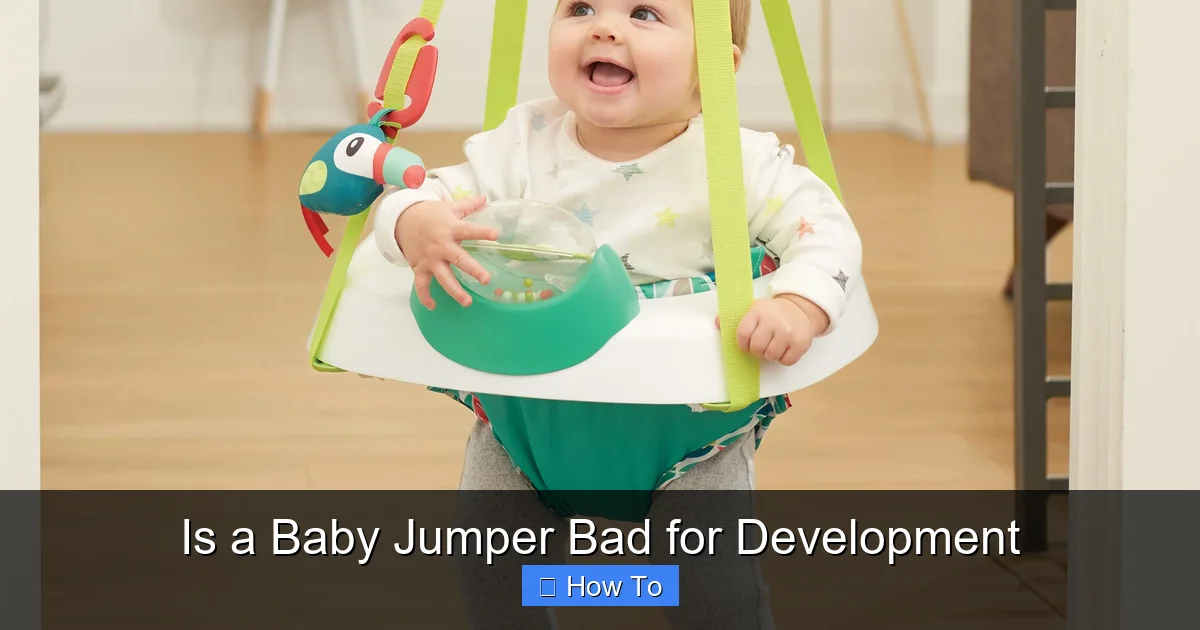
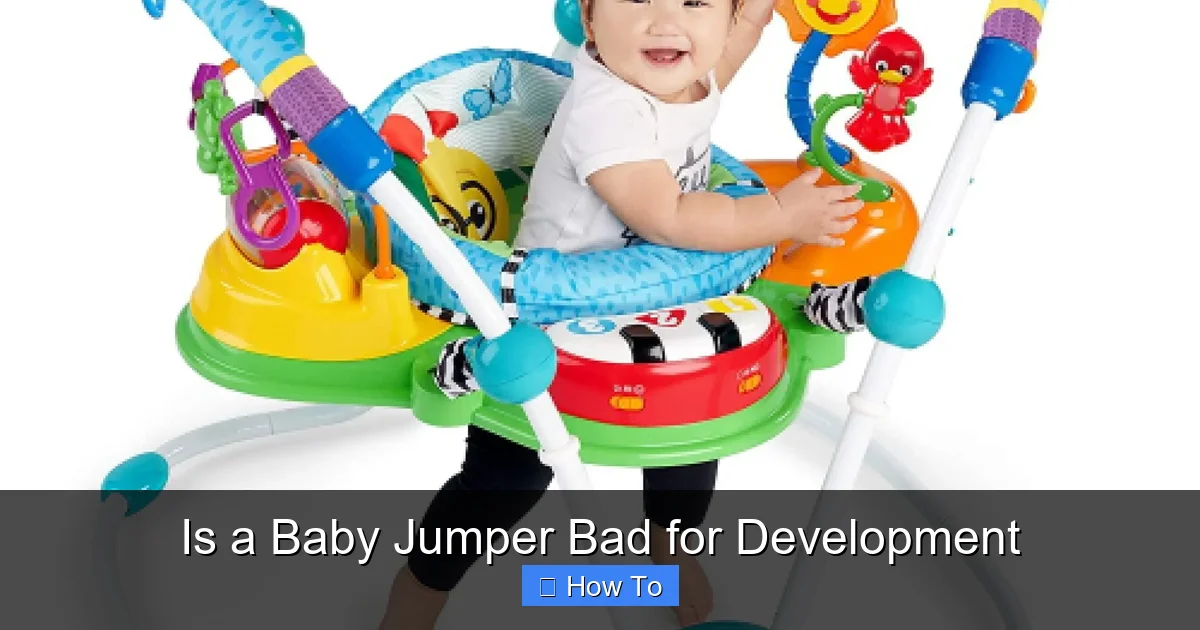
First, let’s be clear about what we’re talking about. A baby jumper, or activity jumper, is a seat suspended by elastic straps or a spring from a door frame or a standalone frame. The baby sits in it, and when they push with their toes, they bounce up and down. Many models have attached toys, lights, and sounds. They are designed for entertainment and limited, supervised play.

Visual guide about Is a Baby Jumper Bad for Development
Image source: m.media-amazon.com
The Potential Benefits (The “Pros”)
When used correctly, a jumper can have a few positive points:
- Fun and Entertainment: Babies often love the sensation of bouncing. It can provide a joyful sensory experience and a change of view.
- Leg Muscle Engagement: The bouncing action can strengthen leg muscles. But remember, it’s a very specific motion.
- Parent’s Hands-Free Moment: It can give you 10-15 minutes to prepare a meal or take a breather while your baby is safely contained and happy.
The Real Risks and Concerns (The “Cons”)
This is the crucial part to understand. The risks are why many pediatric therapists urge caution.
- Hip Development Risks: This is the #1 concern. Many jumpers have narrow, sling-style seats. This can place a baby’s hips in an unhealthy position. It puts pressure on the hip socket. This can increase the risk of Developmental Dysplasia of the Hip (DDH).
- Toe-Walking and Tight Calves: Babies in jumpers often push off with their toes. Doing this for long periods can tighten calf and Achilles tendon muscles. This may lead to a preference for toe-walking later on.
- Delayed Motor Skills: Time in a jumper is time not spent on the floor. Floor time is where babies learn to roll, sit up, crawl, and pull to stand. These skills build core, back, and arm strength. A jumper does not teach these skills. It can actually delay them if overused.
- Improper Posture and Movement: The bouncing motion is not natural walking. It can encourage babies to use their legs in an abnormal, synchronized “jumping” pattern. This does not help them learn the alternating leg motion needed for walking.
- Safety Hazards: Jumpers can tip over. Babies can bounce into door frames, walls, or furniture. They can get fingers pinched in the springs. Without direct supervision, the risks multiply.
Step 2: Follow the Golden Rules for Safe Use
If you choose to use a jumper, these rules are non-negotiable. They minimize risks and keep the experience positive.
Visual guide about Is a Baby Jumper Bad for Development
Image source: m.media-amazon.com
Rule 1: Wait for the Right Age and Milestones
Do not put your baby in a jumper too early. They must have:
- Good Head and Neck Control: Their head should not wobble. They need to hold it up steadily on their own.
- Trunk (Core) Stability: They should be able to sit with minimal support. This usually happens around 5-7 months.
Typical Age Range: Most experts agree that 6 months is the earliest safe start time. Always check the manufacturer’s guidelines, but your baby’s development is the best guide.
Rule 2: Enforce Strict Time Limits
This is the most important rule for development. Less is more.
- Maximum 15-20 minutes per session.
- No more than 1-2 sessions per day.
- Total daily time should not exceed 30 minutes.
Set a timer! It is easy to lose track of time when your baby is happy and you are getting things done.
Rule 3: Ensure Perfect Positioning
How your baby sits in the jumper matters immensely.
- Foot Position: Your baby’s feet should be flat on the floor. Not just on their toes. Adjust the height so their soles make full, firm contact.
- Hip Position: Choose a jumper with a wide, supportive seat. Look for one that keeps the hips in a healthy “M” position—thighs spread apart and knees slightly higher than the buttocks. Avoid narrow, sling-like seats.
- Body Position: Their back should be straight against the seat back. They should not be leaning forward or arching their back.
Rule 4: Supervise Actively and Create a Safe Zone
Never leave your baby unattended in a jumper. Be in the same room, watching.
- Clear the area of hazards like stairs, sharp furniture corners, hot appliances, or blind cords.
- If using a doorway jumper, ensure the door frame is strong and the clamp is secure. Keep the area around the door clear.
- For standalone jumpers, place them on a flat, non-slippery surface away from walls.
Step 3: Prioritize Developmental Floor Time
The jumper should never replace floor play. Think of floor time as the main course and jumper time as a small, occasional dessert.
Visual guide about Is a Baby Jumper Bad for Development
Image source: totsafe.com
Essential Activities to Do Instead of (or alongside) the Jumper
- Tummy Time: The cornerstone of motor development. Builds neck, back, shoulder, and arm muscles.
- Free Rolling and Reaching: Place toys just out of reach to encourage rolling and stretching.
- Sitting Practice: Use cushions for support as they learn to balance.
- Crawling Obstacle Courses: Use pillows and blankets to create fun challenges.
- Cruising Practice: Once they pull up, let them practice walking while holding onto a stable couch or coffee table.
Aim for significantly more minutes of floor time than jumper time every single day.
Step 4: Know When to Stop Using the Jumper
Your baby will give you signs that it’s time to retire the jumper.
- They can walk independently.
- They exceed the jumper’s maximum weight limit (check the manual!).
- They seem bored or frustrated in it.
- They try to climb out of it.
- Their feet are flat on the floor, but their knees are severely bent even at the lowest setting.
Typically, most babies outgrow jumpers between 10-12 months.
Troubleshooting Common Jumper Issues
Let’s solve some common problems parents face.
My baby only goes on their toes in the jumper.
Solution: Lower the seat immediately. Their entire foot must be flat. If they are on tiptoes at the lowest setting, they are too small for the jumper. Stop using it and wait a few weeks before trying again.
My baby seems unhappy or cries in the jumper.
Solution: Don’t force it. Take them out. They might be uncomfortable, tired, or simply not like it. Try again another day for a very short period. If they consistently dislike it, that’s okay. There are many other play options.
The jumper seems to make my baby hyperactive or overstimulated.
Solution: Limit the session to 10 minutes. Avoid using it right before nap or bedtime. The bouncing and attached toys can be very stimulating for some babies.
I’m worried about hip development.
Solution: First, ensure you have a jumper with a wide seat. Second, strictly limit time. Third, discuss your concerns with your pediatrician. They can assess your baby’s hips at well-child visits.
Conclusion: Making an Informed Choice
So, is a baby jumper bad for development? The answer is not a simple yes or no. A baby jumper is a tool. Like any tool, its effect depends on the user. Used with caution, strict limits, and a focus on safety, it can be a brief, fun activity. Used excessively or incorrectly, it can indeed interfere with natural development.
The safest path is to treat a jumper as an occasional entertainment station, not a developmental aid or a babysitter. Your baby’s primary playground should always be the floor. Their most important teachers are their own curiosity and your loving interaction. By balancing fun gadgets with plenty of free movement, you are giving your baby the best foundation to grow strong, confident, and on track.
🎥 Related Video: Are Baby Jumpers Beneficial Or Harmful For Babies?
📺 Jamie Mitchell MS,PT
Baby jumpers are very popular for both babies and parents. However, they place babies at risk of developmental delays and …
