
Learn how to make a study desk at home with this easy DIY project. This guide provides clear steps to build a sturdy desk with an integrated monitor stand, using common tools and materials. Save money and customize your workspace to fit your needs perfectly.
Key Takeaways
- Planning is crucial: Proper measurements and design ensure a desk that fits your space and ergonomic needs.
- Choose the right materials: Selecting durable wood and hardware guarantees longevity and stability for your study desk.
- Safety first: Always use protective gear and follow tool instructions to prevent accidents during construction.
- Integrate a monitor stand: Building a raised platform or shelf improves posture and reduces neck strain.
- Finishing enhances durability: Sanding, staining, or sealing the wood protects it and adds a professional look.
- Customization is key: Adjust dimensions and features like cable management to suit your specific study requirements.
- DIY saves costs: Making a study desk at home is more affordable than buying a pre-made one, with added personal satisfaction.
Introduction
Do you want a perfect study space without spending a lot? Learning how to make a study desk at home is a fun and rewarding DIY project. It lets you create a workspace that fits your room and style. This guide will show you how to build a simple study desk with a monitor stand. You will use basic tools and materials. Even if you are a beginner, you can do this. By the end, you will have a sturdy desk. It will boost your productivity and comfort.
Making a study desk at home saves money. It also gives you control over the design. You can choose the size, height, and features. A good desk helps you study or work better. Adding a monitor stand is smart. It raises your screen to eye level. This reduces neck and back pain. Let’s get started on your DIY journey. Soon, you will know exactly how to make a study desk at home that suits you.
Materials and Tools Needed
First, gather all items. Having everything ready makes the project smoother. Here is a list for your DIY study desk. We include materials for the monitor stand too.

Visual guide about How to Make a Study Desk at Home a Simple DIY Project
Image source: i.ytimg.com
Materials
- Wood for desktop: Use plywood or solid wood. A 3/4 inch thick board is good. Cut it to your size. For example, 48 inches wide and 24 inches deep.
- Wood for legs and frame: 2×4 lumber works well. Get four pieces for legs. Add more for crossbars and supports.
- Wood for monitor stand: A smaller plywood piece. About 12 inches deep and 24 inches wide. Also, get support brackets or scrap wood.
- Hardware: Wood screws (2.5 inch and 1.5 inch). Corner brackets, L-brackets, wood glue, sandpaper, wood stain or paint, and sealant.
- Optional: Cable management clips, drawer slides, felt pads for legs, and decorative trim.
Tools
- Measuring tape and pencil: For precise marks and measurements.
- Saw: A circular saw or hand saw to cut wood.
- Drill and drill bits: To make pilot holes and drive screws.
- Screwdriver: Or use drill bits for screws.
- Clamps: To hold wood pieces together during assembly.
- Level: To check if the desk is even.
- Safety gear: Safety glasses, gloves, and a dust mask.
- Square: To ensure right angles.
- Sander: Or sanding blocks for smoothing wood.
With these, you are ready to learn how to make a study desk at home. Check your list twice. It avoids delays later.
Step 1: Planning and Design
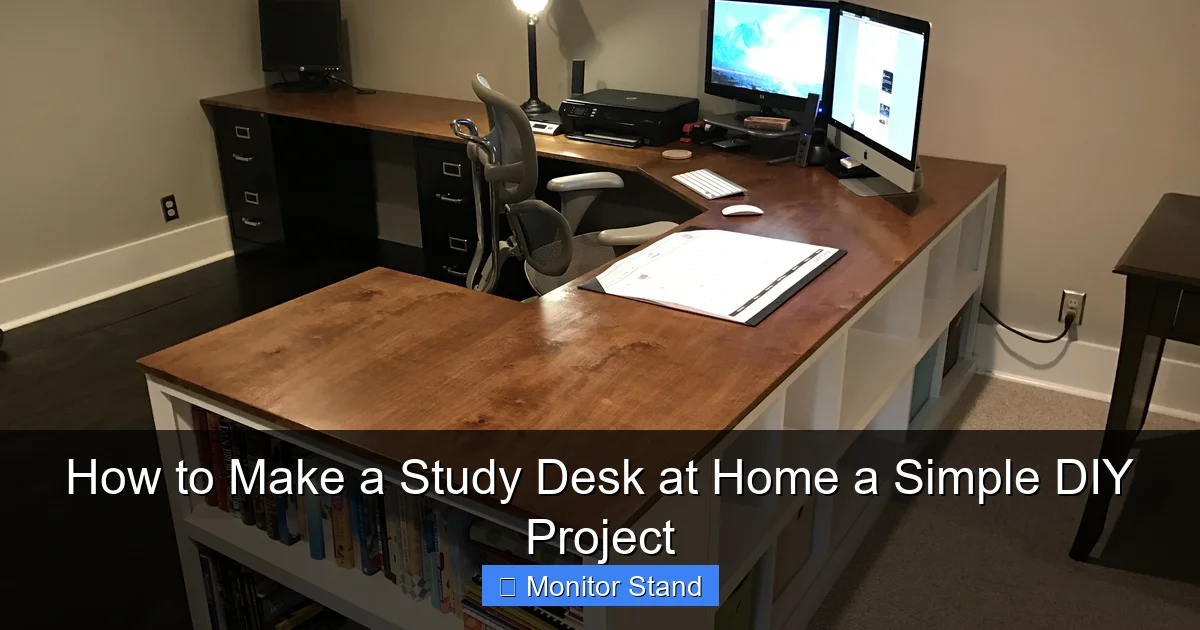
Start with planning. Good planning ensures a desk that fits your space. Think about where the desk will go. Measure the area. Note any obstacles like windows or outlets. Then, consider your needs. How much surface do you want? What about storage? Since we are adding a monitor stand, plan for that too.
Visual guide about How to Make a Study Desk at Home a Simple DIY Project
Image source: ana-white.com
Determine Dimensions
Standard desk height is 29 to 30 inches. But your chair might need a different height. Sit in your chair. Measure from the floor to your elbow. That is a good desk height. For width, 48 to 60 inches is common. Depth can be 24 to 30 inches. This gives room for a monitor, keyboard, and books. For the monitor stand, decide on height. A raise of 4 to 6 inches is often enough. The stand should be wide enough for your screen. About 20 to 24 inches wide is safe.
Sketch Your Design
Draw a simple sketch. Include the desktop, legs, frame, and monitor stand. Label all dimensions. This sketch is your blueprint. It helps when you cut and assemble. You can also use online design tools. But a hand sketch works fine. As you sketch, think about how to make a study desk at home that is both functional and stylish.
Calculate Material Quantities
From your sketch, list wood pieces. For example, one desktop piece, four legs, four crossbars, and one monitor stand platform. Write down lengths. This prevents waste. Buy a little extra for mistakes. Now, you have a clear plan. You are set to move to the next step.
Step 2: Cutting the Wood
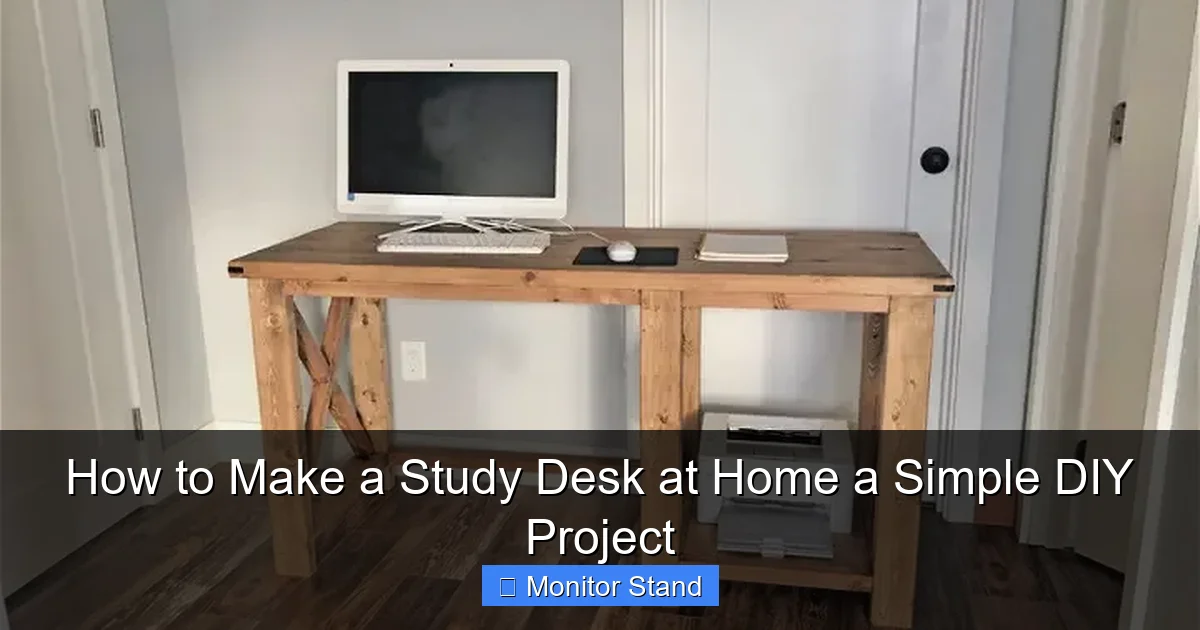
Cutting is a key part of the project. Take your time. Accuracy here makes assembly easier. Always wear safety glasses and a dust mask when cutting.
Visual guide about How to Make a Study Desk at Home a Simple DIY Project
Image source: media.blitsy.com
Cut the Desktop
Take your plywood or solid wood. Measure your desktop dimensions. Mark them with a pencil and straight edge. Use a saw to cut. A circular saw with a guide gives straight cuts. If using a hand saw, go slow. Keep the blade steady. After cutting, sand the edges. Use medium-grit sandpaper. This removes rough spots. It prevents splinters later.
Cut the Legs and Frame Pieces
Cut the 2x4s for legs. Based on your planned height, cut four pieces. For example, if desk height is 30 inches, subtract the desktop thickness. That might give leg length of 29.25 inches. Cut carefully. Then, cut crossbars. These connect legs. For a simple frame, cut two pieces for the front and back. Cut two more for the sides. Lengths depend on your desk width and depth.
Cut the Monitor Stand Components
Cut the monitor stand platform. Use your planned dimensions. For instance, 24 inches wide and 12 inches deep. Also, cut support pieces. These can be small wood blocks or strips. They will hold the platform up. Cut them to the desired height, like 4 inches. Now, all pieces are cut. You are learning how to make a study desk at home with precision. Double-check all cuts before moving on.
Step 3: Assembling the Frame
The frame gives your desk strength. We will build it step by step. Start with the leg assemblies.
Assemble the Leg Units
Take two legs. Place them parallel on a flat surface. Attach a crossbar near the top. Use wood glue and screws. Pre-drill holes to avoid splitting. Then, attach a crossbar near the bottom. Repeat for the other two legs. You now have two leg units. Check with a square. Ensure corners are 90 degrees. This step is vital for stability.
Connect the Leg Assemblies
Place the leg units apart. Distance should match your desk depth. Attach side crossbars between them. Use clamps to hold pieces. Pre-drill and screw from the outside. Make sure everything is level. Use a level on top of the crossbars. Adjust if needed. This frame is the base of your DIY study desk. A sturdy frame means a sturdy desk.
Add Center Support (Optional)
For larger desks, add a center support beam. This prevents desktop sag. Cut a 2×4 to fit between the side crossbars. Attach it in the middle. Use brackets for extra strength. Now, the frame is ready. You are mastering how to make a study desk at home with a solid foundation.
Step 4: Attaching the Desktop
Now, place the desktop on the frame. This is exciting. You see your desk taking shape.
Position the Desktop
Lift the desktop onto the frame. Center it evenly. There should be overhang on all sides. About 1 inch is good. Check with a tape measure. Ensure it looks balanced. Once happy, clamp the desktop to the frame. This holds it in place for screwing.
Secure the Desktop
From underneath, drive screws through the frame into the desktop. Use 2-inch wood screws. Place screws every 6 to 8 inches along the frame. Do not over-tighten. It might crack the wood. Countersink the screws slightly. This means the screw heads are flush or below the surface. It gives a clean look.
Reinforce with Brackets
For added security, install corner brackets. Put them at the joints where legs meet the frame. Also, use L-brackets to connect the desktop to the frame. This is extra insurance. Your desk will handle weight without wobbling. Now, the main structure is done. You are close to finishing your project on how to make a study desk at home.
Step 5: Adding the Monitor Stand
The monitor stand is a highlight. It makes your desk ergonomic. We will build a simple raised platform.
Build the Monitor Stand Platform
Take the cut platform piece. Attach support brackets underneath. You can use metal L-brackets or wood blocks. If using wood, glue and screw them at the corners. Ensure they are even. The platform should sit flat. Test by placing it on a surface.
Attach the Monitor Stand to the Desktop
Decide where to place the stand. Usually, at the back center of the desktop. This leaves room for keyboard in front. Position the stand. Mark its location with a pencil. Then, attach it. You can screw from underneath through the desktop. Or, use brackets to secure it to the back of the desk. Check with a level. The stand must be level for your monitor. This step is key when you make a study desk at home with a monitor stand. It improves your posture.
Test the Monitor Stand
Place your monitor on the stand. See if it feels stable. Adjust if needed. You can add a non-slip pad on the stand. This prevents the monitor from sliding. Now, your desk has a built-in monitor stand. Great job!
Step 6: Finishing Touches
Finishing makes your desk look professional. It also protects the wood. Do not skip this step.
Sanding
Sand the entire desk. Start with medium-grit sandpaper. Go with the wood grain. Sand all surfaces: desktop, legs, frame, and monitor stand. Then, switch to fine-grit sandpaper. This smooths everything. Wipe away dust with a damp cloth. Let it dry.
Staining or Painting
Choose a stain or paint. Stain shows wood grain. Paint gives color. Apply with a brush or rag. Follow the product instructions. Usually, apply in thin coats. Let each coat dry. Two coats are often enough. For paint, you might need primer first. This ensures even coverage.
Sealing
After staining or painting, apply a sealant. Use polyurethane or varnish. It protects from scratches and spills. Apply in a well-ventilated area. Use even strokes. Let it dry completely. This might take a day. Be patient.
Add Optional Features
Now, add extras. Install cable management clips under the desk. They hold wires neatly. Attach felt pads to leg bottoms. They protect floors and reduce noise. You can also add a power strip holder. These small touches make your DIY study desk more functional. You have successfully learned how to make a study desk at home that is both beautiful and practical.
Practical Tips and Examples
Here are some tips to help you. They come from experience.
- Ergonomic Adjustments: Your desk height should let your arms rest at 90 degrees. The monitor stand should bring the screen top to eye level. This prevents strain.
- Material Choices: Plywood is affordable and strong. Solid wood looks premium but costs more. For legs, metal hairpin legs are trendy and easy to install.
- Tool Hacks: No clamps? Use heavy books or weights to hold pieces. No drill? Pre-drill with a nail and hammer, then screw manually.
- Design Variations: Want a larger monitor stand? Make it width of the desk. Add a lower shelf for speakers or plants. For a modern look, use pipe fittings for legs.
- Example Desk: A student desk might be 42 inches wide, 24 inches deep, and 28 inches high. The monitor stand is 20 inches wide, 10 inches deep, and 5 inches high. This fits a laptop and books.
- Space-Saving Ideas: If room is small, build a wall-mounted desk. The monitor stand can be a floating shelf above the desk. It saves floor space.
These tips help you customize. Remember, the goal is to make a study desk at home that works for you. Be creative!
Troubleshooting Common Issues
Problems can happen. Do not worry. Here are fixes.
Desk is Wobbly
Check all screws. Tighten them. Ensure the frame is square. Measure diagonals. They should be equal. If not, adjust by loosening screws and pushing into square. Add diagonal braces if needed. They are wood pieces across corners.
Wood Splits During Assembly
This happens if you do not pre-drill. Always pre-drill holes for screws. Use wood glue on joints. It fills gaps and adds strength. If splits occur, fill with wood filler. Sand smooth after drying.
Monitor Stand is Not Level
Use a level to check. If uneven, add shims. Shims are thin wood pieces. Place them under the stand brackets. Or, adjust the screw tightness. Sometimes, sanding the bottom of the stand helps.
Finish Looks Uneven
Sand the area lightly. Wipe clean. Apply another coat of stain or paint. Use thin coats. Avoid brushing too much. Let dry fully between coats.
Troubleshooting is part of DIY. When you learn how to make a study desk at home, you also learn to solve problems. It makes you a better builder.
Conclusion
You did it! You built your own study desk with a monitor stand. This guide showed you how to make a study desk at home from start to finish. You planned, cut, assembled, and finished. Now, you have a custom desk. It fits your space and needs. It promotes good posture with the monitor stand. And it cost less than a store-bought desk.
Enjoy your new study area. Use it for work, school, or hobbies. Be proud of your DIY skills. You can always modify the desk later. Add drawers or a keyboard tray. The knowledge you gained is valuable. Share it with friends. Happy studying and creating!
