
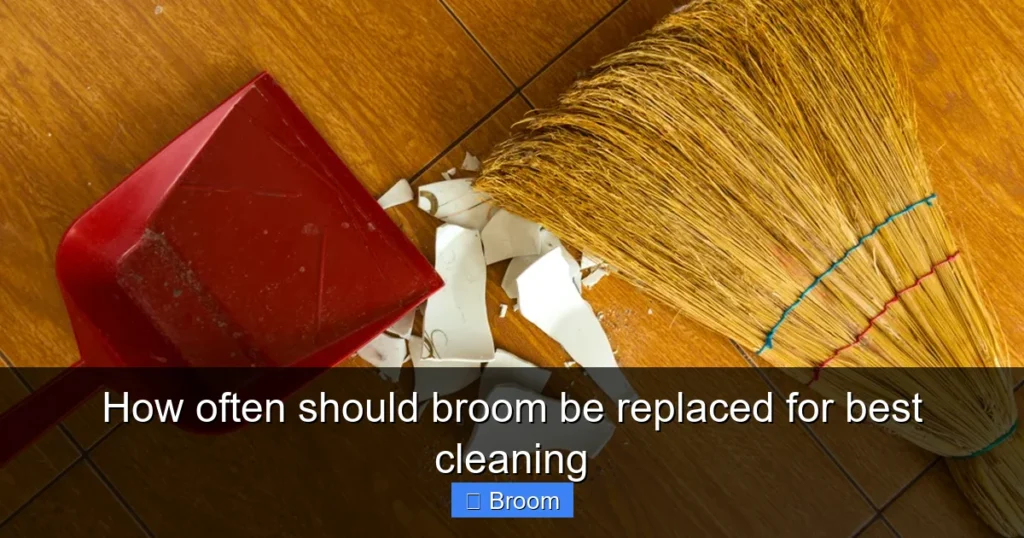
Knowing how often a broom should be replaced is key to keeping your floors truly clean. This guide explains how long different types of brooms last, how to spot the signs of wear, and how to care for your broom so it sweeps effectively for as long as possible. By the end, you’ll know exactly when to replace your broom and how to get the best cleaning performance from every sweep.
Key Takeaways
- Point 1: Most household brooms should be replaced every 6–12 months, depending on use and floor type.
- Point 2: Curved, frayed, or clumped bristles are clear signs your broom is no longer cleaning effectively.
- Point 3: Indoor, outdoor, and specialty brooms have different lifespans and replacement schedules.
- Point 4: Regular cleaning, proper storage, and gentle use can extend how often a broom should be replaced.
- Point 5: A worn broom leaves dust lines, pushes dirt around, and can scratch delicate floors.
- Point 6: Tracking your broom’s age and performance helps you replace it before your cleaning quality drops.
- Point 7: Choosing the right broom for your surface reduces wear and improves overall cleaning results.
Introduction: Why Broom Replacement Matters for Best Cleaning
Most people think a broom lasts forever. You buy it once, hang it in a closet, and forget about it. But if you want the best cleaning results, you need to know how often a broom should be replaced. A worn-out broom does not just look bad. It actually makes your floors dirtier.
Old brooms push dust around instead of picking it up. They leave dirt lines behind. They can even scratch delicate floors. This guide will walk you through how often a broom should be replaced, how to spot the signs of wear, and how to care for your broom so it lasts longer.
By the end, you will know:
- Typical broom lifespans for different types
- How often a broom should be replaced in real homes and workplaces
- Clear signs that your broom is past its prime
- Simple steps to extend your broom’s life
- How to choose a new broom for the best cleaning results
Let’s start with the key question: how often should broom be replaced for best cleaning performance?
How Often Should Broom Be Replaced? General Guidelines
There is no single answer that fits every home. How often a broom should be replaced depends on use, floor type, broom quality, and where you store it. But there are helpful time ranges you can use as a starting point.
Visual guide about How often should broom be replaced for best cleaning
Image source: wrappedinrust.com
Typical Replacement Timelines
- Light use (1–2 times per week): Replace every 12–18 months.
- Moderate use (3–5 times per week): Replace every 6–12 months.
- Heavy use (daily or multiple times per day): Replace every 3–6 months.
These are general rules. If you sweep rough surfaces, like concrete or textured tiles, your broom will wear faster. If you sweep smooth floors, like laminate or sealed hardwood, your broom may last longer.
How Often Should Broom Be Replaced by Type
Different brooms wear out at different speeds. Here is how often a broom should be replaced based on common types:
- Corn or straw broom: Every 6–12 months with regular indoor use. Outdoor use may require replacement every 3–6 months.
- Plastic bristle broom: Every 9–18 months, depending on how stiff the bristles are and how often you sweep.
- Soft indoor broom (fine bristles): Every 6–12 months if used on smooth floors.
- Push broom for garages or driveways: Every 3–9 months with heavy outdoor use.
- Angle broom for general home use: Every 6–12 months for best cleaning results.
Use these ranges as a guide, but do not rely on time alone. The best way to decide how often a broom should be replaced is to look closely at the broom itself and how well it still cleans.
Step 1: Check the Physical Condition of Your Broom
The first step in knowing how often a broom should be replaced is to inspect it. A quick visual check tells you a lot about how much life is left in your broom.
Visual guide about How often should broom be replaced for best cleaning
Image source: mrtirerack.com
Look at the Bristles
Focus on the bristles. They do all the work, so they also show the most wear.
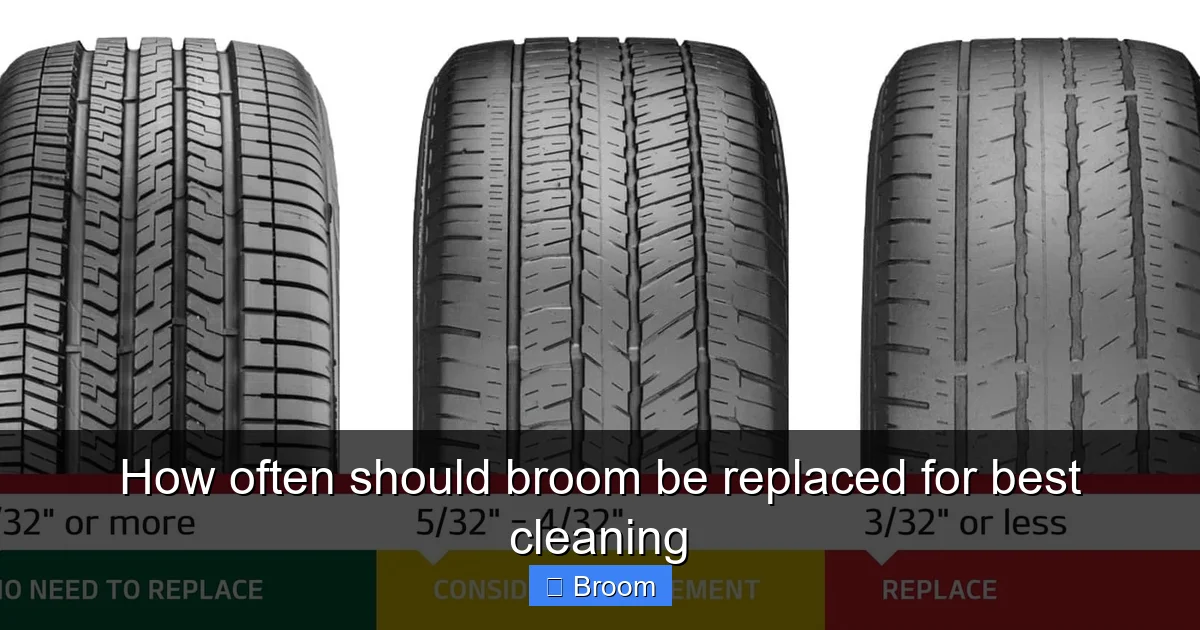
- Are the bristles bent or curved? If they curve sharply to one side, the broom will not make flat contact with the floor.
- Are the tips frayed or split? Some light fraying is normal, but heavy fraying reduces control and cleaning power.
- Are the bristles clumped together? Dirt, hair, and grease can glue bristles into clumps. This makes sweeping uneven.
- Are there gaps in the bristle block? Missing or broken bristles create bare spots that leave dirt behind.
If you see deep curves, heavy fraying, or big gaps, it is a strong sign that your broom should be replaced soon.
Check the Broom Head and Handle
How often a broom should be replaced is not just about bristles. The broom head and handle also matter.
- Loose broom head: If the head wiggles or twists, you will not get steady pressure on the floor.
- Cracked or split handle: A damaged handle can break during use and may be unsafe.
- Rusty or damaged metal parts: Rust can stain floors and weaken the broom structure.
If the handle is solid but the head is worn, you may be able to replace just the head on some models. But in many cases, a full replacement is easier and safer.
Step 2: Test How Well Your Broom Still Cleans
To decide how often a broom should be replaced, you must test performance, not just appearance. A broom can look fine but still fail to clean properly.

Visual guide about How often should broom be replaced for best cleaning
Image source: carlaxauto.com
Do a Simple Sweep Test
Pick a small area of floor with visible dust or crumbs. Sweep it normally and look closely at the results.
- Are there dust lines left behind? If you see a faint line of dust where the broom passed, the bristles may be too worn to grab fine particles.
- Does dirt scatter instead of gather? If debris keeps shooting out to the sides, the broom is not controlling the sweep path.
- Do you need multiple passes? If you must sweep the same spot many times, your broom has likely lost its edge.
If you notice any of these issues, you are closer to the point where your broom should be replaced.
Test on Different Surfaces
How often a broom should be replaced can also depend on how it performs on different surfaces in your home.
- Hardwood or laminate: Check for missed fine dust and hair.
- Tile with grout lines: Look for dirt left in grooves and along edges.
- Concrete or garage floors: See if the broom can move heavier debris without bending too much.
If your broom struggles on the surfaces you clean most, it is time to think about replacement, even if it is not very old.
Step 3: Factor in How Often and Where You Sweep
How often a broom should be replaced is strongly tied to how and where you use it. A broom in a busy household will wear out much faster than one in a small apartment.
Consider Your Cleaning Routine
Ask yourself these questions:
- How many times per week do you sweep? Daily sweeping wears bristles faster.
- Do you sweep large areas? Big rooms or long hallways add more friction and use.
- Do you use the same broom indoors and outdoors? Outdoor dirt, gravel, and rough surfaces shorten broom life.
If you sweep daily in a high-traffic home, how often a broom should be replaced will be closer to every 3–6 months for best cleaning. If you sweep once a week in a small, low-traffic space, you may get 12–18 months of good use.
Think About Floor Types
Floor type changes how often a broom should be replaced too.
- Rough surfaces (concrete, unfinished stone): These grind down bristles quickly.
- Textured tiles: Grout lines and texture catch bristles and cause more wear.
- Smooth floors (vinyl, laminate, sealed hardwood): These are easier on bristles, so brooms last longer.
If most of your sweeping is on rough or outdoor surfaces, expect to replace your broom more often than standard timelines suggest.
Step 4: Use Maintenance to Extend Replacement Time
How often a broom should be replaced also depends on how well you care for it. Basic maintenance can add months of life to your broom and keep cleaning quality high.
Clean the Bristles Regularly
Dust, hair, and oils build up on bristles. This makes them clump and bend faster.
- After each use: Tap the broom gently outside or over a trash can to shake loose dust.
- Weekly: Run a gloved hand or comb through the bristles to pull out hair and threads.
- Monthly (or as needed): Wash plastic bristles in warm, soapy water. Rinse well and let them dry bristle-side up.
Clean bristles keep their shape longer, so you can stretch how often a broom should be replaced without losing cleaning power.
Store Your Broom the Right Way
Improper storage is one of the main reasons people need to replace brooms more often than necessary.
- Never store a broom on its bristles: This bends them permanently and ruins their shape.
- Hang the broom or store it handle-down: Use a wall hook or stand it upright on the handle.
- Keep it dry: Moisture can warp natural bristles and cause mold or mildew.
- Avoid extreme heat: High heat can soften plastic bristles and cause them to curl.
Good storage can easily double the time between replacements and keep your broom working closer to “like new” longer.
Step 5: Know When It’s Time to Replace, Not Repair
At some point, every broom reaches the end of its useful life. Knowing how often a broom should be replaced means recognizing when maintenance is no longer enough.
Clear Signs Your Broom Is Done
- Bristles are permanently curved or flattened even after cleaning or reshaping.
- Large gaps appear where bristles have broken or fallen out.
- Handle or head is cracked, loose, or unstable.
- Sweeping takes much longer and still leaves visible dirt behind.
- Fine dust always remains even after multiple passes.
If you see two or more of these signs, it is time to stop asking how often a broom should be replaced and simply replace it.
When Repair Makes Sense
In some cases, a small repair can buy you more time:
- Tightening a loose screw in the broom head
- Reattaching a threaded head to a handle
- Cleaning and straightening lightly bent bristles with warm water
But if repairs do not restore good performance, you are better off investing in a new broom that will give you better cleaning with less effort.
Choosing a New Broom for Best Cleaning Results
Knowing how often a broom should be replaced is only part of the story. You also need to pick the right replacement. The better the match between broom and floor, the better your cleaning will be.
Match the Broom to the Surface
- Smooth indoor floors: Choose a soft-bristle or fine synthetic broom that captures dust and hair.
- Tile with grout: Use a slightly stiffer broom or an angle broom that reaches into corners and grooves.
- Outdoor and garage: Pick a stiff-bristle push broom or heavy-duty outdoor broom.
- Delicate hardwood: Use soft, flagged-tip bristles that will not scratch the finish.
When you choose the right broom, you reduce wear and can increase the time between replacements while still getting a deep clean.
Consider Quality and Construction
How often a broom should be replaced also depends on quality. A cheap broom may need replacement in a few months. A better-built broom can last much longer.
- Look for dense bristle coverage: More bristles mean better cleaning and slower wear.
- Check bristle attachment: Bristles should be firmly anchored, not loosely glued.
- Choose a sturdy handle: Wood or thick metal handles last longer than thin plastic.
- Pick a comfortable grip: A comfortable handle makes it easier to sweep correctly and gently.
Spending a bit more on a good broom can reduce how often a broom should be replaced and improve your cleaning results at the same time.
Troubleshooting Common Broom Problems
Sometimes it feels like your broom is failing before its time. Here are common problems and what they mean for how often a broom should be replaced.
Problem: Broom Leaves a Dust Line
Likely causes:
- Bristles too worn or too stiff for fine dust
- Broom too dirty or clumped with hair and debris
- Incorrect angle while sweeping
Try this: Clean the bristles, adjust your sweeping angle, and test again. If the dust line remains, it is likely time to replace the broom.
Problem: Bristles Keep Bending or Spreading
Likely causes:
- Storing the broom on its bristles
- Sweeping very rough surfaces with a soft broom
- Using too much pressure while sweeping
Try this: Soak plastic bristles briefly in warm (not boiling) water, then let them dry straight. Change your storage method. If bristles stay spread, the broom should be replaced.
Problem: Broom Smells or Looks Dirty Even After Cleaning
Likely causes:
- Moisture trapped in bristles
- Grease, food, or pet mess soaked into fibers
- Mold or mildew on natural bristles
Try this: Wash with a mild disinfectant, rinse well, and dry in a sunny spot. If the smell or stains remain, it is safer and cleaner to replace the broom.
Conclusion: Putting It All Together
How often a broom should be replaced comes down to a mix of time, use, and performance. For most homes, replacing a broom every 6–12 months gives the best cleaning results. Busy households, rough floors, and outdoor sweeping may need more frequent replacements, while light use on smooth floors can stretch that timeline.
Do not wait for your broom to fall apart. Instead, watch for curved and frayed bristles, poor sweeping performance, and signs of damage. Clean and store your broom well to extend its life, but be ready to replace it when it no longer cleans quickly and thoroughly.
When you understand how often a broom should be replaced and how to choose the right one, every sweep becomes easier, faster, and far more effective. Your floors will look cleaner, and you will spend less time fighting with a tool that has already passed its prime.
🎥 Related Video: Best broom to get rid of dust and pet hair #magicscrubroom #cleangadgets #homecleaning #CleaningHack
📺 Zilarr Home