In this guide, you will discover how much electricity a desk lamp uses and why it matters for your energy bills. Understanding wattage and energy consumption can lead to significant savings. By following the tips outlined in this guide, you can make informed choices about your lighting options.
Key Takeaways
- Understanding Wattage: The wattage of a lamp indicates its energy consumption; lower wattage means less electricity used.
- Types of Bulbs Matter: LED bulbs use less electricity than incandescent or CFL bulbs, making them a better choice for saving energy.
- Estimating Costs: You can calculate the monthly cost of operating a desk lamp based on its wattage and your local electricity rates.
- Usage Habits: The more you use your desk lamp, the higher your energy bill. Consider how often you need it on.
- Energy-Efficient Models: Investing in energy-efficient desk lamps can lead to long-term savings on your utility bills.
- Smart Lighting: Smart desk lamps can help you manage energy usage more effectively by allowing you to control them remotely.
- Environmental Impact: Reducing electricity consumption from lamps contributes to lower carbon footprints and promotes sustainability.
Discover How Much Electricity a Desk Lamp Uses for Savings
Have you ever wondered how much electricity your desk lamp really consumes? Understanding the energy usage of your desk lamp can help you save money on your electricity bill and make more sustainable choices. In this guide, we’ll explore the ins and outs of desk lamp electricity consumption, including how to calculate costs, the types of bulbs available, and tips for reducing energy use. By the end, you’ll know exactly how much your lamp costs to run and how to optimize its use.
Understanding the Basics: What is Wattage?
Wattage is a measurement of electrical power. It indicates how much energy a device uses to operate. In simpler terms, the higher the wattage, the more electricity the device consumes. When it comes to desk lamps, the wattage can vary significantly based on the type of bulb used.

Visual guide about Discover How Much Electricity a Desk Lamp Uses for Savings
Image source: turneylighting.com
Common Bulb Types and Their Wattage
Desk lamps typically use one of the following types of bulbs:
- Incandescent Bulbs: These traditional bulbs use about 60-100 watts and are less energy-efficient.
- CFL Bulbs: Compact fluorescent lamps use about 13-15 watts, making them a more energy-efficient choice.
- LED Bulbs: Light Emitting Diodes (LEDs) use only 6-10 watts, providing significant energy savings.
Calculating Energy Consumption of Your Desk Lamp
Now that you understand wattage, let’s calculate how much electricity your desk lamp uses. This involves a few simple steps:

Visual guide about Discover How Much Electricity a Desk Lamp Uses for Savings
Image source: petersglassshop.bz
Step 1: Identify the Wattage of Your Bulb
Check the packaging or the bulb itself to find out its wattage. For example, if you have a 10-watt LED bulb, that’s the number you’ll use in your calculations.
Step 2: Determine How Many Hours You Use the Lamp
Think about your daily usage. For instance, if you use your desk lamp for 5 hours a day, you’ll use that figure in your calculations.
Step 3: Calculate Daily Energy Consumption
Use the following formula:
Daily Energy Consumption (kWh) = (Wattage × Hours Used) / 1000
For example, for a 10-watt lamp used for 5 hours:
(10 watts × 5 hours) / 1000 = 0.05 kWh
Step 4: Calculate Monthly Energy Consumption
Multiply your daily energy consumption by the number of days in a month:
Monthly Energy Consumption (kWh) = Daily Energy Consumption × 30
Continuing with our example:
0.05 kWh × 30 = 1.5 kWh per month.
Step 5: Calculate Monthly Costs
To find out how much this costs you, multiply your monthly energy consumption by your local electricity rate. If your rate is $0.12 per kWh:
1.5 kWh × $0.12 = $0.18 per month for that lamp.
Choosing the Right Bulb for Savings
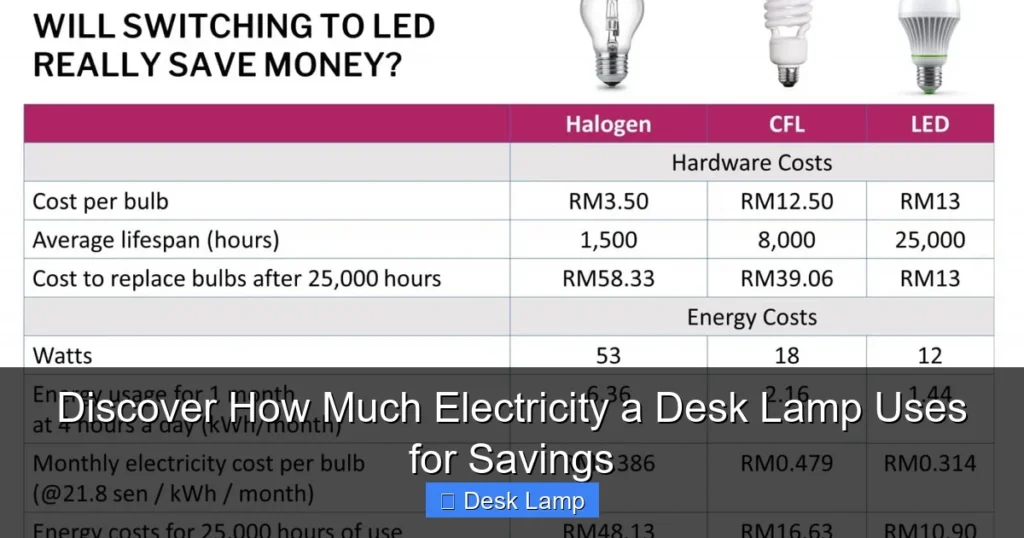
Choosing the right bulb can greatly affect your energy consumption. Here’s how different bulbs compare:

Visual guide about Discover How Much Electricity a Desk Lamp Uses for Savings
Image source: lamplure.com
- Incandescent: High wattage, short lifespan, and high energy costs.
- CFL: Moderate wattage, longer lifespan than incandescent, and lower energy costs.
- LED: Low wattage, very long lifespan (up to 25,000 hours), and the lowest energy costs.
For maximum savings, consider switching to LED bulbs. Although they may cost more upfront, they last longer and use less electricity, providing savings in the long run.
Smart Usage Tips for Desk Lamps
Here are some practical tips for optimizing your desk lamp usage:
- Use Natural Light: Whenever possible, take advantage of natural daylight to reduce lamp usage.
- Turn Off When Not in Use: Make it a habit to turn off your lamp when you leave the room.
- Use Dimmers: Installing dimmers can help you adjust brightness and save energy.
- Invest in Smart Lamps: Smart desk lamps can be controlled via apps to schedule on/off times, reducing unnecessary usage.
Understanding the Environmental Impact
Reducing energy consumption from your desk lamp contributes to a lower carbon footprint and promotes sustainability. By using energy-efficient bulbs and managing your lamp’s usage, you are not only saving money but also helping the environment.
Troubleshooting Common Issues
If you notice unexpected increases in your electricity bill or if your lamp seems to be using more energy than it should, consider these troubleshooting tips:
- Check for Faulty Bulbs: Sometimes, a malfunctioning bulb can cause increased energy usage.
- Inspect Wiring: Damaged wires can lead to power loss and increased consumption.
- Consider Lamp Placement: If your lamp is placed in a dark corner, you might be overusing it to compensate for low ambient light.
Conclusion
Now that you know how much electricity a desk lamp uses, you can make informed decisions that help you save money and reduce your environmental impact. Understanding wattage, calculating costs, and choosing energy-efficient bulbs are crucial steps in maximizing your savings. With the right practices, you can enjoy well-lit spaces without breaking the bank!
🎥 Related Video: what is the best type of lighting for the study or the office for working?
📺 Dear Modern