

A spin mop uses a geared, centrifugal force mechanism within a bucket to wring out the mop head nearly dry. By pushing or pulling a handle, you engage a spinning basket that forces water out through holes, making mopping efficient and less strenuous. Understanding its parts and physics helps you use and maintain it effectively.
Key Takeaways
- Centrifugal Force is Key: The core principle uses rapid spinning to force water out of the mop fibers through the bucket’s holes.
- The Gear System is the Engine: A set of gears converts your simple push/pull motion into high-speed rotation for the basket.
- Two Buckets Optimize the Process: Most models have a wash bucket for cleaning and a separate spin bucket for drying the mop head.
- Proper Technique Maximizes Dryness: A firm, steady push or pull on the handle creates more effective spin than a weak, jerky motion.
- Simple Maintenance Prevents Problems: Regular cleaning of the bucket gears and mechanism ensures smooth operation for years.
- It’s a Physics-Powered Tool: The spin mop is a practical application of basic mechanical advantage and fluid dynamics in your home.
Unveiling the Spin Mop Mechanism: How It Works
Ever pushed down on a mop handle and watched the head whirl like a merry-go-round, magically getting dry? It feels a bit like a kitchen secret. That simple, satisfying action hides a clever bit of engineering. This guide will pull back the curtain. You will learn exactly what happens inside that bucket. We will cover all the parts. We will walk through the process step by step. We will even share tips to make it work better. By the end, you will not just use your spin mop. You will understand it.
The Basic Parts: What Makes Up a Spin Mop System?
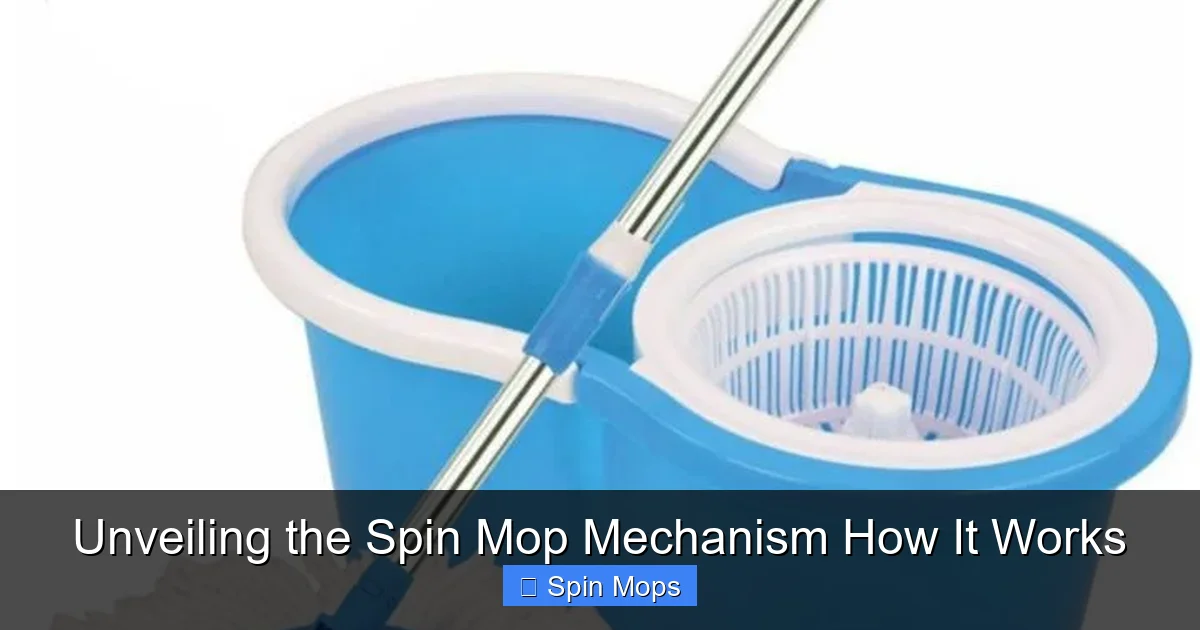
First, let’s meet the team. A standard spin mop system has a few key players.
Visual guide about Unveiling the Spin Mop Mechanism How It Works
Image source: img.drz.lazcdn.com
The Bucket Assembly
This is the command center. Most models have a dual-bucket design.
- Wash Bucket: This compartment is for cleaning your dirty mop head. It often has ridges or scrubbers on the sides to help agitate and loosen grime.
- Spin Bucket: This is where the magic happens. It is a separate, inner bucket with many small holes or slots in its walls and floor.
The Spin Basket and Gear Mechanism
Nestled inside the spin bucket is the heart of the operation.
- Spin Basket: This is the plastic cage that holds the mop head. It locks onto the drive system and rotates at high speed.
- Gear Set: Hidden under or beside the bucket is a set of interlocking plastic gears. These are the amplifiers of your force.
- Drive Shaft or Spindle: This rod connects the gears to the spin basket above.
The Mop Handle
This is not just a stick. It is your power input.
- It has a locking mechanism (often a twist collar or pinch clamp) to secure the mop head.
- The bottom end connects to the top of the spin basket or drive system.
- When you push the handle down, it engages the gears.
The Step-by-Step Working Mechanism
Now, let’s trace the journey of a single push. Follow along the next time you mop!

Visual guide about Unveiling the Spin Mop Mechanism How It Works
Image source: dygtyjqp7pi0m.cloudfront.net
Step 1: Engagement
You place the wet, dirty mop head into the spin basket in the spin bucket. You lower the handle so it connects to the basket. A click or simple drop-in action locks it in place. You are now ready to apply force.
Step 2: Power Transfer and Gear Action
This is the unseen critical phase. You push the handle downward (or pull it upward, depending on the model).
- That vertical motion is caught by the gear system.
- The gears act as a force multiplier. One full push of the handle might make the spin basket rotate 10, 20, or even 30 times. This gear ratio is what makes the high-speed spin possible with minimal effort.
- The vertical “up-and-down” motion is converted into a rapid “round-and-round” rotation.
Step 3: Centrifugal Force Takes Over
As the spin basket whirls, physics kicks in.
- Centrifugal force is the “center-fleeing” force that pushes objects in a rotation outward. Think of how water flies off a spinning bicycle tire.
- This force acts on the water trapped in the mop head’s fibers. The water is pushed radially outward, away from the center of the spin.
Step 4: Expulsion and Collection
The water has to go somewhere.
- The spinning forces the water through the tiny gaps in the mop head and directly against the walls of the spin bucket.
- The holes in the spin bucket allow the water to escape but are too small for the mop head to fit through.
- The expelled water flies out through these holes and collects in the bottom of the outer spin bucket, leaving your mop head damp but not dripping.
Step 5: Completion and Release
You stop pushing. The basket slows and stops. You lift the handle, disengaging it from the basket. You now have a mop head that is perfectly damp for cleaning—it will spread solution without leaving puddles or drying too fast.
Practical Tips for Optimal Performance
Knowing how it works lets you use it smarter.

Visual guide about Unveiling the Spin Mop Mechanism How It Works
Image source: lirp.cdn-website.com
- Use a Firm, Steady Motion: A confident, full push creates a better, longer spin than a timid, short one. Let the gears do their job.
- Don’t Overload the Mop Head: Soak it, but don’t leave it sopping heavy. Excess water overloads the mechanism and makes spinning harder.
- Center the Mop Head: Make sure it’s seated evenly in the basket. An off-center load can cause wobbling and uneven drying.
- Clean the Bucket Mechanism: Occasionally, rinse out the spin bucket and the area under it. Hair and grit can jam the gears.
- Use Both Buckets: Follow the intended workflow: scrub in the wash bucket, then spin-dry in the spin bucket.
Troubleshooting Common Spin Mop Issues
Even simple machines have hiccups. Here’s how to fix them.
Problem: The Basket Won’t Spin or Spins Slowly
Likely Cause: Grit, hair, or string tangled in the gear mechanism.
Fix: Unplug the gears (if possible) or tip the bucket to access the underside. Remove any debris. Flush with warm water.
Problem: The Handle Won’t Engage/Lock with the Basket
Likely Cause: Worn locking mechanism or misalignment.
Fix: Check for visible damage on the handle connector and the basket socket. Ensure you’re pushing straight down. Some models require a slight twist to lock.
Problem: Mop Head is Still Soaking Wet After Spinning
Likely Cause: Not enough spin speed due to weak pushes or an over-saturated mop.
Fix: Wring out excess water by hand first, then try again with more vigorous pumps. Ensure the mop head material is designed for spin mops (microfiber is best).
Problem: The Bucket Leaks or Water Doesn’t Stay Separate
Likely Cause: Crack in the bucket divider or the inner spin bucket not seated correctly.
Fix: Inspect for cracks. Ensure the spin bucket is clicked firmly into its place within the outer shell.
Conclusion: Simplicity Through Smart Design
The spin mop mechanism is a beautiful example of practical engineering. It takes a basic principle—centrifugal force—and applies it through a simple gear system to solve a everyday problem. It turns a wet, messy chore into a quick, controlled task. You are not just pushing a handle. You are engaging a mini power train that spins your mop dry. By understanding the parts and the process, you can keep your mop working smoothly for years. You can also appreciate the clever design that makes your cleaning just a little bit easier. Now, go forth and mop with confidence and knowledge.
🎥 Related Video: #1 Mistake People Make Refilling Their Lighter #butane #lighter #refill #tipsandtricks
📺 MK Lighter