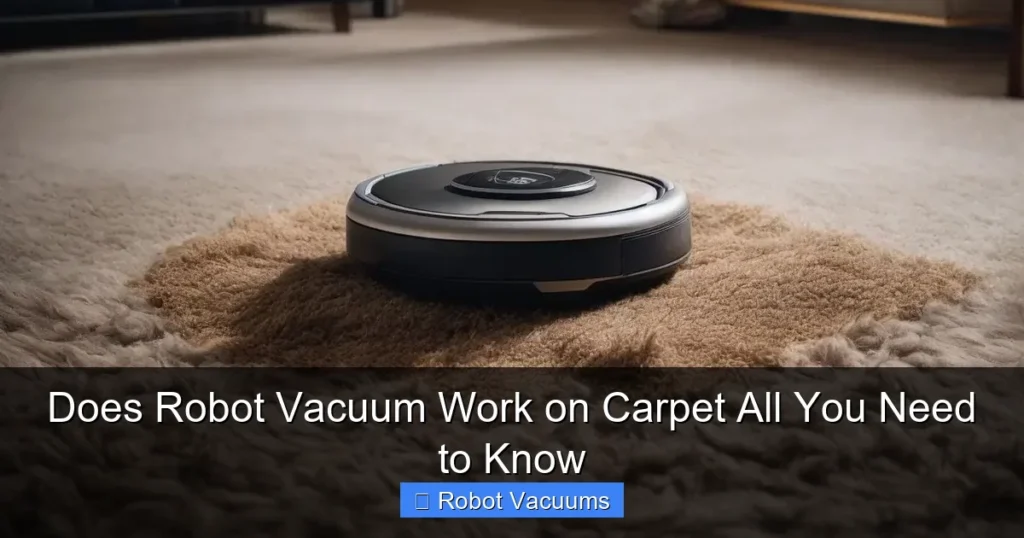
Yes, modern robot vacuums do work on carpet, but their effectiveness varies greatly. They excel on low-pile and medium-pile carpets, especially models with strong suction and specialized brush rolls. Performance on thick, high-pile, or shag carpets can be challenging and often requires a premium model with advanced features. This guide covers everything you need to know to choose the right robot vacuum for your carpets.
Key Takeaways
- Suction Power is Critical: For carpets, look for high Pascal (Pa) suction ratings. Strong suction is needed to pull dirt from carpet fibers, unlike hard floors.
- Brushroll Design Matters: A combination brushroll (bristles and rubber fins) or a dedicated carpet-focused brush is far more effective at agitating and lifting debris from carpets than flimsy, bristle-only brushes.
- Carpet Height is a Limiting Factor: Most robots work best on low-pile (under 0.5 inches) to medium-pile carpets. High-pile, plush, or shag carpets (over 0.75 inches) can cause navigation issues and reduced cleaning.
- Smart Features Enhance Performance: Carpet Detection Boost automatically increases suction on carpets. LiDAR navigation ensures efficient, full-coverage cleaning without missing spots.
- They Maintain, Not Deep Clean: Robot vacuums are fantastic for daily maintenance, picking up surface debris, pet hair, and dust. For a deep, thorough clean, you’ll still need an occasional pass with an upright vacuum.
- Self-Emptying Bases are a Game-Changer: Carpets generate more dirt in the bin. A self-emptying dock allows the robot to clean carpets more frequently without your intervention, maintaining a consistently cleaner home.
Does Robot Vacuum Work on Carpet? All You Need to Know
You’re tired of dragging out the heavy upright vacuum every other day. Your carpets seem to attract every crumb, dust bunny, and pet hair in the house. A robot vacuum promises a hands-off solution, but a big question remains: does a robot vacuum actually work on carpet?
The short answer is a resounding yes. But it’s not a simple yes for every carpet in every home. Modern robot vacuums are engineered to handle carpets, but their success depends on your carpet type and the robot’s features. This guide will walk you through everything. You’ll learn how robots tackle carpets, what features to look for, and how to get the best performance from your automated helper.
How Robot Vacuums Clean Carpets: The Science Behind the Sweep
Unlike hard floors where suction alone can often suffice, carpet cleaning requires a two-step process: agitation and extraction.

Visual guide about Does Robot Vacuum Work on Carpet All You Need to Know
Image source: cdn.shopify.com
First, a brushroll (or sometimes dual brushrolls) agitates the carpet fibers. This loosens the embedded dirt, pet hair, and debris. Then, powerful suction pulls the now-loose particles up into the dustbin.
Better robot vacuums mimic this same principle used by full-sized vacuums. The key difference is they do it in a compact, automated package. Their small size and lower weight can be a challenge on very thick carpets. But with the right tech, they are more than up to the task for daily maintenance.
Step 1: Assess Your Carpet Type
Your carpet’s pile height and density are the biggest factors in robot vacuum compatibility.

Visual guide about Does Robot Vacuum Work on Carpet All You Need to Know
Image source: eqjwsq7qxcu.exactdn.com
Low-Pile & Commercial Carpets
This is the ideal scenario. Low-pile, tight-weave carpets (common in offices and many modern homes) are easy for almost any robot vacuum to navigate and clean. The short fibers allow for excellent suction contact. Most budget and mid-range models will perform very well here.
Medium-Pile Carpets
This is the most common residential carpet. It offers more of a challenge as the robot has to “fight” through slightly longer fibers. Performance here separates basic robots from good ones. You’ll want a model with stronger suction and a robust brushroll.
High-Pile, Plush, or Shag Carpets
This is the tough terrain. Thick, soft carpets can bog down weaker robots. The wheels may struggle to gain traction. The brushroll can get tangled or simply spin above the dirt. For these carpets, you need a top-tier robot with maximum suction, high-traction wheels, and often a specific “carpet boost” mode. Even then, it may not be as effective as on lower piles.
Step 2: Choose the Right Features for Carpet Cleaning
Not all robot vacuums are created equal for carpet duty. When shopping, prioritize these features.
Powerful Adjustable Suction
Look for models that advertise high suction power, measured in Pascals (Pa). For carpets, aim for at least 2000Pa or more. Even more important is automatic suction adjustment, often called “Carpet Detection” or “Carpet Boost.” This smart feature uses sensors to detect when the robot moves onto a carpet. It then automatically ramps up suction to maximum power for a deeper clean, and lowers it on hard floors to save battery.
Advanced Brushroll System
Avoid robots with only small, side-sweeping brushes. The main brushroll is key. The best designs are:
- Combination Brushrolls: These feature both bristles (to dig into fibers) and rubber fins (to flick debris and prevent hair wrap). They are excellent for mixed homes.
- Dual Rubber Brushrolls: Some premium brands use two counter-rotating rubber brushes. They are phenomenal at grabbing pet hair and debris from carpets with minimal tangles.
Strong Navigation & Mapping
Random bump-and-clean robots will miss spots on carpets. For systematic, complete coverage, choose a model with LiDAR or camera-based mapping. This allows the robot to create a map of your home, clean in efficient back-and-forth rows (like a human would), and remember where the carpets are. You can even set “No-Go Zones” to keep it off delicate rugs.
Self-Emptying Dock Compatibility
Carpets hold more dirt. Your robot’s small dustbin will fill up fast. A self-emptying dock is a huge quality-of-life upgrade. The robot returns to its dock, the dock sucks the debris out into a larger bag, and the robot can go out for multiple cleaning sessions on a single charge. This means your carpets get cleaned more frequently without you lifting a finger.
Step 3: Optimize Performance on Your Carpets
You have the right robot. Now, let’s make it work its best.
Pre-Clean the Area
Before the first run or a deep clean, do a quick walk-through. Pick up cords, socks, and small toys. For tasseled rugs, consider folding the tassels under or using a virtual barrier. This prevents tangles and lets the robot focus on dirt.
Schedule Regular Cleanings
The beauty of a robot vacuum is consistency. Schedule daily or every-other-day cleanings. By preventing dirt from being ground deep into the carpet, each clean is easier and more effective. Your carpets will look and feel fresher all the time.
Maintain Your Robot
A clogged robot is a weak robot. Empty the dustbin after every carpet cleaning cycle. Regularly check and clean the brushroll, cutting away any wrapped hair or fibers. Wipe the sensors and charging contacts. A well-maintained robot is a powerful robot.
Troubleshooting Common Carpet Issues
Having problems? Here are quick fixes.
Robot Gets Stuck on the Carpet
Problem: The robot struggles to move or gets beached on a high-pile area.
Solution: This usually means the carpet is too thick for the model. Check if it has a “High-Carpet” or “Max” mode for extra wheel power. If not, you may need to use virtual walls to block that area or consider a more powerful robot with bigger, all-terrain wheels.
It Misses Spots or Seems Random
Problem: The cleaning pattern is haphazard, leaving uncleaned patches.
Solution: Your robot likely lacks smart mapping. For next time, choose a LiDAR model. For now, try clearing more floor space to reduce obstacles, or run it multiple times in a row.
Hair Constantly Tangles in the Brush
Problem: Pet or human hair wraps tightly around the brushroll after every run.
Solution: Switch to a robot with a tangle-free rubber brushroll system. Increase cleaning frequency—less hair accumulation per cycle means easier management. Commit to weekly brushroll maintenance.
Conclusion: A Worthy Carpet Cleaning Partner
So, does a robot vacuum work on carpet? Absolutely. It won’t replace the deep-cleaning power of a high-end upright or carpet cleaner for annual spring cleaning. But as a tool for daily maintenance and touch-ups, it is unparalleled. It keeps surface dust, allergens, pet hair, and crumbs under control, extending the time between your manual vacuums.
The secret is matching the robot’s capabilities to your carpet’s demands. For low-pile carpets, you have many great options. For plush, high-pile carpets, invest in a premium model with strong suction, smart carpet detection, and robust navigation. With the right choice and a little setup, you can finally sit back, relax, and let your robot vacuum keep your carpets looking great every single day.
🎥 Related Video: Watch This Before You Buy A Robot Vacuum!
📺 Chris Majestic
After testing lots of robot vacuums over the past 6 years, here’s what I’ve learned. AMAZON AFFILIATE LINKS Tier #1 ($300 or …