
You must always wash your hands after removing gloves because gloves are not a perfect barrier. Germs can pass through micro-tears or get on your skin while you take the gloves off. Proper hand hygiene ensures that any lingering pathogens are fully removed to keep you and others safe.
Do you think your hands are clean just because you wore gloves? Many people believe that gloves act like a magic shield. They think that once the gloves come off, their skin is perfectly safe. However, this is a dangerous mistake. Whether you are cleaning the house, cooking food, or working in a clinic, you must wash your hands after you take your gloves off. In this guide, we will look at the science of why this is true. We will also show you the best way to keep your hands clean and safe.
Key Takeaways
- Glove Porosity: Many gloves have tiny, invisible holes that allow microscopic germs to reach your skin.
- Contamination Risks: It is very easy to accidentally touch the outside of a dirty glove while taking it off.
- The “Warm” Effect: Hands inside gloves become warm and sweaty, creating a breeding ground for bacteria already on your skin.
- False Security: Wearing gloves can make you feel safer than you are, leading to less careful behavior.
- Standard Protocol: Health and safety experts always require hand washing as the final step of any task involving gloves.
- Chemical Exposure: Some chemicals can seep through glove materials over time, requiring a thorough wash.
The Science Behind Glove Failure
Gloves are great, but they are not perfect. No matter what kind of glove you use, there is a chance it will fail. Understanding these failures helps you stay safe. When you use a washing glove for chores, you might think the thick rubber protects you. In reality, several things are happening below the surface.
Microscopic Pores and Tears
Did you know that gloves can have tiny holes? These are called micro-punctures. You cannot see them with your eyes. These holes are often there when you buy the gloves. Other times, they happen while you work. A small prick from a tool or a bit of friction can open a gap. Germs are very small. Thousands of bacteria can fit through a hole that you cannot even see. This is why a washing glove is only the first line of defense.
Material Permeability
Different materials offer different levels of protection. Latex, nitrile, and vinyl all have different “leak” rates. Over time, some chemicals and viruses can actually soak through the material. This is called permeation. If you wear your gloves for a long time, the risk of stuff getting through increases. If you are using a washing glove in hot water, the heat can sometimes make the material stretch or weaken, letting more things inside.
The Problem of Cross-Contamination
Cross-contamination is when you move germs from one place to another. Gloves are often the biggest cause of this. People feel “clean” in gloves, so they touch many things. They might touch a trash can and then touch a doorknob. The doorknob is now dirty. But the biggest risk of cross-contamination happens when you try to take the gloves off.
Visual guide about Why Do You Need to Wash Your Hands After Removing Gloves
Image source: static.vecteezy.com
The Removal Trap
Taking off gloves is a skill. Most people do it wrong. When you pull a glove off, you often touch the dirty outside of the glove with your bare wrist or hand. If there are germs on the outside of that washing glove, they are now on your skin. This happens in a split second. Because you think your hands were protected, you might go on to touch your face or eat a sandwich. This is how people get sick.
Snap and Splatter
Think about how you pull off a tight glove. Sometimes it snaps. That snap can send tiny droplets of water or dirt into the air. These droplets can land on your skin or clothes. If you were using a washing glove to clean a bathroom, those droplets could carry harmful bacteria. Washing your hands immediately after removal stops these germs from staying on your body.
Bacteria Loves a Warm Environment
Your hands are alive. They have natural bacteria on them all the time. When you put on a washing glove, you seal your skin away from the air. This creates a very specific environment that germs love. It is the perfect “greenhouse” for bacteria.
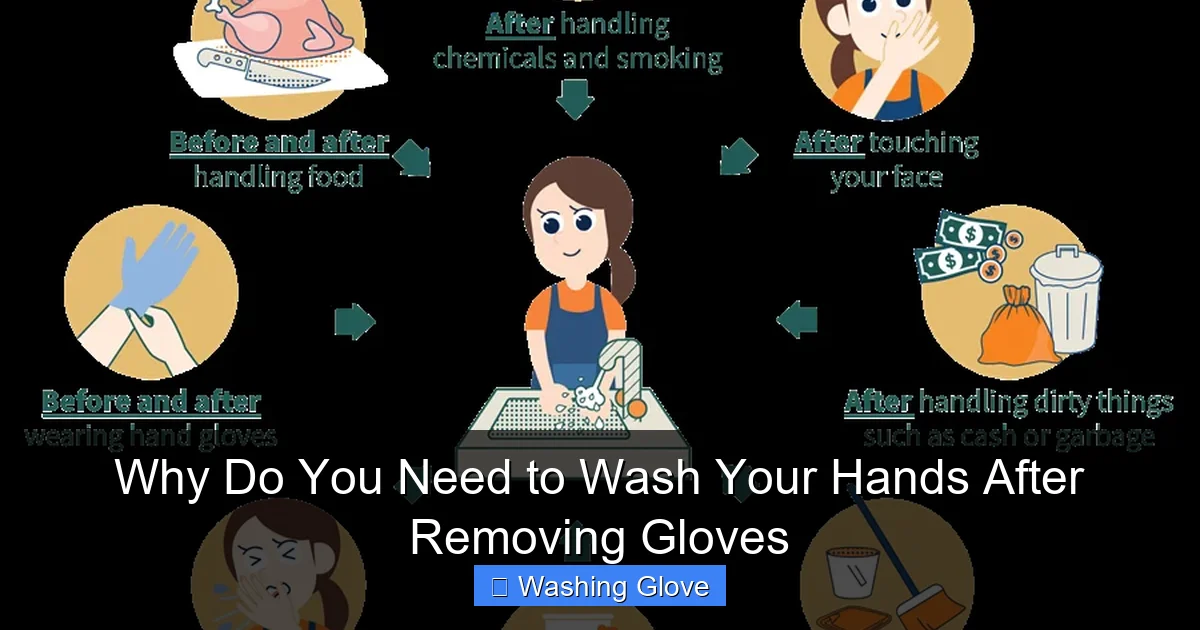
Visual guide about Why Do You Need to Wash Your Hands After Removing Gloves
Image source: cfs.gov.hk
Sweat and Moisture
Within minutes of wearing gloves, your hands start to sweat. This moisture gets trapped. Bacteria love two things: warmth and moisture. The population of bacteria on your skin can grow very fast inside a glove. Even if no outside germs got in, your own skin bacteria are now much more numerous. This can lead to skin irritation or infections if you have a small cut. Washing your hands removes this excess growth of bacteria.
Skin Health and Irritation
Leaving sweat and glove residue on your skin is bad for you. Some gloves have powder inside. Others have chemicals from the manufacturing process. If you do not wash your hands after using a washing glove, these substances stay on your skin. This can cause redness, itching, or even a long-term allergy. Proper washing keeps your skin healthy and strong.
Step-by-Step: How to Remove Gloves Safely
To stay safe, you need to follow a specific process. This process reduces the chance of germs touching your skin. Follow these steps every time you finish using a washing glove or a medical glove.
Visual guide about Why Do You Need to Wash Your Hands After Removing Gloves
Image source: randfonteinherald.co.za
Step 1: The Pinch Technique
Start by pinching the outside of one glove near your wrist. Do not touch your bare skin. Pull the glove down, away from your arm. Turn it inside out as you pull it off. Hold the removed glove in your other gloved hand.
Step 2: The Slide Technique
Now, take your bare finger. Slide it under the wrist of the remaining glove. Do not touch the outside of the glove. Peel the second glove off. It should go over the first glove. This creates a small “bag” with the dirty side of the gloves on the inside.
Step 3: Safe Disposal
Drop the gloves into a bin right away. Do not leave them on a counter. Do not try to clean and reuse single-use gloves. If you are using a reusable washing glove, put it in its proper storage spot. Now, your hands are “free,” but they are not clean yet.
The Right Way to Wash Your Hands
Now that the gloves are off, you must finish the job. A quick rinse is not enough. You need to be thorough to remove anything that leaked through or rubbed off during removal.
Use Soap and Water
Wet your hands with clean, running water. It can be warm or cold. Apply a good amount of soap. Rub your hands together to make a lot of bubbles. Make sure you cover every part of your hand. This includes the backs of your hands, between your fingers, and under your nails.
The 20-Second Rule
You must scrub for at least 20 seconds. This is about the time it takes to sing the “Happy Birthday” song twice. This time is needed for the soap to break down the fats and proteins in germs. If you used a washing glove for a heavy-duty task, you might want to scrub even longer. Rinse your hands well under the tap.
Dry Thoroughly
Dry your hands using a clean towel or an air dryer. Germs move more easily on wet hands. If you are in a public place, use a paper towel to turn off the tap and open the door. Your hands are now truly clean.
When Should You Wash Your Hands?
It is not just about the end of the day. There are many times when you should stop, remove your washing glove, and wash your hands. Knowing these moments will keep you much safer.
Between Different Tasks
If you are cleaning the bathroom and then move to the kitchen, change your gloves. Before you put on the new pair, wash your hands. This prevents you from carrying bathroom germs into your food area. Never assume that the gloves kept your hands clean enough to skip this step.
If a Glove Tears
If you feel a hole or see a tear in your washing glove, stop immediately. Take the gloves off and wash your hands with soap and water. Put on a fresh, dry pair before you go back to work. Working with a torn glove is worse than working with no gloves at all, as it traps the dirty water against your skin.
Common Myths About Gloves
There are many myths that lead to poor hygiene. Let us clear some of these up. These myths often cause people to skip the hand-washing step.
Myth: Hand Sanitizer is Better Than Washing
Hand sanitizer is good when you have no soap. But it is not better than washing. Sanitizer does not remove dirt or grease. If you were using a washing glove, you likely have some residue on your hands. Soap and water physically wash the germs and dirt away. Sanitizer just kills some germs but leaves the “dirt” on your skin.
Myth: Double Gloving Means You Are Twice as Safe
Some people wear two pairs of gloves. This can help in some cases, but it often makes your hands sweat more. More sweat means more bacteria growth. It also makes your hands less sensitive, so you might not feel a tear. Even with two pairs, you still must wash your hands when you are done.
Troubleshooting Glove Issues
Sometimes things go wrong even when you try your best. Here is how to handle common glove problems.
What if my skin is red after removing gloves?
This could be a latex allergy or contact dermatitis. If you find your skin is itchy after using a washing glove, try switching to a different material like nitrile. Always wash your hands immediately after removal to get rid of the irritants causing the redness.
What if I cannot wash my hands right away?
If you are in a place with no sink, use an alcohol-based hand sanitizer. Make sure it has at least 60% alcohol. This is a temporary fix. As soon as you get to a sink, wash your hands with soap and water to properly clean them.
Conclusion
Wearing a washing glove is a smart move for many tasks. It protects your skin from harsh chemicals and gross germs. But the glove is only half of the protection. The most important part of the process is what you do after the glove comes off. By washing your hands, you remove any microscopic germs that got through. You also wash away sweat, bacteria, and glove chemicals.
Make hand washing a habit. Do it every single time you take off your gloves. It only takes 20 seconds, but it can save you from a nasty illness or skin irritation. Stay safe, stay clean, and always remember that the best protection starts with your own two hands.
🎥 Related Video: Doffing Gloves Tutorial: Nursing Skills #shorts
📺 RegisteredNurseRN
Doffing gloves nursing skills tutorial #shorts. In this video, Nurse Sarah gives a quick demonstration on how to remove gloves (doff …