
Specs are compiled from manufacturer listings and verified buyer reviews and can change over time — please confirm the key details on the product page before buying.
If you have ever caught a hand or foot slipping off a standard 24-inch mat mid-pose, you already know the real problem with most yoga mats: they are simply too narrow. This guide sorts through the mats that actually solve that, comparing by width first, then thickness, grip, and weight so you can find the one that gives you room to move without sliding off.
I’m Maruf — the founder and writer behind HomeYarr. This guide is built by comparing the manufacturers’ published specifications and the patterns across verified customer reviews, so you get each pick’s real strengths and trade-offs instead of marketing spin.
Before you buy, know that width is the feature that changes your whole practice, so we have ranked the widest and most stable yoga mat width options for every body type and budget.
Our Picks at a Glance

How To Choose The Right Yoga Mat Width
The width of your mat is the single biggest factor in how free you feel during practice. A standard mat is 24 inches wide, which is fine for a petite frame but leaves taller or broader practitioners fighting to stay on the mat. Wider mats — from 26 inches all the way up to 60 inches — give you room for wide-stance poses, lateral lunges, and pushups without your hands slipping off the edge.
Match Width to Your Body and Style
Measure your shoulder span and the width of your stance in a wide-legged pose. If you are over 5’8″ or have broad shoulders, a 32-inch or 36-inch mat is a huge upgrade. For people who practice hot yoga or vinyasa flows where you move side to side, a 36-inch mat (50% wider than standard) means you rarely have to re-center yourself mid-flow.
Balance Thickness Against Stability
Your knees and elbows will thank you for a thicker mat (10mm and up), but you may wobble more in balance poses. A thinner mat (5-6mm) keeps you firmly connected to the floor, yet it cushions your joints less. For most people, 6-8mm hits the balance: it protects your joints while still letting you feel grounded.
Check the Material and Grip
Most wide mats are made from TPE (thermoplastic elastomer, a recyclable, non-toxic foam) or natural rubber. A textured or “fingerprint” grip pattern on the top surface stops your hands from sliding in downward dog, while a wavy or rippled bottom layer grips the floor. If you practice hot yoga, look for a mat with a moisture-wicking top layer that absorbs sweat.
Quick Comparison
| Model | Best For | Width | Thickness | Weight | Amazon |
|---|---|---|---|---|---|
| Sensu Large Yoga Mat★ Best Overall | Full-body floor workouts | 60″ | 0.35″ | 13.9 lbs | Amazon |
| YOTTOY Extra Thick (24″)Budget Champion | Knee protection on a budget | 24″ | 0.5″ | 4 lbs | Amazon |
| YOTTOY Extra Wide (32″)Beginner’s Pick | Wide coverage with alignment marks | 32″ | 0.34″ | 1.8 lbs | Amazon |
| KEEP Extra Wide | Versatile home workouts | 32″ | 0.28″ | 2.8 lbs | Amazon |
| HAPBEAR Large | Maximum width for stretching | 36″ | 0.25″ | 2.6 lbs | Amazon |
| UMINEUX Large | Changing directions mid-flow | 48″ | 0.25″ | 3.7 lbs | Amazon |
| Karma Fitness 10mm | High-impact strength training | 32″ | 0.39″ | 4 lbs | Amazon |
| Gogokiwi Extra Wide | Tall bodies and big frames | 36″ | 0.25″ | 2.7 lbs | Amazon |
| Manduka GRP Adapt | Hot yoga grip without a towel | 26″ | 0.24″ | 5.5 lbs | Amazon |
In-Depth Reviews
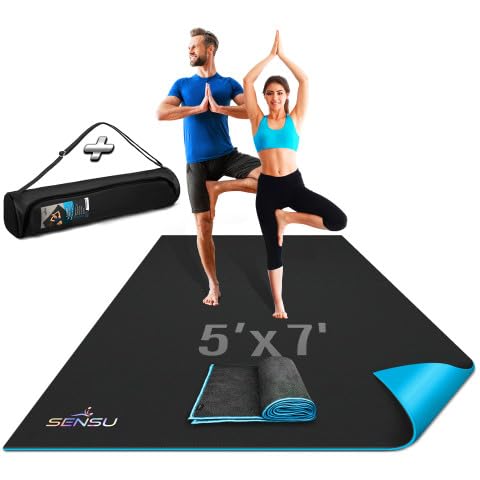
1. Sensu Large Yoga Mat
Our pick — over 4.5★ from 950+ verified ratings; the strongest balance of quality and price.
The massive 60-inch wide mat that turns any hard floor into a full studio.
If your practice involves sprawling out, this is the one. At 84 inches long and 60 inches wide, it is more than double the width of a standard mat, and buyers report it is large enough for four people to practice at once. The 0.35-inch thickness (9mm) delivers dense cushioning that protects knees and elbows, and owners note it is tough enough for kettlebell training even with shoes on.
Quality is the most-praised aspect, with size a close second.. It comes with a waterproof carry bag, four sticky corner grips, and a large microfiber towel. Owners who bought it in 2020 and again in 2022 stack both together for extra cushion on a concrete basement floor, and it holds up to five days a week of use.
The trade-off is portability. At 13.9 pounds, this is a heavy mat — roughly 3.5 times heavier than the 4-pound YOTTOY option — and owners admit they have to drag it across the ground rather than carry it. That is the price of having a mat this large and this cushioned. The 16P-ECO material is odorless and free from harmful phthalates, so you will not smell rubber while you move.
Our take: This is the best overall pick because it solves the two biggest complaints about yoga mats — not enough space and not enough cushion — in one product. The lifetime warranty backs the durable build, making it a long-term investment for your practice..
Reach for this if: you do floor workouts, stretching, or partner yoga and want a mat that covers far more ground than your body needs.
Look elsewhere if: you need to carry your mat to a studio daily — 13.9 pounds gets old fast.
2. YOTTOY Extra Thick Yoga Mat (1/2 inch)
A half-inch of plush padding that makes kneeling poses genuinely pain-free.
At 0.5 inches thick (12mm), this YOTTOY mat is 43% thicker than the Sensu above, and that extra foam is exactly what your knees feel. Buyers with bad hips and joint pain consistently report that the padding eliminates the discomfort of kneeling and sitting postures entirely. The thickness is the second most-praised aspect, right behind overall quality.
The surface uses granular protrusions to increase friction and absorb sweat, while the reverse side has a water ripple texture that grips various floors. It is made from TPE material that is SGS and TUV certified to be free of heavy metals like lead and cadmium, plus 10 harmful types of phthalate, so there is no toxic smell to air out.
Here is the honest catch: the width. This version is 24 inches wide, which is the standard width — not the extra-wide sizing this guide focuses on. Owners mention it actually measures about 2 inches narrower than advertised (30″ vs 32″ in the description), so if width is your priority, this is not the mat for you. But at just 4 pounds, it is easy to toss over your shoulder with the included strap and carry to class.
The verdict: If joint protection is your #1 priority and you practice within a standard-width footprint, this is incredible value. The padding draws the most praise — well over 60 owners single out the thickness as the reason they bought it.
Best if: your knees and hips need serious cushioning and you want a lightweight mat for classes.
Think twice if: you need room for wide stances — the 24-inch width will feel familiar, not expansive.
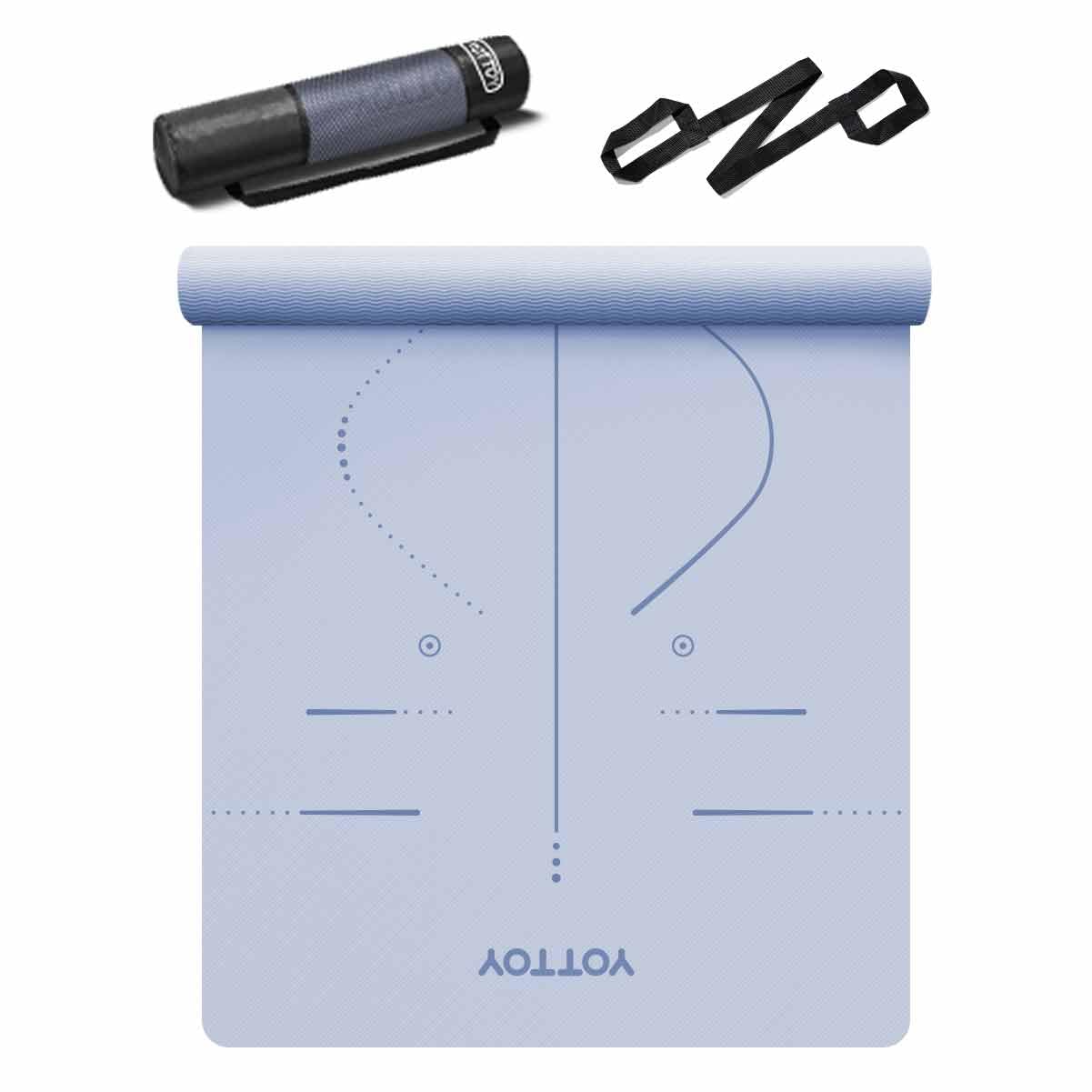
3. YOTTOY Extra Wide Yoga Mat (72″x32″)
The 32-inch wide mat with built-in alignment lines that guide proper hand and foot placement.
This is the mat for anyone new to yoga who wants guidance built right into the surface. The alignment marks help beginners position their hands and feet correctly, and the 72 by 32-inch size gives you 33% more width than a standard mat. The 0.34-inch (8mm) thickness cushions your knees without feeling so soft that balance poses wobble.
The design is inspired by penguin flippers — a surface webbing texture that improves resistance and keeps you from sliding even when you sweat. It is made from TPE material with SGS and TUV double certification, meaning it is non-toxic and odorless right out of the package. At just 1.8 pounds, it is one of the lightest wide mats you will find, and it comes with both a carry strap and a mesh storage bag.
Owners love that the mat lies flat and does not stretch during downward dog, and they appreciate that their knees no longer worry about the hard floor. The recurring minor complaint is that the carry bag tore on first use for one owner, and the mat is slightly harder to roll up than thinner options. Still, the comfort outweighs that small hassle for most.
What wins people over
- Wide 32″ surface with alignment marks for beginners
- Ultra-light 1.8 lbs with strap and mesh bag included
- Non-toxic, odorless TPE with double certification
The minor gripes
- Carry bag durability is questionable for some
- Slightly stiff to roll up due to the thickness
Perfect for: beginners learning proper alignment and anyone who wants a wide mat that barely weighs anything in a bag.
Not ideal if: you need a softer, more plush surface — this prioritizes stability over sink-in cushioning.
4. KEEP Extra Wide Yoga Mat
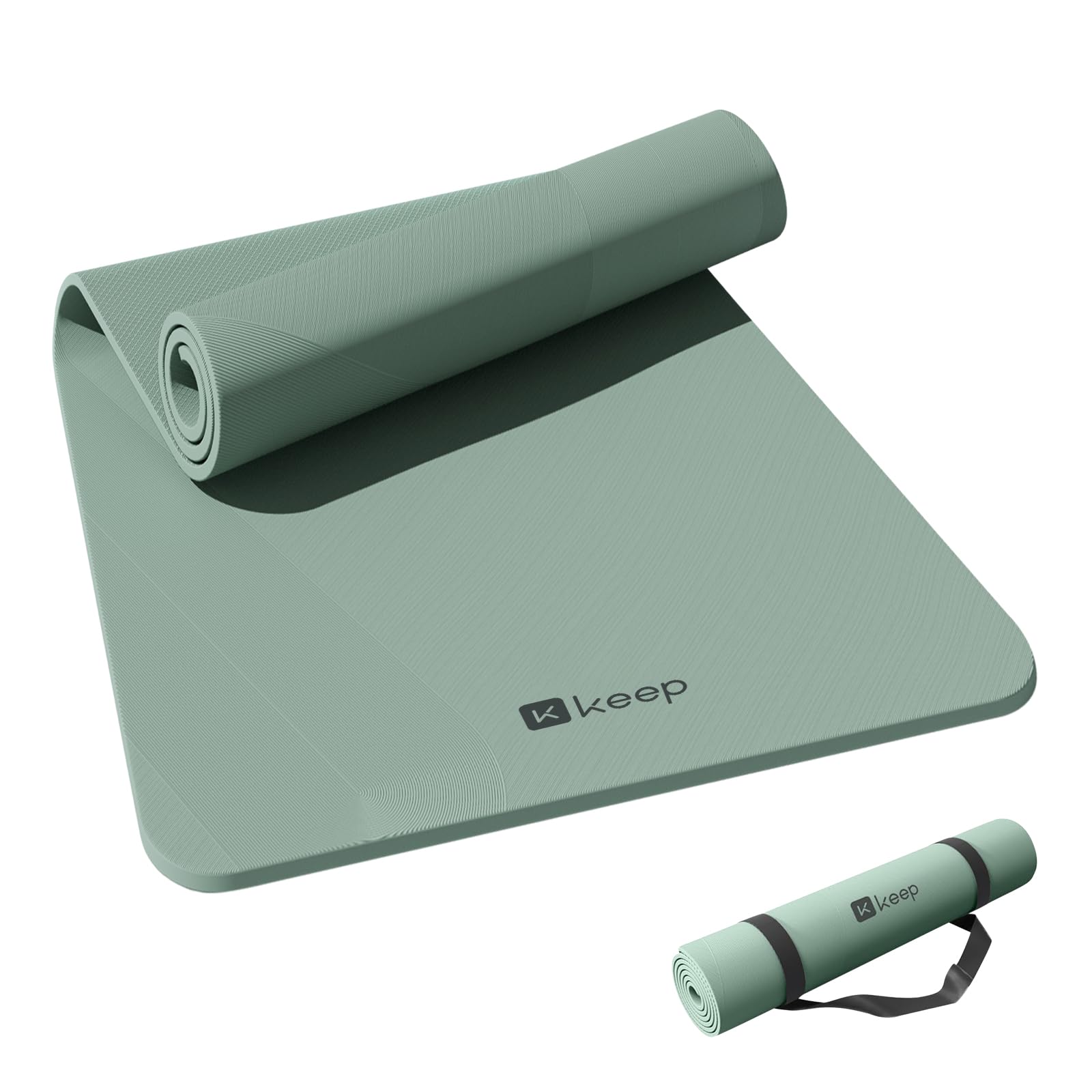
The 32-inch wide all-rounder that handles yoga, strength training, and full-body stretching without complaint.
Some mats are great for yoga but fall apart under weights; this one earns its versatility badge. At 72 by 32 inches with 0.28-inch (7mm) padding, it gives you the space for wide-stance poses and enough cushion for strength work. Owners use it for strength training, yoga, and full-body stretching, calling it versatile for “yoga time” and more. Quality is the most-praised aspect, with size close behind..
The grip system is double-sided: a fingerprint-like texture on top gives precise hand control, while a comprehensive anti-slip pattern underneath keeps every corner secured. It is crafted from TPE that is free from plasticizers and formamide, making it safe for your body and gentle on the environment. At 2.8 pounds, it is light enough to sling over your shoulder with the included adjustable polyester strap.
One owner uses it as a nap mat because it is that thick and comfortable. The occasional note of caution: a few owners found the non-slip surface less grippy than expected on certain floors, so if you practice on very smooth surfaces, test it first. It also benefits from airing out before first use, as the packaging can leave a temporary scent.
Our read: The best do-everything mat in this list. It bridges the gap between a strict yoga mat and a general exercise mat, which is why it works well for so many different routines. The included strap and reasonable weight make it a practical daily companion.
Choose this if: your workouts blend yoga with strength training and stretching and you want one mat for all of it.
skip it if: you need maximum grip on slick floors — a few owners found the traction varies by surface.
5. HAPBEAR Large Yoga Mat
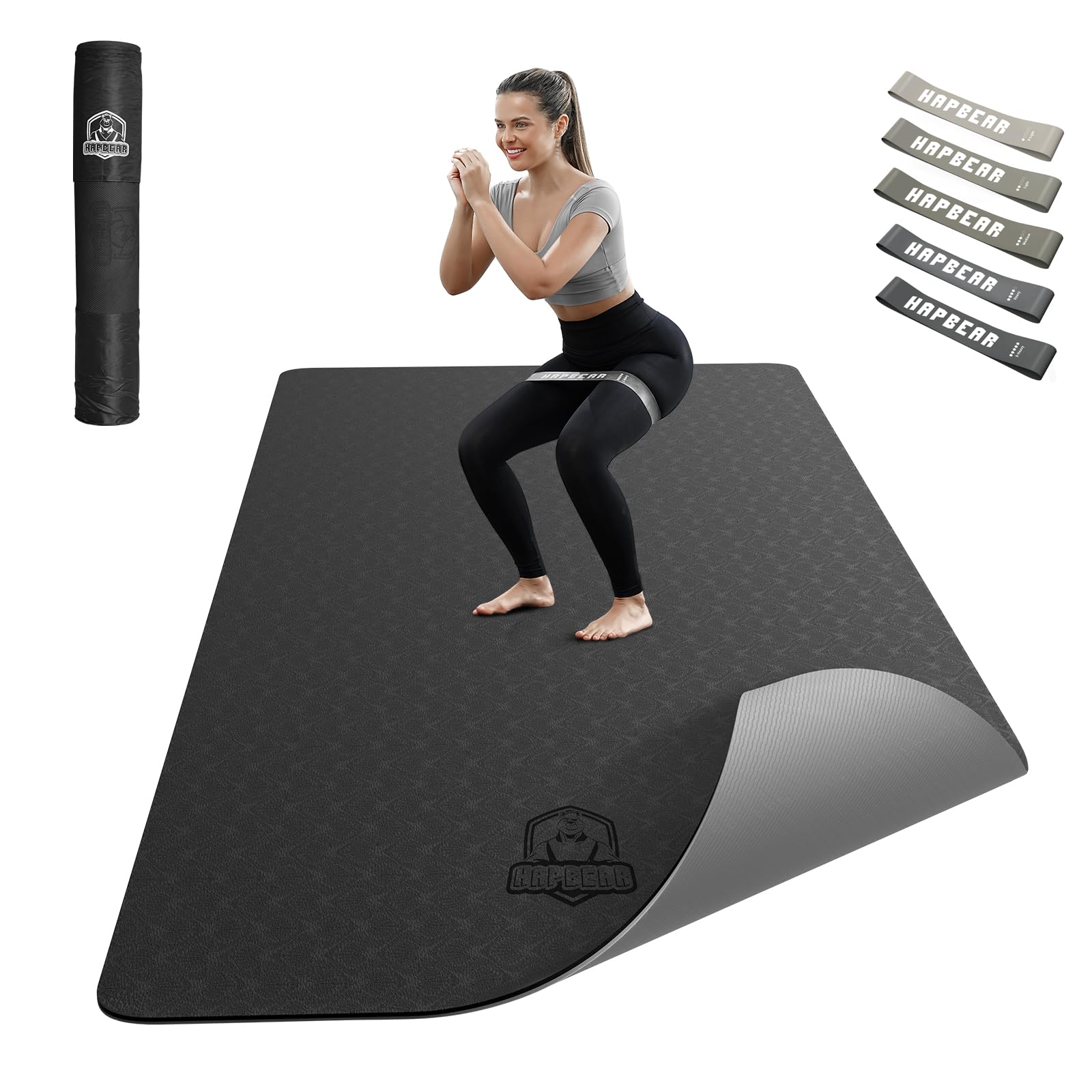
The 36-inch wide surface that is 50% wider than standard for unrestricted stretching and movement.
If you have ever felt trapped by the edges of a standard mat, this is the escape. The 72 by 36-inch surface gives you 50% more width than a standard mat, which means full pushups with both hands planted and lateral lunges without re-centering. Customers note it works well even on asphalt for outdoor workouts, and it is tough enough not to rip when used with sneakers. Quality is the most-praised aspect, with size a close second.
The 0.25-inch (6mm) thickness hits the balance between cushioning and stability. It eases knee and wrist strain during floor exercises without being so plush that you lose your ground connection. The double-sided textured grip keeps the mat firmly in place on smooth surfaces, though the maker notes it is not for use on carpet.
Weighing just 1.2 kg (about 2.6 pounds), it is surprisingly portable for its size and comes with a carry bag. Owners describe it as “not too cushy or thin” and confirm it is larger than typical without being oversized. The one drawback mentioned repeatedly is that it is slightly bulky to roll and store, and it may have an initial scent that needs 1-2 days to air out.
The trade-off: You get genuine extra width at a featherweight, but the 6mm thickness means it is not the plush choice for sensitive knees. The cushioning is adequate for most, but owners note thickness may vary for knee comfort on hard floors.
Best for: bodyweight workouts, stretching routines, and anyone who wants a wide mat that is still easy to carry.
Not for: those who need serious joint cushioning — go thicker if your knees are the priority.
6. UMINEUX Large Yoga Mat

A 48-inch wide double-wide mat that lets you change directions without ever leaving the surface.
This mat is literally double the standard size — 6 feet by 4 feet — which the maker says gives you room to change directions without falling off. That is a real benefit in vinyasa flows where you transition from forward-facing to side-facing poses. Owners use it for curtsy squats and note it is wide enough that they no longer need a second mat for protection during floor work. Quality and size are the top-praised aspects..
The double-sided non-slip design uses a wavy underside for excellent floor traction and a special textured top surface that prevents hands and feet from sliding. It is made from high-density TPE that is phthalate-free, soft, and skin-friendly. At 0.25 inches (6mm) thick and 3.7 pounds, it is light enough to carry back and forth to a Feldenkrais class, and it comes with 2 velcro straps and a storage bag.
The honest caveat is durability. While quality is praised, durability shows up as the weakest aspect in the review data — a few owners note it is not the most closed-cell, durable material they expected at this price point. It also has mixed feedback on carpet, where some report it slides. This is best used on hard floors, and the care instructions recommend barefoot use only, as shoes or pet paws can tear it.
The strengths
- Double-width 48″ surface for unrestricted movement
- Light 3.7 lbs with velcro straps and storage bag
- Phthalate-free TPE that stays soft and grippy
The weaknesses
- Durability is the most common criticism
- Slides on carpet for some users
Get this if: you do dynamic flows that require changing direction and want a mat that covers more than your body ever will.
Avoid if: you practice on carpet or want a mat that will survive rough daily use over many years.
7. Karma Fitness 10mm Extra Thick Workout Mat
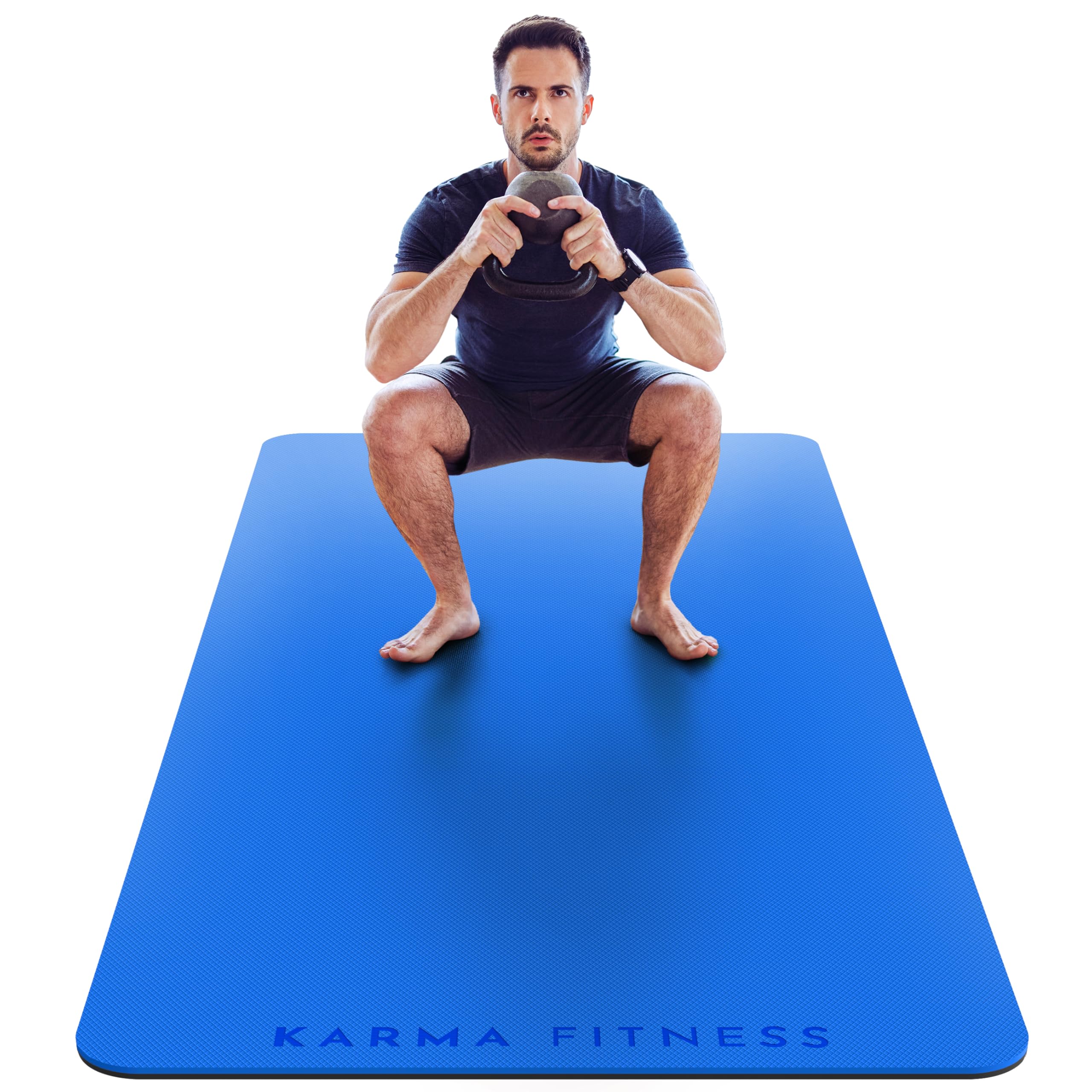
The 10mm thick, 32-inch wide mat that handles heavy strength work without feeling soft or unstable.
This is the mat for demanding workouts, not just gentle stretching. At 72 by 32 inches, it is 33% wider than a standard 24-inch mat, giving you room for press-ups, sumo squats, and lateral lunges. The 0.39-inch (10mm) thickness is the standout spec — owners describe it as comfortable for the lower back and great for tall users. The custom dual-layer TPE is denser than standard NBR foam, so it resists compression even under heavy weight.
What impresses owners is the bespoke diamond texture that provides multidirectional grip on both sides. It stays grippy even when you sweat, and the reversible design means you get a black branded side and a plain side. The waterproof, sweat-resistant surface is easy to clean and works on carpet, hardwood, and gym floors alike. It includes a carry bag with an adjustable shoulder strap for transport.
Long-time users call this the best mat they have used in 20 years for daily gym workouts.. The one trade-off is that the thickness and density make it bulky to carry — it weighs about 4 pounds — but the cushioning is sufficient even for lower back comfort. If you want a mat that feels premium and holds up to intense use, this is the one.
Our take: What wins people over is the combination of real thickness and stability. It is soft enough to protect your back but dense enough not to feel spongey during balance work, which is a hard balance to strike.
Reach for this if: you do strength training, lunges, and high-intensity workouts and want a wide mat that will not bottom out.
Pass if: you need the lightest possible mat for daily commuting — the 10mm density adds noticeable bulk.
8. Gogokiwi Extra Wide Yoga Mat
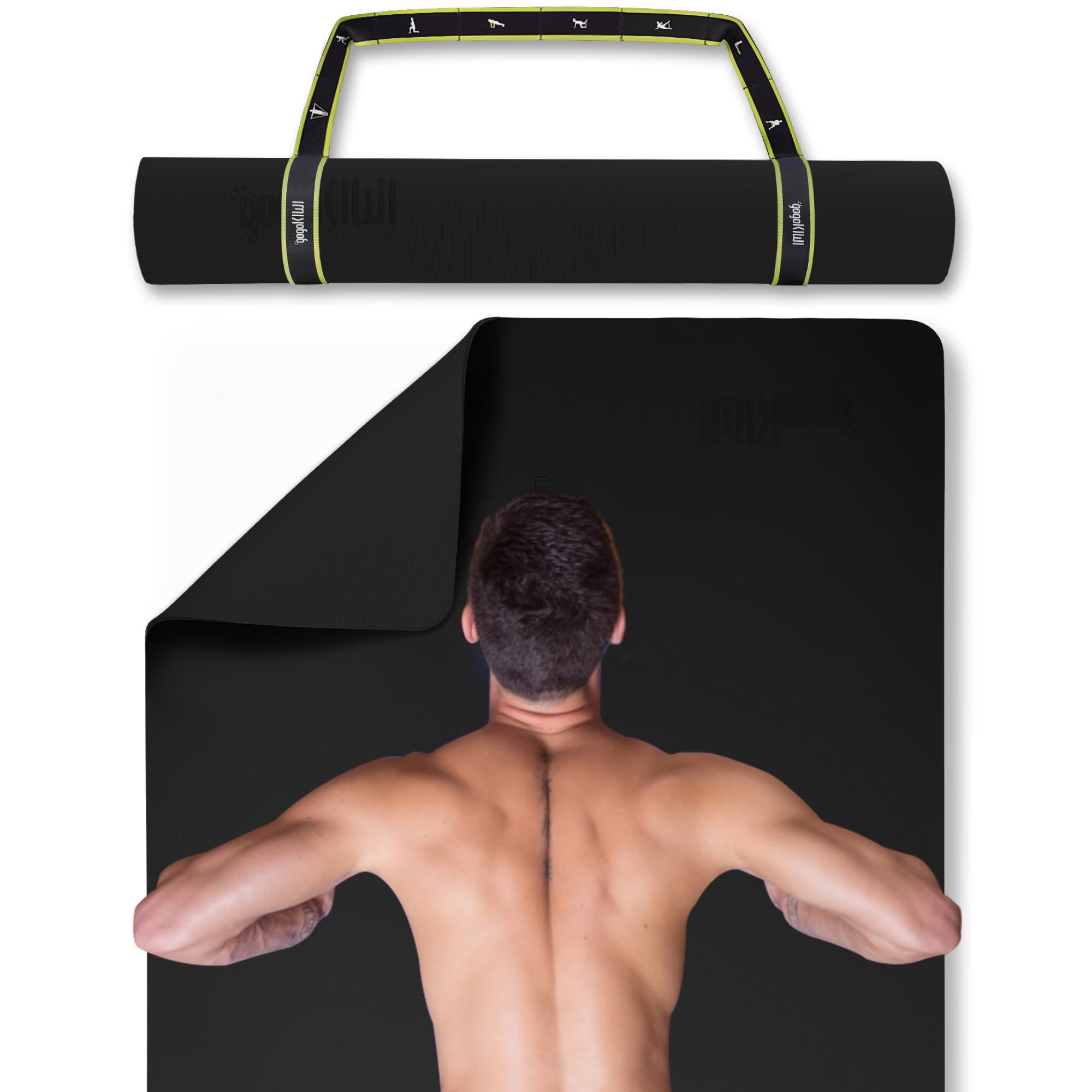
The 36-inch wide mat built for taller bodies and bigger frames to stretch and lunge freely.
If you are tall or broad-shouldered, standard mats make you constantly check your edges. This one gives you 72 by 36 inches of open space to stretch tall, drop into a lunge, and flow without sliding off. Owners specifically note the width lets them do pushups with both hands on the mat, which is impossible on a standard 24-inch surface. Quality is the most-praised aspect by a wide margin, with size as the clear second..
The material is the interesting part here. It is made from dense RecFoam that stays firm and supportive workout after workout instead of stretching out or thinning underfoot. The closed-cell surface keeps sweat from soaking in, so it wipes clean easily. It is built from 100% recyclable material, which is a nice environmental touch. At 2.7 pounds and 0.25 inches thick, it is light and easy to manage.
The included strap does double duty — it rolls the mat up tight for storage and doubles as a stretching band for hamstrings, shoulders, and hips. The grip is a fine dual-sided texture, closer-knit on top and grippier underneath, designed for dry-hand traction. The honest caveat: grip gets mixed feedback, with some owners finding it too slippery for their preference, and durability is mixed with some units showing wear within months. It is also a bit heavy for a mat, and one owner has to put it away to keep the cats from scratching it.
What stands out: The dual-purpose strap is a genuinely useful design touch. The RecFoam (a dense foam that resists compression) holds its shape well, and the 36-inch width gives taller practitioners real room to move without the bulk of a full 48-inch mat.
Best for: tall users, bigger frames, and anyone doing pushups or wide-stance work who wants 36 inches of freedom.
Not for: hot yoga — the grip is designed for dry hands, and some owners found it slippery when sweaty.
9. Manduka GRP Adapt Yoga Mat
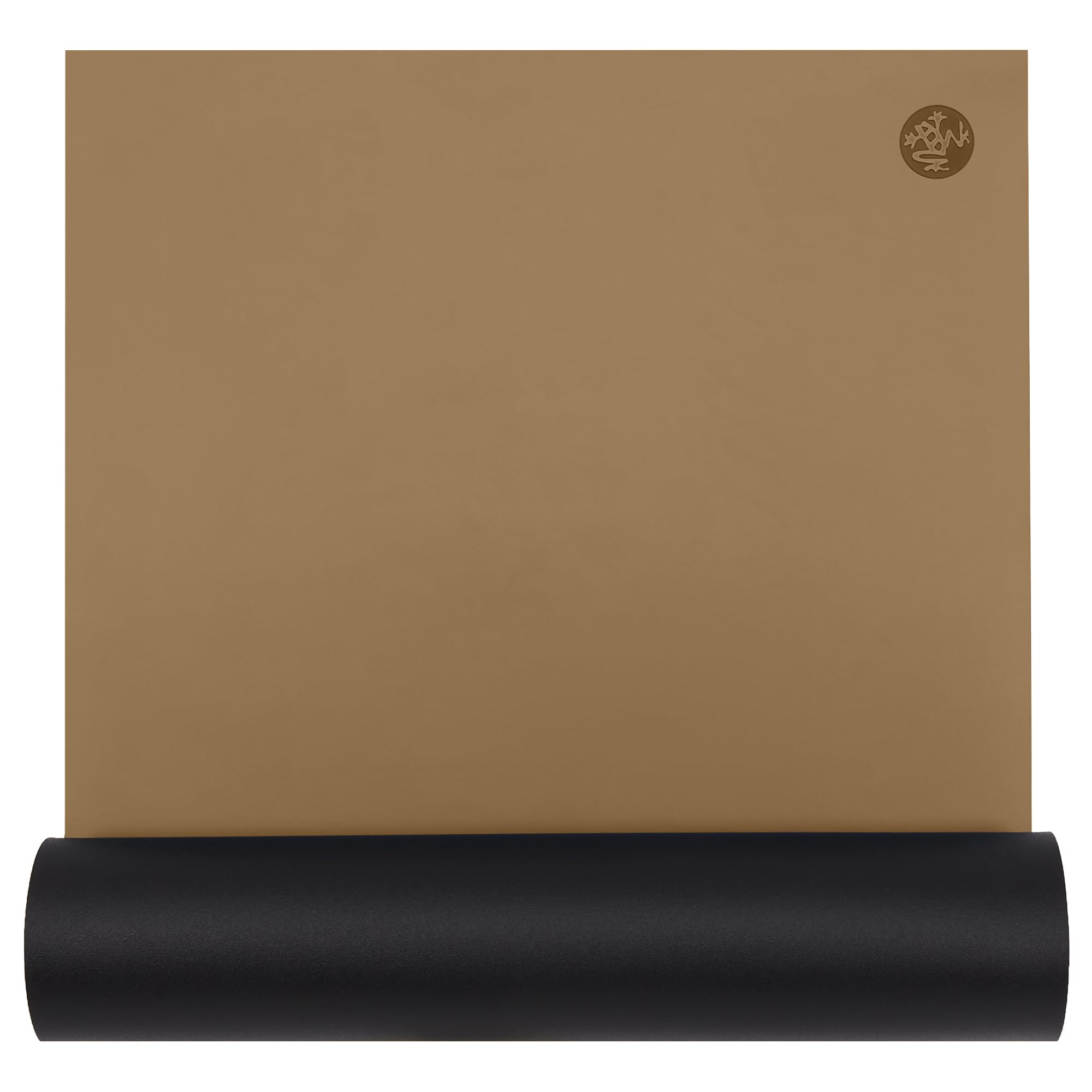
The premium hot yoga mat that grips so well you can skip the towel entirely.
This is the specialists’ pick for hot yoga, and it earns it through a clever design. The Satin Grip top layer delivers what the maker calls its best grip yet, performing in any condition without needing a towel. The Moisture Flow scrim absorbs 2x more sweat than competitors, keeping the surface dry during hot sessions., drawing moisture into the mat so the surface stays dry and slip-free. Owners confirm the grip prevents sliding, improves balance, and supports feet and ankles even for practitioners over 50.
At 71 by 26 inches, it is wider than a standard mat but nowhere near the widest in this list. The 0.24-inch (5mm) thickness gives you a solid floor connection for balance poses, and the polyurethane and rubber construction feels premium. It weighs 5.5 pounds, which owners describe as heavier than other mats but manageable. The terracotta color is warm and attractive, and the marbled surface does a good job of hiding sweat marks.
The durability story is genuinely mixed. While many reviewers point out it holds up well with regular use, some report the top layer coming apart over time. An occasional unit arrives damaged or as the wrong product, which is frustrating given the premium positioning. Owners also note it is heavy and hard to roll, and there is a faint odor initially. But for hot room use, the consensus is clear: this outperforms cheaper and cork mats for staying put when you sweat.
Why hot yogis love it
- Grip that works without a towel even when soaked
- Moisture Flow layer absorbs 2x more sweat
- Solid 5mm thickness aids balance and knee comfort
The honest downsides
- Durability is mixed — some tops layers come apart
- Heavy at 5.5 lbs and stiff to roll up
Choose this if: you practice hot yoga regularly and want a mat that grips even when drenched in sweat.
Look elsewhere if: width is your priority — at 26 inches this is only slightly wider than standard, not truly expansive.
Understanding the Specs: Width, Thickness, Grip
Width: The Freedom Factor
Width is the spec that defines your practice space. Standard mats are 24 inches wide, which works for petite frames but leaves taller or broader practitioners fighting the edges. Extra-wide mats range from 26 inches up to 60 inches. A 32-inch mat is 33% wider than standard and gives you room for wide-stance poses, while a 36-inch mat is 50% wider and lets you do pushups with both hands planted. If you practice dynamic flows or have broad shoulders, measure your stance and add a few inches of buffer.
Thickness: Cushion vs. Stability
Thickness is measured in millimeters or inches and directly controls how much joint cushioning you get versus how grounded you feel. A 5mm mat (about 0.2 inches) gives you a firm floor connection for balance poses but offers minimal knee padding. A 10mm mat (about 0.4 inches) feels plush and protects knees and elbows but can make balance feel slightly less stable. The 6-8mm range is the most popular because it balances both. If you have sensitive knees or practice on hard floors, go thicker.
Grip and Texture
Grip comes from the surface texture on both sides. The top layer must stop your hands and feet from sliding — look for terms like “fingerprint texture,” “granular protrusions,” or “diamond texture.” The bottom layer must grip the floor — wavy or rippled undersides are common. For hot yoga, a moisture-wicking top layer is essential because sweat destroys grip on most mats. The trade-off is that some grippy textures feel rougher on bare skin, so decide what you prioritize: dry-hand traction or a smooth feel.
Weight and Portability
Weight matters more than you might think. Wide mats are inherently heavier because there is more material, but the range is wide: from featherlight 1.8-pound options to a 13.9-pound behemoth. If you carry your mat to a studio, look for 4 pounds or less with a strap or bag included. If your mat lives at home, weight barely matters and you can prioritize cushioning and width instead. The 13.9-pound Sensu is a perfect example — it is the best mat for home but the worst to carry.
FAQ
What is the best yoga mat width for tall people?
Is a 32 inch yoga mat wide enough?
Does a wider yoga mat affect balance?
What is the difference between 6mm and 10mm yoga mats?
Can I use a wide yoga mat on carpet?
Is a thicker yoga mat better for knee pain?
How do I know if my yoga mat is too narrow?
What does TPE mean in yoga mats?
Should I buy a yoga mat with alignment lines?
Why are wide yoga mats more expensive?
Final Thoughts: The Verdict
For the majority of shoppers, the yoga mat width winner is the Sensu Large Yoga Mat because it delivers the most dramatic upgrade in practice space — a full 60 inches wide with 0.35-inch cushioning, backed by the strongest review consensus in this list. If you want the best balance of width and portability, grab the YOTTOY Extra Wide at 32 inches and just 1.8 pounds. And for hot yoga where grip is everything, the Manduka GRP Adapt is the one to reach for, even though it trades away some width for that sweat-proof traction.
How We Picked
We do not accept paid placement. Every pick is matched to a real buyer and a real use-case; we do not hands-on test units.
Sources & Methodology
Specifications: manufacturer listings and product documentation. Review insights: verified customer reviews, as of August 2026. Pricing: not shown on this page (it changes often); check the current price via the retailer link.