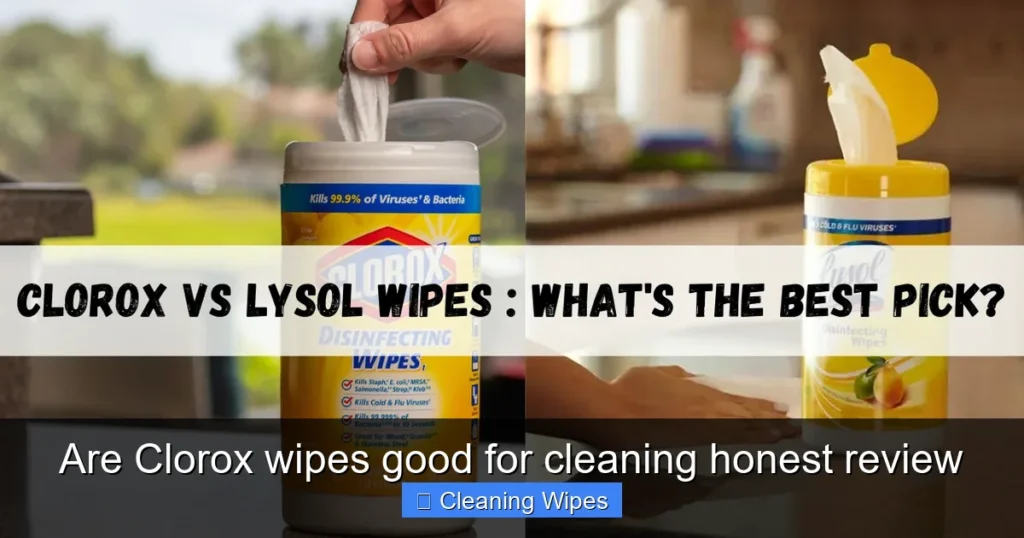
Are Clorox wipes good for cleaning? This honest review explains when they work well, when they fall short, and how to use them safely. You’ll learn the best surfaces to clean, how to disinfect the right way, and smart tips to save time and money. By the end, you’ll know exactly when Clorox wipes are worth using and what to avoid.
Key Takeaways
- Point 1: Clorox wipes are very effective for quick cleaning and disinfecting hard, nonporous surfaces when used correctly.
- Point 2: They are not ideal for every surface; avoid unfinished wood, some stone, and delicate screens unless the label says it is safe.
- Point 3: To truly disinfect, the surface must remain visibly wet for the full contact time listed on the container.
- Point 4: Clorox wipes are convenient for high-touch areas like doorknobs, light switches, counters, and bathroom fixtures.
- Point 5: Overuse can be wasteful and may dry out skin or damage some finishes, so use them where they add the most value.
- Point 6: They are not a substitute for deep cleaning; use them as part of a broader cleaning routine.
- Point 7: Safe use includes good ventilation, hand washing, and keeping wipes away from kids, pets, and food prep while still wet.
Are Clorox Wipes Good for Cleaning? Honest Review & How-To Guide
Are Clorox wipes good for cleaning, or are they just a pricey convenience? Many people keep a canister in the kitchen or bathroom, but few use them the right way. In this honest review, we will look at what Clorox wipes can do, what they cannot do, and how to use them safely and effectively.
By the end of this guide, you will know:
- When Clorox wipes are actually a good choice for cleaning
- Which surfaces they work best on
- How to use them step by step for real disinfection
- Common mistakes to avoid
- How they compare to other cleaning methods
This is a simple, practical guide you can follow in any home. Let us start with what these wipes really are and how they work.
Understanding Clorox Wipes: What They Can and Cannot Do
What Are Clorox Wipes?
Clorox wipes are disposable cleaning wipes pre-soaked in a disinfecting solution. They are designed to clean and kill germs on hard, nonporous surfaces. Many people ask, “Are Clorox wipes good for cleaning every mess?” The honest answer is no. They are great for some tasks and not ideal for others.

Visual guide about Are Clorox wipes good for cleaning honest review
Image source: goodhousecleaner.com
Most Clorox disinfecting wipes are approved to kill common bacteria and viruses when used as directed. They are especially useful for high-touch areas. But they are not meant for heavy scrubbing, fabric, or deep stains.
Where Clorox Wipes Work Best
Here are surfaces where Clorox wipes are usually a good option:
- Kitchen counters (sealed, nonporous)
- Bathroom sinks and faucets
- Toilet seats and handles
- Doorknobs and handles
- Light switches and remote controls
- Sealed appliance exteriors (fridge, microwave, dishwasher)
- Desk surfaces and hard plastic chairs
On these surfaces, Clorox wipes are good for cleaning daily messes and reducing germs. They can remove light dirt, food residue, and fingerprints while also disinfecting.
Surfaces to Avoid with Clorox Wipes
Some surfaces can be damaged by the chemicals in the wipes. Are Clorox wipes good for cleaning wood furniture or natural stone? Often, no. Be careful with:
- Unfinished or unsealed wood: The liquid can soak in and cause warping or discoloration.
- Natural stone (like marble or granite) if not labeled safe: The cleaner may dull or etch the surface.
- Leather: Can dry out and crack over time.
- Some screens: Unless the label says it is safe for electronics, use a screen-safe wipe instead.
- Fabric or carpet: Wipes are not designed for soft surfaces.
Always read the label on your specific Clorox wipes. Different versions have slightly different directions and approved surfaces.
Step-by-Step: How to Use Clorox Wipes for Everyday Cleaning
Are Clorox wipes good for cleaning if you just swipe quickly and walk away? Not really. To get the full benefit, you need to follow a few simple steps. Here is how to use them the right way.

Visual guide about Are Clorox wipes good for cleaning honest review
Image source: brydenstokes.com
Step 1: Read the Label and Safety Instructions
Before you begin, check the container. Look for:
- Approved surfaces list
- Directions for use
- Required “contact time” (how long the surface must stay wet)
- Any warnings (keep away from children, avoid mixing with other cleaners, etc.)
Are Clorox wipes good for cleaning if you ignore the label? No. The label tells you how to get real disinfection and avoid damage.
Step 2: Prep the Surface
Clorox wipes work best on surfaces that are not heavily soiled. If there is a lot of dirt or grease, do this first:
- Wipe away crumbs or loose debris with a paper towel or cloth.
- For heavy grease, use a degreaser or soapy water first.
- Dry the surface lightly so the wipe does not get overwhelmed by grime.
Are Clorox wipes good for cleaning big, greasy messes alone? Not really. Use them after you remove the worst of the mess.
Step 3: Pull Out a Fresh Wipe (or Two)
Open the lid and pull out one wipe at a time. Make sure the wipes are still wet. If the top wipes feel dry, push your hand down into the container to bring up wetter wipes.
If the wipe dries out while you clean, throw it away and grab a new one. A dry wipe will not disinfect properly.
Step 4: Wipe the Surface Thoroughly
Now you are ready to clean. Use the wipe to cover the surface fully.
- Start at one end and move in straight lines.
- Do not just dab; use firm, even strokes.
- Flip the wipe to a clean side as it gets dirty.
- For high-touch spots (like doorknobs), pay extra attention.
Are Clorox wipes good for cleaning tight spots? Yes, you can fold them to reach corners and edges.
Step 5: Let the Surface Stay Wet (Contact Time)
This step is the one most people skip. To truly disinfect, the surface must stay visibly wet for the full contact time listed on the label, often around 4 minutes.
That means:
- Do not dry the surface with a towel right away.
- Do not blow on it or wave something to make it dry faster.
- If it dries too fast, you may need to wipe again.
Are Clorox wipes good for cleaning germs if you wipe and dry instantly? No. They clean some dirt, but they will not fully disinfect.
Step 6: Allow to Air Dry
Once the contact time is met, let the surface air dry. After it is dry, you can use the area as normal. For food-contact surfaces, check the label. Some versions say to rinse with water after disinfecting before placing food on them.
After you finish, throw the used wipes in the trash. Do not flush them. They can clog pipes and cause plumbing problems.
How to Use Clorox Wipes in Different Areas of Your Home
In the Kitchen
Are Clorox wipes good for cleaning kitchens? Yes, for many tasks. They are handy for:
- Wiping down sealed countertops after food prep
- Cleaning fridge handles, microwave doors, and cabinet knobs
- Disinfecting cutting board surfaces after raw meat (if the label allows, then rinse)
- Cleaning trash can lids and handles
Tips:
- Use a separate wipe for areas that touched raw meat.
- Do not use on unsealed wood cutting boards.
- Rinse food-contact surfaces if the label instructs you to do so.
In the Bathroom
Are Clorox wipes good for cleaning bathrooms? This is one of their best uses. They are great for:
- Toilet seats, lids, and flush handles
- Sink basins and faucets
- Shower handles and knobs
- Light switches and door handles
Use them between deeper cleanings to keep germs under control. For heavy soap scum or hard water stains, you may still need a separate bathroom cleaner.
On High-Touch Surfaces Around the House
High-touch areas collect germs fast. Are Clorox wipes good for cleaning these spots daily? Yes, they are ideal for:
- Doorknobs and door edges
- Light switches and switch plates
- Remote controls (if safe for that material)
- Game controllers and shared electronics exteriors
- Railings and banisters
Use a light touch on electronics and never soak them. Wring out excess liquid if needed (with clean hands or gloves) before wiping.
At Work or On the Go
Many people keep a travel pack in the car or at the office. Are Clorox wipes good for cleaning shared workspaces? Often yes. You can use them for:
- Desk surfaces
- Shared keyboards and mice (check for electronics-safe versions)
- Phone handsets and office equipment buttons
- Steering wheels and door handles in vehicles
Again, avoid very delicate screens unless the wipes are labeled safe for that use.
Pros and Cons: Honest Review of Clorox Wipes for Cleaning
Advantages of Clorox Wipes
Are Clorox wipes good for cleaning in a busy household? Here are the big pros:
- Convenience: No need to mix sprays or use separate cloths.
- Disinfection: When used correctly, they kill many common germs.
- Speed: Perfect for quick wipe-downs and touch-ups.
- Portability: Easy to keep in a bag, car, or desk.
- Less cross-contamination: You can toss the wipe after cleaning a dirty area.
Disadvantages of Clorox Wipes
Are Clorox wipes good for cleaning as your only method? Not always. Some cons include:
- Cost: More expensive than basic spray and reusable cloths over time.
- Waste: Single-use wipes create more trash.
- Surface limits: Not safe for all materials, especially some wood and stone.
- Skin irritation: Frequent use without gloves can dry or irritate skin.
- Not for heavy messes: They struggle with thick grime or baked-on food.
So, are Clorox wipes good for cleaning overall? Yes, they are very useful when you need quick, targeted cleaning and disinfection. But they should be one part of your cleaning toolkit, not the only tool you use.
Safety Tips When Using Clorox Wipes
Because these wipes contain chemical disinfectants, safe use matters. Are Clorox wipes good for cleaning if you do not handle them safely? No. Follow these tips:
- Ventilate the area: Open a window or turn on a fan, especially in small bathrooms.
- Protect your skin: If you use them often, consider gloves or wash hands after use.
- Keep away from kids and pets: Store the container out of reach.
- Do not mix with other cleaners: Never use them right after bleach or ammonia products unless the label allows.
- Use on the right surfaces: Follow the approved surface list on the label.
- Do not flush: Always throw used wipes in the trash.
If you have sensitive skin or breathing issues, limit use or choose gentler cleaning options for everyday tasks.
Common Mistakes and Troubleshooting
Problem: Surfaces Still Feel Sticky or Dirty
Are Clorox wipes good for cleaning sticky messes? Only to a point. If surfaces feel sticky after using a wipe, it may be because:
- The mess was too heavy for a single wipe.
- Residue from old spills or cleaners is still there.
- You did not rinse a food-contact surface when needed.
Fix: Wash the area with warm, soapy water first. Then use a Clorox wipe to disinfect if needed.
Problem: Streaks on Shiny Surfaces
Glass, stainless steel, and glossy finishes can streak. Are Clorox wipes good for cleaning these surfaces? Sometimes yes, but streaks can show.
Fix: After disinfecting and letting the surface sit for the contact time, buff with a dry microfiber cloth to remove streaks.
Problem: Wipes Dry Out in the Container
If the lid is left open, the wipes can dry out. Dry wipes are not effective.
Fix:
- Always snap the lid closed tightly after pulling out a wipe.
- Store the container upright.
- If they are slightly dry, you can sometimes revive them a bit with a small amount of water, but this may dilute the disinfectant. For full disinfection, it is best to replace them.
Problem: Skin Irritation
Are Clorox wipes good for cleaning if they irritate your skin? Not for you. Some people react to the chemicals.
Fix:
- Wear gloves when using the wipes.
- Wash hands after use.
- Switch to milder cleaners for everyday wiping and save Clorox wipes for high-germ areas only.
When to Use Clorox Wipes vs. Other Cleaning Methods
Use Clorox Wipes When:
- You need quick disinfection of high-touch surfaces.
- You are cleaning up after someone has been sick.
- You want a fast clean in the bathroom or kitchen between deep cleans.
- You are at work or traveling and need a disposable option.
Use Other Methods When:
- You are doing a full deep clean of a whole room.
- You are cleaning large areas like floors and walls.
- You are dealing with heavy grease, baked-on food, or thick grime.
- You want a more eco-friendly, low-waste routine.
In short, are Clorox wipes good for cleaning every job? No. They shine for quick, targeted tasks and disinfection, not for full-house cleaning or heavy-duty scrubbing.
Conclusion: Are Clorox Wipes Good for Cleaning Overall?
So, are Clorox wipes good for cleaning in real life, not just in ads? Yes, they are very effective for what they are designed to do. They clean light messes and disinfect many hard, nonporous surfaces when used correctly. They are fast, easy, and convenient, especially for high-touch areas in kitchens, bathrooms, and shared spaces.
But they are not perfect. They cost more than basic cleaners, create more waste, and are not safe for every surface. They also cannot replace deep cleaning or heavy scrubbing. The best approach is to use Clorox wipes as a helpful tool, not your only tool.
Use this guide to decide when they are worth it in your home. If you follow the steps and tips here, you can get the most from each wipe and keep your home cleaner and safer.