
Are cleaning wipes the same as disinfecting wipes? Not at all—and using the wrong one can leave behind germs you thought you removed. This guide explains the difference between cleaning and disinfecting wipes, how to read labels, and when to use each type in your home. Learn how to clean and disinfect properly so your surfaces are both visibly clean and hygienically safe.
Key Takeaways
- Point 1: Cleaning wipes remove dirt and grime, while disinfecting wipes are designed to kill germs like bacteria and viruses.
- Point 2: The label will clearly state “disinfectant” or list EPA registration and kill claims if the wipes can disinfect.
- Point 3: You often need to clean first, then disinfect, because disinfecting wipes work best on already clean surfaces.
- Point 4: Disinfecting wipes must stay wet on the surface for a set “contact time” to actually kill germs.
- Point 5: Use cleaning wipes for everyday messes and disinfecting wipes for high-touch and high-germ areas.
- Point 6: Not all wipes are safe for every surface; always check the packaging for material compatibility.
- Point 7: Using disinfecting wipes too often or incorrectly can damage surfaces and irritate skin, so follow safety tips.
Are Cleaning Wipes the Same as Disinfecting Wipes Explained
Many people grab a pack of wipes and assume it will both clean and kill germs. But are cleaning wipes the same as disinfecting wipes? The short answer is no. They are not the same, and using them as if they are can leave your home looking clean but still full of germs.
In this guide, you will learn the real difference between cleaning wipes and disinfecting wipes, how to read the labels, when to use each type, and how to use them the right way. By the end, you will know exactly which wipe to choose for your kitchen, bathroom, electronics, and more. You will also see simple steps to keep your home both clean and hygienic, without wasting time or money.
Step 1: Understand the Difference Between Cleaning and Disinfecting
What does “cleaning” mean?
Cleaning is about removing things you can see and feel. This includes dust, crumbs, grease, food spills, and sticky residue. When you use cleaning wipes, you are wiping away physical dirt and some germs along with it. But cleaning wipes are not always designed to kill germs. They just help move them off the surface and onto the wipe.
Visual guide about Are cleaning wipes the same as disinfecting wipes explained
Image source: instacart.com
So, are cleaning wipes the same as disinfecting wipes? In terms of visual results, they can seem similar. Both can leave a counter looking spotless. But cleaning wipes focus on appearance and basic hygiene, not on killing specific bacteria or viruses.
What does “disinfecting” mean?
Disinfecting is about killing germs on a surface. Disinfecting wipes contain chemical ingredients that are proven to kill certain bacteria and viruses. These wipes are tested and regulated. Many of them are registered with the EPA (in the U.S.) or similar agencies in other countries.
When you use disinfecting wipes correctly, you reduce the number of germs to a safer level. This is important during cold and flu season, after handling raw meat, or when someone in your home is sick. So again, are cleaning wipes the same as disinfecting wipes? No. Disinfecting wipes go beyond cleaning. They are designed to kill germs, not just remove dirt.
Cleaning vs disinfecting in simple terms
- Cleaning wipes: Remove dirt, dust, and some germs. Great for everyday messes.
- Disinfecting wipes: Kill germs like bacteria and viruses when used correctly. Best for high-risk areas.
Think of it this way: cleaning wipes make things look nice. Disinfecting wipes make things safer from germs.
Step 2: Learn How to Read Wipe Labels
Check for the word “disinfect”
If you are wondering, “Are cleaning wipes the same as disinfecting wipes?” the label is your first clue. Look at the front of the pack or canister.

Visual guide about Are cleaning wipes the same as disinfecting wipes explained
Image source: m.media-amazon.com
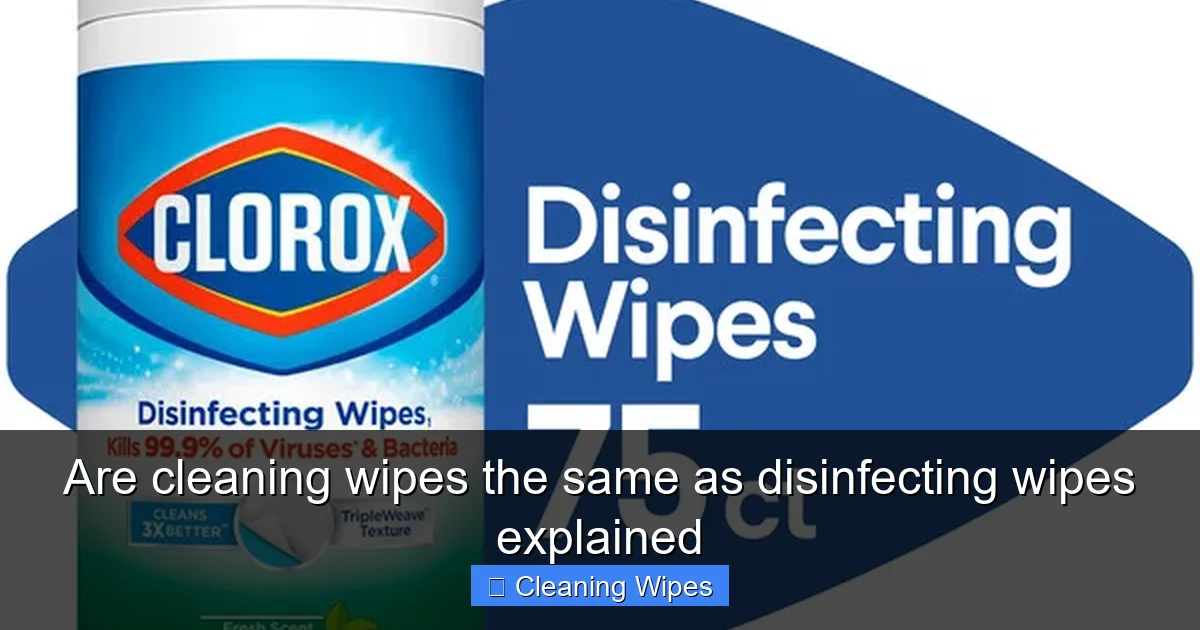
- If it says “disinfecting wipes,” “antibacterial wipes,” or “kills 99.9% of germs,” it is likely a disinfecting product.
- If it only says “cleaning wipes,” “multi-surface wipes,” or “household wipes” with no germ claims, it is probably just for cleaning.
Look for kill claims and an EPA number
Disinfecting wipes usually list specific germs they kill, such as E. coli, Salmonella, or certain viruses. On the back label, you may also see an EPA registration number. This means the product has been tested and approved as a disinfectant.
Cleaning wipes will not have an EPA disinfectant registration. They may still remove some germs, but they are not tested or approved to kill them at specific rates.
Check the “directions for use” section
This part of the label tells you how to use the wipes. It also helps answer the question: are cleaning wipes the same as disinfecting wipes in how you use them? Not exactly.
- Cleaning wipes: Directions are usually simple. Wipe the surface until clean. No waiting time is required.
- Disinfecting wipes: Directions often include a “contact time” or “surface must remain wet for X minutes.” This is how long the surface needs to stay wet to kill germs.
If there is a required contact time, you are dealing with a disinfecting product, not just a cleaner.
Step 3: Decide When You Need Cleaning vs Disinfecting
When to use cleaning wipes
Use cleaning wipes for everyday messes where the main goal is to remove dirt, not necessarily to kill germs. Here are some examples:
- Wiping crumbs off the kitchen table after breakfast
- Cleaning dust off shelves, window sills, or baseboards
- Removing fingerprints from doors, light switches, or walls
- Quickly cleaning the outside of the fridge or cabinets
- Wiping down non-germy spills, like water or juice on the counter
In these cases, asking “are cleaning wipes the same as disinfecting wipes?” is less important. You mainly need a wipe that can lift dirt and leave the surface looking clean.
When to use disinfecting wipes
Use disinfecting wipes when germs are a real concern. For example:
- After handling raw meat on the kitchen counter or cutting board (if safe for that surface)
- On bathroom surfaces like toilet handles, faucets, and sink areas
- On high-touch items like doorknobs, light switches, and remote controls
- When someone in your home is sick with a cold, flu, or stomach bug
- On frequently touched surfaces in shared spaces, like office desks or break room tables
In these situations, the question “are cleaning wipes the same as disinfecting wipes?” really matters. Cleaning alone will not protect you from many germs. You need a disinfecting product and you must use it as directed.
Step 4: Clean First, Then Disinfect (When Needed)
Why you should clean before disinfecting
Disinfecting wipes work best on clean surfaces. If a counter is covered in grease or crumbs, the disinfecting ingredients may not touch all the germs. Dirt can act like a shield, blocking the disinfectant.
So, even though you may ask, “are cleaning wipes the same as disinfecting wipes?” in many cases, you need both steps. Clean first to remove dirt. Then disinfect to kill germs that are left behind.
How to do a simple two-step process
You can follow this easy routine in your home:
- Step 1 – Wipe away dirt: Use a cleaning wipe (or a cloth with soap and water) to remove visible mess. Make sure you get rid of crumbs, sticky spots, and grease.
- Step 2 – Disinfect: Use disinfecting wipes on the now-clean surface. Follow the label directions carefully.
- Step 3 – Let it stay wet: Keep the surface wet for the full contact time listed on the label. Do not dry it off early.
This method is especially helpful in kitchens and bathrooms. It answers the practical side of “are cleaning wipes the same as disinfecting wipes?” by showing how they can work together.
Step 5: Use Disinfecting Wipes Correctly
Follow the contact time
Disinfecting wipes are only effective if the surface stays visibly wet for the required time. This can range from 30 seconds to 10 minutes, depending on the wipe and the germ.
If you wipe quickly and let it dry in a few seconds, you may not be killing the germs you think you are. This is one of the biggest reasons why people ask “are cleaning wipes the same as disinfecting wipes?” They may be using disinfecting wipes like simple cleaners, which reduces their germ-killing power.
Use enough wipes
Do not use one small wipe for a huge area. When a wipe dries out, it can no longer disinfect properly. If you are cleaning a large counter or several doorknobs, use multiple wipes so each surface stays wet long enough.
Do not rinse unless the label says so
Some disinfecting wipes say you should rinse the surface after use, especially if it will touch food or children’s items. Others say you do not need to rinse. Always follow the product directions.
If you rinse too soon, you may remove the disinfectant before it has done its job. If you never rinse when you should, you might leave behind residue that is not safe for food contact.
Keep them away from skin and eyes
Disinfecting wipes are not meant for your skin, unless the label clearly says they are safe for hands. Many household disinfecting wipes can irritate skin, and they should never be used on your face or body.
This is another way that cleaning wipes and disinfecting wipes are not the same. Some cleaning wipes are gentle enough for surfaces like highchairs or toys (with rinsing), while many disinfecting wipes are stronger and need more care.
Step 6: Match the Wipe to the Surface
Surfaces usually safe for cleaning wipes
Most cleaning wipes are safe on hard, sealed surfaces, such as:
- Sealed countertops (laminate, some stone, and solid surface)
- Appliance exteriors (fridge doors, microwaves, ovens)
- Tables and chairs with finished wood or metal
- Plastic surfaces like trash cans or storage bins
Still, always test in a small, hidden area first. Even cleaning wipes can damage delicate finishes over time.
Surfaces usually safe for disinfecting wipes
Many disinfecting wipes are made for:
- Bathroom surfaces (toilet seats, handles, sinks)
- Kitchen counters (if the label says they are safe for that material)
- Doorknobs, light switches, and railings
- Non-porous surfaces like sealed tile and some plastics
Again, check the label. Some stone surfaces, unfinished wood, and certain plastics can be damaged or dulled by strong disinfectants.
Be careful with electronics and screens
Electronics like phones, tablets, and laptops are high-touch items, so it is tempting to use disinfecting wipes on them. But not all wipes are safe for screens or sensitive coatings.
Look for wipes that are labeled as safe for electronics, or follow the device manufacturer’s cleaning advice. In this case, asking “are cleaning wipes the same as disinfecting wipes?” is very important. The wrong choice can damage your screen or leave streaks and residue.
Step 7: Use Wipes Safely Around Family and Pets
Store wipes out of reach
Both cleaning wipes and disinfecting wipes should be kept away from children and pets. The chemicals in the wipes can be harmful if swallowed or chewed. Always close the package tightly and store it in a safe place.
Ventilate the area
Some disinfecting wipes have strong fumes. If you are using a lot of them at once, open a window or turn on a fan. This reduces the chance of headaches or irritation from the smell.
Wash your hands after use
Even if the wipes feel gentle, it is wise to wash your hands after using disinfecting wipes. This helps remove any leftover chemicals from your skin.
Use fewer disinfecting wipes when not needed
It is easy to overuse disinfecting wipes because they feel convenient. But you do not need to disinfect every surface every day. For many tasks, a simple cleaning wipe or soap and water is enough.
Remember, are cleaning wipes the same as disinfecting wipes? No, and using disinfecting wipes all the time can be rough on surfaces, your skin, and the environment. Save them for times and places where germs are a real concern.
Troubleshooting Common Wipe Problems
Problem: Surfaces feel sticky after wiping
If a surface feels sticky after using wipes, you may be using too many wipes or not letting the area dry fully. It can also happen if you layer cleaning products without rinsing.
Solution: Wipe again with a clean, damp cloth and let the surface air dry. Next time, use fewer wipes and follow the label directions closely.
Problem: Streaks on glass or shiny surfaces
Some cleaning and disinfecting wipes are not meant for glass or glossy finishes. They can leave streaks or a cloudy film.
Solution: Use a glass-specific cleaner or a microfiber cloth with a gentle spray. Reserve your wipes for non-glass surfaces, unless the label says they are streak-free on glass.
Problem: Skin irritation after using wipes
If your hands feel dry, itchy, or irritated, the chemicals in the wipes may be too strong for your skin.
Solution: Wear disposable gloves when using disinfecting wipes, or switch to milder cleaning wipes for everyday tasks. Always wash your hands after cleaning.
Problem: Wipes dry out in the package
If the lid or seal is left open, wipes can dry out and become useless.
Solution: Always close the package tightly. Store wipes upside down occasionally to help redistribute the liquid. If they are already dry, do not try to re-wet them with tap water for disinfection; they will no longer have the right chemical balance.
Conclusion: Choosing the Right Wipe Every Time
So, are cleaning wipes the same as disinfecting wipes? Now you know they are not. Cleaning wipes are great for removing dirt and everyday messes. Disinfecting wipes are designed to kill germs, but only when you use them exactly as directed.
To keep your home both clean and safe, remember these key ideas:
- Use cleaning wipes for routine tidying and visible messes.
- Use disinfecting wipes for high-germ areas and when someone is sick.
- Read labels carefully to understand what each wipe can and cannot do.
- Clean first, then disinfect when you need extra germ control.
- Match the wipe to the surface and follow all safety instructions.
By understanding the difference, you will save money, protect your surfaces, and keep your family healthier. The next time you shop, you will not just ask, “are cleaning wipes the same as disinfecting wipes?” You will know exactly which one you need and how to use it.
