
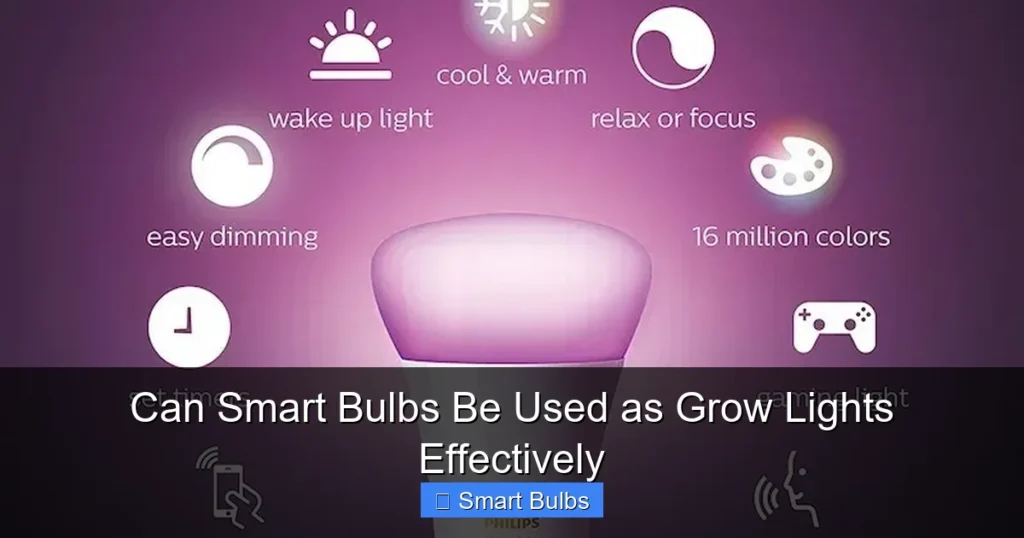
While tempting for their convenience and customizable colors, smart bulbs are generally not effective as primary grow lights for most plants. They often lack the specific spectrum, intensity (Photosynthetically Active Radiation or PAR), and overall power output required for robust plant growth, beyond perhaps sustaining very low-light plants or starting seedlings temporarily. For serious indoor gardening or achieving significant yields, dedicated grow lights remain the far superior and more efficient solution.
Can Smart Bulbs Be Used as Grow Lights Effectively?
The world of smart home technology is incredibly exciting, bringing convenience and customization to nearly every corner of our lives. From smart thermostats to smart speakers, these innovations aim to make daily tasks easier and more enjoyable. It’s only natural, then, for the growing number of indoor plant enthusiasts to wonder if their beloved smart bulbs, with their dazzling array of colors and programmable schedules, could also pull double duty as grow lights.
Imagine the convenience: setting the perfect light schedule for your plants right from your phone, adjusting the color spectrum to supposedly match different growth stages, all while keeping your living space aesthetically pleasing. It sounds like a dream come true for the modern plant parent. But as with many things that sound too good to be true, the reality of using smart bulbs as grow lights is a bit more nuanced than a simple on/off switch. Let’s dig into what plants truly need from light and how smart bulbs stack up against those requirements.
Key Takeaways
- Limited Effectiveness for Most Plants: Smart bulbs typically lack the necessary light spectrum and intensity (PAR) for vigorous growth in the majority of plant species.
- Spectral Deficiencies: While color-tunable, smart bulbs struggle to efficiently deliver the crucial red and blue wavelengths in the quantities plants need for photosynthesis.
- Insufficient Light Intensity (PAR): Their overall light output, often measured in lumens, doesn’t translate to the Photosynthetically Active Radiation (PAR) critical for plant development. Dedicated grow lights focus on maximizing PAR.
- Basic Survival, Not Thriving: Smart bulbs might sustain very low-light houseplants or newly germinated seedlings for a short period, but they won’t promote significant vegetative growth, flowering, or fruiting.
- Automation is a Plus, But Light Quality Matters More: Smart bulb scheduling and dimming features are convenient, but these benefits are negated if the light itself is inadequate for plant needs.
- Cost vs. Performance Mismatch: While seemingly a cheaper alternative, investing in dedicated grow lights offers significantly better performance, efficiency, and long-term results for serious indoor cultivation.
- Specific Use Cases Are Niche: Only the most undemanding, decorative plants that require very little light might somewhat tolerate a smart bulb setup, but even then, expectations should be low.
📑 Table of Contents
- Understanding What Plants Truly Need from Light
- The Capabilities and Limitations of Smart Bulbs
- Spectral Showdown: Smart Bulbs vs. Plant-Specific Needs
- The Intensity Factor: Do Smart Bulbs Provide Enough PAR?
- Practical Applications and Realistic Expectations
- Making an Informed Decision: Cost vs. Performance
- Conclusion
Understanding What Plants Truly Need from Light
Before we even consider plugging in a smart bulb, it’s crucial to understand the fundamental role light plays in plant life. Plants aren’t just “turning green” under light; they’re performing a complex process called photosynthesis. This process is how they convert light energy into chemical energy to grow, flower, and produce fruit. Not all light is created equal in the eyes (or leaves) of a plant.
The Importance of the Light Spectrum
Think of white light as a rainbow, a blend of different colors, each with its own wavelength. Plants primarily use specific parts of this spectrum for photosynthesis:
- Blue Light (400-500 nm): This wavelength is critical for vegetative growth, meaning the development of leaves and stems. It encourages compact, bushy growth and helps regulate stomatal opening (the pores on leaves that take in CO2).
- Red Light (600-700 nm): Red light is essential for flowering and fruiting. It also plays a vital role in stem elongation and overall biomass production. When combined with blue light, it creates a powerful photosynthetic engine.
- Green Light (500-600 nm): While often thought to be reflected by plants (giving them their green color), recent research shows that green light can penetrate deeper into the plant canopy, reaching lower leaves and contributing to photosynthesis, especially in dense foliage.
- Far-Red Light (700-800 nm): Beyond the visible spectrum, far-red light influences stem elongation, flowering time, and shade avoidance responses. It’s not directly used for photosynthesis but impacts plant architecture.
Dedicated grow lights are engineered to provide a spectrum optimized for plant growth, often focusing heavily on red and blue, with specific amounts of green and far-red light.
Light Intensity and Duration (PAR, PPFD)
It’s not enough to just have the right colors; plants also need enough *quantity* of that light. This is where terms like Photosynthetically Active Radiation (PAR) and Photosynthetic Photon Flux Density (PPFD) come into play, and they’re crucial for understanding if smart bulbs can be used as grow lights.
- Lumens vs. PAR vs. PPFD: When you buy a regular light bulb, you usually look at lumens – a measure of how bright the light appears to the human eye. However, lumens tell you very little about how useful that light is to a plant.
- PAR (Photosynthetically Active Radiation): This refers to the portion of the electromagnetic spectrum (typically 400-700 nanometers) that plants use for photosynthesis.
- PPFD (Photosynthetic Photon Flux Density): This is the most accurate measurement for grow lights. It quantifies the number of PAR photons that hit a specific surface area (usually in micromoles per square meter per second, μmol/m²/s). Essentially, it tells you how much “plant-usable” light is actually reaching your plant.
- Daily Light Integral (DLI): This is the total amount of PAR light a plant receives in a 24-hour period. Different plants have different DLI requirements to thrive. Getting enough DLI means having both sufficient PPFD and appropriate light duration.
For context, a cloudy day outdoors might provide 500-1000 μmol/m²/s, while full sun can hit 2000 μmol/m²/s. Many indoor plants need anywhere from 100-500 μmol/m²/s or more, depending on their growth stage and species.
The Capabilities and Limitations of Smart Bulbs
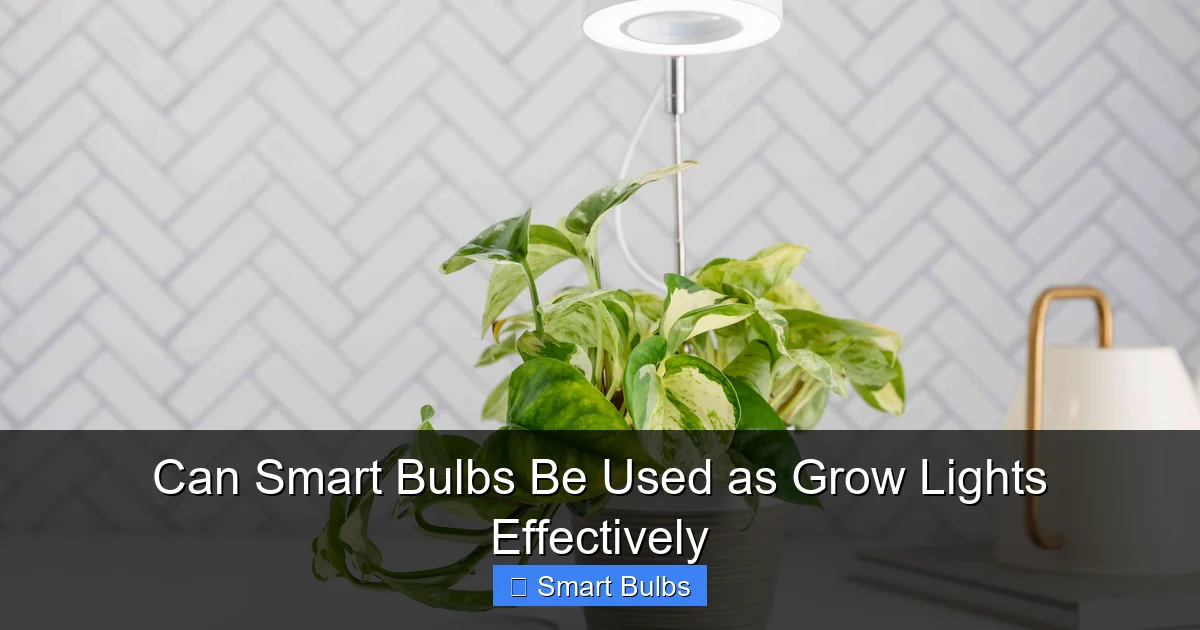
Visual guide about Can Smart Bulbs Be Used as Grow Lights Effectively
Image source: thespruce.com
Now that we understand what plants need, let’s look at what smart bulbs bring to the table. These bulbs are designed with human comfort and convenience in mind, not botanical optimization.
What Smart Bulbs Offer
Smart bulbs, particularly those with RGB (Red, Green, Blue) capabilities, offer several attractive features:
- Color Tuning: You can often adjust the light to any color in the rainbow, including various shades of white. This means you *can* technically select a purple light (mixing red and blue) or a warm white, for example.
- Scheduling and Automation: This is a big plus. You can set precise on/off times, dimming schedules, and even gradual sunrise/sunset effects through an app or smart home hub.
- Remote Control: Adjust your lights from anywhere with an internet connection.
- Aesthetics: Smart bulbs blend seamlessly into a home’s decor, looking like regular light bulbs.
These features are undeniably useful for general home lighting and creating ambiance. But are they enough to make smart bulbs effective grow lights?
Where Smart Bulbs Fall Short for Plants
Unfortunately, the features that make smart bulbs great for human use are often insufficient for plant growth.
- Typical Lumen Output: Most smart bulbs are designed to light a room comfortably, not to provide intense, focused light for plants. Their lumen output, while seemingly bright to us, translates to very low PAR values for plants, especially as distance increases.
- Lack of Specific Plant Spectrums: While you can *create* a purple light, the efficiency and quality of the specific red and blue wavelengths produced by a smart bulb’s LEDs are typically far inferior to those in a dedicated grow light. Grow lights use specialized LED diodes chosen for their precise wavelength and high efficiency in converting electricity into PAR. Smart bulbs use general-purpose RGB LEDs.
- Thermal Management: While LEDs are energy-efficient, they still produce heat. Dedicated grow lights have robust heat sinks to manage this, ensuring the LEDs operate efficiently and last longer. Smart bulbs have much smaller heat management systems, which can limit their sustained high-power output in specific color modes.
Spectral Showdown: Smart Bulbs vs. Plant-Specific Needs

Visual guide about Can Smart Bulbs Be Used as Grow Lights Effectively
Image source: blogstudio.s3.amazonaws.com
This is where the rubber meets the road. Can a smart bulb truly replicate the ideal light spectrum for photosynthesis?
The “Full Spectrum” Misconception
Many general-purpose LEDs and even some smart bulbs are marketed as “full spectrum.” For human eyes, this usually means a light that looks white and includes all visible wavelengths. However, for plants, “full spectrum” in a grow light context means a spectrum *optimized* for photosynthesis, often with peaks in the red and blue regions, and not necessarily an even distribution across all wavelengths. A white smart bulb, while “full spectrum” to us, might have most of its energy concentrated in the green and yellow parts of the spectrum, which are less photosynthetically efficient for many plants.
Can Color Tuning Compensate?
With a color-tunable smart bulb, you can select a “pink” or “purple” setting, which looks like the stereotypical grow light color. You can also try to dial in specific red and blue values. While this offers some control, there are critical limitations:
- Efficiency: Smart bulb LEDs are not designed for maximum efficiency in specific narrow red or blue bandwidths. They are general-purpose RGB emitters. A dedicated grow light uses specialized deep red, royal blue, and sometimes far-red diodes that are highly efficient at producing those precise wavelengths.
- Intensity within Spectrum: Even if you set your smart bulb to emit a red light, the *amount* of usable red light (PAR in the red spectrum) will likely be very low compared to a dedicated grow light. It’s like having a very dim red flashlight versus a powerful red laser; both emit red light, but one has vastly more energy.
- Lack of Specific Wavelengths: High-quality grow lights often include specific narrow bands of red (e.g., 660nm deep red) and blue (e.g., 450nm royal blue) that are particularly effective for photosynthesis. Smart bulbs typically use broader band RGB LEDs that don’t hit these optimal peaks with the same precision or intensity.
The Intensity Factor: Do Smart Bulbs Provide Enough PAR?
Perhaps the biggest hurdle for smart bulbs serving as grow lights is light intensity, specifically the Photosynthetically Active Radiation (PAR) output.
Decoding Light Metrics
As mentioned, lumens are for humans, PAR and PPFD are for plants. A typical smart bulb might boast 800-1000 lumens, which is fine for lighting a small room. But when you convert that to PPFD, especially considering the inefficient spectrum for plants, the numbers drop dramatically.
Real-World PAR Output of Smart Bulbs
Independent tests often reveal that even a smart bulb set to a “grow light” color will only produce a very low PPFD. For example, a good smart bulb might deliver 20-50 μmol/m²/s at a few inches from the plant. In contrast:
- A basic entry-level dedicated grow light (like a small LED bar) can easily deliver 150-300 μmol/m²/s from a foot or more away.
- More powerful grow lights for fruiting or flowering plants will exceed 500-1000 μmol/m²/s.
This means you’d need multiple smart bulbs, placed incredibly close to your plants (potentially causing heat stress or bleaching), to even approach the minimal light levels needed for moderate growth. The inverse square law applies here: light intensity drops off rapidly with distance. If a smart bulb puts out 50 μmol/m²/s at 6 inches, it might be less than 10 μmol/m²/s at 12 inches.
Practical Applications and Realistic Expectations
So, when can smart bulbs be used as grow lights, if ever? And when is it absolutely essential to invest in dedicated equipment?
When Smart Bulbs Might *Barely* Work
Let’s be realistic: using smart bulbs as grow lights is a very niche application, primarily for survival rather than thriving.
- Germination (Very Short Term): For the first few days of germination, very young seedlings require relatively low light. A smart bulb placed very close might provide enough light to prevent them from becoming leggy. However, once true leaves appear, they will quickly outgrow this light source.
- Very Low-Light Decorative Plants: Think plants that would barely survive in a dimly lit corner of your house, like a ZZ plant or a snake plant that tolerates low light. A smart bulb might supplement ambient light enough to keep them alive, but don’t expect lush growth.
- Supplementary Light (Not Primary): If you already have a strong primary grow light and just want to add a *tiny* bit of additional light to a shadowed area, a smart bulb *might* contribute minimally. This is not its intended purpose, however.
- Short-Term Holding: If you’re moving plants and temporarily need *any* light source for a day or two, a smart bulb is better than complete darkness.
In all these scenarios, your expectations for plant growth should be extremely low. You’re aiming for survival, not vigorous development, when using smart bulbs as grow lights.
When to Absolutely Choose Dedicated Grow Lights
For almost any serious indoor gardening endeavor, dedicated grow lights are non-negotiable.
- Fruiting and Flowering Plants: Tomatoes, peppers, cannabis, orchids – these plants have high light requirements to produce flowers and fruit. Smart bulbs simply cannot deliver the intensity or the specific spectral peaks needed for these processes.
- Significant Vegetative Growth: If you’re trying to grow bushy herbs like basil, leafy greens like lettuce, or simply want your houseplants to grow larger and healthier, dedicated grow lights provide the consistent, optimal light needed.
- Seedlings and Cuttings for Transplant: While smart bulbs might work for the first few days of germination, robust seedlings ready for transplant need strong, balanced light to develop strong root systems and compact growth.
- Maximizing Yield and Health: If your goal is to grow healthy, productive plants, you need to provide them with the best possible conditions, and light is arguably the most critical factor after water and nutrients.
DIY Enhancements (and why they’re often futile)
Some might consider adding reflectors or using multiple smart bulbs to boost the output. While reflectors can certainly help direct light, the fundamental limitation of low PAR output from smart bulbs remains. You’d need an impractical number of bulbs and an excessively close distance to achieve even moderate grow light levels, often costing more than a proper grow light in the first place, and still being less efficient.
Making an Informed Decision: Cost vs. Performance
When you’re trying to decide if smart bulbs can be used as grow lights, it often comes down to a comparison of initial cost versus long-term value and performance.
Initial Cost vs. Long-Term Value
A single smart bulb might cost $15-$50. A basic, effective LED grow light can start around $30-$50 for a small strip, and go up to hundreds for professional setups. At first glance, the smart bulb seems cheaper.
However, consider the value:
- Smart Bulbs: You might buy several smart bulbs, trying to compensate for low output. This can quickly add up. And even then, your plants will likely struggle, leading to wasted effort and potentially dead plants. The “cost” here isn’t just the bulb, but the lost time and resources invested in plants that don’t thrive.
- Dedicated Grow Lights: While the initial investment might be higher, you’re buying a tool specifically designed for the job. It will deliver the correct light, promote healthy growth, and yield better results, ultimately saving you money by producing successful plants and avoiding constant replacements.
Energy Efficiency
Both smart bulbs and dedicated grow lights are typically LED technology, meaning they are inherently more energy-efficient than older incandescent or fluorescent lights. However, there’s a key distinction:
- Smart Bulbs: Their efficiency is measured in terms of lumens per watt for human vision. A significant portion of their energy might be converted into light wavelengths that are not optimal for plant photosynthesis, essentially wasted energy from a plant’s perspective.
- Dedicated Grow Lights: These are engineered for *photosynthetic* efficiency. They convert electricity into PAR photons with high precision, meaning more of the energy consumed directly contributes to plant growth. This makes them more energy-efficient *for their intended purpose* even if they draw more watts than a single smart bulb.
Therefore, while a smart bulb might use less power overall, it’s far less efficient at delivering *usable* light to your plants.
Conclusion
So, can smart bulbs be used as grow lights effectively? The honest answer is: generally, no. While the allure of smart home integration and customizable colors is strong, smart bulbs are fundamentally designed for human comfort and ambient lighting, not the rigorous demands of plant photosynthesis. They fall short in critical areas such as spectral quality, intensity (PAR output), and overall efficiency for plant growth.
For the vast majority of indoor gardening endeavors, from nurturing seedlings to growing vibrant herbs, vegetables, or flowering plants, a dedicated grow light remains the superior choice. These specialized lights are engineered to provide exactly what your plants need to thrive, ensuring robust growth, health, and ultimately, a more rewarding gardening experience. While your smart bulbs can beautifully illuminate your home, let a purpose-built grow light handle the serious business of nurturing your green companions. Make an informed choice for your plants, and watch them flourish under the right light.
Frequently Asked Questions
Can a smart bulb sustain plant life?
A smart bulb might sustain very low-light plants or newly germinated seedlings for a short period, preventing immediate death. However, it will not provide the energy needed for robust growth, flowering, or fruiting for most plant species.
Do smart bulbs emit the correct spectrum for plants?
While many smart bulbs can be color-tuned to emit red and blue light, their general-purpose LEDs are not optimized for the specific wavelengths or intensity required for efficient photosynthesis. Dedicated grow lights use specialized diodes designed for precise plant spectrums.
Is the light from smart bulbs intense enough for plant growth?
No, the Photosynthetically Active Radiation (PAR) output of typical smart bulbs is far too low for most plants to thrive. They are designed for human visibility (lumens), not for the high-intensity light plants need for strong growth.
Can I combine multiple smart bulbs to create an effective grow light?
While combining multiple smart bulbs would increase light output, it’s generally an inefficient and costly approach. You would need an impractical number of bulbs placed very close to plants, still without the optimal spectrum, likely costing more than a single dedicated grow light.
Are smart bulbs more energy-efficient than grow lights?
Both use LED technology, but dedicated grow lights are designed for *photosynthetic* efficiency, meaning more of their energy output is in wavelengths usable by plants. Smart bulbs, while efficient for ambient light, waste much of their energy on wavelengths less useful for plant growth.
What type of plants, if any, could benefit from a smart bulb?
Only extremely low-light tolerant, decorative plants that primarily need to survive (e.g., ZZ plants, snake plants in very dim conditions) or seedlings during the initial germination phase might see marginal benefit from a smart bulb as a supplementary, rather than primary, light source.