
Specs are compiled from manufacturer listings and verified buyer reviews and can change over time — please confirm the key details on the product page before buying.
Every yoga mat promises a steady foundation, but the real test comes when your knees press into a hard floor or your palms start to sweat in a hot class. The right mat balances joint cushioning, non-slip grip, and a price that matches how often you practice. This guide breaks down nine popular mats by those exact standards, so you can spot the one that fits your practice — and your floor — without guessing.
I’m Maruf — the founder and writer behind HomeYarr. This guide is built by comparing the manufacturers’ published specifications and the patterns across verified customer reviews, so you get each pick’s real strengths and trade-offs instead of marketing spin.
The key is matching the mat’s thickness and material to your routine, and we’ve weighed every option to find the best yoga mat cost is the value winner here, balancing price with real joint protection.
Our Picks at a Glance


How To Choose The Best Yoga Mat Cost
Understand what you’re paying for before comparing prices. Thickness and material are the two specs that most affect your experience.
Thickness: The Cushioning vs. Stability Trade-off
Thicker mats (10-12mm) cushion knees and hips, ideal for beginners, restorative yoga, or sensitive joints. But the extra give can make balance poses like tree pose feel less stable. Thinner mats (4-6mm) offer a firmer floor connection for standing balance but less protection on hard surfaces.
Material: TPE, NBR, and the “New Mat” Smell
The material dictates grip, weight, and odor. NBR foam is highly cushioned and soft, but it’s often heavier and can have a strong odor from the start. TPE (thermoplastic elastomers) is a newer foam that’s lighter, more elastic, and typically has less odor, making it a popular choice for those who want a balance of performance and portability. Always check if the manufacturer notes any certifications — like being free of heavy metals or phthalates — if that matters to you.
Quick Comparison
| Model | Best For | Thickness | Dimensions | Material | Amazon |
|---|---|---|---|---|---|
| Gaiam Thick Yoga Mat★ Best Overall | Joint Comfort at Home | 10mm (0.4″) | 72″ x 24″ | NBR Foam | Amazon |
| YOTTOY Extra Thick MatMaximum Cushion | Maximum Cushioning | 12mm (0.5″) | 72″ x 24″ | TPE | Amazon |
| Gogokiwi Wide MatWidest Pick | Maximum Width & Space | 6.35mm (0.25″) | 72″ x 36″ | RecFoam | Amazon |
| Karma Fitness Large Mat | High-Intensity Workouts | 10mm (0.39″) | 72″ x 32″ | Dual-Layer TPE | Amazon |
| KEEP Extra Wide Mat | Extra Width & Comfort | 7mm (0.28″) | 72″ x 32″ | TPE | Amazon |
| YOTTOY Wide & Thick Mat | Eco-Friendly & Wide | 8mm (0.34″) | 72″ x 32″ | TPE | Amazon |
| Amazon Basics TPE Mat | Simple Versatility | 6mm (0.24″) | 73.6″ x 24″ | TPE | Amazon |
| MRZZATA Double-Sided Mat | Firm Stability & Sweat | 7mm (0.28″) | 72″ x 32″ | TPE | Amazon |
| Readaeer Foldable Mat | Travel & Dorm Life | 6mm (0.24″) | 72″ x 24″ | TPE | Amazon |
In‑Depth Reviews
1. Gaiam Thick Yoga Mat
Our pick — over 4.5★ from 46,500+ verified ratings; the strongest balance of quality and price.
The cushioned crowd-pleaser that proves you don’t need a studio budget for happy knees.
If your main worry is a hard floor digging into your knees and hips during floor work, this mat’s 10mm (2/5 inch) of NBR foam is the answer. It’s a plush, forgiving surface that buyers consistently describe as “thick and safe,” and many note it offers better knee protection than a thinner 1-inch mat they’ve used before. The soft texture also helps reduce slipping on most hard floors during dry workouts, so you can move through Pilates and stretching with confidence.
This mat is noticeably heavier than the TPE options on this list — the denser foam makes it about 1 pound heavier than some alternatives — but that weight translates directly to durability and cushion. The trade-off is a mat that can hold a permanent curve from rolling, and the included carrying strap is secure but not the easiest to use. A few owners also note a strong foam odor when the mat first arrives, which typically fades after airing out for 24–48 hours.
What wins people over here is the sheer value: the quality is praised far more than any other aspect, and owners say it feels like a great price, especially compared to similar mats they’ve seen for more money. It’s a versatile choice for beginners, low-impact yoga, and recovery work on wood, tile, or concrete floors.
thick cushioning value
- Plush 10mm foam is kind to knees, hips, and joints
- Comfort-focused textured surface grips most hard floors
- Low-odor NBR foam is easy to wipe clean
- Includes an adjustable carrying strap for transport
heavy to carry
- Noticeably heavier than lighter TPE mats
- Prone to holding a curve from how it’s rolled
- Initial foam odor needs 24–48 hours to air out
- Secure strap is a bit fiddly to use
plush support: Beginners and anyone doing floor-based yoga, Pilates, or stretching at home who wants serious joint cushioning without a premium price tag.
portability issues: You carry your mat to a studio daily — the extra weight and permanent roll curve make it less travel-friendly than the foldable options.
2. YOTTOY Extra Thick Yoga Mat
The thickest mat here — a 12mm cloud that still grips the floor beneath you.
For the maximum amount of cushioning available on this list, the YOTTOY goes all the way up to 12mm (1/2 inch) thick — that’s more than double the 6mm of the Readaeer foldable mat. Buyers with bad hips and sensitive knees report it’s “thick enough to protect my knees and doesn’t slide around on the floor,” making it a strong pick for side-lying Pilates and kneeling postures. The anti-slip surface uses granular protrusions to increase friction and absorb sweat, while a water ripple texture on the reverse grips different floor types.
You get serious cushioning here, but you pay for it in weight: at 4 pounds, this is the heaviest mat in the lineup, more than double the 1.8-pound Readaeer. For health-conscious buyers, the TPE material is SGS & TUV certified (third-party tested to be free of heavy metals like lead and cadmium, plus 10 harmful types of phthalate). Owners say it’s still light enough to toss over a shoulder, but rolling it tight enough to fit back in its holder takes effort — a few had to lay it flat with weights on the ends to stop the curling.
The thing everyone raves about is the thickness — it’s the top positive aspect by far — followed by the overall quality. It’s a “sparkly” pink mat that one owner calls “the perfect yoga mat,” balancing affordability with a premium, plush feel that makes it a great investment for home practice.
cushion seekers: Your practice is all about comfort — think restorative yoga, floor stretches, and anyone with joint pain who wants the most padding possible.
tight spaces: You need to pack light or roll the mat tightly for a bag every day; the 4-pound weight and stubborn roll-up habit make it a home-body mat.
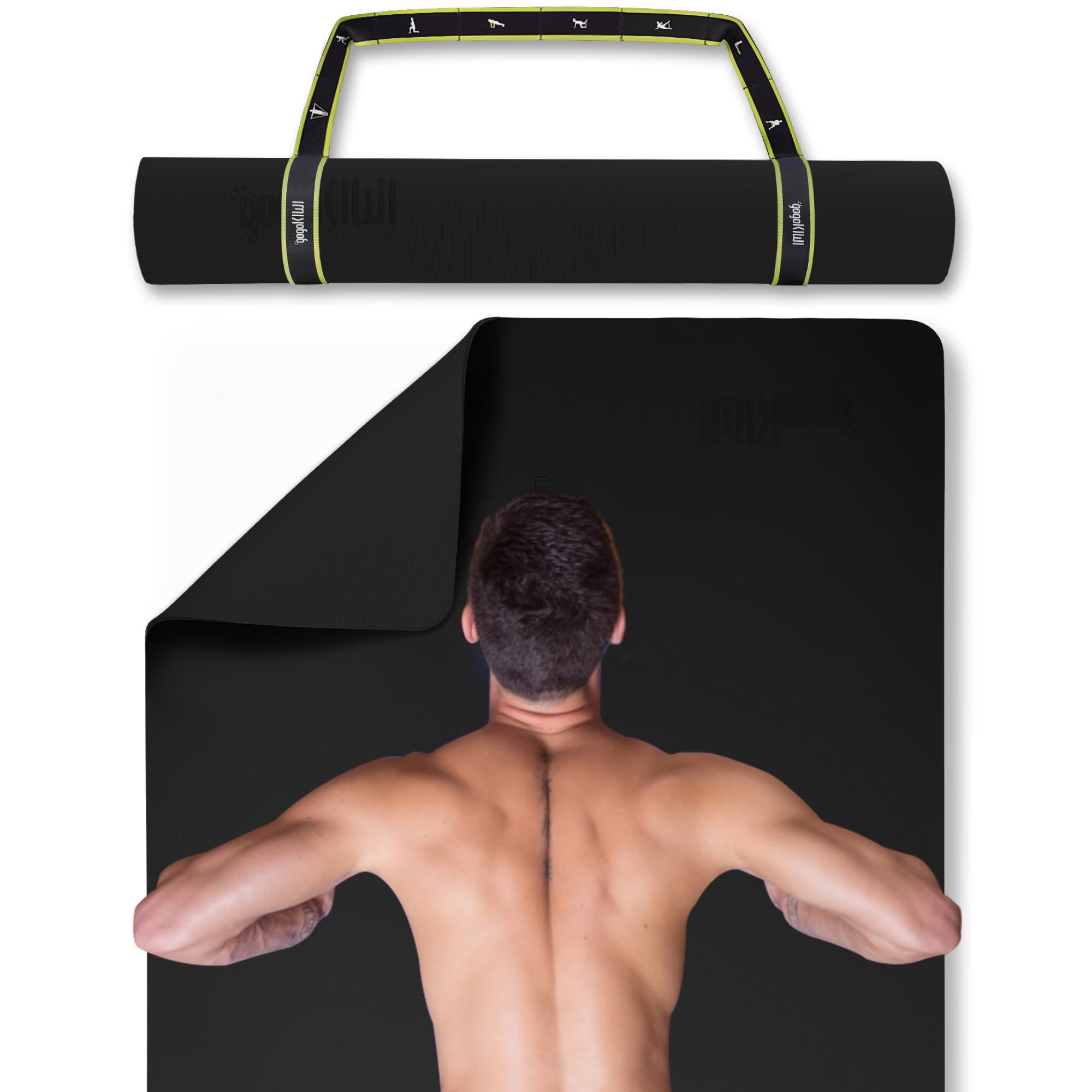
3. Gogokiwi Extra Wide Yoga Mat
A full 36 inches wide — the rare mat where push-ups don’t end with your hands on the floor.
If you’re tall, broad-shouldered, or just tired of your hands and feet sliding off the edges, the Gogokiwi gives you the most real estate of any mat here. At 72″ x 36″, it’s a full foot wider than the standard 24-inch mats, and buyers specifically love that they can do push-ups with both hands on the mat. The dense RecFoam material is designed to hold its shape workout after workout, with a closed-cell surface that keeps sweat from soaking in — you just wipe it off the top.
The included strap does double duty: it rolls the large mat up tight for storage, then works as a stretching band for hamstrings, shoulders, and hips. At 2.7 pounds, the weight is reasonable for a mat this size, but a few owners call it “a bit heavy for a mat” and note the fine dual-sided texture is “designed for dry-hand traction” — so it suits vinyasa and home workouts, but may not be the stickiest for extremely sweaty hot yoga. Some owners also report durability can vary, with rare units showing wear within months.
The quality stands out as the most-praised aspect, with the size coming in second. It’s an excellent pick for bigger frames, taller bodies, and anyone doing dynamic floor exercises who values not worrying about rolling off the edge.
wide poses: Taller or larger practitioners who need maximum width for wide-stance poses, push-ups, and stretching without stepping off the mat.
hot yoga: You practice hot, sweaty yoga and need maximum stickiness — this is tuned for dry-hand traction and keeps a clean surface instead.
4. Karma Fitness Large Workout Mat

The high-intensity workhorse — 33% wider than standard, with a diamond grip that handles the sweat.
This mat is built for people who do more than just yoga. The Karma Fitness mat is 72″ x 32″, which the maker notes is 33% wider than a standard 24-inch mat, giving you extra room for press-ups, sumo squats, lateral lunges, and stretching. The custom dual-layer TPE design combines cushioning with stability — buyers describe it as comfortable without being “too soft or spongey,” which is exactly what you want when you’re pushing through a strength session.
The bespoke diamond texture provides multidirectional grip on both sides, so you stay put even during high-intensity exercise. It’s waterproof and sweat-resistant, making it easy to clean after a hard workout, and it performs well on carpet, hardwood, or gym floors. The included carry bag with an adjustable shoulder strap makes it easy to take to the studio or park. As one long-time exerciser put it, this is the “best mat I’ve used so far” in 20 years of practice.
The caveat is that a mat this thick and wide is inherently bulky to carry, even with the bag. But for the quality and cushioning on offer, most owners find the trade-off worth it. The quality is the most-mentioned positive, followed by the size, with cushioning and thickness both earning consistent praise.
floor exercises: Your routine mixes yoga with strength training, lunges, and floor work — you want a thick, stable base that handles intensity.
hard floors: You need a lightweight mat to pack for travel; the 1.8 kg weight and bulky roll make it better suited for home or gym.
5. KEEP Extra Wide Yoga Mat
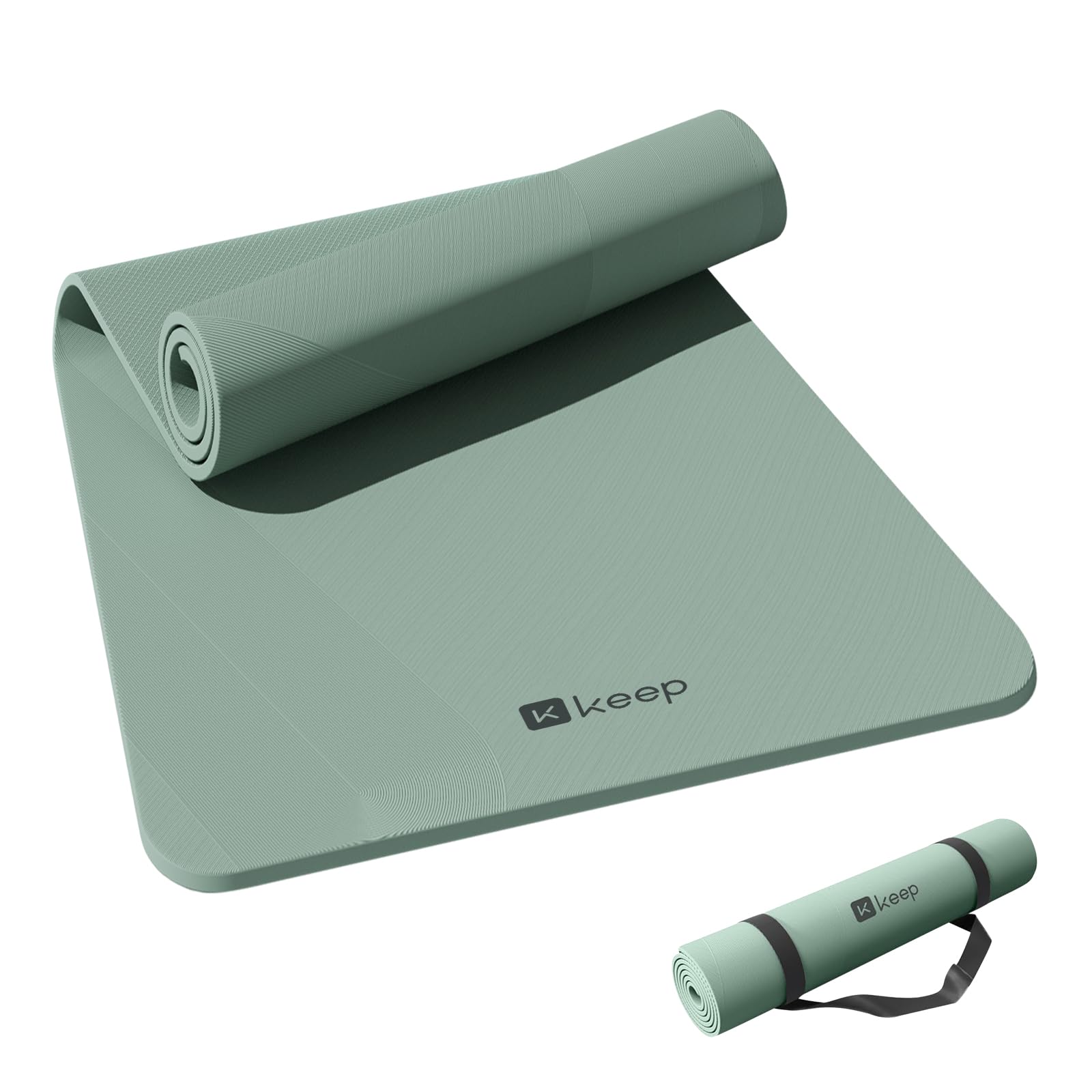
The wide, planet-friendly mat that gives your knees a break without weighing you down.
The KEEP mat splits the difference nicely: it’s 32 inches wide for ample pose space, but keeps the weight down to just 2.8 pounds. The 7mm (0.28-inch) padding is a solid middle ground — thicker than a basic travel mat, but not as plush as the 12mm YOTTOY. Buyers appreciate that it’s “wide enough for many poses, including floor and wide stance poses,” and the fingerprint-like anti-slip texture on top provides precise grip for every pose.
What sets this mat apart is its eco-friendly construction. It’s crafted from premium TPE that’s free from plasticizers and formamide, making it a safer choice for your body and gentler on the planet. The bottom layer features a comprehensive anti-slip pattern, ensuring no corner is left unsecured. The included adjustable polyester strap makes it easy to carry to class or the gym.
The standout feature is the size — owners love the extra width so they don’t worry about falling off the edge. Quality is the most-praised aspect, with the size following close behind. One buyer did note the “pale green” color looks more like a blue/aqua shade in person, so if you’re matching workout gear, keep that in mind. It’s a solid, odorless upgrade for anyone who wants more room without going to the extreme 36-inch width.
stretching: Practitioners of all sizes who want more width than standard but don’t want to haul a heavy mat — the 2.8-pound weight keeps it portable.
joint pain: The color may run more aqua/blue than the advertised “pale green,” so don’t buy it purely for a specific green aesthetic.
6. YOTTOY Wide & Thick Yoga Mat
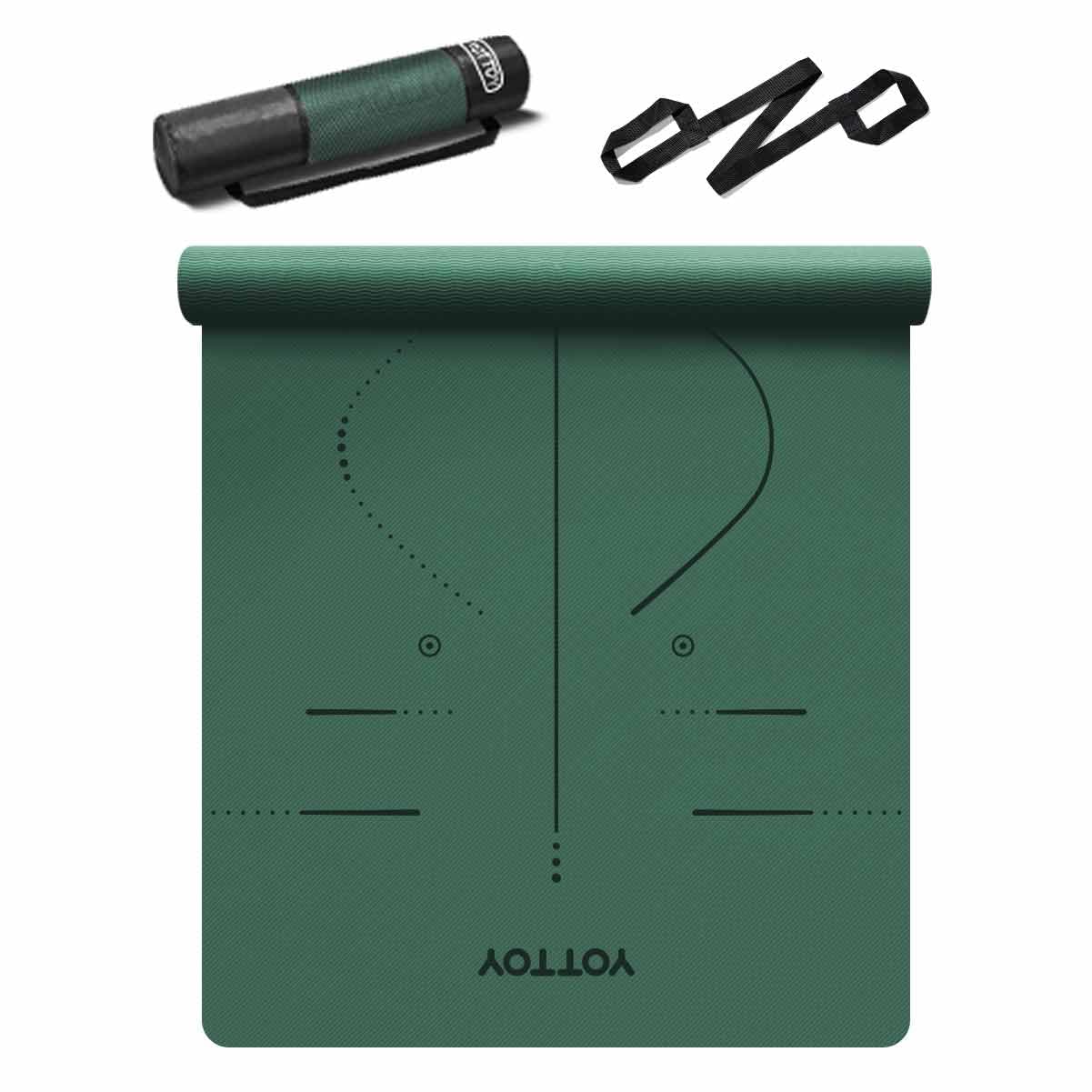
A wide 8mm mat with alignment marks that guide beginners through every pose.
This YOTTOY mat brings the brand’s signature quality to a wider 72″ x 32″ format with a balanced 8mm thickness. It’s designed for practitioners who want more room than a standard mat but don’t need the extreme cushioning of the 12mm version. The “surface flippers webbing design,” inspired by penguin flippers, improves the resistance factor so you can sweat without slipping, and it’s strong enough to prevent ripping during weight training or floor exercises.
For beginners, the alignment marks printed on the surface are a thoughtful touch, helping you position your hands and feet correctly. The mat is made from strictly selected TPE with SGS & TUV double certification, meaning it’s non-toxic and odorless, plus waterproof and sweat-proof. The polymer material provides effective sound damping and anti-vibration, protecting your knees and joints during practice.
At 1.9kg, it’s reasonably light for its size and comes with both a strap and a mesh storage bag. Owners love the extra width and thickness, noting it “lies flat” and that the cushioning strikes the right balance between comfort and stability. One buyer’s carry bag tore on first use, and the mat is slightly harder to roll up, but the comfort and coverage “outweighs this” for most. The 0.34-inch thickness provides noticeably more support than the standard 6mm mats.
all-around use: You’re a beginner who wants alignment guidance and a wide, stable base — the built-in marks genuinely help with positioning.
travel: The included mesh bag is a weak point; treat it gently and consider a sturdier bag if you plan to travel with it often.
7. Amazon Basics TPE Exercise Mat
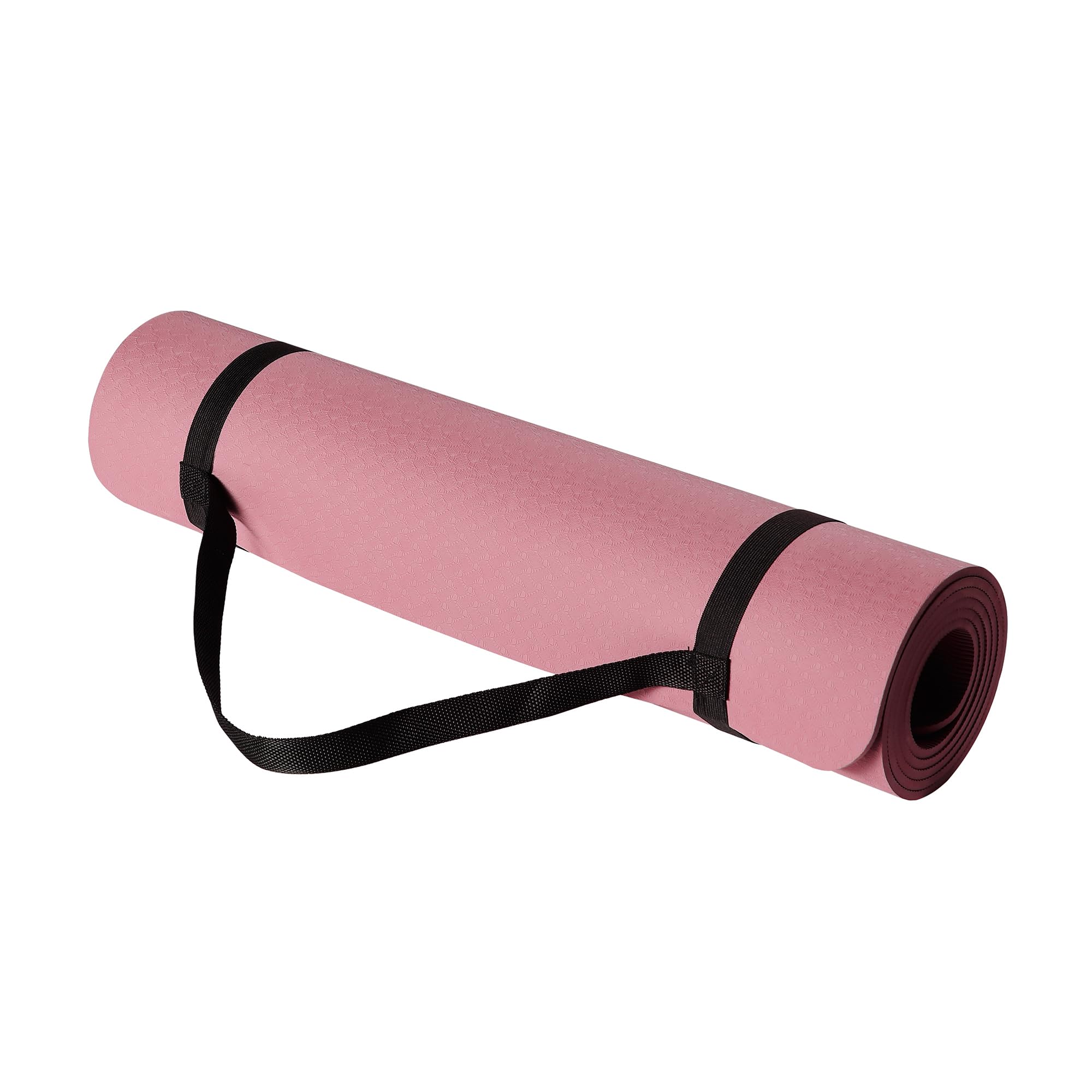
The smart, no-frills standard — long enough, grippy enough, and priced right.
The Amazon Basics mat is the definition of “does the job” — and that’s a compliment. It’s slightly longer than most at 73.6 inches, giving taller users a bit more room to stretch out. The 1/4-inch (0.24″) TPE foam provides a balance of joint cushioning and stability, making it a reliable choice for yoga, Pilates, and general fitness at home, in the studio, or outdoors. The non-slip surface holds poses, and the spring-back elasticity maintains its shape while supporting your balance.
Owners praise it for being “very portable, because it’s thinner, and can roll up tight,” making it far less bulky than thicker mats. It’s a lightweight 2 pounds and includes a carrying strap, so it travels easily to the gym or a class. The quality and grip are the most-praised aspects, with buyers noting it’s durable, has no odor, and that you don’t need to buy more expensive options. One owner mentions it “stretches too much in yoga poses causing instability,” so it may not be ideal for advanced balance work.
The plum color receives mixed feedback — some love the muted shade, while others expected something different. But for a straightforward, reliable mat that covers all the basics, it’s a strong value pick. If you’re just starting out or want a simple backup mat, this is a smart, affordable choice.
budget pick: Beginners, casual practitioners, and anyone who wants a solid, portable, no-nonsense mat that rolls up tight for easy transport.
daily grind: You practice intense, balance-heavy yoga and need a firmer, less stretchy surface — this one has a bit of give in deep poses.
8. MRZZATA Double-Sided Yoga Mat

A wider, thicker mat that finally lets a power vinyasa teacher feel secure on wood floors.
If you want stability when sweat starts flowing, the MRZZATA delivers. At 72″ x 32″ x 7mm, it’s wider and thicker than traditional mats, and the double-sided non-slip surfaces work — wavy undersides grip the floor, while a special textured surface keeps your hands and feet from sliding when you sweat. It unrolls pretty flat and stays put, giving you a firm connection to the floor.
The TPE material (a thermoplastic elastomer, softer and more eco-friendly than PVC or NBR) offers higher density, better tear resistance, and easy cleaning with mild soap and a damp cloth. The included dual-use strap works as both a carry strap and a stretching strap. A seasoned power vinyasa teacher with over a decade of experience appreciated the upgrade on wood floors, though they found it “not exactly sticky” — so it handles sweat well, but it’s not the most adhesive mat for extremely dynamic flow.
Buyers love that it’s “thicker and wider than traditional yoga mats,” with one noting they no longer need a second mat underneath for added comfort. The comfort and size get consistent praise, though thickness feedback is mixed — some find it perfect while others expected more. At 2.8 pounds, it’s a reasonable weight for the coverage you get.
grip variety: You practice sweaty vinyasa or power yoga on hard floors and want a wider, stable base that won’t slide around.
longevity: It’s a firm, stable mat rather than a plush one — if you want maximum cushioning, the thicker YOTTOY or Gaiam options serve better.
9. Readaeer Foldable Yoga Mat
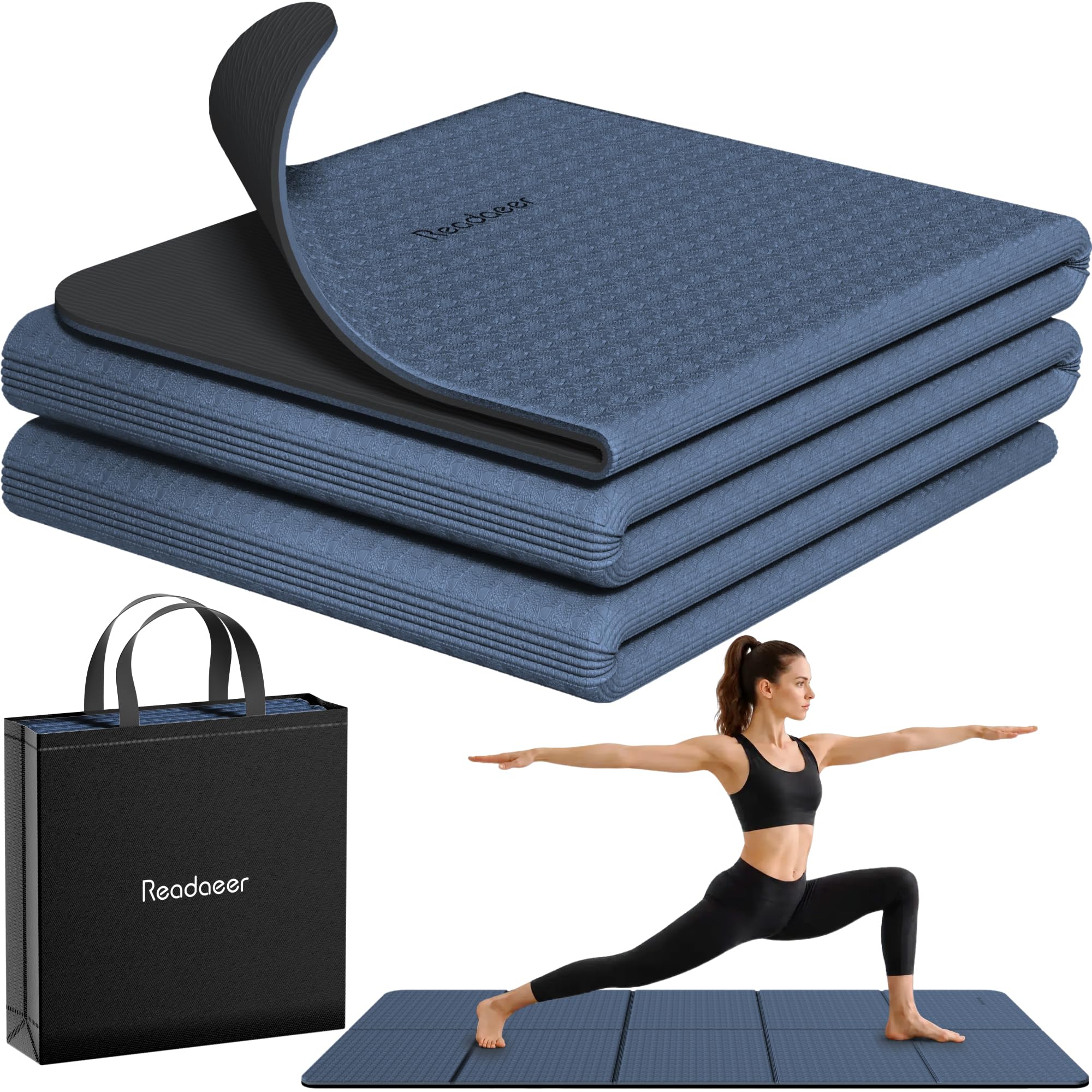
The carry-on companion — folds to 70% smaller than rolled mats for travel and dorms.
This is the mat you take with you. The Readaeer folds down to a compact 15″ x 12″ x 4″ — the maker says that’s 70% smaller than rolled mats — and tucks easily into suitcases, backpacks, or closet storage. At just 1.8 pounds, it’s the lightest mat on this list, making it perfect for travel workouts, dorm rooms, or anyone who wants to keep one at the office. Buyers specifically note it fits in carry-on suitcases and comes with a travel bag.
The double-sided anti-slip design locks firmly onto smooth surfaces like hardwood and tile, so you keep a secure grip even during sweaty sessions. At 6mm (0.24″) thick, it offers decent comfort — one owner loves using it for home workouts on hardwood flooring — but it’s on the thinner side, and some users note you may want a thicker mat for extended knee work. The 72″ x 24″ size gives you full-standard space to move.
Quality is the most-praised aspect, with portability and foldability close behind. Buyers love that it’s “lightweight, easy to pack, and comfortable to use” and that it keeps one side entirely clean. The trade-offs are minor: some find it hard to refold perfectly after heavy use, and the included bag has “cheap with uneven handles.” But for sheer convenience, it’s tough to top — one dancer brings it to a studio for warm-ups and leaves it in their locker.
on-the-go: Travelers, dorm-dwellers, and anyone who needs a mat that fits in a carry-on — the fold-flat design is a genuine space-saver.
comfort sessions: It’s a 6mm mat, so knee-sensitive users will want a thicker option, and the included bag is basic at best.
Understanding the Specs
Thickness (mm)
The thickness of a yoga mat is measured in millimeters (or inches) and directly controls how much padding you get between your body and the floor. Standard travel mats run about 4-6mm, while plush home mats go up to 10mm or 12mm. Thicker mats (8mm+) protect knees and hips better for floor work, but they can make standing balance poses feel less stable. Thinner mats (4-6mm) give you a firmer connection to the floor, which experienced yogis often prefer.
Material (TPE vs NBR)
The material determines the mat’s weight, grip, and longevity. TPE (thermoplastic elastomers) is a lightweight, elastic foam that typically resists odor and rolls up tightly — it’s the modern standard for performance mats. NBR (nitrile butadiene rubber) is a denser, softer foam that offers maximum cushioning but is noticeably heavier and sometimes carries a strong initial smell. PVC is a traditional, durable option but is heavier and less eco-friendly.
Width and Length
Standard mats measure 24 inches wide by 68-72 inches long. Extra-wide mats (32-36 inches) give you more room for wide-stance poses, push-ups, and larger body types — they prevent your hands and feet from slipping off the edges during dynamic movements. Longer mats (73+ inches) suit taller practitioners. Wider mats are heavier and bulkier to carry and store.
Grip and Texture
Grip is delivered through surface textures and materials. Some mats use granular protrusions or textured patterns to increase friction for your hands and feet, especially when you sweat. Others rely on the natural stickiness of the material itself. A dual-sided design often means a textured top for grip and a wavy or patterned bottom for floor traction. Closed-cell surfaces repel sweat and are easier to wipe clean, while open-cell surfaces are more absorbent but grippier.
FAQ
What thickness of yoga mat is best for beginners?
Why are TPE yoga mats better than PVC or NBR?
Will an extra-wide mat fit in my yoga bag?
How do I get rid of the smell of a new yoga mat?
How long should a yoga mat last before needing replacement?
Is a thicker mat always better for my knees?
What is the difference between a yoga mat and an exercise mat?
Why do some yoga mats slide on the floor?
Are more expensive yoga mats worth the extra cost?
How do I clean and maintain my yoga mat?
Final Thoughts: The Verdict
Across the board, the yoga mat cost winner is the Gaiam Thick Yoga Mat because it delivers the best mix of plush 10mm cushioning and a budget-friendly price point. If you want maximum thickness for sensitive joints, the YOTTOY Extra Thick Mat is the one to grab. And for maximum width and space, the Gogokiwi Wide Mat stands above the rest. The crowd favorite, with over 46,000 owners, is the Gaiam — proof of its appeal across all levels of practice.
How We Picked
We do not accept paid placement. Every pick is matched to a real buyer and a real use-case; we do not hands-on test units.
Sources & Methodology
Specifications: manufacturer listings and product documentation. Review insights: verified customer reviews, as of August 2026. Pricing: not shown on this page (it changes often); check the current price via the retailer link.