
Specs are compiled from manufacturer listings and verified buyer reviews and can change over time — please confirm the key details on the product page before buying.
Zero-drop boots put your heel and forefoot at the same height, so you stand the way your body naturally does rather than tipped forward on a raised heel. This flat stance lets your feet, ankles, and calves work naturally, which is why many men switch from traditional boots. The catch is that not every “barefoot-style” boot is built the same, and fit quirks matter far more here than in a normal boot, so this guide breaks down the real trade-offs of each pair.
I’m Maruf — the founder and writer behind HomeYarr. This guide is built by comparing the manufacturers’ published specifications and the patterns across verified customer reviews, so you get each pick’s real strengths and trade-offs instead of marketing spin.
Every pair on this list keeps your foot flat and lets your toes spread, but they differ wildly in warmth, sole stiffness, and break-in time. Read on to find the best zero drop boots for men that match how and where you actually walk.
Our Picks at a Glance

How To Choose The Best Zero Drop Boots For Men
Zero-drop is only half the story. A boot can have a flat sole and still cramp your toes, so the first thing to check is the shape of the toe box. A genuinely foot-shaped boot lets your big toe point straight ahead and your other toes spread sideways when you push off, which is what relieves the squeezing you feel in most conventional footwear.
Sole flexibility and ground feel
Thin, flexible soles improve ground feel, training foot muscles and balance over time. But that same thinness is a trade-off on hard pavement or sharp rocks, where a thicker sole with some protection feels far more comfortable. Decide where you’ll wear them most — trail and grass suit thin soles, while all-day concrete work calls for something with more cushion.
Waterproofing and warmth
Not all waterproof claims are equal. Some boots shed light rain easily, while others soak through in deep snow or standing water, so match the boot to your real conditions rather than trusting a single word on the box. Insulation matters too — a winter boot keeps toes warm in freezing weather, but the same boot feels far too hot for spring errands.
Sizing and break-in
Zero-drop boots fit differently from your normal shoes, and many run large or small by a half size. Read the sizing notes for each pair carefully, because a toe that touches the front is a dealbreaker in a boot designed for toe spread. Expect a transition period too — your calves and Achilles tendons have to adapt to a flat sole, so ease into longer walks over a couple of weeks.
Quick Comparison
| Model | Best For | Toe Box | Waterproofing | Weight Feel | Amazon |
|---|---|---|---|---|---|
| Jim Green African Ranger★ Best Overall | Trail hiking & rugged outdoor work | Very wide | Water resistant | Light | Amazon |
| Xero Alpine Snow BootWinter Warrior | Cold, snowy winter hikes | Wide | Water resistant | Lightweight | Amazon |
| Merrell Wrapt Mid | Everyday hiking with arch support | Roomy | Waterproof | Lightweight | Amazon |
| Belleville TR102 | Tactical & flat-foot comfort | Wide | Water resistant | Very lightweight | Amazon |
| Belleville TR501 | Rucking & military use | Wide | Not specified | Light | Amazon |
| Xero Ridgeway Chelsea | All-day town & light trail style | Regular width | Weather resistant | Lightweight | Amazon |
| Altra Lone Peak 9 Mid | Long trail hikes with cushion | Very wide | Waterproof | Lightweight (13.45 oz) | Amazon |
In-Depth Reviews
1. JIM GREEN Men’s Barefoot African Ranger Boots
Our pick — over 4.5★ from 300+ verified ratings; the strongest balance of quality and price.
The handcrafted leather boot that wins people over with its sturdy build and genuinely wide toe box
You get a boot you repair rather than replace with the JIM GREEN African Ranger, thanks to its handmade full-grain leather build that’s designed to be resoled. Over a hundred owners praise the sturdy construction and the generous toe box that fits wide feet perfectly — one buyer even says it relieved their bunion. This pair nails the zero-drop concept with its flat sole and wide toe box.
Buyers report the sole is “flexible after ~50 miles” with good ground feel, though it’s a comfortable mid-ground, not a barefoot purist shoe. The main trade-off is the break-in. Some owners say it needs about two weeks and recommend thick socks because the ankle padding can be brutal at first, while others report no break-in needed at all. One owner found the original insoles ruin the fit and advises removing them entirely for the proper barefoot experience.
At these are a serious investment, but the craftsmanship and durability justify the cost for men who spend long days on trails or rugged outdoor work. The boot is not for hard surfaces all day — it shines on grass and dirt, and it’s not built as a winter boot. Note the laces can be tricky to adjust, and the natural veg color runs a bit less shiny in person than the pictures suggest.
What wins owners over
- Sturdy full-grain leather that develops a beautiful patina
- Wide toe box that fits wide feet and bunions comfortably
- Flexible sole with real ground feel after a short break-in
Where it tests your patience
- Ankle padding can be brutal to break in — wear thick socks
- Not comfortable for all-day hard pavement use
- Laces are fiddly to get just right
Reach for these if: you want a handmade, resoleable leather boot for trail hiking and outdoor work that lets your toes spread naturally.
Look elsewhere if: you need a boot for standing on concrete all day or you want zero break-in from day one.
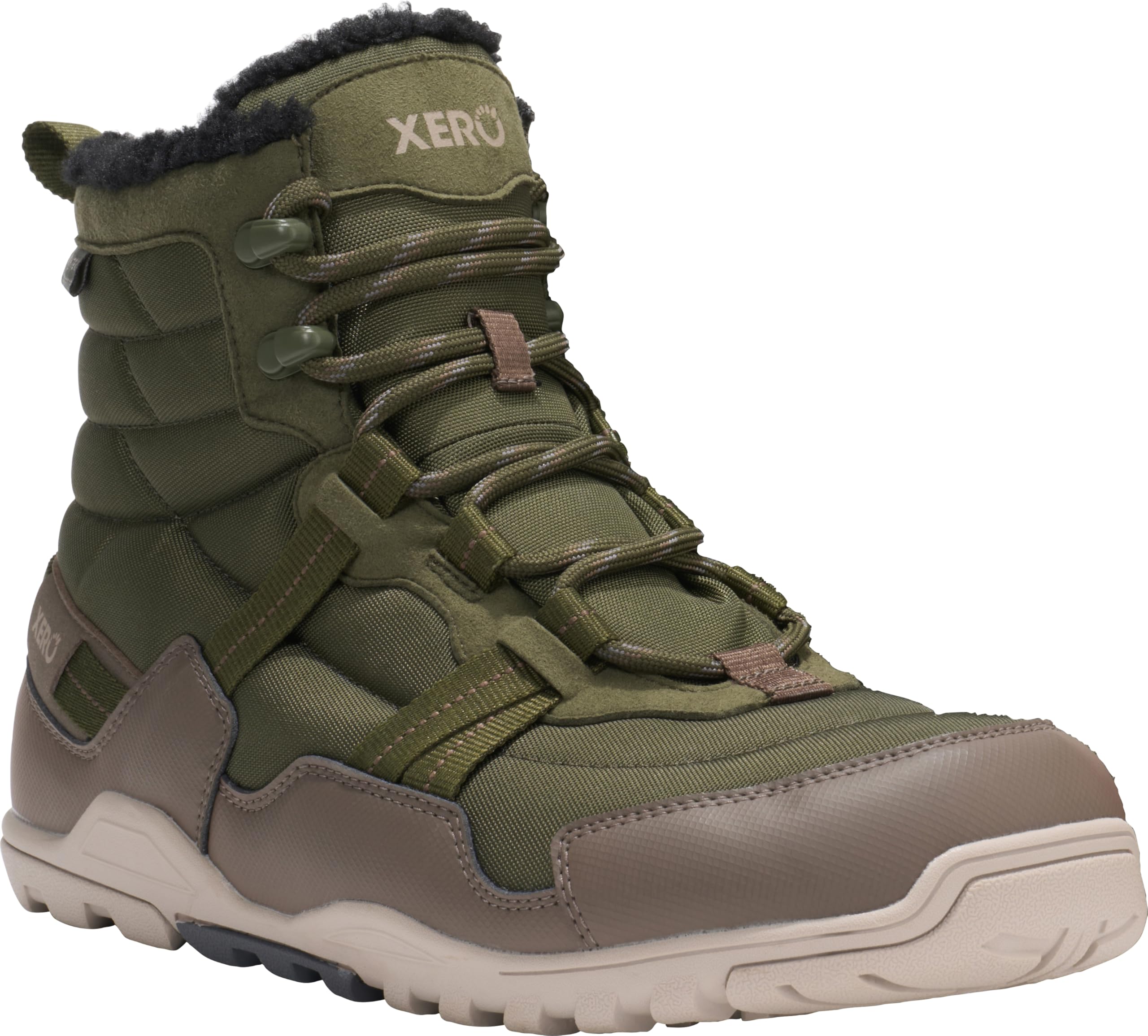
2. Xero Shoes Men’s Alpine Barefoot Snow Boots
The zero-drop snow boot that keeps feet warm and dry through serious winter days
This is the pair for men who refuse to give up natural foot movement just because winter rolled in. Owners mention keeping feet dry after 10-hour days in snow for a full week, with feet only slightly moist and dry again by morning — and the spacious, wide fit means no need to size up. Owners praise the quality, warmth, wide fit, and ice-and-snow traction.
The flexible sole is thick enough for winter terrain while still letting your foot move naturally, and the easy hook lacing gives solid ankle support. But owners split on waterproofing: some call it “water-resistant, not waterproof” and say it soaks through in standing water or wet grass. One buyer’s toes went numb after 30 minutes stationary in 30-45°F temps, and the round laces untie easily — flat laces fix that.
At this is a solid mid-range value for a dedicated winter barefoot boot, though some owners feel it’s on the pricier side. The toe box isn’t as wide as some barefoot purists want, so if you need maximum toe splay this may come up short. This is best for cool, dry and snowy hikes — not for standing still in extreme cold or for deep standing water.
The winter strengths
- Keeps feet dry through long days in snow
- Excellent traction on ice and snow
- Wide, spacious fit that runs true to size
The honest limits
- Not fully waterproof in standing water or deep snow
- Toes can go numb when standing still in freezing temps
- Round laces come untied easily
Best suited to: men who want a zero-drop winter boot for active snow days and long cold walks, not for standing around in extreme cold.
skip it if: you need a boot that can sit in deep puddles or stand still for hours in single-digit weather.
3. Merrell Mens Wrapt Mid Waterproof
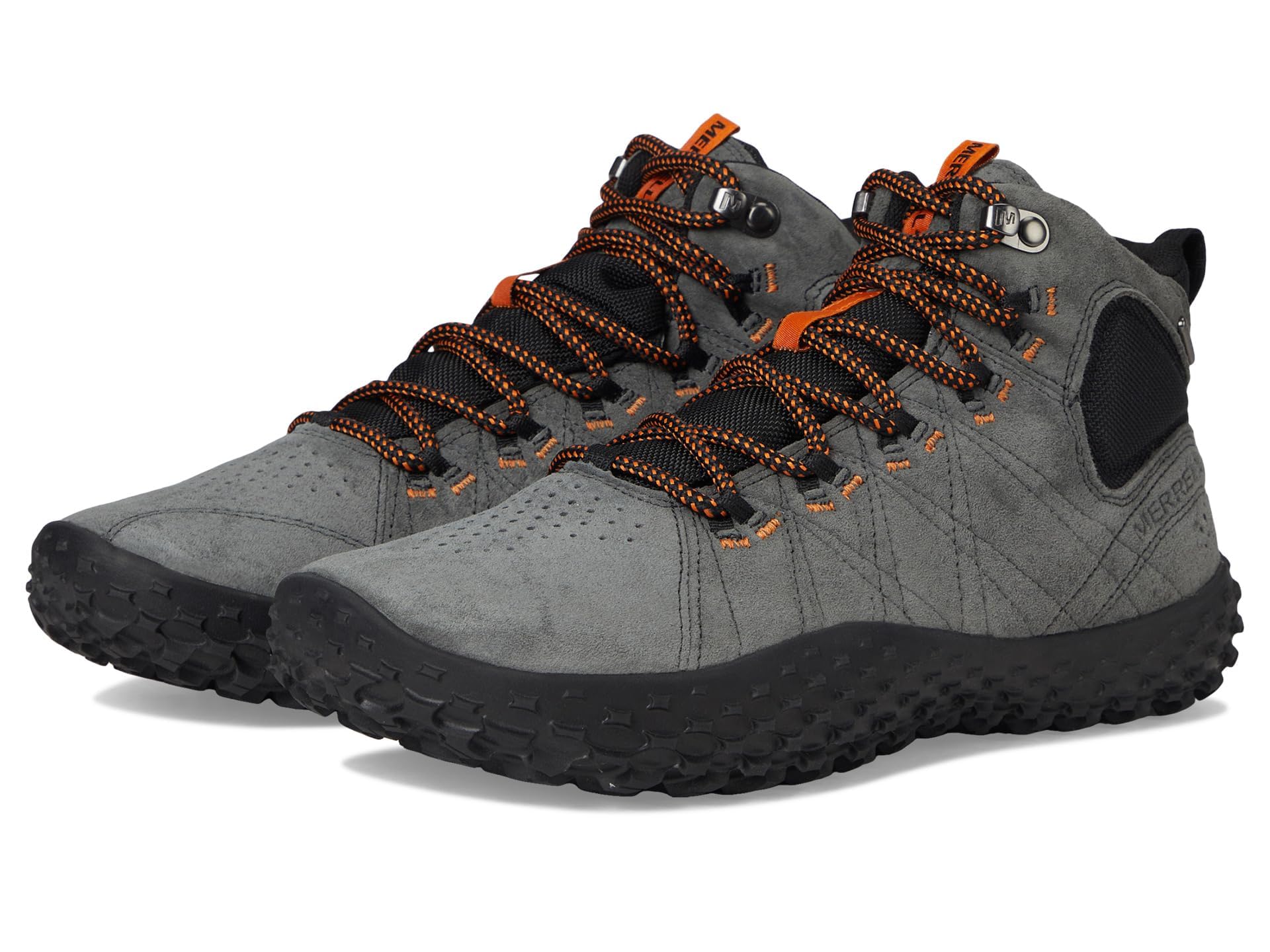
The zero-drop hybrid with an aggressive rubber sole that hikers say grips like nothing else
Nearly fifty owners praise the fit of the Merrell Wrapt Mid, noting the toe box is comfortable and the boot fits true to size. Merrell bills this as a zero-drop hybrid built to mimic the shape of the human foot. Traction is the other star: customers note “unbelievable traction,” and one says the soles are thick enough to walk on sharp rocks. Waterproofing works too, with water beading right off the upper.
Durability is strong: one owner reports they last about three seasons at 5 miles a day of hiking, and that same 69-year-old calls them pain-free for hiking. But barefoot purists, take note: this boot has a real, ridged arch support, which is why one owner returned them saying “not true barefoot shoes.” If you want a completely flat, arch-free sole, this isn’t that. If you want zero-drop with support, this is the winner.
At this is a solid mid-range pick, and owners say the price is great versus Vibram alternatives. The fit runs narrow for some — one buyer with a wider foot returned them hoping to circle back later — and another had to size up a full size. The laces can fray, and the break-in can bring some side-foot pain, so give them a fair chance before judging.
The crowd favorites
- Outstanding grip that handles sharp rocks
- Genuinely waterproof with water beading off
- Comfortable, true-to-size fit with a roomy toe box
Know before you buy
- Has real arch support — not a flat barefoot sole
- Runs narrow for some wider feet
- Laces can fray over time
Choose this if: you want zero-drop with arch support and serious waterproof trail grip rather than a strict flat sole.
Pass if: you’re a barefoot purist who needs a completely arch-free, flexible sole.
4. Belleville Mini Mil TR102 Minimalist Tactical Boots

The tactical minimalist that hundreds of owners say fits great and keeps feet fresh on long shifts
This is a boot with serious following — over four hundred owners praise the fit, making it the most-praised aspect by a mile. The lightweight build is the second biggest win, and it shows: one owner wore them through a 12.5-hour technical hunt with a 40lb pack and reported zero foot fatigue. Another owner with flat feet says the wide toe box and natural foot function eased his foot and knee soreness.
The TR102 excels as a true minimalist boot for tactical and flat-foot use, but it has real quirks. The leather coating can scuff and flake within a month for some owners, and the lace loops can dig into your foot. Sizing is genuinely inconsistent — one owner found a 6.5W fits like a women’s 7.5, while another says to size up and go wide. The sole is also on the hard side with weak snow and ice traction, so this is not a winter boot.
At this sits in the mid-to-premium range, and owners note it’s “water-resistant, not Gore-Tex” despite what the title might claim. Toe lacks rubber wrap for kneeling, and it’s not as flexible as true barefoot shoes. One long-term owner kept a pair going for about 10 years, which speaks to the durability when treated well. Expect a transition period as your calves and Achilles adapt to the flat sole.
Why it’s a favorite
- Fit is the top praise — great for wide feet and flat feet
- Very lightweight with zero foot fatigue on long days
- Natural foot function reduces foot and knee soreness
Where it stumbles
- Leather coating can scuff and flake quickly
- Sizing is genuinely inconsistent between pairs
- Hard sole with weak snow and ice traction
Grab these if: you need a lightweight tactical boot for long shifts and want your toes to spread, especially with flat feet.
Think twice if: you need waterproofing, a soft cushioned sole, or consistent sizing from your footwear.
5. Belleville TR501 AMRAP Military Boots
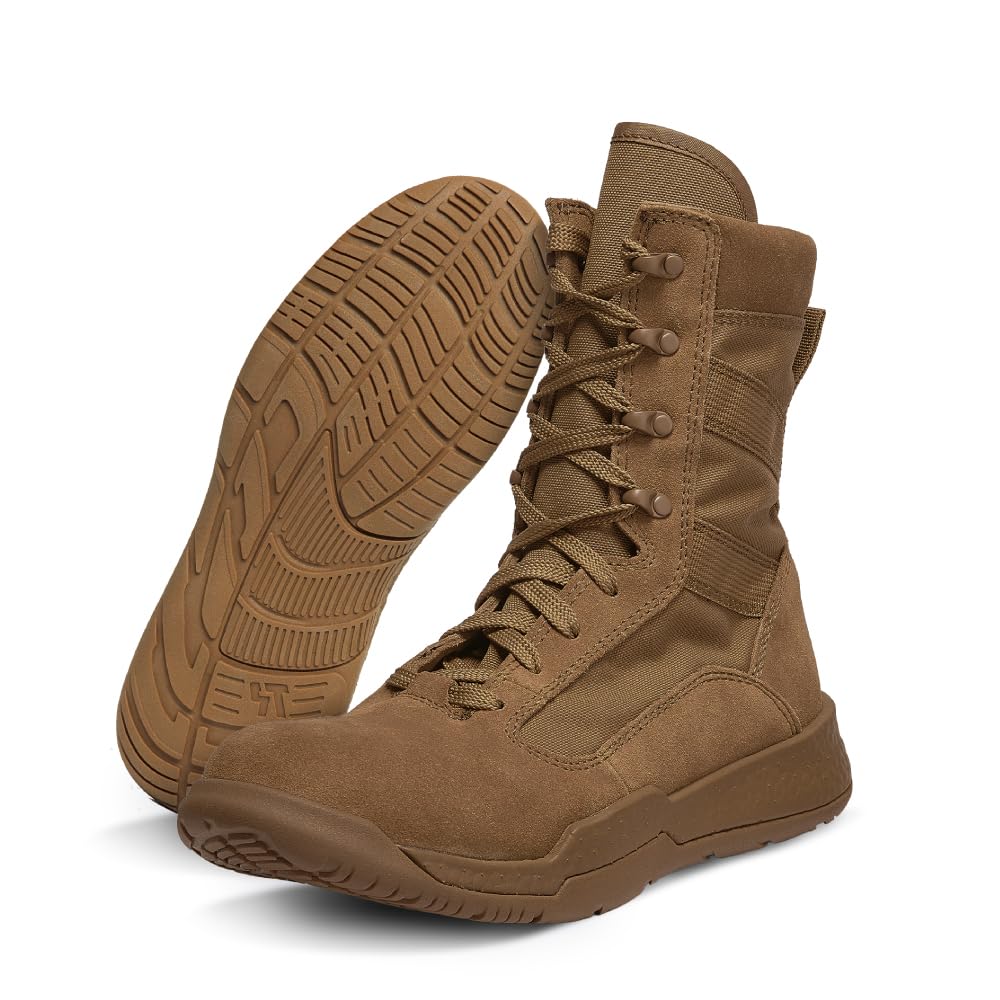
The sneaker-like combat boot that ruckers say needs almost no break-in
Comfort is what wins people over here — it’s the top-praised aspect, with owners calling these the “most comfortable boots from the start” and comparing them favorably to Danner Tachyons and Garmont. The second biggest praise goes to overall quality, and one owner has worn them for over two years and says they’re holding up great. The lightweight, sneaker-like feel and springy soles make them popular for gym work and runs, not just rucking.
The TR501 is AR 670-1 compliant, which makes it a go-to for military use. One owner at Fort Knox found them very comfortable, light, and quiet with no break-in needed. The trade-off is durability: some reviewers point out fast-wearing soles, and after a year the boots get “very slippery on wet or slick surfaces.” The suede also water-stains easily and needs a repellent. Flat-footed buyers should grab an arch-support insole, as one owner found after 18 hours on his feet.
At this is a premium-tier military boot, and most owners say the price is worth it. The fit runs a hair big for some, so sizing down half a size is the common advice. Several owners also report receiving used or returned pairs sold as new, which is frustrating but not a reflection of the boot itself. This is a fall and spring boot — owners say it suits 30-70°F weather, not deep winter.
The strong points
- Extremely comfortable right from the start
- Lightweight and sneaker-like for rucking and runs
- AR 670-1 compliant for military use
Watch for these
- Soles can wear fast and get slippery on wet surfaces
- Suede water-stains easily without repellent
- Runs a half size big for some
Best for: military and rucking use where out-of-the-box comfort and light weight matter more than winter warmth.
Not the one if: you need a waterproof boot or you’ll be walking on wet, slick surfaces regularly.
6. Xero Shoes Men’s Ridgeway Barefoot Chelsea Boots
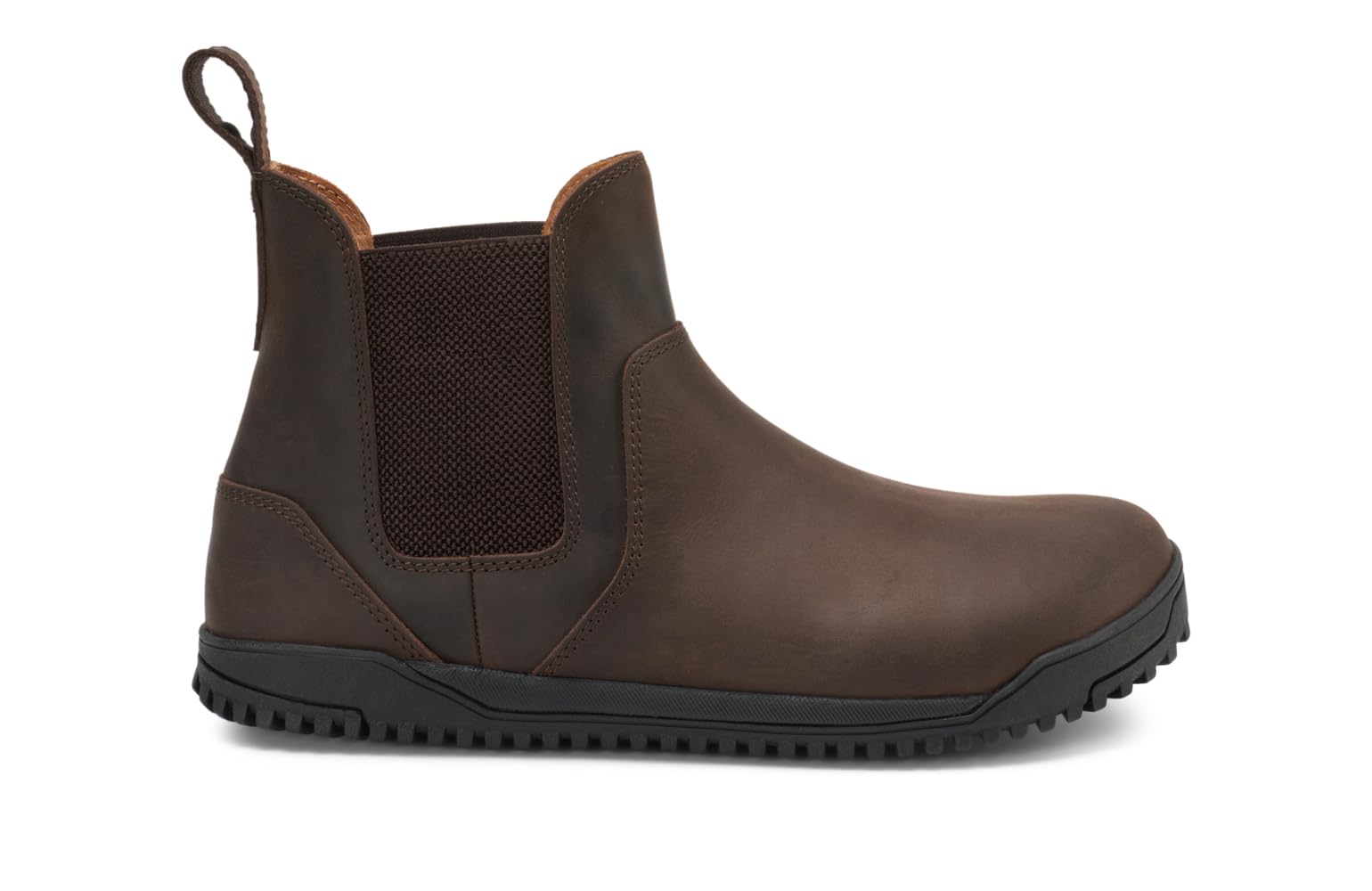
The classic Chelsea that one owner calls the most durable barefoot pair he’s ever owned
This is the zero-drop boot for men who want the sleek Chelsea silhouette with a lugged outsole for uneven terrain. The full-grain leather “looks better as it breaks in,” and the elastic gore lets you slip in and out easily while holding a secure fit. One owner who wore them through a Chicago winter calls them “significantly more sturdy and weatherproof than Vivobarefoot Chelsea” — high praise from someone who’s clearly been around barefoot boots.
The comfort story is strong once they mold to your foot. One owner found the sole stiff for the first day, but by the third day they’d “become just an extension of my feet.” Another calls them comfortable for all-day wear. The catch is sizing, and it’s a big one: reviews are all over the map. Some say run small and go up a full size, others found a half size up unnecessary, and one owner reports the typical size is too short with the next size up fitting the same. Check the size chart carefully.
This is a premium-tier pick, and the width is the sticking point — one owner returned them because they’re too narrow for wide feet, noting the width is “like regular shoes.” The leather can arrive a bit dry but cleans up beautifully with conditioner. Given the mixed sizing feedback, this is a boot for men with regular-width feet who can try them on or are willing to exchange for the right size.
What shines
- Durable, weatherproof build that beats other barefoot Chelseas
- Comfortable all-day wear once broken in
- Classic Chelsea style with a rugged lugged outsole
What’s frustrating
- Sizing is genuinely inconsistent — go up a full size
- Too narrow for wide feet
- Leather can arrive dry and needs conditioning
Pick this up if: you want a stylish barefoot Chelsea for all-day town wear and light trail use, and you have a regular-width foot.
Avoid if: you have wide feet or you’re not willing to deal with sizing exchanges.
7. ALTRA Men’s Lone Peak 9 Waterproof Mid Hiking Shoe
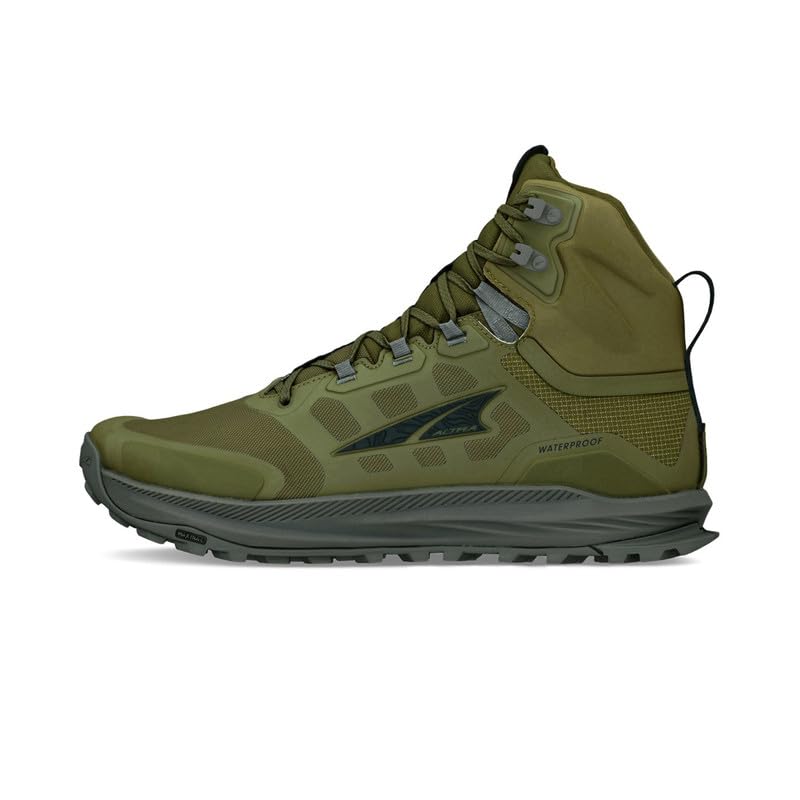
The cushioned zero-drop hiker that trail lovers say is “game changing” for natural feel
Altra built its name on the FootShape toe box, and this mid-height version of the Lone Peak 9 carries that torch with a very wide box that owners praise as perfect. The quality is the top-praised aspect, followed closely by the fit, and at 13.45 oz it’s genuinely lightweight for a waterproof mid boot. One owner credits the wide toe box and zero drop with resolving his wife’s 11-year foot pain.
The cushioned Altra EGO midsole foam gives you more comfort than a typical barefoot boot while still connecting you to the ground, and the grippy MaxTrac outsole handles all terrain types. The Stoneguard insert protects your feet from rocks and debris underneath. One prosthetic-leg owner says the grip is class-leading and gives him hiking confidence with no slipping. Waterproofing is the mixed bag — some owners find it works well, while others say splashes from puddles wet their feet through the lower eyelets.
At this is a premium trail investment, but owners who wear the brand swear by the quality. The “black” color is actually closer to Wolf Grey, which frustrates some buyers. Durability gets mixed feedback too — one long-term owner says the older models were better, with waterproofing fading after 3-6 months. For serious trail hikers who want cushion with their zero drop, this is the strongest option; for strict barefoot minimalists, the arch-free flat sole is exactly what you want.
What trail lovers rave about
- Perfect wide toe box with a natural, foot-shaped fit
- Cushioned EGO foam keeps feet comfortable on long hikes
- Grippy MaxTrac outsole with Stoneguard rock protection
The honest caveats
- Waterproofing is inconsistent — puddles can wet feet through eyelets
- “Black” color is actually closer to Wolf Grey
- Durability declining vs older Lone Peak models
Reach for this if: you want a cushioned, zero-drop hiker with a wide toe box for serious trail miles where your feet need protection.
Look past it if: you need reliable deep-waterproofing or you want a thin, barefoot-feel sole.
Understanding the Specs
Zero Drop vs. Raised Heel
Zero drop means your heel and forefoot sit at the same height, so the boot doesn’t tip you forward like most shoes with a raised heel. This natural posture is why many men report reduced foot, knee, and hip strain. If you’re new to it, ease in — your calves and Achilles need time to adapt.
Toe Box Shape
This matters as much as the drop itself. A genuinely foot-shaped toe box lets your toes spread out sideways when you push off, instead of being squeezed together. That’s the difference between a boot that merely has a flat sole and one that actually lets your foot work naturally. Wide feet, bunions, and toe splay all point to a wider toe box.
FAQ
Are zero-drop boots the same as barefoot boots?
Will zero-drop boots help with flat feet or foot pain?
How long does it take to adjust to zero-drop boots?
Do zero-drop boots run true to size?
Can I wear zero-drop boots for hiking on rough terrain?
Are zero-drop boots good for winter and snow?
What’s the difference between water-resistant and waterproof boots?
Can I use zero-drop boots for work or tactical duty?
Final Thoughts: The Verdict
For the majority of shoppers, the zero drop boots for men winner is the JIM GREEN African Ranger because it delivers the best balance of quality, ground feel, and genuine wide-toe comfort in a boot built to last and be resoled. If you want cushioned trail performance with a wide toe box, grab the Altra Lone Peak 9 Mid. For cold-weather hikes where you refuse to give up natural foot movement, the Xero Alpine Snow Boot is the one to reach for — and with the Jim Green holding the highest crowd rating of the group, it’s the safest bet for your first zero-drop pair.
How We Picked
We do not accept paid placement. Every pick is matched to a real buyer and a real use-case; we do not hands-on test units.
Sources & Methodology
Specifications: manufacturer listings and product documentation. Review insights: verified customer reviews, as of August 2026. Pricing: not shown on this page (it changes often); check the current price via the retailer link.