
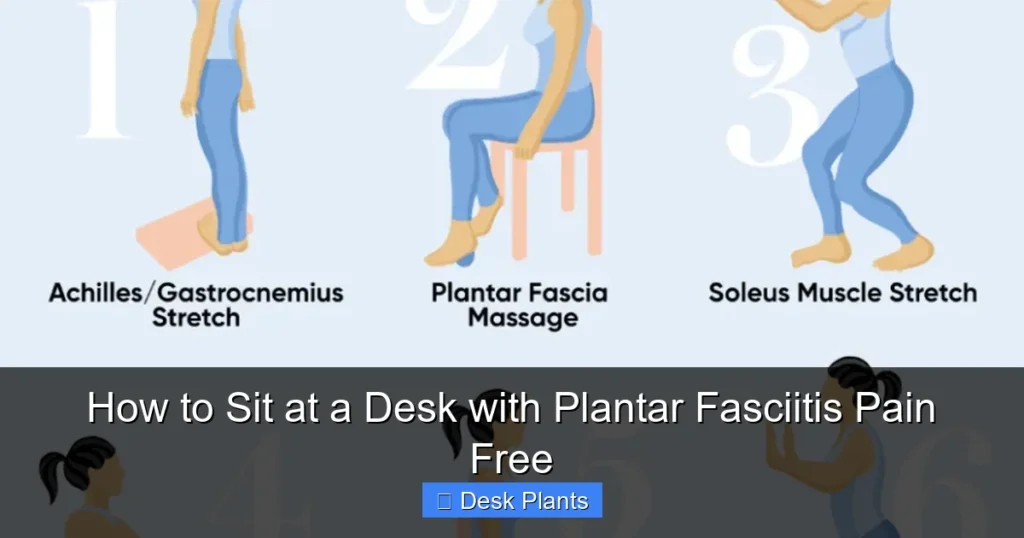
Sitting with plantar fasciitis requires more than just a good chair. This guide provides a complete system for pain-free desk work, from optimal posture and essential foot support to targeted stretches you can do without leaving your seat. Transform your workday by addressing the root causes of pain while sitting.
Key Takeaways
- Support Your Feet First: Never let your feet dangle; use a firm footrest or rolled towel to maintain a proper 90-degree ankle angle and reduce strain on the plantar fascia.
- Posture is a Full-Body Chain: Proper desk posture starts from your feet, extends through a supported back, and ends with your screen at eye level to prevent compensatory strain.
- Movement is Non-Negotiable: Set a timer to perform seated stretches and ankle circles every 30 minutes to keep blood flowing and the plantar fascia from stiffening.
- Invest in the Right Tools: A quality footrest, supportive shoes or slippers, and an ergonomic chair are critical investments for managing plantar fasciitis at your desk.
- Your Day Starts Before You Sit: Morning stretches before work and wearing supportive footwear at home are essential to preemptively calm inflamed tissue.
- Troubleshoot Your Setup: If pain persists, methodically check your sitting angle, foot placement, and lumbar support, as small adjustments can make a big difference.
How to Sit at a Desk with Plantar Fasciitis Pain Free
If you’re reading this, that familiar stab of pain in your heel or arch has likely followed you right to your office chair. Plantar fasciitis doesn’t clock out when you do. The inflammation in that thick band of tissue on the bottom of your foot can scream in protest even when you’re sitting, especially if you’re sitting wrong.
The good news? You can take control. Sitting with plantar fasciitis isn’t just about enduring it. It’s about creating an environment that lets your feet heal, even while you work. This guide will walk you through a complete system. You will learn how to set up your workspace, adjust your posture, and use simple movements for a pain-free workday.
The Sitting Mistake That Worsens Plantar Fasciitis
Let’s start with the biggest error. It’s letting your feet dangle. When your chair is too high, your feet don’t touch the floor flat. Your ankles drop, pointing your toes downward. This passive position keeps your plantar fascia in a stretched, tense state for hours. It’s like gently pulling on a rubber band all day long. The tissue never gets to relax. This can maintain or even worsen inflammation.

Visual guide about How to Sit at a Desk with Plantar Fasciitis Pain Free
Image source: i.ytimg.com
The goal is neutral. You want your feet flat and supported, with your ankles at roughly a 90-degree angle. This takes the tension off the fascia and allows it to rest. Achieving this is step one for pain-free sitting.
Step 1: Build Your Foundation – Foot and Ankle Support
Your feet are the literal foundation of your sitting posture. Support them correctly, and everything else aligns more easily.
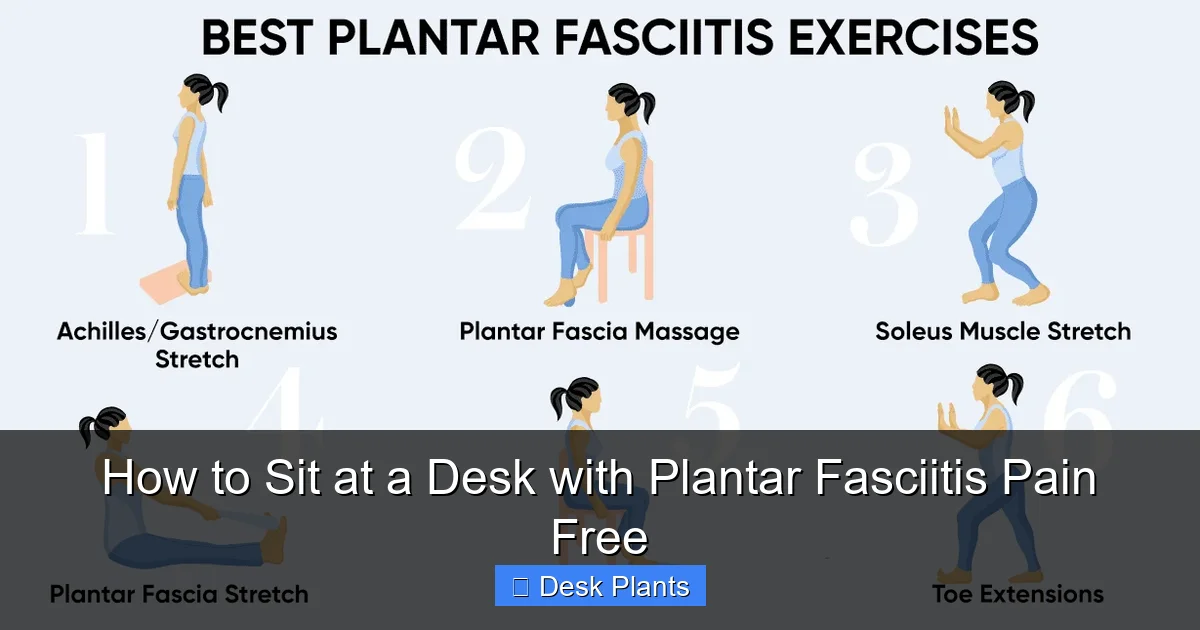
Visual guide about How to Sit at a Desk with Plantar Fasciitis Pain Free
Image source: shape.com
1.1 Use a Proper Footrest
This is your most important tool. A good footrest provides a stable, adjustable platform.
- Choose the Right Type: A solid, sloping footrest is ideal. It should allow your feet to rest flat or with a slight heel-high tilt. Avoid wobbly or too-soft footrests.
- Set the Correct Height: Adjust it so your thighs are parallel to the floor and your ankles are at a 90-degree angle. Your knees should be level with or slightly below your hips.
- Position it Properly: Place it close enough that you can rest your entire foot on it without reaching. You should be able to shift your foot position easily.
Budget Tip: No footrest? Use a firm, stable box, a stack of large books, or even a small, hard-sided suitcase. The key is stability and height.
1.2 Never Sit Barefoot or in Socks
Your feet need arch support, always. The hard floor or even a footrest offers none.
- Wear Supportive Indoor Shoes or Slippers: Look for models with good arch support and a firm heel counter. Brands that make “comfort” or “orthotic” slippers are perfect for this.
- Use Orthotic Inserts: If you use custom or over-the-counter orthotics in your shoes, get a second pair for your dedicated desk shoes or slippers.
- Consider Compression Socks: Sleeve-style compression socks can provide gentle support and improve circulation without being too tight on your toes.
Step 2: Master Your Sitting Posture
With your feet supported, you can now align the rest of your body. Think of it as a chain from your feet to your head.
Visual guide about How to Sit at a Desk with Plantar Fasciitis Pain Free
Image source: i.pinimg.com
2.1 Adjust Your Chair
- Seat Height: Adjust so your feet are flat on the footrest (or floor) with knees at 90 degrees.
- Seat Depth: You should have 2-4 fingers of space between the back of your knees and the seat edge.
- Lumbar Support: Your chair should support the natural curve of your lower back. Use a rolled towel or a lumbar pillow if needed.
- Armrests: Adjust so your shoulders are relaxed and your elbows are at a 90-degree angle.
2.2 Position Your Desk and Screen
- Desk Height: Your forearms should be parallel to the floor when typing, with wrists straight.
- Monitor Position: The top of your screen should be at or slightly below eye level, about an arm’s length away. This prevents you from hunching and straining your neck and back.
Step 3: Integrate Seated Movement and Stretches
Sitting still is the enemy. You must move to pump blood and keep tissues flexible. Set a timer for every 25-30 minutes.
3.1 Micro-Movements (Every 30 Minutes)
- Ankle Circles: Lift one foot and slowly circle your ankle 10 times clockwise, then 10 times counter-clockwise. Switch feet.
- Toe Raises: Keep your heel on the footrest. Lift only your toes and the ball of your foot up, then down. Do 15 reps per foot.
- Heel Lifts: With balls of your feet on the footrest, lift your heels up and down. This works the calves.
3.2 Seated Stretches (Every 60-90 Minutes)
- Seated Plantar Fascia Stretch: Cross your affected foot over the opposite knee. Gently pull your toes back toward your shin until you feel a stretch in the arch. Hold for 30 seconds. Repeat 3 times.
- Seated Calf Stretch: Sit forward in your chair. Extend one leg straight, heel on the floor, toe pointed up. Gently lean forward until you feel a stretch in the back of your calf. Hold for 30 seconds. Switch legs.
- Tennis Ball Roll: Keep a tennis ball or a frozen water bottle under your desk. Roll the arch of your foot firmly over it for 1-2 minutes per foot. This is a great massage.
Step 4: Create a Plantar Fasciitis-Friendly Daily Routine
Your desk time is just part of the picture. What you do before and after work matters immensely.
- Morning First Steps: Before you put weight on your feet, do a quick seated stretch. Pull your toes back to stretch the fascia. Then, always wear supportive shoes from bed to desk.
- Evening Care: After work, do a more thorough stretching routine for your calves and plantar fascia. Consider icing your heel for 15 minutes if it feels particularly inflamed.
- Hydrate and Nourish: Staying hydrated helps maintain tissue health. An anti-inflammatory diet can also help reduce overall inflammation in the body.
Troubleshooting Persistent Pain at Your Desk
If you’ve made these changes and pain persists, let’s investigate.
- Pain when first standing up: This is classic plantar fasciitis. It means the fascia tightened while you were sitting. Solution: Be more diligent with your seated stretches every 30 minutes. Do the toe-pull stretch right before you stand.
- Pain that increases through the day: This suggests your setup is still causing strain. Solution: Double-check your ankle angle. Is it truly 90 degrees? Is your footrest firm enough? Are you slouching and putting pressure on your legs?
- Numbness or tingling: This could indicate nerve pressure. Solution: Ensure the edge of your chair isn’t pressing into the backs of your thighs. Check your sitting posture; you may be leaning too far forward.
Conclusion: Your Blueprint for a Pain-Free Workday
Living and working with plantar fasciitis is a marathon, not a sprint. You now have a complete blueprint. It starts with supporting your feet with a proper footrest and shoes. It continues with aligning your whole-body posture from the ground up. The magic ingredient is consistent, gentle movement throughout your day to prevent stiffness.
Remember, the goal isn’t perfection. It’s consistent, mindful effort. Start with one change today—perhaps getting that footrest set up. Then add another tomorrow. By building these habits, you transform your desk from a source of pain into a space of active recovery. Your feet will thank you with every step you take, from your desk and beyond.
🎥 Related Video: Beginner Seated Desk Exercises You Can Do At The Office
📺 Justin Agustin
Full-length beginner workout videos at https://justinagustin.com and the “Justin Agustin Fitness app available on in the Apple …