
This guide provides a complete safety analysis of baby jumpers. While they offer fun and a brief hands-free break, their safety depends entirely on proper use and strict adherence to guidelines. We detail the potential risks to hip development, crucial safety steps, and expert recommendations to help you make an informed decision for your child.
Key Takeaways
- Supervision is Non-Negotiable: A baby in a jumper must always be within sight and reach of a responsible adult to prevent accidents.
- Limit Daily Use: Experts recommend no more than 10-20 minutes, once or twice a day, to minimize risks to hip development and avoid overstimulation.
- Proper Fit is Crucial: Your baby’s feet must be flat on the floor or platform, and the harness must be snug to prevent slumping or escaping.
- Know the Hip Development Risk: Prolonged or improper use in a “frog-leg” position can contribute to hip dysplasia; always ensure the hips are properly supported.
- Environment Matters: The jumper must be placed on a flat, level surface away from stairs, cords, furniture, and hot or hazardous items.
- Timing is Everything: Most jumpers are for babies with strong head and neck control, typically not before 4-6 months, and should be discontinued once a baby can walk or tries to climb out.
- It’s Not a Developmental Tool: Jumpers do not help babies learn to walk and should not replace essential floor-based tummy time and free movement.
Are Baby Jumpers Safe? The Ultimate Safety Guide for Parents
As a parent, you want to give your baby joy and fun. You also want to keep them safe. Baby jumpers are a popular piece of gear. They promise entertainment and a brief, precious hands-free moment. But a big question hangs in the air: are baby jumpers safe?
The answer is not a simple yes or no. Safety depends entirely on how you use it. This guide will walk you through everything. You will learn about the real risks. You will get step-by-step safety instructions. You will also hear what pediatric experts say. Our goal is to give you the knowledge to make the best choice for your family. Let’s jump in.
Understanding Baby Jumpers
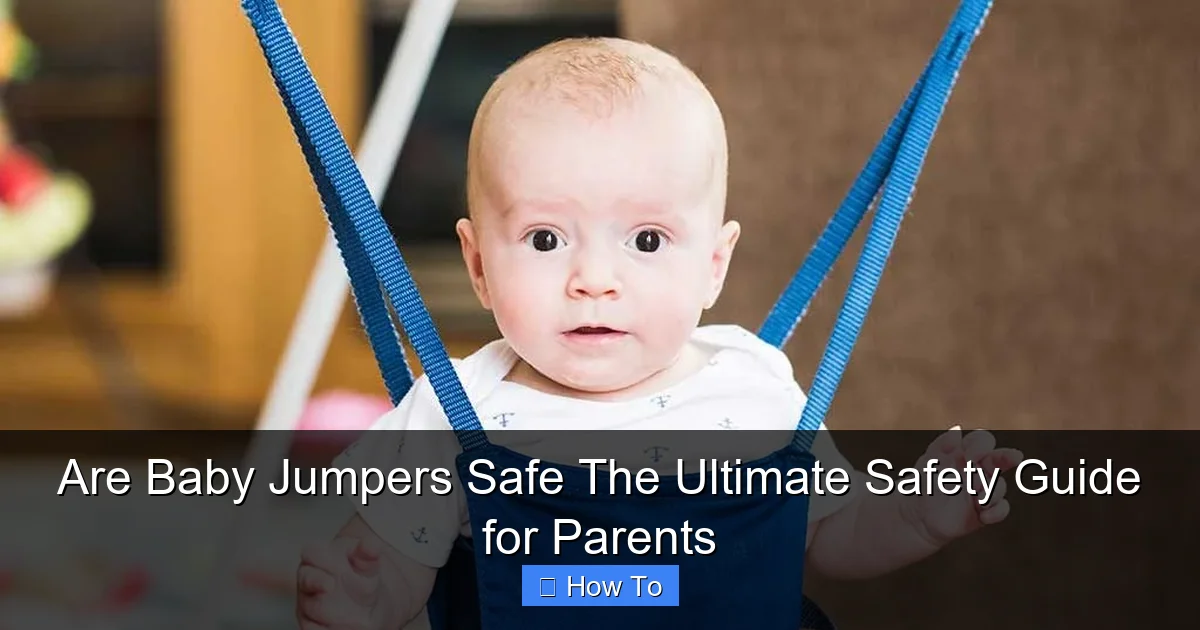
First, let’s define what we’re talking about. A baby jumper is a seat suspended by elastic straps or a spring from a frame or a doorway. The baby sits in a fabric seat. They use their legs to push off the ground. This creates a bouncing motion. Many models have toy bars, lights, and sounds. They are designed for babies who can hold their head up but are not yet walking.

Visual guide about Are Baby Jumpers Safe The Ultimate Safety Guide for Parents
Image source: imperfecthomemaking.com
Types of Baby Jumpers
There are two main types:
- Stationary Jumpers (Jumperoos): These have their own freestanding frame. They often come with a 360-degree rotating seat and an attached activity center.
- Doorway Jumpers: These hang from a metal clamp over a door frame. They are usually simpler and less expensive.
Stationary models are generally considered safer. They offer more control over the environment. Doorway jumpers depend on the strength of the door frame. They also have a wider swing radius near walls and door jambs.
The Safety Debate: Potential Risks of Baby Jumpers
Why is there so much concern? Leading pediatric groups urge caution. Understanding the risks is the first step to preventing them.
Visual guide about Are Baby Jumpers Safe The Ultimate Safety Guide for Parents
Image source: cdn.cdnparenting.com
1. Risk of Hip Dysplasia
This is the most cited concern by pediatricians. Hip dysplasia is when the hip socket doesn’t fully cover the ball of the thigh bone. A baby’s hips are still made of soft cartilage. In a jumper, a baby’s legs often dangle. Their weight rests on their crotch. Their hips can be forced into an unnatural, spread “frog-leg” position. This position, especially for long periods, can stress the hip joints. It may contribute to improper development.
2. Toe-Walking and Delayed Motor Skills
In a jumper, babies often push off with their toes. They are in an upright position before their muscles are ready. This can strengthen calf muscles in an uneven way. It may encourage a toe-walking pattern. More importantly, time in a jumper is time not spent on the floor. Floor time is critical. It allows babies to practice rolling, sitting, crawling, and pulling up. These activities build core strength and coordination. Overuse of a jumper can potentially delay these motor milestones.
3. Safety and Accident Risks
Without proper setup and supervision, jumpers can be dangerous. Risks include tipping over, especially with doorway models. A baby can swing into a wall or furniture. They might get fingers pinched in the springs or straps. There is also a risk of falls if the harness is not secure or if the baby outgrows the weight limit.
Your Step-by-Step Baby Jumper Safety Guide
If you choose to use a jumper, follow this guide meticulously. Safety is in the details.

Visual guide about Are Baby Jumpers Safe The Ultimate Safety Guide for Parents
Image source: imperfecthomemaking.com
Step 1: Choosing the Right Jumper (If You Use One)
Your first safety decision happens at the store.
- Look for Good Hip Support: Choose a jumper with a wide, firm seat. The seat should support the baby’s thighs and keep their legs in a more natural, flexed position—not dangling straight down.
- Opt for a Stationary Model: A freestanding jumperoo is safer than a doorway jumper. It offers a stable base and controls the bounce radius.
- Check for Safety Certifications: Ensure the product meets current safety standards (like ASTM or JPMA).
- Get a Adjustable Harness: A secure, multi-point harness (at least 3-point) is essential to keep your baby upright and in place.
Step 2: The Safe Setup
Proper installation is non-negotiable.
- Read the Manual: Every model is different. Follow the manufacturer’s instructions exactly.
- Test the Stability: For a stationary jumper, ensure all legs are locked. Push on it to make sure it doesn’t tip easily.
- Doorway Jumper Extreme Caution: If using a doorway jumper, you must secure the clamp on a sturdy, interior door frame. Test it with far more weight than your baby’s. Ensure the spring and straps show no signs of wear.
- Clear the Zone: Create a 3-foot safety circle around the jumper. Remove all furniture, cords, blinds, hot drinks, and sharp objects. The area should be clear of stairs and other hazards.
Step 3: The Perfect Fit and Positioning
How your baby sits in the jumper is critical for their physical safety.
- Wait for the Right Age: Your baby must have full, steady head and neck control. This is typically around 4-6 months. Do not use it sooner.
- Foot Flat Rule: When seated, your baby’s feet must be flat on the floor or the base platform. Their knees should be slightly bent. If they are on their tiptoes or can’t touch, the jumper is too high. If their legs are cramped, it’s too low.
- Snug Harness: Buckle the harness tightly enough that you can only fit one or two fingers between the straps and your baby’s body. They should not be able to slump sideways or escape.
Step 4: Safe Usage and Timing
This is where most parents need to be strict with themselves.
- Supervise Constantly: Never leave your baby alone in the jumper. Stay in the same room, watching them. This is not a substitute for adult care.
- Set a Timer: The absolute maximum single session should be 15-20 minutes. Many experts recommend even less, like 10 minutes.
- Limit Total Daily Time: Do not exceed a total of 20-30 minutes per day, broken into sessions. More time increases all risks.
- Follow Your Baby’s Lead: If your baby looks frustrated, sleepy, or arches their back to get out, take them out immediately.
Step 5: Knowing When to Stop
Your baby will outgrow the jumper. Stop using it immediately when:
- Your baby reaches the manufacturer’s maximum weight limit (often 25-30 lbs).
- Your baby can walk.
- Your baby tries to climb out or rock the jumper violently.
- Your baby’s head reaches the top of the frame.
Troubleshooting Common Jumper Concerns
What if things don’t go as planned? Here’s some quick advice.
My baby fusses or cries in the jumper.
Take them out! They might be uncomfortable, overstimulated, or simply done. Never force use. The jumper should be a fun, optional activity.
My baby only goes on their toes.
Check the height adjustment. Their feet must be flat. If it’s adjusted correctly and they still toe-push, limit time even more. Consider if the jumper is right for your child.
I’m worried about hip development.
Talk to your pediatrician. They can assess your baby’s hips. To be extra safe, choose a jumper with excellent thigh support. Prioritize floor play and carrying your baby in a hip-healthy position (legs spread around your torso).
Conclusion: Making an Informed Choice
So, are baby jumpers safe? They can be used with an extreme focus on safety, moderation, and supervision. They are not a necessary item. The safest choice is to skip them and focus on tummy time, lap bouncing, and free play on a mat.
If you do use one, think of it as a brief amusement park ride, not a daily routine. Follow the steps in this guide. Listen to your pediatrician. Most importantly, watch your baby. Their development thrives on interaction, movement, and your loving attention. Use any baby gear wisely. Always put safety and healthy growth first.
🎥 Related Video: Common Toys That Can Delay Development (And can also be a safety risk!)
📺 Emma Hubbard
These common baby toys provide no developmental benefits and may even lead to developmental delays when over-used.