
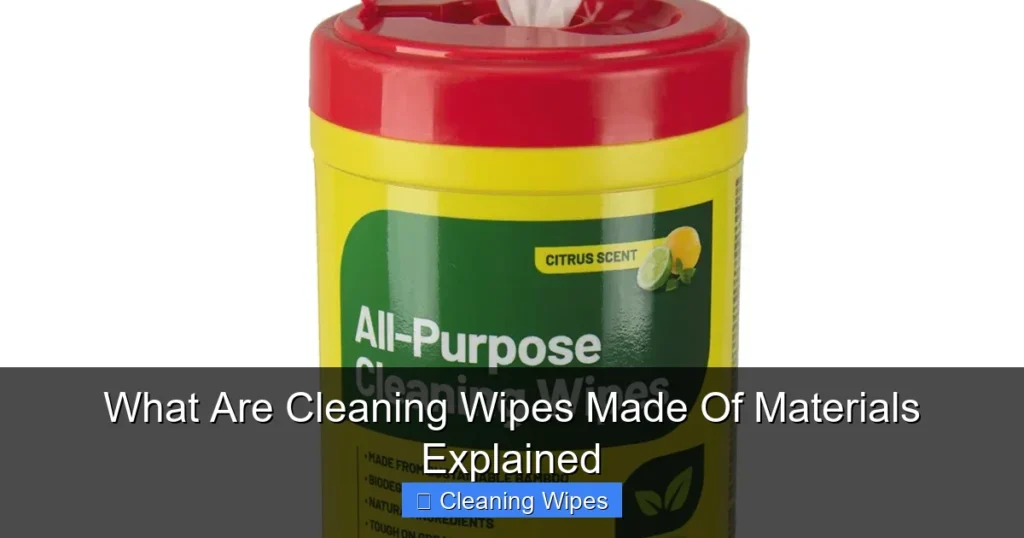
This guide explains exactly what cleaning wipes are made of, from the fabric base to the cleaning solution and preservatives. You will learn how different materials affect strength, safety, and environmental impact. Use this simple breakdown to choose the best cleaning wipes for your home, skin, and the planet.
Key Takeaways
- Point 1: Cleaning wipes are made of a fabric base, a liquid cleaning solution, and preservatives to keep them fresh.
- Point 2: Most cleaning wipes use synthetic fibers like polyester or polypropylene, but some brands now use plant-based or biodegradable materials.
- Point 3: The cleaning solution can include water, detergents, disinfectants, alcohol, and skin conditioners, depending on the wipe type.
- Point 4: Many wipes labeled as “flushable” still contain plastics and do not break down quickly, so they should go in the trash.
- Point 5: Fragrances, dyes, and preservatives can irritate sensitive skin; fragrance-free and hypoallergenic wipes are safer choices.
- Point 6: Reading the ingredient list and material claims helps you pick wipes that match your cleaning needs and eco values.
- Point 7: You can reduce waste by choosing reusable cloths, compostable wipes, or making simple DIY alternatives for some tasks.
Introduction: What Are Cleaning Wipes Made Of?
Cleaning wipes are everywhere. We use them on kitchen counters, bathroom sinks, phones, and even our hands and faces. But have you ever stopped to ask, what are cleaning wipes made of and what exactly are you touching, smelling, and throwing away?
This guide breaks down cleaning wipes in a simple way. You will learn:
- What the fabric part of a wipe is made from
- What goes into the liquid cleaning solution
- Which extra ingredients you should watch for
- How different materials affect the environment
- How to choose safer and better wipes for your home
By the end, you will understand what cleaning wipes are made of and how to read labels with confidence. You will also get practical tips to pick the right wipes and even some ideas to cut waste.
Step 1: Understand the Three Main Parts of a Cleaning Wipe
To answer the question “what are cleaning wipes made of,” it helps to break each wipe into three basic parts:

Visual guide about What Are Cleaning Wipes Made Of Materials Explained
Image source: headchefgrinder.co.uk
- The fabric base (the sheet itself)
- The liquid cleaning solution
- The additives and preservatives
Every brand uses these three parts in some form. The details change by type, such as disinfecting wipes, baby wipes, makeup wipes, or multi-surface wipes. But the basic idea stays the same.
1. The Fabric Base
The fabric is the “body” of the wipe. It holds the liquid and does the scrubbing. It is usually a nonwoven material. That means the fibers are pressed and bonded together, not woven like a T-shirt.
2. The Cleaning Solution
The liquid is the “brain” of the wipe. It decides what the wipe can do. It may clean, disinfect, moisturize, or remove makeup. The formula is usually water-based with added cleaning agents.
3. The Additives
Additives are the “extras.” They keep the wipes stable, smelling nice, and safe to use. They include preservatives, fragrances, and sometimes skin-soothing ingredients.
Now let’s look at each part in detail so you can clearly see what cleaning wipes are made of in your home.
Step 2: Learn What the Fabric in Cleaning Wipes Is Made Of
The fabric is the most visible part, so we start here. When we ask what are cleaning wipes made of, we usually think of the cloth itself. There are three main material groups:

Visual guide about What Are Cleaning Wipes Made Of Materials Explained
Image source: itwprobrands.com
2.1 Synthetic (Plastic-Based) Fibers
Many cleaning wipes are made from plastic-based fibers. These are strong, cheap, and easy to produce.
- Polyester – Durable, soft, and holds liquid well. Common in disinfecting and surface wipes.
- Polypropylene – Lightweight, resistant to chemicals, and often used in cleaning and industrial wipes.
- Polyethylene – Sometimes blended with other fibers for strength and softness.
These fibers are made from petroleum. They do not break down quickly in the environment. So when we talk about what cleaning wipes are made of, this plastic base is a big reason wipes create long-term waste.
2.2 Natural and Plant-Based Fibers
Some wipes use natural materials. These may be more eco-friendly, but not always, because it depends on how they are processed.
- Cotton – Soft and absorbent. Often used in cosmetic and baby wipes. It can be biodegradable, especially if not mixed with plastic.
- Viscose / Rayon – Made from wood pulp or bamboo. It is a regenerated cellulose fiber. It feels soft and cloth-like.
- Bamboo fibers – Marketed as sustainable because bamboo grows fast. Often used in “eco” or “green” wipes.
When you ask what are cleaning wipes made of in “natural” brands, you will often see blends of viscose, bamboo, and cotton. These can break down faster than plastic wipes, especially in composting conditions.
2.3 Blended Fabrics
Many wipes mix synthetic and natural fibers. For example:
- Polyester and viscose blends
- Cotton and polyester blends
- Polypropylene and cellulose blends
Blends aim to balance cost, strength, and feel. But even a small amount of plastic fiber can reduce how well the wipe breaks down. So when figuring out what cleaning wipes are made of, always check for words like “polyester” or “polypropylene” on the label.
2.4 Are Cleaning Wipes Biodegradable?
Some wipes are labeled “biodegradable.” This usually means the fabric can break down under certain conditions. But:
- Biodegradation may take months or years.
- It may require industrial composting, not a backyard pile.
- The liquid ingredients may still affect soil and water.
So when you see “biodegradable,” still ask yourself what are cleaning wipes made of exactly. Look for clear claims like “100% plant-based fibers” and check if the brand explains how to dispose of them.
Step 3: Understand What the Cleaning Solution Is Made Of
The liquid inside the pack is just as important as the fabric. When you wipe a surface, the solution is what actually does the cleaning or disinfecting.
3.1 Water: The Main Ingredient
In most wipes, water makes up the majority of the liquid. It acts as a carrier for all the other ingredients. You may see it listed as “aqua” on the ingredient list.
3.2 Surfactants (Cleaning Agents)
Surfactants are the ingredients that lift dirt, grease, and oils. They help water mix with oily residues so they can be wiped away.
- Mild detergents – Common in household cleaning wipes and baby wipes.
- Non-ionic surfactants – Gentle and often used in skin-contact wipes.
- Anionic surfactants – Stronger cleaners for heavy-duty wipes.
When people ask what are cleaning wipes made of that makes them clean so well, surfactants are a big part of the answer.
3.3 Disinfectants and Antimicrobial Agents
Disinfecting wipes include chemicals that kill bacteria, viruses, and fungi. Common active ingredients include:
- Quaternary ammonium compounds (“quats”) – Very common in household disinfecting wipes.
- Alcohols (ethanol, isopropyl alcohol) – Used in sanitizing wipes, especially for hands and surfaces.
- Chlorine-based compounds – Sometimes used in industrial or medical settings.
These ingredients are why disinfecting wipes have specific contact times on the label. To be effective, the surface usually needs to stay visibly wet for a set time.
3.4 Moisturizers and Skin Conditioners
Wipes made for skin, like baby wipes or facial wipes, often have ingredients to reduce dryness or irritation.
- Glycerin – A humectant that draws moisture to the skin.
- Aloe vera – Soothing and often used for marketing appeal.
- Plant oils – Such as coconut oil or jojoba oil in makeup remover wipes.
So when you wonder what are cleaning wipes made of that makes them feel gentle, these moisturizing ingredients are part of the reason.
3.5 pH Adjusters
pH adjusters keep the solution at the right acidity or alkalinity. This helps with stability and comfort on skin.
- Citric acid
- Sodium citrate
- Sodium hydroxide (in very small amounts)
Balanced pH can make wipes less irritating and more effective at cleaning certain soils.
Step 4: Know the Additives and Preservatives in Cleaning Wipes
To fully answer what are cleaning wipes made of, we must also look at the small but important ingredients: preservatives, fragrances, and dyes.
4.1 Preservatives
Wipes are stored wet in a closed pack. This is a perfect place for bacteria and mold to grow if there are no preservatives.
Common preservatives include:
- Phenoxyethanol
- Sodium benzoate
- Potassium sorbate
- Parabens (less common now due to consumer concern)
- Formaldehyde-releasing agents (used in some older or cheaper formulas)
Preservatives keep wipes safe during their shelf life. But some people with sensitive skin may react to certain types. If you have allergies, it helps to know what cleaning wipes are made of at this level of detail.
4.2 Fragrances
Many wipes have a fresh or floral scent. This comes from added fragrance blends.
On labels, you may see:
- Fragrance or Parfum – A mix of many scent chemicals.
- Specific essential oils like lavender oil or lemon oil.
Fragrances can make wipes pleasant to use, but they are also a common trigger for irritation. If you have sensitive skin or asthma, “fragrance-free” wipes are often a better choice.
4.3 Colorants and Dyes
Some wipes or their packaging use dyes for branding or style. You may see names like:
- CI (Color Index) numbers
- FD&C color names
Dyes are not needed for cleaning. They are mostly cosmetic. If you want a simpler formula, look for wipes without added color.
Step 5: Compare Different Types of Cleaning Wipes by Their Materials
Now that you know what cleaning wipes are made of in general, let’s compare common types. Each type uses the same basic structure but with different details.
5.1 Disinfecting Surface Wipes
- Fabric: Often polyester or polypropylene, sometimes blended with cellulose.
- Solution: Water, surfactants, and disinfectants like quats or alcohol.
- Additives: Preservatives, fragrances, and pH adjusters.
These are made to kill germs on hard, non-porous surfaces. They are not meant for skin or food unless the label says so.
5.2 All-Purpose Cleaning Wipes
- Fabric: Synthetic or blended nonwoven material.
- Solution: Water and mild detergents, sometimes with a small amount of solvent for grease.
- Additives: Fragrance, preservatives, and sometimes conditioning agents for shine.
These wipes focus more on removing dirt and less on killing germs. When asking what are cleaning wipes made of for daily cleaning, this is a common group.
5.3 Baby Wipes
- Fabric: Often soft nonwoven made from polyester, polypropylene, viscose, or cotton blends.
- Solution: Mostly water, very mild surfactants, and moisturizing agents.
- Additives: Gentle preservatives, sometimes fragrance-free, often with aloe or chamomile.
Baby wipes are designed for delicate skin. Yet they still contain preservatives and sometimes fragrances, so it is useful to know what cleaning wipes are made of before using them on sensitive areas.
5.4 Makeup Remover and Facial Wipes
- Fabric: Soft, cloth-like nonwoven, often with plant-based fibers.
- Solution: Water, surfactants, oils, and makeup-dissolving agents.
- Additives: Fragrance, preservatives, and skin conditioners.
These wipes are designed to remove cosmetics, sunscreen, and oil from the face. They often feel richer or more “slippery” because of added emollients.
5.5 “Flushable” and Toilet Wipes
- Fabric: Usually a cellulose-based nonwoven that breaks apart more easily than standard wipes.
- Solution: Water, mild cleansing agents, and sometimes soothing ingredients.
- Additives: Preservatives and light fragrance.
Even when marketed as flushable, many plumbing experts still advise throwing them in the trash. If you care about what cleaning wipes are made of in terms of sewer safety, it is safer not to flush them.
Step 6: How to Read Labels and Choose Better Cleaning Wipes
Now that you know what cleaning wipes are made of, use this knowledge in the store or online. Here is a simple step-by-step way to choose better wipes.
6.1 Step A: Check the Fabric Material
Look on the package for words like:
- “100% plant-based fibers”
- “Viscose,” “rayon,” “cotton,” or “bamboo”
- “Polyester” or “polypropylene” (these are plastics)
If you want less plastic, choose mostly plant-based fibers. If you need very strong wipes for tough jobs, synthetic blends may be better.
6.2 Step B: Identify the Type of Cleaner
Decide what you need the wipe to do:
- For disinfecting – Look for EPA-registered disinfecting wipes and check the active ingredient (quats or alcohol).
- For everyday cleaning – Mild surfactants are enough; no need for harsh disinfectants.
- For skin use – Choose wipes labeled for baby or face, with gentle formulas.
Knowing what cleaning wipes are made of helps you avoid using strong disinfectants on skin or food areas unless the label allows it.
6.3 Step C: Watch for Fragrance and Dyes
If you have sensitive skin or allergies:
- Choose fragrance-free or “for sensitive skin” wipes.
- Avoid bright colored wipes that may have extra dyes.
- Test a small area first if you are unsure.
6.4 Step D: Consider Environmental Claims
Look for clear, honest claims:
- “Plastic-free” or “no synthetic fibers”
- “Home compostable” with instructions
- Certifications from trusted eco labels, if available
Be cautious with vague words like “eco-friendly” without details. Always ask yourself what are cleaning wipes made of under that green label.
Step 7: Troubleshooting Common Problems with Cleaning Wipes
Even when you understand what cleaning wipes are made of, you may still face issues. Here are some common problems and quick fixes.
7.1 Wipes Drying Out in the Pack
Possible causes:
- Lid not closed tightly
- Package stored in a hot or sunny place
What to do:
- Always snap the lid or reseal the sticker fully after each use.
- Store wipes in a cool, dry place away from direct sunlight.
- If slightly dry, you can sometimes revive with a small amount of distilled water, but this may affect preservatives, so use quickly.
7.2 Skin Irritation After Use
Possible causes:
- Fragrance sensitivity
- Reaction to preservatives or disinfectants
- Using surface wipes on skin by mistake
What to do:
- Switch to fragrance-free, sensitive-skin wipes.
- Rinse skin with plain water after using a wipe.
- Always use wipes only for their intended purpose.
7.3 Clogged Drains or Toilet Issues
Possible causes:
- Flushing wipes that do not break down quickly
- Using “flushable” wipes in older plumbing or septic systems
What to do:
- Put all wipes in the trash, even if labeled flushable, unless a plumber or local authority says otherwise.
- Use toilet paper for flushing and wipes only for external cleaning.
Step 8: Simple Alternatives to Reduce Wipe Waste
Once you know what cleaning wipes are made of, you may want to lower your use, especially of plastic-based wipes. Here are easy options.
8.1 Reusable Cloths and Spray Cleaners
Use microfiber cloths, cotton rags, or old T-shirts cut into squares. Pair them with a spray cleaner or a simple mix of mild soap and water for many everyday tasks.
8.2 DIY Cleaning Wipes (For Non-Disinfecting Use)
You can make simple cleaning cloths at home:
- Use small cotton cloths or old washcloths.
- Store them in a container with a mix of water and a little gentle dish soap.
- Wring out before use and wash after.
These are not disinfecting wipes, but they work well for light cleaning.
8.3 Choose Compostable or Plant-Based Wipes
If you still need disposable wipes, look for ones made from 100% plant-based fibers and check if they are compostable. Follow disposal instructions to get the best environmental benefit.
Conclusion: Use Your New Knowledge to Choose Wisely
Now you know what cleaning wipes are made of. Each wipe combines a fabric base, a liquid cleaning solution, and a mix of preservatives and additives. The fabric might be plastic-based, plant-based, or a blend. The solution may clean, disinfect, or moisturize, depending on its ingredients.
With this clear picture of what cleaning wipes are made of, you can:
- Pick wipes that match your cleaning tasks.
- Avoid ingredients that irritate your skin.
- Reduce plastic waste by choosing better materials or using reusables.
Next time you reach for a pack, flip it over and read the label. Use what you have learned about what cleaning wipes are made of to make choices that are safer for your home, your family, and the planet.