
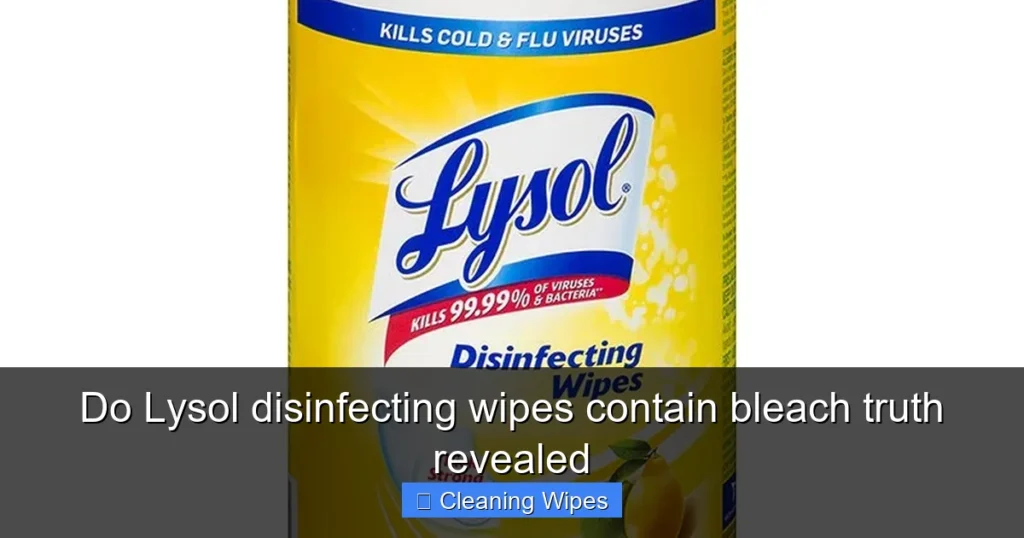
Lysol disinfecting wipes do not contain bleach in their standard formulas, even though many people assume they do. Instead, they use other disinfecting ingredients that kill germs without the harsh effects of chlorine bleach. This guide explains what’s in Lysol wipes, how to use them safely, when you might still need bleach, and how to choose the right wipe for every cleaning job.
Key Takeaways
- Point 1: Most Lysol disinfecting wipes do not contain bleach; they use other disinfectants to kill germs.
- Point 2: Because they are bleach-free, Lysol wipes are generally safer on many surfaces, but you should still test delicate items first.
- Point 3: Always read the product label to confirm ingredients and check whether a specific Lysol wipe is bleach-free.
- Point 4: Proper use means wiping, keeping the surface visibly wet for the full contact time, and letting it air dry.
- Point 5: Bleach wipes and Lysol disinfecting wipes are not the same; each has different ideal uses and safety rules.
- Point 6: Use gloves and good ventilation if you are sensitive to cleaning products, even if they are bleach-free.
- Point 7: Store wipes sealed and out of children’s reach to keep them moist, effective, and safe.
Do Lysol Disinfecting Wipes Contain Bleach? Truth Revealed
If you have ever opened a tub of Lysol disinfecting wipes and smelled that sharp, clean scent, you may have wondered, do Lysol disinfecting wipes contain bleach? Many people assume they do, because we often connect strong cleaning smells with bleach. The truth is simpler and more helpful than most people think.
This guide will walk you through what is really in Lysol disinfecting wipes, how they work, and how to use them safely in your home. You will learn when bleach is useful, when it is not, and how to tell the difference between bleach wipes and regular disinfecting wipes. By the end, you will know exactly what you are using on your counters, doorknobs, and devices.
Understanding What’s Inside Lysol Disinfecting Wipes
To answer the question, do Lysol disinfecting wipes contain bleach, we need to look at their ingredients. Different Lysol wipes have slightly different formulas, but the core idea is the same.
Visual guide about Do Lysol disinfecting wipes contain bleach truth revealed
Image source: i5.walmartimages.com
Active ingredients in most Lysol disinfecting wipes
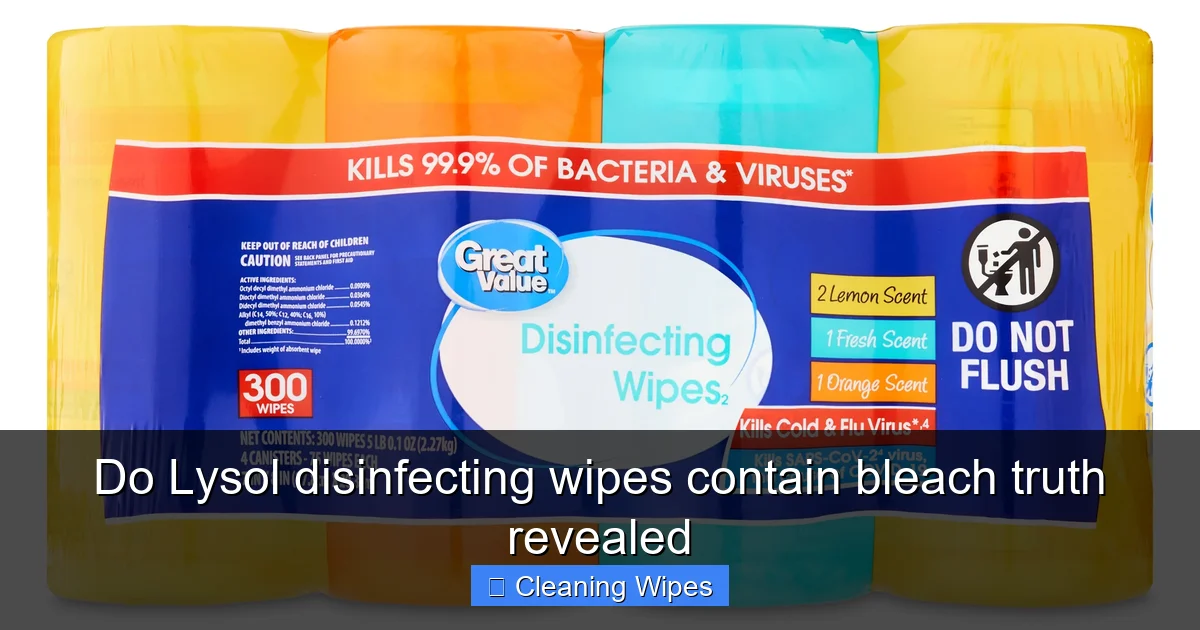
In general, Lysol disinfecting wipes use quaternary ammonium compounds (often called “quats”) as their main germ-killing ingredients. These are disinfectants that can kill bacteria and some viruses on hard, non-porous surfaces.
On a typical container, you might see ingredients such as:
- Alkyl dimethyl benzyl ammonium chloride (listed with percentages)
- Alkyl dimethyl ethylbenzyl ammonium chloride (or similar names)
These are the chemicals that do most of the disinfecting work. They are not bleach. They are a different class of disinfectants that work in another way and are usually safer for more surfaces than chlorine bleach.
So, do Lysol disinfecting wipes contain bleach?
In standard, everyday consumer products, the answer is usually no. Most Lysol disinfecting wipes you find at the grocery store or online are bleach-free. This is one of the main reasons they are marketed as safe for many household surfaces, including sealed stone, finished wood, and electronics (when used as directed).
However, formulas and product lines can change. Some specialty or institutional products in the broader cleaning market may combine brands and bleach, so it is always smart to check the label. But when people ask, do Lysol disinfecting wipes contain bleach, they are usually talking about the common consumer tubs. Those are designed to disinfect without bleach.
Why people confuse Lysol wipes with bleach
There are a few reasons this confusion is so common:
- Strong scent: Many people link a strong, “chemical” smell with bleach, even though many products use fragrance and other disinfectants.
- Brand association: Lysol is a powerful disinfectant brand, and bleach is a powerful disinfectant, so people often lump them together.
- Similar uses: Both bleach and Lysol disinfecting wipes are used to kill germs on surfaces, which makes them seem the same.
Knowing the real answer to “do Lysol disinfecting wipes contain bleach” helps you choose the right product for each job and avoid damage or irritation.
How to Check If a Wipe Contains Bleach
Even though Lysol disinfecting wipes are usually bleach-free, it is still wise to check any cleaning wipe you buy. Here is a simple way to confirm what is in your wipes.
Visual guide about Do Lysol disinfecting wipes contain bleach truth revealed
Image source: sfpaperproducts.com
Step 1: Read the front label
Start with the front of the package. Many brands will clearly say if a product is bleach-free or if it contains bleach. Look for phrases such as:
- “Bleach-free”
- “With bleach”
- “Chlorine-free”
If you do not see any mention of bleach, do not assume the answer to “do Lysol disinfecting wipes contain bleach” is yes or no. You still need to read the back label.
Step 2: Check the active ingredients list
Turn the container around and find the section labeled Active Ingredients. This is where you get the real answer.
If the wipe contains bleach, you will see a form of chlorine bleach listed, such as:
- Sodium hypochlorite
In most Lysol disinfecting wipes, you will not see sodium hypochlorite. Instead, you will see quaternary ammonium compounds, as mentioned earlier. That is your clear sign that the wipe does not contain bleach.
Step 3: Read usage directions and warnings
When people ask, “do Lysol disinfecting wipes contain bleach,” they are also worried about safety. The directions and warning sections give extra clues:
- If the product warns strongly about bleaching fabrics or says it is for whites only, it may contain bleach.
- If it focuses on general disinfecting and surface safety, it is more likely bleach-free.
Always follow the instructions exactly, even if the wipes do not contain bleach. Bleach-free does not mean harmless.
How to Use Lysol Disinfecting Wipes Safely and Effectively
Now that you know the answer to “do Lysol disinfecting wipes contain bleach,” the next step is using them the right way. Many people wipe too quickly and do not let the product work long enough to kill germs.
Step 1: Choose the right surface
Lysol disinfecting wipes are designed for hard, non-porous surfaces. These include:
- Kitchen counters (sealed)
- Bathroom sinks and faucets
- Toilets (seat, handle, exterior)
- Doorknobs, light switches, and handles
- Sealed stone, laminate, and tile
- Electronics and remotes (follow device maker’s guidance)
Even though the answer to “do Lysol disinfecting wipes contain bleach” is usually no, you still need to be careful with:
- Unfinished or unsealed wood
- Natural stone that is not sealed
- Leather or delicate fabrics
- Unpainted or raw metals that may corrode
Always test a small, hidden area first if you are unsure.
Step 2: Clean visible dirt first
Disinfecting wipes work best on relatively clean surfaces. If a surface is very greasy or covered in food or dirt, wipe it with a damp cloth or mild cleaner first. Then use the disinfecting wipe.
Even though you now know the answer to “do Lysol disinfecting wipes contain bleach,” remember that all disinfectants work better when heavy soil is removed first.
Step 3: Wipe and keep the surface wet
This is the step most people rush. To properly disinfect:
- Wipe the surface until it is visibly wet.
- Check the label for the contact time (often 4 minutes or more).
- Do not dry the surface before that time is up.
Letting the surface stay wet is crucial. It gives the active ingredients time to kill germs. The answer to “do Lysol disinfecting wipes contain bleach” does not change this rule. Bleach and non-bleach disinfectants both need contact time.
Step 4: Let the surface air dry
After the recommended time, you can let the surface air dry. On food-contact surfaces, the label may tell you to rinse with water after disinfecting. Always follow that advice.
If you are wiping an item you touch often, like a phone, do not soak it. Use a lightly wrung-out wipe and follow the device maker’s guidance.
Step 5: Wash your hands
Even though Lysol disinfecting wipes are bleach-free in most cases, they still contain chemicals that can irritate skin or eyes. When you finish cleaning:
- Throw the used wipes in the trash (do not flush).
- Wash your hands with soap and water.
Gloves are a good idea if you have sensitive skin or will be using wipes for a long time.
When You Might Still Need Bleach Instead of Wipes
Knowing the answer to “do Lysol disinfecting wipes contain bleach” also helps you see when bleach might still be the right tool. Bleach has special uses that some wipes cannot fully replace.
Use bleach for certain high-risk situations
Bleach can be helpful when you need very strong disinfection, such as:
- Cleaning up certain bodily fluids (always follow health guidelines).
- Disinfecting some surfaces after illness, as directed by health authorities.
- Whitening or disinfecting white laundry (using proper dilution).
In these cases, you may use a diluted bleach solution or a product that clearly states it contains bleach. This is separate from answering “do Lysol disinfecting wipes contain bleach,” because you are choosing bleach on purpose for a specific job.
Use Lysol disinfecting wipes for everyday cleaning
For daily household cleaning, Lysol disinfecting wipes are usually enough. They are simple to use, do not require mixing, and are generally safer for more surfaces than bleach. They are ideal for:
- Daily bathroom wipe-downs
- Kitchen counters and appliances
- Light switches, remotes, and game controllers
- Car interiors (test first on delicate materials)
So, while the answer to “do Lysol disinfecting wipes contain bleach” is no, they still offer strong disinfecting power for routine use.
Safety Tips for Using Bleach-Free Lysol Wipes
Even though they are bleach-free, Lysol disinfecting wipes still need careful handling. Here are some simple safety tips.
Tip 1: Avoid mixing with other cleaners
Do not use Lysol disinfecting wipes at the same time as other strong cleaners on the same surface. Even without bleach, mixing chemicals can cause fumes or reduce effectiveness. Clean with one product at a time.
Tip 2: Ventilate your space
Open a window or turn on a fan when you clean. Some people are sensitive to fragrances or disinfectant fumes. Good airflow helps, whether or not your main concern is “do Lysol disinfecting wipes contain bleach.”
Tip 3: Protect kids and pets
Keep containers of wipes out of reach of children and pets. Do not let kids chew on wipes, play with them, or handle the liquid. After using wipes on surfaces that kids touch often, let the surface dry before they handle it.
Tip 4: Store wipes properly
To keep Lysol disinfecting wipes effective:
- Close the lid tightly after each use.
- Store at room temperature.
- Do not let the wipes dry out or freeze.
Dried-out wipes will not disinfect well, no matter the answer to “do Lysol disinfecting wipes contain bleach.” Moisture is key for proper contact time.
Troubleshooting Common Problems With Lysol Wipes
Even when you know that most Lysol disinfecting wipes do not contain bleach, you can still run into issues. Here are common problems and simple fixes.
Problem 1: Wipes are drying out
If you open the tub and find mostly dry wipes:
- Make sure the lid was fully closed before.
- Store the container upside down for a while to let liquid redistribute.
- If they are completely dry, replace the container. Do not try to “revive” them with random liquids, as that changes the formula.
Problem 2: Streaks on shiny surfaces
Even though the answer to “do Lysol disinfecting wipes contain bleach” is no, they can still leave streaks on glass, stainless steel, or glossy counters.
- Use a clean, dry microfiber cloth to buff after the disinfecting contact time.
- For glass, you may want to use a glass cleaner after disinfecting, if the label allows.
Problem 3: Skin irritation
If your hands feel dry or irritated after using wipes:
- Wear disposable or reusable cleaning gloves.
- Wash your hands well and apply a gentle moisturizer.
- If irritation continues, stop using the product and talk to a healthcare professional.
Problem 4: Concern about sensitive surfaces
If you are worried about a delicate surface but still want disinfection:
- Test the wipe on a small hidden area first.
- Check the manufacturer’s instructions for that item.
- Consider using a different cleaning method if the surface is not rated for disinfectant wipes.
Comparing Lysol Disinfecting Wipes and Bleach Wipes
Because many people ask, “do Lysol disinfecting wipes contain bleach,” it helps to compare them with true bleach wipes. This shows when each type is best.
Key differences
- Ingredients: Lysol disinfecting wipes use quats; bleach wipes use sodium hypochlorite.
- Surface safety: Bleach wipes can discolor fabrics and some surfaces; Lysol wipes are usually gentler but still need testing.
- Smell: Bleach wipes have a classic bleach smell; Lysol wipes have a fragrance or disinfectant scent that is different from bleach.
- Uses: Bleach is often best for whitening and some high-risk disinfection; Lysol wipes are better for daily, general household cleaning.
When you understand the answer to “do Lysol disinfecting wipes contain bleach,” you can pick the right product instead of using bleach where it is not needed.
Conclusion: The Truth About Bleach in Lysol Disinfecting Wipes
So, do Lysol disinfecting wipes contain bleach? For the typical consumer products you buy for your home, the answer is no. They are designed to kill germs using other disinfecting ingredients, not chlorine bleach. This makes them versatile and convenient for everyday cleaning on many surfaces.
Still, you should always read labels, follow directions, and use good safety habits. Knowing exactly what is in your cleaning products helps you protect your home, your belongings, and your family. Use bleach when it is truly needed, and rely on bleach-free Lysol disinfecting wipes for most daily disinfecting jobs.