
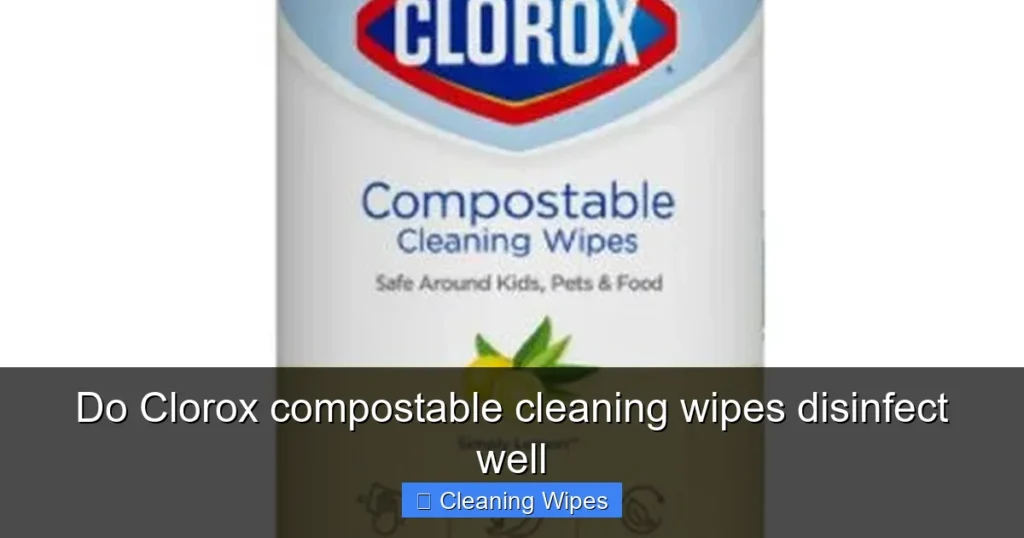
Clorox compostable cleaning wipes are great for everyday cleaning, but they are not registered disinfecting wipes. They help remove dirt, grime, and some germs from surfaces, yet they do not provide the same proven germ-killing power as EPA-registered disinfecting wipes. This guide explains what these wipes can and cannot do, how to use them correctly, and when you should switch to true disinfecting wipes for better protection.
Key Takeaways
- Point 1: Clorox compostable cleaning wipes are designed for cleaning, not for hospital-grade disinfection.
- Point 2: They help remove some germs by wiping them away, but they are not the same as EPA-registered disinfecting wipes.
- Point 3: For high-risk areas like bathrooms, cutting boards, and sick rooms, you should use Clorox disinfecting wipes or another true disinfectant.
- Point 4: These compostable wipes are better for the environment than many traditional wipes because they are plant-based and designed to break down.
- Point 5: Always read the label to see if a wipe “disinfects” or just “cleans” and follow the directions for safe and effective use.
- Point 6: You can pair compostable cleaning wipes with a separate disinfectant spray when you need deeper germ protection.
- Point 7: Using the right wipe for the right job helps you stay healthy while also reducing waste and protecting the environment.
Introduction: Do Clorox Compostable Cleaning Wipes Disinfect Well?
Many people want a clean home and a healthy planet at the same time. That is why products like Clorox compostable cleaning wipes are so popular. They promise easy cleaning with plant-based materials that can break down more easily than plastic-based wipes. But there is one big question people ask over and over: do Clorox compostable cleaning wipes disinfect well?
This how-to guide walks you through what these wipes actually do, how they work, and how to use them the right way. You will learn the difference between cleaning and disinfecting, how to read product labels, and when you should choose compostable cleaning wipes versus true disinfecting wipes. By the end, you will know how to keep your home clean, when you need stronger germ-killing power, and how to balance health with eco-friendly choices.
Understanding What Clorox Compostable Cleaning Wipes Really Do
Cleaning vs. Disinfecting: Why It Matters
Before you can decide if Clorox compostable cleaning wipes disinfect well, you need to understand the difference between cleaning and disinfecting. These words are often mixed up, but they mean very different things.

Visual guide about Do Clorox compostable cleaning wipes disinfect well
Image source: down-th.img.susercontent.com
- Cleaning means removing dirt, food, grease, and some germs from surfaces. You wipe things away. The number of germs goes down, but many can still remain.
- Disinfecting means using chemicals that are proven to kill a high percentage of germs, like bacteria and viruses, on hard surfaces when used as directed.
When you ask “do Clorox compostable cleaning wipes disinfect well,” you are really asking if they kill germs at the same level as Clorox disinfecting wipes. In most cases, the answer is no. They are cleaning wipes, not full disinfecting wipes.
What the Label Tells You
The most important step is to read the label. Real disinfecting products must be registered with the EPA in the United States and will clearly say “disinfecting” or “kills 99.9% of germs” along with directions for contact time.
On Clorox compostable cleaning wipes, you will usually see words like “cleans,” “cuts through grease,” or “removes messes.” You will not see the same strong disinfecting claims you find on Clorox disinfecting wipes. That is a big clue that these compostable cleaning wipes are made for everyday cleaning, not for hospital-grade disinfection.
How Clorox Compostable Cleaning Wipes Handle Germs
Even though these wipes are not registered disinfectants, they still help with hygiene in two ways:
- Mechanical removal: When you wipe a surface, you physically lift and remove some germs along with dirt and residue.
- Cleaning ingredients: The cleaning solution in the wipes can help break down grime and may reduce some germs, even if it is not a full disinfectant formula.
So, do Clorox compostable cleaning wipes disinfect well? They do not disinfect in the strict, regulated sense. But they do help reduce the number of germs by cleaning the surface. For routine, low-risk areas, that may be enough.
When to Use Clorox Compostable Cleaning Wipes
Best Situations for Compostable Cleaning Wipes
Clorox compostable cleaning wipes are perfect for everyday messes where heavy disinfection is not required. Here are some good uses:

Visual guide about Do Clorox compostable cleaning wipes disinfect well
Image source: down-th.img.susercontent.com
- Wiping crumbs and spills off kitchen counters after making a snack
- Cleaning the outside of appliances like microwaves, fridges, and toasters
- Wiping coffee tables, side tables, and TV stands
- Freshening up desks, shelves, and non-food surfaces
- Quick cleanups in cars, like dashboards and door handles (check material safety)
In these low-risk areas, the key goal is to keep things looking and feeling clean. For that purpose, Clorox compostable cleaning wipes work very well, even if they do not disinfect like stronger wipes.
Situations Where You Need True Disinfection
Some places in your home need more than basic cleaning. These are spots where germs can spread quickly or where raw food and bodily fluids are present. In these cases, Clorox compostable cleaning wipes are not enough on their own. You should use real disinfecting wipes or another EPA-registered disinfectant.
- Bathroom sinks, toilet seats, and flush handles
- Kitchen cutting boards after raw meat, poultry, or seafood
- Fridge handles and faucet handles during cold and flu season
- High-touch surfaces when someone in the home is sick
- Diaper changing tables and trash can lids
If you are wondering “do Clorox compostable cleaning wipes disinfect well enough for these spots,” the safe answer is no. For these jobs, choose Clorox disinfecting wipes or a disinfectant spray plus paper towels or reusable cloths.
How to Use Clorox Compostable Cleaning Wipes the Right Way
Step 1: Check the Label and Surface
Always start by reading the label on the pack. Make sure the surface you want to clean is listed as safe. Most Clorox compostable cleaning wipes are safe on sealed stone, finished wood, stainless steel, and many hard, non-porous surfaces. But you should:
- Avoid unsealed wood or delicate surfaces unless the label says they are safe.
- Test a small hidden area first if you are unsure.
- Never use on skin, pets, or food directly.
This step makes sure you use the wipes where they are meant to be used and avoid damage.
Step 2: Remove Loose Debris First
Before you wipe, quickly remove big crumbs, food scraps, and other loose debris. You can:
- Brush crumbs into your hand or into the trash.
- Use a dry cloth or paper towel to lift heavy messes.
Doing this first helps the Clorox compostable cleaning wipes work better. They can then focus on removing the thin layer of dirt and residue instead of getting clogged by big chunks.
Step 3: Wipe in One Direction
Pull out a fresh wipe and unfold it fully. Wipe the surface in one direction, instead of scrubbing back and forth. This helps you move dirt and germs off the surface instead of spreading them around.
Use a steady, gentle pressure. If the wipe starts to dry out or gets very dirty, throw it away and use a new one. That way you are not just pushing grime from one spot to another.
Step 4: Let the Surface Air Dry
After wiping, let the surface air dry. Do not rinse unless the label tells you to rinse on food-contact surfaces. Some cleaning solutions are designed to be left on the surface so they can keep working as they dry.
Even though Clorox compostable cleaning wipes are not full disinfectants, letting the surface dry naturally helps avoid streaks and gives the cleaning agents time to finish their job.
Step 5: Dispose of Wipes Properly
One big reason people like Clorox compostable cleaning wipes is that they are made from plant-based fibers. But that does not mean you can flush them. Never flush wipes, even compostable ones, unless the label clearly says it is safe.
Here is how to dispose of them:
- Put used wipes in the trash if you do not have access to a compost facility.
- If the label and local rules allow, you may place them in a green bin for industrial composting.
- Do not compost them at home unless the package says they are safe for home compost systems.
Proper disposal helps protect your plumbing and supports the environmental benefits of compostable cleaning wipes.
How to Disinfect Effectively When Needed
Step 1: Decide If You Need Disinfection
Ask yourself these questions:
- Is someone in the house sick or has a weak immune system?
- Is this a high-touch surface like a doorknob, light switch, or faucet?
- Did raw meat, eggs, or bodily fluids touch this surface?
If you answer yes to any of these, you need more than basic cleaning. In these cases, Clorox compostable cleaning wipes are not enough. You should use a disinfecting product.
Step 2: Choose the Right Disinfecting Product
Look for products labeled “disinfecting wipes” or “disinfectant spray.” They should list germs they kill and include an EPA registration number. Clorox disinfecting wipes are a common choice.
You can still use Clorox compostable cleaning wipes in your routine. Just reserve your disinfecting wipes or spray for higher-risk areas and times when you need stronger germ control.
Step 3: Follow Contact Time Directions
Disinfectants only work as promised if you use them correctly. Most labels will say something like “leave surface wet for X minutes.” That is called contact time.
To disinfect properly:
- Clean visible dirt first with a compostable cleaning wipe or a cloth.
- Apply the disinfecting wipe or spray until the surface is visibly wet.
- Let it stay wet for the full contact time on the label.
- Allow to air dry, or wipe if the label allows after the time is up.
This is the step that many people skip, and then they wonder why their disinfecting does not work well. If you want real germ-killing power, you must follow the directions exactly.
Combining Compostable Cleaning Wipes with Disinfectants
Two-Step Method for High-Risk Areas
You do not have to choose between eco-friendly cleaning and strong disinfection. You can use both. Here is a simple two-step method:
- Step 1: Clean with compostable wipes. Use Clorox compostable cleaning wipes to remove dirt, grease, and grime.
- Step 2: Disinfect with a registered product. Follow with a disinfecting wipe or spray on the same surface, and let it sit for the full contact time.
This approach lets you enjoy the benefits of compostable cleaning wipes while still getting proven disinfection when you need it most.
Example: Kitchen Counter After Raw Chicken
Here is how this looks in real life:
- After cutting raw chicken, scrape food scraps into the trash.
- Wipe the counter with a Clorox compostable cleaning wipe to remove juices and residue.
- Then use a Clorox disinfecting wipe or disinfectant spray on the same area.
- Leave it wet for the time listed on the disinfectant label before using the counter again.
In this case, you are not relying on compostable cleaning wipes to disinfect. Instead, you use them to clean first, which makes the disinfectant work better.
Environmental Benefits and Limits
Why Compostable Cleaning Wipes Are Popular
Traditional wipes often contain plastic fibers. They can last for many years in landfills and can harm the environment if they end up in water systems. Clorox compostable cleaning wipes are made with plant-based materials, so they are designed to break down faster under the right conditions.
By using compostable cleaning wipes, you can:
- Reduce plastic waste compared to many standard wipes.
- Support brands that are trying to be more eco-friendly.
- Feel better about everyday cleaning, especially for light jobs.
Eco-Friendly Does Not Mean Disinfecting
It is important to remember that being compostable does not make a wipe better at killing germs. When people ask, “do Clorox compostable cleaning wipes disinfect well,” they sometimes assume that a greener product is also a stronger germ fighter. That is not true.
Compostable cleaning wipes are about materials and disposal, not about disinfecting power. Always check the label to see what the product is actually designed to do.
Troubleshooting Common Problems
Problem 1: Surfaces Still Feel Sticky
If your counters or tables feel sticky after using Clorox compostable cleaning wipes, try these tips:
- Use a second wipe for larger or very dirty areas.
- Wipe in one direction and avoid over-scrubbing.
- If residue builds up, occasionally wash the surface with warm water and mild dish soap, then dry.
Problem 2: Wipes Dry Out in the Pack
If your wipes are drying out too fast:
- Make sure the lid snaps fully shut after each use.
- Store the pack upside down so moisture spreads evenly.
- Keep the package away from direct sunlight or heat sources.
If they are completely dry, do not try to re-wet them with tap water for disinfecting. Remember, Clorox compostable cleaning wipes are not disinfecting wipes, and adding water will not change that.
Problem 3: Confusion About Disinfection Claims
If you feel unsure whether your wipes disinfect well, go back to the label. Look for words like “disinfecting,” “sanitizing,” and “EPA registration number.” If those are missing, treat the product as a cleaner, not a disinfectant.
When in doubt, use Clorox compostable cleaning wipes for everyday messes, and keep a separate disinfecting product on hand for germ-heavy situations.
Conclusion: Do Clorox Compostable Cleaning Wipes Disinfect Well?
Clorox compostable cleaning wipes are smart, convenient tools for everyday cleaning. They are plant-based, easy to use, and better for the environment than many traditional wipes. They do a good job removing dirt, spills, and some germs from surfaces in your home.
However, they are not full disinfecting wipes. They do not offer the same proven germ-killing power as EPA-registered disinfecting products. If your main goal is to kill germs on high-risk surfaces, you should choose Clorox disinfecting wipes or another true disinfectant instead.
The best approach is to use each product for what it does best. Rely on Clorox compostable cleaning wipes for daily cleaning and low-risk areas. Then bring in disinfecting wipes or sprays for bathrooms, raw meat cleanup, and times when people are sick. This way, you keep your home clean and healthy while still making more eco-friendly choices.