

This guide reveals the typical water capacity of a spin mop bucket and why it’s crucial for effective cleaning. Most standard spin mops hold between 3 to 4.5 liters (0.8 to 1.2 gallons) of water, but this can vary by brand and design. Understanding this capacity helps you use less water, wring your mop head perfectly, and clean your floors more efficiently.
Key Takeaways
- Standard Capacity Range: Most spin mop buckets hold between 3 to 4.5 liters (0.8 to 1.2 gallons), which is designed for efficiency and portability.
- Capacity Impacts Performance: The right amount of water ensures proper wringing of the mop head, leaving it damp, not soaking, for optimal floor cleaning and drying.
- Two Compartments, One Purpose: The bucket is divided into a wash basin and a spin basket; total capacity is for the entire bucket, but you only fill the wash side for cleaning.
- How to Measure Your Bucket: You can easily find your mop’s capacity by checking the manual, looking for markings inside the bucket, or doing a simple water measurement test.
- More Water Isn’t Better: Overfilling the bucket can lead to messy spills, inefficient spinning, and overly wet floors that take longer to dry.
- Adjust for Your Task: Use less water for light cleaning or small areas, and a full (but not overflowing) bucket for large, heavily soiled floors.
- Check Before You Buy: Consider bucket capacity alongside other features like wringing mechanism and mop head quality when purchasing a new spin mop.
Discover the Spin Mop Water Capacity: How Much It Holds
Welcome to your complete guide on spin mop water capacity. Have you ever filled your spin mop bucket and wondered, “Is this too much?” or “Is this enough?” You’re not alone. Knowing exactly how much water your spin mop holds is a small detail that makes a huge difference. It affects how well you can wring the mop, how efficiently you clean, and even how long your floors take to dry.
This guide will walk you through everything you need to know. We’ll cover the typical water capacity you can expect, why it matters for your cleaning routine, and how to find the exact amount for your specific model. You’ll also get practical tips for using the right amount of water for every job. Let’s dive in and clear up the confusion!
Understanding Spin Mop Bucket Design and Capacity
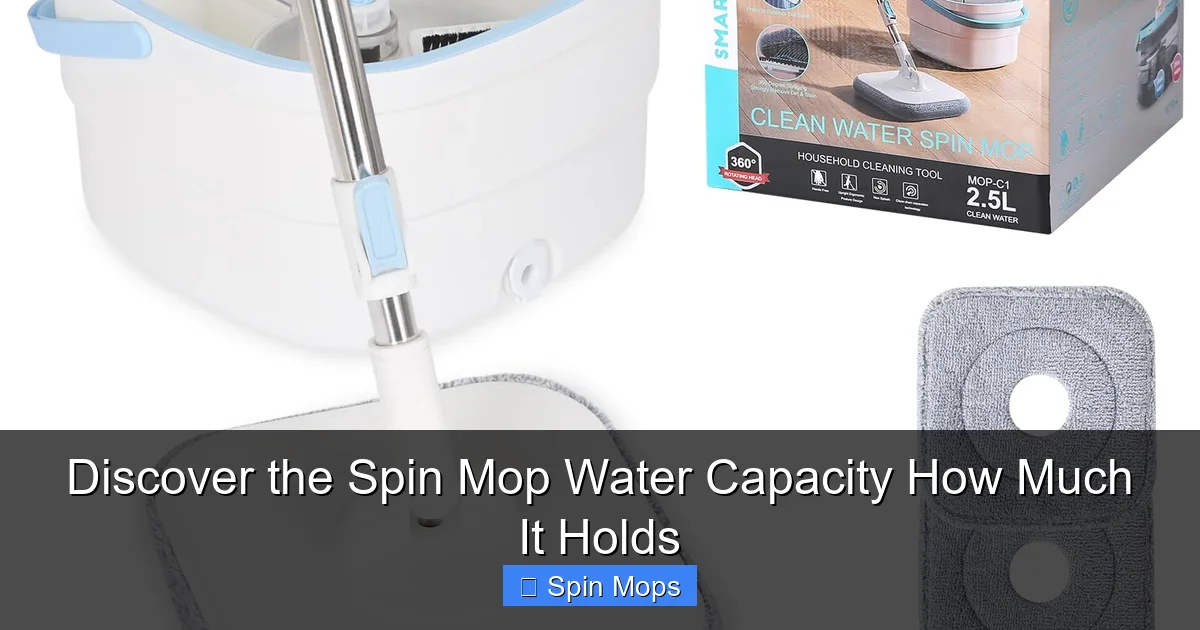
First, let’s look at the bucket itself. A spin mop system is clever. The bucket has two sections. One side is for washing and rinsing your mop head. The other side is a spinning basket that wrings out the water. This design is key to its efficiency.
Visual guide about Discover the Spin Mop Water Capacity How Much It Holds
Image source: m.media-amazon.com
The total water capacity refers to how much water the entire bucket can hold if filled to the very top. But you never actually use it that way. When you mop, you only fill the wash basin. The spin basket stays empty so it can do its job.
So, when we talk about a bucket holding 4 liters, it means the entire unit can hold 4 liters. For mopping, you might only put 2 to 3 liters in the wash side. This leaves room for the mop head to slosh around without spilling over.
Why Capacity is a Range, Not One Number
You’ll see that capacity is often given as a range. A common spin mop water capacity is 3 to 4.5 liters. Why the range? Different brands and models have different sizes. A compact mop for small apartments might have a smaller bucket. A heavy-duty model for large homes might have a larger one.
The design of the spinning mechanism also takes up space. Some buckets are taller, some are wider. All these factors change the total amount of water the bucket can hold.
How to Measure Your Spin Mop’s Water Capacity
Don’t know your mop’s exact capacity? No problem. Here’s a simple step-by-step process to find out.
Visual guide about Discover the Spin Mop Water Capacity How Much It Holds
Image source: img.lazcdn.com
Step 1: Check the Manual or Product Listing
This is the easiest method. Find the user manual that came with your mop. Look for a section labeled “Specifications” or “Product Details.” The capacity should be listed there, often in liters (L) and sometimes in gallons (gal). If you threw the manual away, search online for your mop’s model name and number. The manufacturer’s website or a retail listing will have this info.
Step 2: Look for Markings Inside the Bucket
Many modern spin mop buckets have helpful markings. Check the inside wall of the wash basin. You might see lines with numbers like “1L, 2L, 3L.” These are fill lines to guide you. The highest marked line is usually the recommended maximum fill level for mopping, not the absolute total capacity.
Step 3: The Water Measurement Test
If there are no markings, do a simple test. You’ll need a large measuring jug or a container with known volume (like a 1-liter bottle).
First, find the total capacity:
- Place your empty spin mop bucket in a sink or tub.
- Slowly pour water from your measuring jug into the bucket until it is literally full to the brim.
- Keep track of how much water you pour. The total amount is the bucket’s maximum capacity.
Next, find the practical mopping fill level:
- Empty the bucket.
- Now, pour water only into the wash basin (the side without the spin pedal).
- Stop when the water level is about 2-3 inches (5-7 cm) from the top of that basin. This is the ideal “working” level that prevents spills during use.
- Measure this amount. This is the practical water capacity you should use for cleaning.
Optimizing Your Water Use for Different Cleaning Tasks
Now that you know how much your bucket holds, let’s use that knowledge. You don’t always need to fill it to the max. Adjusting your water level saves effort and gives better results.

Visual guide about Discover the Spin Mop Water Capacity How Much It Holds
Image source: cf.shopee.ph
For Large, Dirty Floors (Full Capacity)
When tackling a big kitchen or a muddy entryway, use more water. Fill the wash basin to its practical maximum (that level a few inches from the top). You’ll need plenty of clean water to rinse away heavy grime. You may need to change the water mid-job if it gets too dirty.
For Medium or Light Cleaning (Half to Three-Quarters Full)
For weekly maintenance of living areas or bedrooms, you don’t need as much. Filling the basin halfway or a bit more is perfect. This makes the bucket lighter to carry and reduces water waste. The spin mop water capacity is a limit, not a target.
For Small Spots or Quick Cleanups (Minimal Water)
Just need to clean up a spilled drink? Put just an inch or two of water in the basin. It’s enough to rinse the mop head without the hassle of a full bucket setup.
Pro Tip: Use Warm Water
For cutting through grease and dirt more effectively, use warm (not boiling) water. It helps dissolve residues faster. Just remember, the capacity in liters is the same whether the water is hot or cold.
Troubleshooting Common Water Capacity Issues
Sometimes, things don’t go as planned. Here are solutions to common problems related to mop bucket water.
Problem: Water Sloshes Out While Mopping
This usually means you’ve overfilled the bucket. Solution: Always leave a 2-3 inch gap at the top of the wash basin. When you dip and swirl the mop, the water needs room to move without overflowing.
Problem: Mop Head Isn’t Wringing Out Enough Water
If your mop head is still dripping after spinning, check the water level in the wash basin. If it’s too high, the spin basket might be dipping into the water during the spinning cycle, re-wetting the mop. Solution: Ensure the spin basket is completely empty and dry before you place the mop head in it. Also, don’t overfill the opposing wash side.
Problem: Bucket Leaks from the Seam or Base
This is a defect, not a capacity issue. Solution: Check for cracks. Contact the manufacturer if it’s under warranty. As a temporary fix, you can use a waterproof sealant designed for plastics, but replacing the bucket is often the best long-term solution.
Choosing a Spin Mop: Why Capacity Matters
If you’re in the market for a new spin mop, bucket capacity is a feature to consider alongside wringing mechanism and mop head quality.
- For a small home or single user: A compact bucket with a 3-liter capacity is lighter and easier to store and carry.
- For a large home or family: A bucket with a 4.5-liter or larger capacity means fewer trips to the sink to change dirty water, saving you time.
- Look for clear fill lines: Buckets with marked water levels take the guesswork out of filling and make using the correct spin mop water capacity much easier.
Conclusion: Mastering Your Mop for a Better Clean
Understanding your spin mop’s water capacity is a simple step toward becoming a cleaning pro. It’s not about memorizing a number. It’s about using that knowledge to work smarter. By filling your bucket to the right level for the job, you prevent messes, get a perfectly damp mop head, and achieve faster-drying, streak-free floors.
Remember the sweet spot: most buckets work best when the wash basin is filled a few inches from the top. Use less water for small jobs, more for big ones. Now, you can confidently answer the question, “How much water does a spin mop hold?” and, more importantly, use that answer to make your cleaning routine faster and more effective. Happy mopping!
🎥 Related Video: No water from mop not Part 2
📺 Snicks Audi